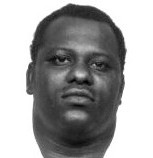
Lawrence Lee Buxton
Murderer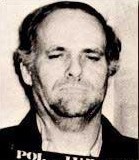 Ervil LeBaron
Murderer · USA · 1972
Ervil Morrell LeBaron (1925 to August 16, 1981) was the leader of a polygamous…
35 victims
Ervil LeBaron
Murderer · USA · 1972
Ervil Morrell LeBaron (1925 to August 16, 1981) was the leader of a polygamous…
35 victims
 Brian Kevin Rosenfeld
Murderer · USA · 1985
Brian Kevin Rosenfeld Brian Kevin Rosenfeld was sentenced to three concurrent l…
23 victims
Brian Kevin Rosenfeld
Murderer · USA · 1985
Brian Kevin Rosenfeld Brian Kevin Rosenfeld was sentenced to three concurrent l…
23 victims
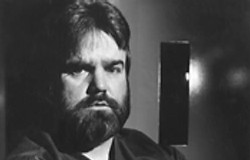 Marvin Gray
Murderer · USA · 1975
Marvin Gray was convicted killer who claimed responsibility for 23 slayings and…
23 victims
Marvin Gray
Murderer · USA · 1975
Marvin Gray was convicted killer who claimed responsibility for 23 slayings and…
23 victims
 Yahweh ben Yahweh
Murderer · USA · 1980
Yahweh ben Yahweh was born and legally named Hulon Mitchell Jr. (October 27, 19…
23 victims
Yahweh ben Yahweh
Murderer · USA · 1980
Yahweh ben Yahweh was born and legally named Hulon Mitchell Jr. (October 27, 19…
23 victims
 Mark Hutt
Murderer · Canada · 2009
Mark Hutt was convicted of first-degree murder in connection with the death of…
1 victim
Mark Hutt
Murderer · Canada · 2009
Mark Hutt was convicted of first-degree murder in connection with the death of…
1 victim
 David Renz
Murderer · USA · 2013
March 14, 2013 — David Renz carjacked Liverpool librarian Lori Ann Bresnahan an…
1 victim
David Renz
Murderer · USA · 2013
March 14, 2013 — David Renz carjacked Liverpool librarian Lori Ann Bresnahan an…
1 victim
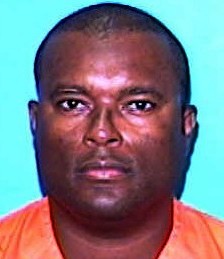 Emanuel Johnson
Murderer · USA · 1988
Emanuel Johnson was convicted of First-Degree Murder and was sentenced to death…
2 victims
Emanuel Johnson
Murderer · USA · 1988
Emanuel Johnson was convicted of First-Degree Murder and was sentenced to death…
2 victims
 Rebecca Sears
Murderer · USA · 2009
Rebecca Sears — defendant; mother of Christopher Sean Bowers. · Christopher Sea…
1 victim
Rebecca Sears
Murderer · USA · 2009
Rebecca Sears — defendant; mother of Christopher Sean Bowers. · Christopher Sea…
1 victim
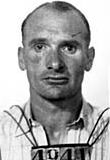 Elmer Brunner
Murderer · USA · 1957
Elmer David Brunner died on 3 April 1959. He was executed by electrocution on 3…
1 victim
Elmer Brunner
Murderer · USA · 1957
Elmer David Brunner died on 3 April 1959. He was executed by electrocution on 3…
1 victim
- Gender
- male
- Country
- USA
- Location
- Harris County, Texas, USA
- Date of birth
- September 16, 1952
- Age at first offence
- 28
- Characteristics
- rape?, rapist
- Victim profile
- Joel Slotnik, 40 (customer)
- Method of murder
- Shooting
- Date(s) of murder
- September 19, 1980
- Years active
- 1980
- Date of arrest
- —
- Status
-
Executed
Executed by lethal injection in Texas on February 26, 1991
Offender
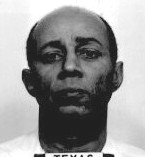
- Lawrence Lee Buxton (also known as Buxton), executed inmate.
- Age: 38 (28)
- Education level: 10th grade
- Prison status: Confined on death row in the Texas Department of Criminal Justice, Institutional Division.
Timeline
- February 22, 1991 — Buxton instituted his second federal habeas corpus petition in the United States District Court for the Southern District of Texas.
- February 23, 1991 — The district court denied Buxton all relief and denied a certificate of probable cause for appeal.
- February 25, 1991 — Buxton applied to the United States Court of Appeals for a certificate of probable cause for appeal and for a stay of execution.
- February 26, 1991 — Buxton was executed by lethal injection in Texas.
The offence
Grocery store robbery and killing of Joel Slotnik
Buxton and two masked accomplices robbed a Safeway grocery store after returning home from Yom Kippur services on the evening of September 19, 1980. Mrs. Sternberg, Joel Slotnik, and his five-year-old son Aaron entered the store.
- A man with a stocking mask over his face yelled "Hit the deck" as they entered.
- Sternberg observed three masked men, with two of them brandishing guns.
- One of the masked men forced Patricia Jackson, an assistant store manager, to give the contents of her cash register at gun point.
- Sternberg heard a robber tell Slotnik "You better get that kid down."
- The gunman took aim off Patricia Jackson and aimed the gun at Slotnik, who was seated with his arm around his son.
- After taking aim with both hands for seven to eight seconds, the gunman shot Slotnik in the neck.
- Slotnik died from the wound four days later.
- Two robbers exited the store, followed by the third robber.
- Sternberg identified the third robber as the killer.
Family observations and identification in court
- Linda Slotnik, Joel Slotnik’s wife, testified that she heard a noise and looked toward the store doors.
- She observed two masked men walking rapidly, followed by a third man.
- The third man pulled off his mask as he left the store.
- Linda Slotnik identified Buxton in court as the man who pulled off his mask.
- Lee Slotnik, Joel Slotnik’s fourteen-year-old son, testified that he heard the sound of a shot coming from inside the store.
- He also identified Buxton as the third robber to leave the store.
Statement attributed to Buxton
John Larry Foster testified that he had a conversation with Buxton in Houston sometime in late January or the first part of February, 1981. Buxton told Foster that:
- "he went out and pulled a robbery" at a grocery store; and
- "this guy seen him when he was coming out and he hollered for the guy to stop and he didn't so he shot." Buxton also told Foster that he used "38 slugs" because they were "hard to be traced." Foster testified that Buxton reportedly laughed about the incident.
Investigation
Investigators discovered a similarity between six robberies of savings and loan offices and the supermarket holdup. Buxton was charged with capital murder while serving 35 years in prison for those six robberies.
Arrest
- No arrest information was provided in the record text.
Trial
Charges and conviction
A Texas state district court convicted Buxton of the capital offense of murder in the course of a robbery. After a separate punishment hearing, the jury affirmatively answered the two Texas special issues and sentenced Buxton to death.
Legal issues at trial (guilt-innocence jury charge)
During the guilt-innocence phase, the trial court charged the jury that:
A person acts intentionally, or with intent, with respect to the nature of his conduct or to a result of his conduct when it is his conscious objective or desire to engage in the conduct or cause the result. Now, if you find from the evidence beyond a reasonable doubt that on or about September 19, 1980, in Harris County, Texas, the defendant, Lawrence Lee Buxton, did then and there unlawfully, while in the course of committing or attempting to commit the robbery of Patricia Jackson, intentionally cause the death of Joel Slotnik, by shooting Joel Slotnik with a gun, then you will find the defendant guilty of capital murder.
The record described that Buxton’s attorneys did not object to the first section, which tracked the definition of “intentionally” found in Sec. 6.03(a) of the Texas Penal Code Ann. (Vernon 1974).
Punishment special issues
At the sentencing phase, the court submitted the jury the following issues pursuant to Tex. Code Crim. P. art. 37.071(b):
SPECIAL ISSUE NO. 1
Do you find from the evidence beyond a reasonable doubt that the conduct of the defendant, Lawrence Lee Buxton, that caused the death of the deceased was committed deliberately and with the reasonable expectation that the death of the deceased or another would result?
SPECIAL ISSUE NO. 2
Do you find from the evidence beyond a reasonable doubt that there is a probability that the defendant, Lawrence Lee Buxton, would commit criminal acts of violence that would constitute a continuing threat to society?
Voir dire hypotheticals (verbatim examples)
The State asked juror Robbie Dunlap during voir dire:
Q: As far as reasonable expectation, again, I think you can see that it is also--uh--showing you that you might not have a reasonable expectation. I'm giving you another example: Supposing in that bank the triggerman who goes in, while he pulls out his gun and deliberately asks for the money--they're not really fast enough--fires it off in the area and it ricochets off something and he strikes a person that he didn't even know was in the background and killed 'em. You know he's deliberately pulled the gun, deliberately pulled the trigger, but when he shot in the air, he didn't have a reasonable expectation that it would ricochet just right and kill somebody in the back room. And so you see that reasonably, even though he did an intentional act, it may not be considered that he would cause the death.
Both sides accepted Dunlap as a juror.
The State asked juror Vada Kalisek during voir dire:
Now, let's take the same situation, puts everybody on the floor--puts everybody on the floor, got one teller taking the money and he says, "If you don't give me the money in three seconds, I'm gonna shoot somebody," and he really don't mean it and she's going as fast as she can but he thinks, "She can do it a little faster," so he says, "I'll scare her, get her moving," and he fires up in the air. He didn't expect it to go all the way through the ceiling but it does. But, by his misfortune, or somebody else's, it hits a steel beam and ricochets off and hits a person he's got laying on the floor and kills 'em. * * * * * * He's guilty of capital murder but he--you might be able to answer that question no because you see that he didn't deliberately--he didn't have that reasonable expectation that death would result from that deliberate act.
Vada Kalisek was sworn in as a juror.
The State used a similar hypothetical during the voir dire of juror Gerald R. Mitchell, and again used the bank robbery-ricochet hypothetical during juror Joan E. Spradlin’s voir dire.
Prior proceedings
- Buxton’s conviction automatically was appealed to the Texas Court of Criminal Appeals, which affirmed the conviction.
- Buxton v. State, 699 S.W.2d 212 (Tex. Crim. App. 1985), cert. denied, 476 U.S. 1189.
- The United States Supreme Court denied Buxton’s petition for a writ of certiorari.
- The trial court set Buxton’s execution date for September 30, 1986.
- Buxton applied for a state writ of habeas corpus, which was denied.
- Buxton immediately filed an application for a writ of habeas corpus in the United States District Court for the Southern District of Texas.
- A stay of execution was granted by the district court on September 29, 1986.
- The district court later granted the State’s summary judgment motion, vacated the stay, and denied Buxton’s request for a certificate of probable cause to appeal.
- The Court of Appeals denied relief on July 21, 1989 in Buxton v. Lynaugh, 879 F.2d 140 (5th Cir. 1989), cert. denied, 110 S. Ct. 3295.
- Buxton’s petition for a writ of certiorari was denied.
Sentencing
- The jury affirmatively answered the two Texas special issues after a separate punishment hearing.
- The jury sentenced Buxton to death.
Appeals
Federal habeas (first federal habeas petition)
The record included Lawrence Lee Buxton, Petitioner-Appellant, v. James A. Lynaugh, Director, Texas Department of Corrections, Respondent-Appellee. No. 88-2156.
- August 17, 1989 — The federal court addressed Buxton’s petition and held that it found no violation of the Constitution or laws or treaties of the United States, affirming the judgment denying habeas relief.
- It stated that the Texas state district court convicted Buxton of capital murder in the course of a robbery and sentenced him to death, and that the Texas Court of Criminal Appeals affirmed the conviction.
Second federal habeas petition and certificate of probable cause / stay
James A. Collins, Director, Texas Department of Criminal Justice, Institutional Division, Respondent-Appellee. No. 91-2172**, with appeal from the United States District Court for the Southern District of Texas.
- Buxton instituted his second federal habeas corpus petition on February 22, 1991 and requested a stay of execution, an evidentiary hearing, and habeas corpus relief vacating his conviction for capital murder and death sentence.
- The district court denied relief on February 23, 1991 and denied a certificate of probable cause.
Certificate of probable cause and stay rulings
The federal appellate court:
- denied Buxton’s application for a certificate of probable cause because it found no substantial showing of denial of a federal right; and
- denied Buxton’s motion for a stay of execution because it found he demonstrated neither a substantial case on the merits nor that the balance of equities weighed in his favor.
Other details
Execution date setting by state court
- October 16, 1990 — Buxton filed a second application for a state writ of habeas corpus.
- January 17, 1991 — The State district court set Buxton’s execution date for February 26, 1991.
- February 8, 1991 — The trial court entered findings of fact and conclusions of law and recommended denial of Buxton’s application for a writ of habeas corpus.
- February 20, 1991 — The Texas Court of Criminal Appeals denied relief based upon those findings.
- February 21, 1991 — The trial court entered findings of fact and conclusions of law on Buxton’s supplemental habeas application and again recommended denial.
- February 21, 1991 — The Texas Court of Criminal Appeals denied Buxton’s supplemental habeas application.
- February 19, 1991 — Buxton filed a supplemental habeas application in the trial court and the Court of Criminal Appeals.
- February 25, 1991 — Buxton applied to the appellate court for a certificate of probable cause for appeal (CPC) and for a stay of execution.
Legal issues raised in the second federal habeas petition
Buxton raised the following issues:
- The trial court violated his Sixth, Eighth, and Fourteenth Amendment rights because the jury was unable to give mitigating effect to the possibility that Buxton was not the triggerman in Joel Slotnik’s murder.
- The Texas death sentencing scheme prevented Buxton’s attorney from investigating and presenting mitigating evidence concerning Buxton’s deprived childhood and abusive father in violation of his Sixth, Eighth, and Fourteenth Amendment rights.
- Buxton received ineffective assistance of counsel in violation of his Sixth and Fourteenth Amendment rights because trial counsel failed to object to improper hypotheticals during jury selection, improper jury arguments, and an improper jury charge.
- Buxton was denied due process of law under the Fourteenth Amendment because the jury charge authorized conviction under a theory not amounting to capital murder.
- Buxton received ineffective assistance of appellate counsel in violation of his Sixth and Fourteenth Amendment rights because appellate counsel did not argue that the jury charge was fundamentally defective.
- Buxton was denied due process of law under the Fourteenth Amendment because a state “fundamental error” doctrine relating to jury charges was not applied to him on appeal.
- Buxton was subjected to an ex post facto law because of the application of an “egregious harm” standard of review relating to jury charges rather than a “fundamental error” standard.
Prosecutor statements and challenged content (verbatim)
During the State’s opening argument, the prosecutor made the following unobjected-to statements:
That there was an intentional cause that they intention--that the Defendant intentionally caused the death of Joel Slotnik by shooting Slotnik with a gun. Well, if there was any doubt that there was an intentional act of shooting with a gun, that when there was testimony that the Defendant in this case, Lawrence Buxton, held a gun like this (indicating) for seven to eight seconds and then shot. If that's not an intentional act, I don't know what is.
The record also described that shortly after the challenged statement, the prosecutor argued to the jury:
I think it's clear beyond any doubt whatsoever that not only was he a party to the robbery but that he knowingly and intentionally killed Joel Slotnik on that day in question.
Mitigation investigation background
The state trial court found:
- Buxton made no objection to the Texas death penalty scheme on the basis of its alleged chilling effect on counsel’s investigation and presentation of mitigating evidence, and he did not submit any requested instruction concerning mitigation and the scheme.
- Counsel were aware that Buxton came from a poor family and had a limited education.
- Counsel made a tactical decision to neither develop nor present evidence of Buxton’s background and education at the 1983 trial. The state trial court concluded that Buxton’s failure to object or request mitigation instructions procedurally barred his claim and that any alleged futility perceived by trial counsel did not remove the duty to preserve the complaint for later state and federal habeas review. The state trial court also noted there was no evidence that counsel felt precluded from investigating and presenting Buxton’s background, citing lead trial counsel John Emmett Crow’s investigation, development, and presentation of mitigating background evidence in John Henry Selvage’s 1979 capital murder trial.
Prior-state procedural findings regarding anti-parties instruction
The record described that Buxton argued the jury could not give mitigating effect to the possibility that he was not the triggerman because the trial court did not provide an “anti-parties” charge at the punishment phase, and that his trial attorneys failed to object to that omission and failed to request the charge.
Spotted an error, or have more information about this case?