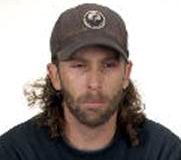
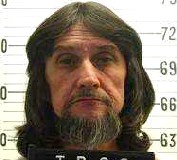
Mark Hutt
Murderer James Roszko
Murderer · Canada · 2005
James Roszko was a Canadian man operating a hydroponic marijuana grow-op in Roc…
4 victims
James Roszko
Murderer · Canada · 2005
James Roszko was a Canadian man operating a hydroponic marijuana grow-op in Roc…
4 victims
 Derek Jensen
Murderer · Canada · 2011
Derek Jensen was the ex-boyfriend of Tabitha Stepple. Jensen had encountered St…
3 victims
Derek Jensen
Murderer · Canada · 2011
Derek Jensen was the ex-boyfriend of Tabitha Stepple. Jensen had encountered St…
3 victims
 Douglas Donald Moore
Murderer · Canada · 2003
Douglas Donald Moore died of an apparent suicide in a cell at the Maplehurst De…
3 victims
Douglas Donald Moore
Murderer · Canada · 2003
Douglas Donald Moore died of an apparent suicide in a cell at the Maplehurst De…
3 victims
 Jeremy Steinke
Murderer · Canada · 2006
Jeremy Allan Steinke was sentenced to three life sentences on December 15, 2008…
3 victims
Jeremy Steinke
Murderer · Canada · 2006
Jeremy Allan Steinke was sentenced to three life sentences on December 15, 2008…
3 victims
 Shawn Lamb
Murderer · Canada · 2011
Shawn Cameron Lamb was 54 at sentencing. He was described as a chronic drug add…
3 victims
Shawn Lamb
Murderer · Canada · 2011
Shawn Cameron Lamb was 54 at sentencing. He was described as a chronic drug add…
3 victims
 Travis Baumgartner
Murderer · Canada · 2012
Sentenced to life in prison with no chance of parole for 40 years on September…
3 victims
Travis Baumgartner
Murderer · Canada · 2012
Sentenced to life in prison with no chance of parole for 40 years on September…
3 victims
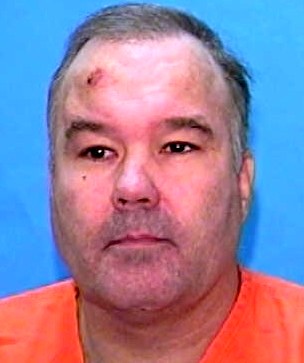 Ray Lamar Johnston
Murderer · USA · 1997
Ray Lamar Johnston was convicted in the Thirteenth Judicial Circuit, Hillsborou…
2 victims
Ray Lamar Johnston
Murderer · USA · 1997
Ray Lamar Johnston was convicted in the Thirteenth Judicial Circuit, Hillsborou…
2 victims
 Marie Dean Arrington
Murderer · USA · 1964
Marie Dean Arrington (born August 8, 1933) was an American criminal. She was al…
2 victims
Marie Dean Arrington
Murderer · USA · 1964
Marie Dean Arrington (born August 8, 1933) was an American criminal. She was al…
2 victims
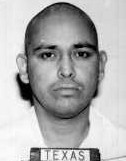 Luis Ramirez
Murderer · USA · 1998
Luis Ramirez was a Hispanic male executed by lethal injection in Texas on Octob…
1 victim
Luis Ramirez
Murderer · USA · 1998
Luis Ramirez was a Hispanic male executed by lethal injection in Texas on Octob…
1 victim
 Mel Ignatow
Murderer · USA · 1988
Mel Ignatow was a resident of Louisville, Kentucky. Brenda Sue Schaeffer (Brend…
1 victim
Mel Ignatow
Murderer · USA · 1988
Mel Ignatow was a resident of Louisville, Kentucky. Brenda Sue Schaeffer (Brend…
1 victim
 Dallen Bounds
Serial killer · USA · 1999
Dallen Forrest Bounds (August 9, 1971 - December 23, 1999) was an American seri…
4 victims
Dallen Bounds
Serial killer · USA · 1999
Dallen Forrest Bounds (August 9, 1971 - December 23, 1999) was an American seri…
4 victims
 Megan Hogg
Murderer · USA · 1998
Megan Hogg was sentenced to 25 years to life on September 24, 1999, for the 199…
3 victims
Megan Hogg
Murderer · USA · 1998
Megan Hogg was sentenced to 25 years to life on September 24, 1999, for the 199…
3 victims
- Gender
- male
- Country
- Canada
- Location
- Ottawa, Ontario, Canada
- Date of birth
- 1976
- Age at first offence
- 33
- Characteristics
- parricide, torture
- Victim profile
- Donna Ellen Jones, 33
- Method of murder
- The body was found badly scalded, beaten, with broken bones, and having been shot with air gun pellets. She died of septic shock from infection due to untreated burns
- Date(s) of murder
- December 5, 2009
- Years active
- 2009
- Date of arrest
- 7 days after
- Status
-
Life imprisonment
Sentenced to life in prison with no chance of parole for 25 years on June 7, 2013
Case details
Mark Hutt was convicted of first-degree murder in connection with the death of his wife, Donna Ellen Jones-Hutt, in Ottawa, Canada, in December 2009. The case involved allegations that he scalded and tortured her, left her to die, and delayed calling 911.
Victim
Donna Ellen Jones-Hutt (December 25, 1975 – December 5, 2009) was a 33-year-old Canadian woman whose body was found in the basement of her home in Ottawa in December 2009.
Relationship
Donna Ellen Jones-Hutt was married to Mark Peter Hutt, and he acted as her husband.
Location
Her body was found in the basement of her home in Ottawa, Canada, on Barwell Avenue, west end Ottawa, around 9:30 a.m. on the Sunday after her death was discovered.
Timeline
- summer of 2005 — Mark Hutt and Donna Jones met, and they were on the same baseball team.
- September 2007 — The couple had a planned September 2007 wedding; friends planned an intervention; it did not work.
- 2007 — Mark Hutt and Donna Jones married.
- June 2006 — Mark Hutt declared bankruptcy around the time the couple got engaged.
- 2009 — Donna Jones declared bankruptcy.
- November 24, 2009 — Donna Jones suffered scalding from boiling water, after which her burns became infected and she developed septic shock.
- December 5, 2009 — Donna Jones died.
- December 6, 2009 — Mark Hutt called 911 at 9:15 a.m. saying his wife had stopped breathing; police and first responders attended and documented the crime scene.
- June 7, 2013 — A jury found Mark Hutt guilty of first-degree murder.
- June 7, 2013 — Mark Hutt was sentenced to life in prison with no chance of parole for 25 years.
Background
Donna Ellen Jones-Hutt was raised in a home where she was “belittled” by her father, who taught her that she ought to “honour your husband”. She was self-conscious about her weight and appearance. She was a graduate of Carleton University and held a civil service job with the Canadian Food Inspection Agency. Friends described her as “bubbly”, “outgoing” and “an absolute sunshine”.
Mark Hutt and Jones met in the summer of 2005 while they were on a baseball team. After the relationship developed, Jones began to pull away from friends and family. Her performance in her federal public service job began to slip.
Friends began to notice signs of domestic abuse, including bruises on Jones’s body and overheard phone conversations in which Hutt screamed abuse. Hutt frequently called Jones to check up on her when she was with friends. Before their planned September 2007 wedding, friends planned a formal intervention to ask Jones to call it off, but they backed out of her wedding party after it did not work.
Jones’s weight dropped from 162 pounds to 101 pounds over the following two years. It was described that Hutt was emotionally and financially dependent on Jones. Hundreds of notes found in Jones’s home reflected what was described as Hutt’s “Dr. Jekyll and Mr. Hyde nature,” including one note calling Jones a “terrible wife” and another insisting, “You are my angel.” Jones was preparing to file for bankruptcy after she had indulged Hutt’s desires for a truck, an ATV, a snowmobile, a snowboard and other items.
A few months before Jones’s death, oozing burns on her arms appeared and seemed to become infected, and Jones reportedly refused medical attention.
The offence
Jones was found dead in the basement of her home on December 6, 2009, on a mattress made of couch pillows. Her body had been badly scalded, beaten, and had broken bones. She had injuries that included shot air gun pellets and signs consistent with physical violence.
During the autopsy, 29 pellets from an air rifle were found lodged in Jones’s skin. A forensic pathologist, Christopher Milroy, testified that the pellets must have been fired from the short distance of a few feet to have penetrated the skin. Some pellets were in her body for quite some time, and Milroy said Jones showed signs of lead poisoning, although he said the level was not high enough to poison her. Milroy testified that she was likely shot with at least two of those pellets after the scalding.
Jones also had nine fractured ribs, a broken nose, two black eyes, and many cuts, bruises and scrapes on her head, knees and legs. Milroy said the injuries were caused after Jones was burned on November 24, 2009.
Her injuries included seven calloused ribs, suggesting an earlier fracture likely caused by kicks, as well as two recent rib fractures. She had a broken left finger, a fractured right wrist, and an earlier forearm break known as a “nightstick fracture,” caused by a blow to the arm raised in a defensive position.
A burn expert, Joel Fish, medical director of the burn unit of the Hospital for Sick Children in Toronto, testified that if Jones had received proper medical treatment, she would have had a “virtually 100 per cent” chance of survival.
Approximately 40% of Jones’s body had been burned. She died of septic shock from infection due to untreated burns.
Verbatim statements included:
- Prosecutor Vikki Bair argued about the case dynamics and said: “We think it’s justice — justice for Donna and honour for Donna.”
- Joel Fish testified: “virtually 100 per cent”.
Investigation
Forensic evidence and trial testimony described the crime scene and injuries.
A forensic officer, acting Sgt. Stephen Jones, testified that police found a BB pellet gun in the powder room on the main floor of the home and a high-powered pellet rifle in a suitcase. He testified that the Savage brand pellet rifle with a scope was in the “firing” position and could fire with enough power to injure and kill.
A forensic officer testified that it was difficult to get fingerprints because Jones was so badly burned. The jury heard that forensic officers found red stains that could be blood on walls, a hallway floor, and on stair posts. There was also a broken door. Red stains were also found on a hair scrunchie, on a sneaker, and on the collar of a coat.
During police testimony, Ottawa police Det. Tara Anderson described the scene at the house as “terrible” and said: “I've never seen anything like this in my life”. She testified that Hutt told her Jones was drunk when she fell into a fire at a friend’s party in Cornwall and that co-workers patted her down. Anderson testified that Hutt told her Jones refused to go to the hospital when she got home. Anderson described severe burns on the victim’s stomach, arms and sides, and she said Jones also had two black eyes, scrapes, and holes in her legs. She testified that Jones “looked like she had been dragged behind a car on a gravel road,” and she described Hutt as “agitated and hysterical”.
Paramedic Logan Martin testified that Jones’s face was swollen so much she could not open Jones’s eyes to check her pupils. Martin testified that when Jones’s T-shirt was lifted to check burn injuries, Jones’s shirt was sticking to the wounds.
Hutt told police elaborate reasons for Jones’s injuries, including claims that she had fallen into a fire pit and that he had tried to treat her himself. Anderson testified that Hutt said that while he was carrying her to the bathroom, she fell and a “large chunk of her hair fell out,” and that she hit her head on a bed post and on a bathroom wall. Anderson testified that Hutt told her he pawned things to pay for bandages he put on Jones’s arms. Anderson testified that Hutt did not cry when she was told his wife was dead.
Det. Tara Anderson and paramedic Logan Martin statements included:
- Anderson said the smell was: “There was some decomposing odour. It was an acrid, sickly smell, nothing like I've smelled before,”
- Anderson described Hutt as “agitated and hysterical.”
- Anderson said Jones “looked like she had been dragged behind a car on a gravel road,”
- Martin testified that Jones’s shirt was sticking to the wounds.
- Anderson testified: “large chunk of her hair fell out.”
The investigation also included financial and communications evidence. Police testimony described that Mark Hutt’s cell phone records showed calls made outside the couple’s house after Jones scalded him, and that calls to Jones were made at high frequency per day. His calls to her stopped on Nov. 25, 2009, the day Hutt said he accidentally threw boiling water on her. After Nov. 25, Hutt’s cell phone was used in Aylmer, Que., Vanier, and Kirkwood. A call was made to a Merivale paintball store. He also called his divorced parents and an ex-girlfriend.
The lead investigators found handcuffs, a bow and arrow, and a sword at his residence.
Arrest
Mark Peter Hutt was arrested Friday afternoon following an investigation and examination of autopsy results. He was charged and was to appear in court Sunday.
Charges and plea
Mark Hutt was charged with first-degree murder in connection with Donna Ellen Jones-Hutt’s death. He pleaded not guilty at trial to first-degree murder.
Hutt pleaded guilty to the lesser charge of criminal negligence causing death, but the Crown rejected the plea and argued he was guilty of first-degree murder.
Trial
The trial opened with allegations by Crown prosecutor Meaghan Cunningham on the opening day that Hutt systemically abused Jones physically, psychologically, and financially, and scalded her with boiling water. Cunningham alleged that after she was burned, her wounds became infected and she descended into septic shock and died 11 days later. Cunningham described Jones’s body as having third and fourth degree burns, with two black eyes, a broken nose, bruises, scabs, and nine rib fractures. Cunningham also said Jones initially looked like she was “dragged behind a car on a gravel road”.
A domestic violence expert, Deborah Anne Sinclair, testified about domestic violence dynamics and victims’ behaviour. In cross-examination, Sinclair said victims seek to protect abusers, even if it is to their own detriment, and that many victims of domestic violence do not want the relationship to end, but want the abuse to stop. She also said most women killed by partners are murdered as they try to leave the relationship.
In closing and testimony described in the trial coverage, the defence lawyer Lorne Goldstein did not contest that Hutt abused Jones, but pointed out that her broken bones, bruises and cuts did not cause her death. Goldstein conceded that Hutt tortured Jones “beyond comprehension”. The defence presented no witnesses.
Testimony about injuries and medical outcomes included:
- Milroy’s testimony about the pellets and their penetration distance.
- Milroy’s testimony that at least two pellets were likely fired after scalding.
- Milroy’s testimony about time of death being about 12 hours before the 911 call.
- Fish’s testimony about survival chances with proper treatment.
Debate about what caused particular injuries included that Milroy testified pellets were likely fired after the scalding and that injuries were caused after Jones was burned on November 24, 2009.
During the trial evidence described, the Crown rejected Hutt’s plea to criminal negligence causing death and argued for first-degree murder.
Sentencing
The jury took less than a day to deliberate. On June 7, 2013, it found Mark Hutt guilty of first-degree murder. Life in prison with no chance of parole for 25 years was described as the automatic sentence, the maximum penalty in Canada.
In the sentencing outcome statement, the date provided was June 7, 2013. It also stated that the life sentence with no chance of parole for 25 years was the only sentence for first-degree murder and that it would be imposed later so that loved ones could prepare victim impact statements.
Outcome
Mark Hutt was convicted of first-degree murder in the death of Donna Ellen Jones-Hutt.
Aftermath
After the conviction, there were statements described from Jones’s family and others in reaction to the verdict. Derek Jones described Jones as “a bowlful of jelly, she was always laughing and willing to help others,” and he said: “He will pay for the rest of his life,” and: “Justice has prevailed and the dear Lord will take care of him in the afterlife.”
Other verbatim statements included:
- A person shouted at an expressionless Hutt: “Pay the piper now, you prick,”
- Jones’s brother Derek Jones said: “An evil man” was convicted of his “evil crimes,”
- Derek Jones said: “Justice has prevailed and the dear Lord will take care of him in the afterlife.”
- Prosecutor Vikki Bair said: “We may not see as much victim-blaming in the future,”
- Prosecutor Meaghan Cunningham said in opening: “Mark Hutt systemically abused Donna Jones — physically, psychologically, financially,”
- Prosecutor Vikki Bair stated: “The prison guard is in your head,”
- Deborah Anne Sinclair said: “The prison guard is in your head,”
- Hutt’s interview included his statement: “I shoulda just brought her anyway … Sweetheart, why wouldn’t you just go to the hospital? Why? Why? Why? Why wouldn’t you just go? “I shoulda just brought her anyway … Sweetheart, why, why, why, why?”
- Hutt said: “Nothing, not a darned thing. I wear hoodies a lot.”
- Hutt said: “Sweetheart, I told you this was going to happen.”
- Hutt said: “I really don't care any more, sir … There’s really nothing left for me to live for. I never meant to hurt my wife. I begged her (to go to hospital). She just wouldn’t listen to me; I don’t know why.”
- Hutt said: “She hit me in the back of the head like you wouldn’t believe” and protested “’I’m fine, I’m fine, I’m fine.’”
- Hutt said: “You saved my life. Thank you.”
- Hutt said in relation to his parents and how he was raised: “I have an anger problem,”
- Hutt said: “Why wouldn’t you go to the hospital?”
- Hutt said: “I know, I know,”
- In interview narration, Hutt said: “I’m so sorry, sweetheart,”
- In interview narration, Hutt said: “But I have to tell the truth. I can’t lie. Why wouldn’t you just go to the hospital? Why? Why? Why? Why wouldn’t you just go? “I shoulda just brought her anyway … Sweetheart, why wouldn’t you just go to the hospital? Why? Why? Why? Why wouldn’t you just go?
- Milroy said: “virtually 100 per cent”.
Other details
Donna Jones-Hutt’s body was found on a mattress made of couch pillows in the basement.
Ottawa police stated at the time of the charge that her death was Ottawa’s seventh homicide of the year.
Krista Moulds testified that she had been friends with Jones since they were 12 years old. She alleged Hutt was “controlling and obsessive,” and said she lost contact with Jones one month after Jones’s 2007 wedding to Hutt. Moulds described being fearful for Jones and said: “I had no joy. Seeing her in an unhealthy relationship, I didn’t want her to marry that man. I was fearful for her,” and said: “I’m fearful for her,” as part of her testimony.
Mike Paquette testified that their group tried to befriend Hutt but he was not interested and that he never smiled or joked with the group, saying: “I can't remember a single time he smiled or joked with the group. I never heard Donna say good things (about Hutt), like he's so awesome or romantic,”.
Moulds and Paquette refused to attend Jones’s wedding in September 2007 and Jones stopped talking to them shortly after that.
Moulds testified that Hutt threatened to commit suicide if Jones ever left him. She described confronting Jones about handprint bruises and said Jones attributed them to falling off Hutt’s ATV or that Hutt’s dog jumped on her. She also said Hutt wanted to know if she had done laundry.
The case included descriptions that Hutt did not have friends other than his wife and followed Jones around and insisted on knowing who she spoke to.
Derek Jones testified that Donna Jones-Hutt was shy but always laughing, and he said she “didn't have much success with boys.” He also said she became withdrawn and “wasn't herself, she was a drone,” and that after she married Hutt, Hutt stopped coming to family functions.
The trial coverage also described that friends planned to intervene on December 7, 2009, the day after she died, but the third-party complaint was left uninvestigated until after her body was found.
Deborah Anne Sinclair testified about domestic violence and compliance.
A final sentencing-related note in the case coverage stated that life with no chance of parole for 25 years would be imposed later on June 25 after victim impact statements could be prepared, though the provided sentencing outcome date remained June 7, 2013.
Spotted an error, or have more information about this case?