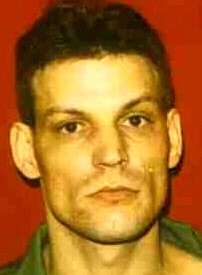
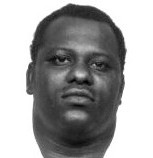
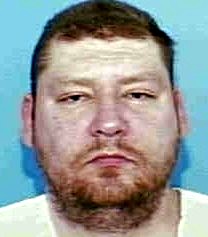
Jason Scott Byram
Murderer Brian Kevin Rosenfeld
Murderer · USA · 1985
Brian Kevin Rosenfeld Brian Kevin Rosenfeld was sentenced to three concurrent l…
23 victims
Brian Kevin Rosenfeld
Murderer · USA · 1985
Brian Kevin Rosenfeld Brian Kevin Rosenfeld was sentenced to three concurrent l…
23 victims
 Russell Ellwood
Murderer · USA · 1991
Russell Ellwood was a former taxi driver. Authorities suspected him of killing…
20 victims
Russell Ellwood
Murderer · USA · 1991
Russell Ellwood was a former taxi driver. Authorities suspected him of killing…
20 victims
 Robert Martines Perez
Murderer · USA · 1994
Name: Robert Martines Perez · Other name used in proceedings: Robert Martinez P…
15 victims
Robert Martines Perez
Murderer · USA · 1994
Name: Robert Martines Perez · Other name used in proceedings: Robert Martinez P…
15 victims
 Billy Frank Vickers
Murderer · USA · 1993
Billy Frank Vickers Vickers was executed by lethal injection in Texas on Januar…
14 victims
Billy Frank Vickers
Murderer · USA · 1993
Billy Frank Vickers Vickers was executed by lethal injection in Texas on Januar…
14 victims
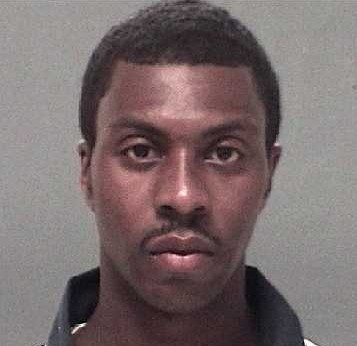 Richard Jameswhite
Serial killer · USA · 1992
Richard Jameswhite was a 19-year-old man wanted in Brooklyn for killings and al…
15 victims
Richard Jameswhite
Serial killer · USA · 1992
Richard Jameswhite was a 19-year-old man wanted in Brooklyn for killings and al…
15 victims
 David McGreavy
Murderer · United Kingdom · 1973
David McGreavy was born in 1950 or 1951. He was an English convicted murderer w…
3 victims
David McGreavy
Murderer · United Kingdom · 1973
David McGreavy was born in 1950 or 1951. He was an English convicted murderer w…
3 victims
 Alvin Braziel
Murderer · 1993
Alvin Braziel, also named Alvin Avon Braziel Jr., was convicted of capital murd…
1 victim
Alvin Braziel
Murderer · 1993
Alvin Braziel, also named Alvin Avon Braziel Jr., was convicted of capital murd…
1 victim
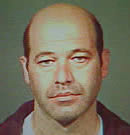 Angelo Colalillo
Murderer · Canada · 1993
Angelo Colalillo was suspected of committing serial sexual assaults and murders…
3 victims
Angelo Colalillo
Murderer · Canada · 1993
Angelo Colalillo was suspected of committing serial sexual assaults and murders…
3 victims
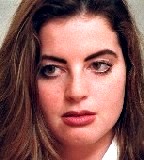 Lisa Michelle Lambert
Murderer · USA · 1991
Lisa Michelle Lambert was a defendant in the killing of 15-year-old Laurie Show…
1 victim
Lisa Michelle Lambert
Murderer · USA · 1991
Lisa Michelle Lambert was a defendant in the killing of 15-year-old Laurie Show…
1 victim
- Gender
- male
- Country
- USA
- Location
- Columbia, South Carolina, USA
- Date of birth
- September 25, 1965
- Age at first offence
- 28
- Characteristics
- armed robbery, robbery, kidnapping, child abuse
- Victim profile
- Julie Johnson (female, 36)
- Method of murder
- St abbing with a butcher knife
- Date(s) of murder
- May 23, 1993
- Years active
- 1993
- Date of arrest
- Same day
- Status
-
Executed
Executed by lethal injection in South Carolina on April 23, 2004
Case record
People
- Jason Scott Byram — defendant
- Julie Johnson — victim; elementary school teacher; mother of three; aged 36 at the time of her death
- Jeff Johnson — victim’s husband
- Peggy Ferrell — victim’s mother; registered nurse; aged 70
- Jay Elliott — Byram’s attorney
- Barney Giese — prosecutor
- Douglas Strickler — lead counsel; public defender
- Lee Coggiola — second counsel
- Gary E. Clary — circuit judge
- Burnett, Justice — author of a Supreme Court opinion in State v. Byram
- Jon E. Ozmint — Director, South Carolina Department of Corrections
- Henry Dargan Mcmaster — Attorney General, State of South Carolina
- Henry — referenced as part of a quote in State v. Byram (spelling preserved where it appears as a name fragment in context)
- Dr. Donald Morgan — forensic psychiatrist retained for evaluation
- Dr. Geoff McKee — forensic psychologist retained for evaluation
- Evelyn Califf — social worker
- Patti Rickborn — investigator
- Olae Mae Chandler — Byram’s birth mother
- Cindy Macias — Byram’s friend
- Sal Macias — protester; 50; University of South Carolina Sumter professor
- Trey Walker — spokesman for the attorney general’s office
- Robert Deans — researcher with Death Penalty Information Center
- David Clayton — referenced in an execution context
- Jerry Bridwell McWee — referenced in an execution context
- Larry Gene Bell — referenced in an execution context
- Donald “Pee Wee” Gaskins — referenced in an execution context
- Jim / “Jim Doe” — accomplice named by Byram (identity contested)
Background
Julie Johnson had been an elementary school teacher for 12 years, specializing in emotionally handicapped children with special needs. She lived in a home with her husband and three children asleep upstairs.
The offence
On the morning of May 23, 1993, Julie Johnson was dozing on her living room couch with her husband and three children asleep upstairs. Byram broke and entered through her kitchen window. He took her purse and stole her van.
Hours later, Byram returned to steal a TV and VCR. When Johnson awoke, Byram stabbed her repeatedly with a butcher knife from the kitchen.
Johnson made it to the front yard where her husband and a police officer heard her final words. She died on the way to the hospital.
Before dying, Johnson indicated to her husband and the police that she was attacked by an individual acting alone.
Investigation
Police found Byram’s fingerprint at the crime scene.
An eyewitness testified they saw Byram after the murder driving a van with blood on his shirt and no passengers.
When Byram was arrested later that afternoon, he admitted to police that he had entered Johnson’s home and stabbed her to keep her quiet. He said it was an accomplice named “Jim” who stabbed her repeatedly and killed her.
Police attempted to locate “Jim” based on Byram’s statement but found no evidence of an accomplice.
A DNA analysis found Johnson’s blood on a shirt in Byram’s apartment. Authorities found Byram’s fingerprint inside the home and the DNA analysis supported that Johnson’s blood was on a shirt associated with Byram.
Arrest
Byram was arrested later on May 23, 1993, after police investigated the murder.
Trial
Byram was convicted by a South Carolina jury in Columbia, South Carolina.
He was convicted of:
- murder
- first-degree burglary
- attempted armed robbery
- grand larceny of a motor vehicle
The Supreme Court opinion reported that Byram was sentenced, respectively, to:
- death (for murder)
- life imprisonment (for first-degree burglary)
- twenty years’ imprisonment (for attempted armed robbery)
- ten years’ imprisonment (for grand larceny of a motor vehicle)
At trial, Byram maintained that “Jim Doe” was the accomplice referred to in his statement.
Evidence about “Jim Doe”
The Supreme Court found that the trial court properly excluded evidence about “Jim Doe,” describing the proffered testimony as speculative and not inconsistent with Byram’s guilt.
A witness who rented a room in the same boarding house as Byram testified he saw Byram around 12:00 a.m. on May 23, 1993, in a white van. The witness testified that Byram had blood on his shirt, and that when asked about the van, Byram said it belonged to a friend and that the witness should not tell anyone about it. The witness testified he did not see anyone else in the van.
The Supreme Court also described testimony about Byram meeting “Jim” outside a particular gay bar on May 22, 1993, and the police investigation finding no person matching “Jim’s” description at the relevant location and time.
The Supreme Court held:
- the trial court properly excluded evidence that “Jim Doe” was the accomplice referred to in Byram’s statement
- Byram was not entitled to a jury instruction on parole eligibility
- the trial judge did not allow excessive victim impact evidence
- Byram was not prejudiced by the presence of television cameras in the courtroom during sentencing notwithstanding an erroneous conclusion about discretion to exclude television media without excluding other forms of media
The Supreme Court affirmed.
Jury selection claim (federal habeas)
In the Fourth Circuit proceedings, Byram argued ineffective assistance of counsel during jury selection because his defense team used peremptory challenges to strike potential jurors for reasons of race.
The Fourth Circuit described that, at trial, defense counsel exercised nine out of ten peremptory strikes to exclude white jurors from the venire and an additional four challenges to remove white jury alternates.
The Fourth Circuit described the Batson framework and the trial court’s credibility determination crediting Strickler’s explanations.
Mitigation and ineffective assistance claim (federal habeas)
In the Fourth Circuit proceedings, Byram argued ineffective assistance during the sentencing phase because his lawyers failed to present sufficient mitigation evidence, including alleged evidence of brain damage from fetal alcohol syndrome and evidence of abuse and neglect as a child.
The Fourth Circuit described that trial counsel retained forensic psychiatrist Dr. Donald Morgan and forensic psychologist Dr. Geoff McKee to evaluate Byram, including tests such as EEG and MRI, and that counsel decided not to present the experts’ testimony.
The Fourth Circuit described that social worker Evelyn Califf and investigator Patti Rickborn assisted counsel in preparing mitigation, including review of school records and foster care placement summaries and attempts to obtain adoption records.
The Fourth Circuit affirmed dismissal of Byram’s habeas claims and held he failed to show counsel’s performance was objectively unreasonable or that outcomes would have differed.
Sentencing
The trial court sentenced Byram to:
- death for the murder
Appeals
State appeal
- In State v. Byram, 485 S.E.2d 360 (S.C. 1997) (Direct Appeal), the Supreme Court affirmed the convictions and sentence, rejecting Byram’s claims regarding:
- exclusion of evidence about “Jim Doe”
- jury instruction on parole eligibility
- excessive victim impact evidence
- television cameras during sentencing
The Supreme Court opinion stated the statutory aggravating circumstances of burglary and robbery while armed with a deadly weapon were found by the jury.
Post-conviction and habeas
- Byram petitioned for a writ of habeas corpus under 28 U.S.C. § 2254 after exhausting state remedies.
- The district court rejected Byram’s claims but issued a certificate of appealability.
- The Fourth Circuit affirmed the district court’s dismissal in Byram v. Ozmint, 339 F.3d 203 (4th Cir. 2003) (Habeas).
Outcome
Byram was executed by lethal injection in South Carolina on April 23, 2004.
He was pronounced dead at 6:15 p.m.
Final statement attributed to Byram
Inside the death chamber, Byram’s attorney Jay Elliott read a statement attributed to Byram:
“While I maintain my innocence, I do want to express my condolences to the family of Mrs. Johnson, and I fully understand they only seek justice for their daughter.”
The statement also expressed Byram’s appreciation to the S.C. Department of Corrections concerning his treatment.
The statement concluded with a reading of John 3:16 and the words, “I believe.”
Byram then turned his head to the left and mouthed a few words to the witnesses.
Aftermath
Peggy Ferrell watched the execution and held her brother’s hand as the lethal chemicals were injected into Byram.
Jeff Johnson said:
“And so what's happened here today is justice was served, "And so what's happened here today is justice was done for the citizens of South Carolina. Not for me and not for my family. It was done for everybody out there that goes to bed at night."”
Statements attributed to Peggy Ferrell included:
“I will go to my grave knowing he was looking at me. It was the first time I had eye contact with him and I felt like he was trying to say something,”
and:
“The second or third time that he did that, I just nodded my head and thanked him because I knew in my heart that there was an apology there.”
A quote attributed to Ferrell also stated:
“I have no feelings of vindictiveness, just profound sorrow that I will probably carry for the rest of my life.”
Sal Macias said Byram expressed many times that he wished the incident did not occur, and that Byram never admitted killing Johnson.
Other details
Byram’s legal representation
At Byram’s trial:
- Douglas Strickler was reported as lead counsel and public defender.
- Lee Coggiola was reported as second counsel.
The Fourth Circuit described Strickler as having previously tried more than ten non-capital murder cases and participating in two death penalty cases, including representing a death row petitioner for post-conviction relief.
The Fourth Circuit described Coggiola as having tried several major felony cases before being appointed to represent Byram and as having work experience at the Death Penalty Resource Center.
The Fourth Circuit described that Strickler spent approximately 623.5 hours preparing Byram’s case and that Coggiola testified that she met with Byram at least thirty times before trial.
Byram’s age and identity details
- Byram was 38 at the time of execution.
- Byram was born 09/25/1965.
- Byram was 6' 01" tall and 165 lbs.
- Byram’s hair was BLACK, eyes BROWN, complexion OLIVE.
- In one context, Byram was described as Caucasian.
Prison record fields mentioned
- Inmate: BYRAM, JASON SCOTT
- Inmate #: 00005007
- SID#: SC00503206
- County of conviction: RICHLAND
- Date of sentencing: 03/09/1995
- Race: Caucasian
Final meal
Byram’s final meal included:
- Steak
- mashed potatoes
- green beans
- collard greens
- corn bread
- banana pudding
- cherry cheesecake
- apple cobbler and sweet iced tea
Additional remarks attributed to others
Circuit Judge Gary Clary said:
“May God have mercy on your soul,”
and Byram quipped back:
“Yours, too.”
An attorney-client privilege statement was attributed to Jay Elliot:
“Asked if his client has ever shown any remorse, attorney Jay Elliot would not comment, citing the attorney-client privilege.”
A prosecutor statement attributed to Barney Giese included:
“I still remember the case very vividly even over all those years, and I think the reason I remember it was because the facts were so horrific,”
and:
“She was a special needs teacher who was beloved by her students,”
Execution context and other inmates referenced
The execution coverage referenced that Byram was the 31st inmate put to death in South Carolina since the death penalty was reinstated in 1976, and that he was the third inmate put to death in South Carolina that year.
Other executions mentioned in context included:
- Jerry Bridwell McWee, convicted of killing a convenience store clerk in July 1991, executed by lethal injection on a date referenced as March (as part of the same execution context)
- David Clayton, convicted of the 1994 killing of a Georgetown police officer, executed by lethal injection in March
- Larry Gene Bell, last electrocution in South Carolina in 1996
- Donald “Pee Wee” Gaskins, executed by electric chair in 1991 (before lethal injection as an option)
Spotted an error, or have more information about this case?