
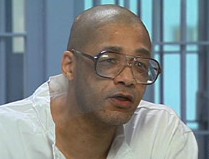
Abbas Baqir Abbas
Mass murderer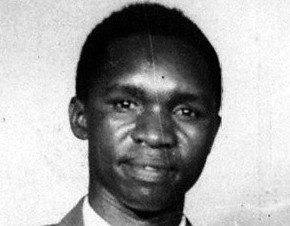 Joseph Kibweteere
Mass murderer · Uganda · 2000
Joseph Kibweteere led a breakaway sect known as the Movement for the Restoratio…
1000 victims
Joseph Kibweteere
Mass murderer · Uganda · 2000
Joseph Kibweteere led a breakaway sect known as the Movement for the Restoratio…
1000 victims
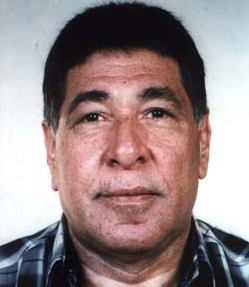 Gameel Al-Batouti
Mass murderer · USA · 1999
Gameel Al-Batouti (also rendered “Gamil ElBatouty” or “El Batouty” in U.S. offi…
216 victims
Gameel Al-Batouti
Mass murderer · USA · 1999
Gameel Al-Batouti (also rendered “Gamil ElBatouty” or “El Batouty” in U.S. offi…
216 victims
 Kim Dae-Han
Mass murderer · South Korea · 2003
Name: Kim Dae-Han · Age: 56 · Occupation/background: He was an unemployed forme…
198 victims
Kim Dae-Han
Mass murderer · South Korea · 2003
Name: Kim Dae-Han · Age: 56 · Occupation/background: He was an unemployed forme…
198 victims
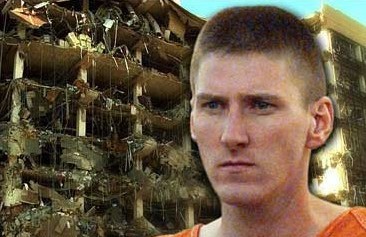 Timothy McVeigh
Mass murderer · USA · 1995
Timothy James McVeigh (April 23, 1968 – June 11, 2001) was a United States Army…
168 victims
Timothy McVeigh
Mass murderer · USA · 1995
Timothy James McVeigh (April 23, 1968 – June 11, 2001) was a United States Army…
168 victims
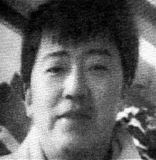 Zhang Pilin
Mass murderer · China · 2002
Zhang Pilin (张丕林) died in the plane crash of China Northern Airlines Flight 613…
111 victims
Zhang Pilin
Mass murderer · China · 2002
Zhang Pilin (张丕林) died in the plane crash of China Northern Airlines Flight 613…
111 victims
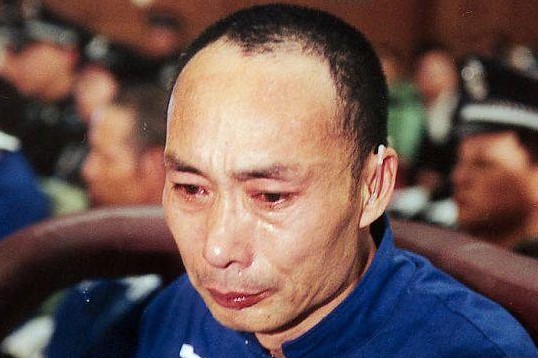 Jin Ruchao
Mass murderer · China · 2001
Jin Ruchao was blamed and arrested for planning and carrying out the Shijiazhua…
108 victims
Jin Ruchao
Mass murderer · China · 2001
Jin Ruchao was blamed and arrested for planning and carrying out the Shijiazhua…
108 victims
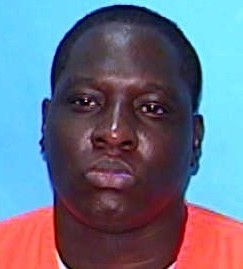 David Lee Thomas
Murderer · USA · 1990
David Lee Thomas was sentenced to death on March 15, 1991 in Twentieth Judicial…
1 victim
David Lee Thomas
Murderer · USA · 1990
David Lee Thomas was sentenced to death on March 15, 1991 in Twentieth Judicial…
1 victim
 Renee King
Murderer · USA · 2010
Renee King was sentenced in Macomb Circuit Court for the 2010 murder of her ste…
1 victim
Renee King
Murderer · USA · 2010
Renee King was sentenced in Macomb Circuit Court for the 2010 murder of her ste…
1 victim
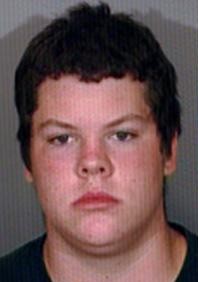 James Meyer
Homicide · USA · 2006
James Meyer was 15 years old at the time he pleaded guilty to first-degree arso…
1 victim
James Meyer
Homicide · USA · 2006
James Meyer was 15 years old at the time he pleaded guilty to first-degree arso…
1 victim
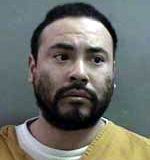 William Marrufo
Homicide · USA · 2005
William Jesus Marrufo was a former drummer for the band Ozomatli. Marrufo’s fam…
1 victim
William Marrufo
Homicide · USA · 2005
William Jesus Marrufo was a former drummer for the band Ozomatli. Marrufo’s fam…
1 victim
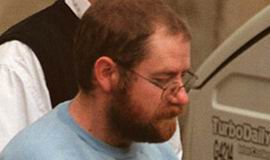 John Justin Bunting
Serial killer · Australia · 1992
John Justin Bunting (born 4 September 1966 in Inala, Queensland) was an Austral…
11 victims
John Justin Bunting
Serial killer · Australia · 1992
John Justin Bunting (born 4 September 1966 in Inala, Queensland) was an Austral…
11 victims
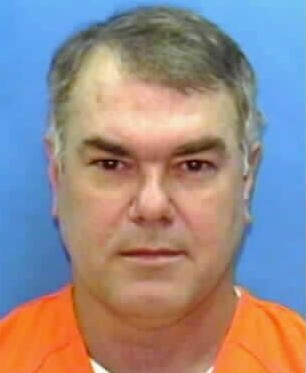 Thomas Dewey Pope
Murderer · USA · 1981
Thomas Dewey Pope (DOB: 01/29/49) was prosecuted in the Seventeenth Judicial Ci…
3 victims
Thomas Dewey Pope
Murderer · USA · 1981
Thomas Dewey Pope (DOB: 01/29/49) was prosecuted in the Seventeenth Judicial Ci…
3 victims
- Gender
- male
- Country
- Sudan
- Location
- Omdurman, Sudan
- Date of birth
- 1967
- Age at first offence
- 33
- Characteristics
- —
- Victim profile
- Male worshippers
- Method of murder
- Shooting (Kalashnikov assault rifle)
- Date(s) of murder
- December 8, 2000
- Years active
- 2000
- Date of arrest
- —
- Status
-
Shot to death by police
Case record: Abbas Baqir Abbas
Background
Abbas Baqir Abbas was identified as a member of the militant Al-Takfir wa al-Hijran (Renunciation and Exile) faction. He was described as an attacker who opened fire at Muslim worshippers during night prayers and was shot to death by police.
Abbas was also described as having long-standing religious differences with the Islamic sect targeted by the attack. Police said Abbas had formerly belonged to al-Sunna al-Mohammediyya but left the sect owing to religious differences. Police further said that after he joined Takfir wal Hijra, Abbas repeatedly made violent threats against members of his former group.
Police said Abbas had previously argued about religious beliefs with members of the small mosque and had threatened to teach members of his former sect a lesson. The interior ministry spokesman said Baqir had killed 20 worshippers and injured 33 in his attack, and that police investigations and assessment confirmed the attacker was only one person.
Abbas’ personal background was also described by relatives and villagers interviewed for reporting. Abbas’ uncle, Mohammed Ahmed Osman, told the official Al-Anbaa newspaper that Abbas’ mother left home in the village of Dassees because he caused trouble with his siblings. The uncle said Abbas “always beat his sister and accused her of infidelity because he believes her clothes were un-Islamic, although she wore Sudanese costume,” and that Abbas was deported from Libya before completing his studies there in the faculty of economics at Tripoli University, where he led Islamist groups that authorities saw as threatening security.
Villagers said Abbas used to regularly visit his brother Ismail, who lived in Jarafa, and that Abbas used to visit the Ansar al-Sunna sect’s mosque in Jarafa village outside Khartoum but would not pray with the worshippers. One villager told AFP: “Instead, he used to engage in heated discussions with them on controversial Islamic issues.”
The Ansar al-Sunna sect issued a press statement complaining that Abbas had previously threatened prayer leaders and other worshippers of the sect and that lawsuits had been filed against him. The sect appealed to the authorities to finally ban the activities of the Takfir wal-Hijra group, which it blamed for two previous attacks on its members.
There was also discussion of the ideology and rivalries between Takfir wal-Hijra and Ansar al-Sunna. The sect believed Islamic law imposed in Sudan should be implemented by force, while Ansar al-Sunna did not. Ansar al-Sunna had no political affiliations but had links with the orthodox Sunni Muslim Wahhabi sect.
The offence
Abbas al-Baqir Abbas walked onto the mosque grounds in the village of Garaffa and began firing an automatic rifle through a window at worshippers. Police said the attack occurred during the second bow of evening prayers during the Muslim holy month of Ramadan, and that worshippers were praying in the mosque.
Police said the attack targeted a mosque belonging to another Muslim sect, Ansar al-Sunna (Supporters of Sunna), and that it had a history of rivalry with Takfir wal-Hijra.
Police said Abbas killed 20 people and wounded 33 others, including a policeman. State television showed film and pictures of dead bodies in pools of blood and wounded people in bloodied clothes outside the mosque.
Funerals were reported to have been taking place for people who were killed while attending evening prayers at a village mosque in Sudan. A mass funeral for most of those who died Friday night was staged with blanketed corpses carried on bedsteads to the graveyard in Jarafa.
Different reports on the number killed appeared, including reporting that 23 people were killed after two additional deaths following the attack.
Investigation
Khartoum police General Osman Gaafar told reporters that Abbas al-Baqir Abbas, identified as a member of the Islamic militant group Takfir wal Hijra, walked onto the mosque grounds in the village of Garaffa and began firing an automatic rifle through a window at the worshippers.
Police spokesman General Osman Yakoub Ali said four police units rushed to the al-Sunna al-Mohammediyya Mosque and shot the gunman after he refused to surrender.
Interior Ministry spokesman Othman Yaqoub Ali said Abbas appeared to have been acting alone and that “According to our investigations and assessment, up to now we can confirm the attacker was only one person.” He also said police had previously detained Abbas briefly four months earlier along with about 20 other people believed to be members of Al-Takfir wa al-Hijra, and that Abbas was released after he repented and said he had abandoned the group’s ideas.
Police said Abbas was armed with an assault rifle and was killed while resisting arrest.
At least one police official also addressed witness reports. General Osman Yakoub Ali said Abbas appeared to act alone, and Ali stated: “Up to now our investigations and assessment suggest that the attacker was one person.”
At the same time, witnesses said at least three attackers had been involved and that gunfire came from three directions. An eyewitness said: “at 8.15 p.m. (2315 GMT) Khartoum time tonight (Friday), during the second bow of evening prayers (in the fasting month) of Ramadan in the mosque, gunfire came from three directions.” Another policeman at the scene was quoted as saying there were more than three gunmen, all wearing traditional white robes, and that except for the man who was shot by police, all other assailants escaped.
Arrest / police response
Police shot and killed Abbas al-Baqir Abbas after he refused to surrender. He was shot dead by police after spraying bullets on the packed congregation, according to reporting.
Police shot dead the gunman after he walked up to the al-Sunna al-Mohammediyya Mosque in the village of Garaffa and fired an automatic rifle through its window.
On Saturday, President Omar el-Bashir visited the mosque in Garaffa, a village north of Omdurman, and the mosque’s concrete floor had bullet holes and was stained with patches of blood. El-Bashir paid his condolences to relatives of the victims.
Trial / sentencing / appeals
No trial, sentencing, or appeals information was provided.
Outcome
The gunman, Abbas Baqir Abbas, was shot to death by police during the incident at the mosque.
More than 65 leading members of the outlawed Muslim fundamentalist group Takfir wal-Hijra were reported to have been arrested and interrogated following the attack, according to Akhbar al-Yom.
Aftermath
An angry crowd demanding revenge gathered outside Omdurman University Hospital where the wounded were admitted, according to reporting.
The police statement promised protection for all Sudanese citizens and described the dead as martyrs.
President Omar el-Bashir stressed that the government was “capable of protecting the citizens and their property.” He also said legislation would be passed to control fanatical religious groups and that “Today we vow to rectify laws in order to protect society from destructive and harmful ideas,” in a short speech outside the mosque.
President Omar el-Beshir’s adviser for legal and political affairs, Abdel Basset Subderat, told reporters that the interior minister and other key cabinet ministers had broadened guidelines for security forces to curb violence, and that the guidelines were not specified as being directed specifically at Takfir wal-Hijra.
Interior Ministry spokesman Othman Yaqoub Ali said: “This amendment is not for specific organizations,” when asked whether it targeted the Takfir group, and “It is left to the security forces to enforce it.”
Police said Abbas had threatened his former sect members and that he had been detained for four months in 1998 for these threats, and released after repenting.
General Osman Jaffar, head of the capital’s police force, told a news conference: “We don't believe there was any political motive behind the aggression, but we believe the wrong interpretation of the religious code was behind the incident.”
Worshipper testimony included: “There was blood all over the place. People were terrified.”
Timeline
- 1996 — An attack on the same mosque killed 12 people.
- 1998 — Police detained Abbas for four months for violent threats against his former group; police said he was released after saying he repented.
- four years before the reporting — The interior ministry spokesman said Abbas had been among a group of about 20 Al-Takfir wa al-Hijra members who were arrested briefly and later set free.
- Friday night during Ramadan — Abbas opened fire at the mosque during night prayers, killing 20 and wounding 33; police shot him dead after he refused to surrender.
- Saturday — President Omar el-Bashir visited the mosque in Garaffa and paid condolences; a crowd gathered outside Omdurman University Hospital demanding revenge.
- Sunday — Reporting described a portrait of Abbas from interviews; a death toll of 23 was reported after two additional deaths.
Other details
- Abbas Baqir Abbas was named as being from Al-Dasis, a village in northern Sudan’s Al-Jazirah region.
- Police said Abbas was a former disciple of Ansar al-Sunna and had previously argued with members of the small mosque.
- Police said Abbas came from the central region of el-Gezira and was a former member of the Popular Defense Forces, a government unit that fights southern rebels.
- Police said Takfir wal-Hijra advocated isolation from the sinful world.
- The Takfir wal-Hijra name literally meant “Repentance and Flight,” and it was used in Egypt in the early 1970s by a violent offshoot of the Muslim Brotherhood before being adopted by groups in other Arab countries.
- Reporting said Takfir wal-Hijra had carried out attacks on mosques of Ansar al-Sunna two other times since 1996, including a 1994 attack in which gunmen killed 16 people and a three-years-later attack in which its members killed two worshippers.
- Police said in 1996 members fought a gun battle with police that killed eight people.
- Police said Abbas shot at others while rampaging through the village later but spared women, and at least two boys were killed in indiscriminate fire.
- Witnesses reported that the gunman avoided targeting the women’s section of the mosque and reassured a woman who tried to flee that he would not shoot women.
- Sudan was reported as being due to hold presidential and parliamentary elections phased over nine days starting Monday, with President Omar Hassan al-Bashir seeking election; most opposition parties were boycotting the polls.
- One report described political opposition blaming the Islamist government in Khartoum for encouraging violent acts by turning Sudan into a haven for extremists and by training young men in an Islamist militia.
- Reporting said Abbas served in the militia known as the popular defense forces before undergoing military training and fighting anti-government rebels waging a 17-year civil war in southern Sudan.
Spotted an error, or have more information about this case?