Maurice Oscar Byrd
Mass murderer Julio Gonzalez
Mass murderer · USA · 1990
Julio Gonzalez was sentenced to 174 twenty-five-year sentences (a total of 4,35…
87 victims
Julio Gonzalez
Mass murderer · USA · 1990
Julio Gonzalez was sentenced to 174 twenty-five-year sentences (a total of 4,35…
87 victims
 David Burke
Mass murderer · USA · 1987
David Augustus Burke (May 18, 1952–December 7, 1987) was an employee of USAir,…
43 victims
David Burke
Mass murderer · USA · 1987
David Augustus Burke (May 18, 1952–December 7, 1987) was an employee of USAir,…
43 victims
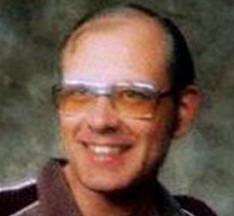 James Huberty
Mass murderer · USA · 1984
James Oliver Huberty was a 41-year-old unemployed security guard. He was born i…
21 victims
James Huberty
Mass murderer · USA · 1984
James Oliver Huberty was a 41-year-old unemployed security guard. He was born i…
21 victims
 Ronald Gene Simmons
Mass murderer · USA · 1987
Ronald Gene Simmons was a retired United States Air Force sergeant. Over the Ch…
16 victims
Ronald Gene Simmons
Mass murderer · USA · 1987
Ronald Gene Simmons was a retired United States Air Force sergeant. Over the Ch…
16 victims
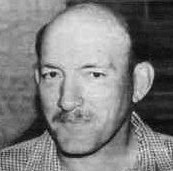 Patrick Henry Sherrill
Mass murderer · USA · 1986
Patrick Henry Sherrill Patrick Henry Sherrill committed suicide by shooting him…
14 victims
Patrick Henry Sherrill
Mass murderer · USA · 1986
Patrick Henry Sherrill Patrick Henry Sherrill committed suicide by shooting him…
14 victims
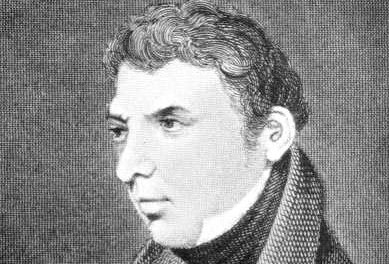 John Thurtell
Murderer · United Kingdom · 1823
John Thurtell (born December 21, 1794) was hanged at Hertford on January 9, 182…
1 victim
John Thurtell
Murderer · United Kingdom · 1823
John Thurtell (born December 21, 1794) was hanged at Hertford on January 9, 182…
1 victim
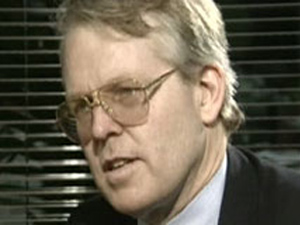 John Barlow
Murderer · New Zealand · 1994
16 February 1994 — Financial dealers Eugene and Gene Thomas, father and son, we…
2 victims
John Barlow
Murderer · New Zealand · 1994
16 February 1994 — Financial dealers Eugene and Gene Thomas, father and son, we…
2 victims
 Kim de Gelder
Murderer · Belgium · 2009
Kim de Gelder was a Belgian aged 20 from Sinaai. He was described as a silent b…
4 victims
Kim de Gelder
Murderer · Belgium · 2009
Kim de Gelder was a Belgian aged 20 from Sinaai. He was described as a silent b…
4 victims
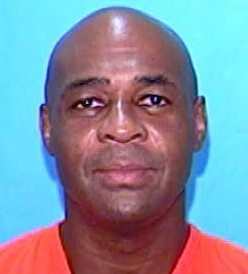 Douglas Ray Meeks
Murderer · USA · 1974
Douglas Ray Meeks was a Florida prison inmate. In two separate trials, Meeks wa…
2 victims
Douglas Ray Meeks
Murderer · USA · 1974
Douglas Ray Meeks was a Florida prison inmate. In two separate trials, Meeks wa…
2 victims
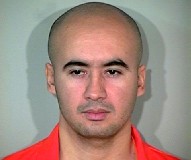 Martin Raul Soto-Fong
Homicide · USA · 1992
Martin Raul Soto-Fong was sentenced to death on February 3, 1994. Soto-Fong and…
3 victims
Martin Raul Soto-Fong
Homicide · USA · 1992
Martin Raul Soto-Fong was sentenced to death on February 3, 1994. Soto-Fong and…
3 victims
 Miguel Rios
Murderer · USA · 1992
Miguel Rios was sentenced to death on April 2, 1996 for the shooting death of M…
2 victims
Miguel Rios
Murderer · USA · 1992
Miguel Rios was sentenced to death on April 2, 1996 for the shooting death of M…
2 victims
- Gender
- male
- Country
- USA
- Location
- St. Louis County, Missouri, USA
- Date of birth
- December 7, 1954
- Age at first offence
- 26
- Characteristics
- robbery
- Victim profile
- 3 female and 1 male (cafeteria employees)
- Method of murder
- Shooting
- Date(s) of murder
- October 23, 1980
- Years active
- 1980
- Date of arrest
- —
- Status
-
Executed
Executed by lethal injection in Missouri on August 23, 1991
Case caption and citations
State of Missouri v. Maurice Oscar Byrd, cite as 676 SW 2d 494 (Mo.banc 1984). United States Court of Appeals for the Eighth Circuit. 917 F.2d 1037. No. 90-1491. Parties in federal appeal: Maurice Oscar Byrd, Appellant, v. Paul Delo, Superintendent, State Correctional Facility at Potosi, and Attorney General of the State of Missouri, Appellees.
Timeline
- October 23, 1980 — Employees arrived at Pope’s Cafeteria in the West County Shopping Mall and discovered that three employees had been killed and a fourth employee was still alive, though mortally wounded.
- October 23, 1990 — The Supreme Court of Missouri denied Maurice Byrd’s original petition for habeas corpus under Mo.Sup.Ct.R. 91.
- October 19, 1990 — The Eighth Circuit decided the appeal in 917 F.2d 1037.
- October 26, 1990 — Rehearing was granted in the Eighth Circuit case; a stay of execution was also granted in that context, and the mandate was stayed.
- August 14, 1991 — A further Eighth Circuit opinion was issued in 942 F.2d 1226.
- August 23, 1991 — Maurice Byrd was executed by lethal injection in Missouri.
- May 1990 — Judge Nangle took senior status.
Background
Maurice Oscar Byrd was a Missouri death-row inmate. He appealed federal court rulings denying his second petition for a writ of habeas corpus under 28 U.S.C. Sec. 2254. In the alternative, he requested that his stay of execution be continued.
Byrd’s second habeas petition in the Eighth Circuit was characterized as falling into two broad categories: three claims that had been considered and rejected in his first action (“repetitive claims”) and six claims that were not raised in his first petition (“new claims”). The appellate decision in 917 F.2d 1037 affirmed the district court’s denial of the habeas petition and dissolved the stay of execution.
On petition for rehearing and stay of execution, the panel granted rehearing and the application for stay of execution; Judge Bowman dissented from that grant. The date of execution set by the Missouri Supreme Court was stayed until further order of the court en banc or further appellate proceedings, and the petition for rehearing en banc was rendered moot.
In the related procedural developments discussed in 942 F.2d 1226, the Supreme Court of Missouri later clarified that its denial of Byrd’s original habeas petition under Rule 91 had been based solely on state procedural grounds.
The offence
On October 23, 1980, employees arrived at Pope’s Cafeteria in the West County Shopping Mall in St. Louis County, Missouri, and discovered that three employees had been killed and a fourth employee was still alive, though mortally wounded.
The victim who was mortally wounded had been shot in each eye and died a little more than a week later.
Over four thousand dollars had been taken from the office.
At the time of the murders, Maurice Byrd worked for an exterminating service, and the cafeteria was one of his customers.
Investigation
The morning of the killings involved Byrd’s employment. On the morning of the murders, the bookkeeper for Byrd’s employer arrived at work and noticed that Byrd was already there with another person, seated in a car that was different from the one normally driven by him.
The state’s case included testimony that Byrd was already at work around 7:50 that morning.
The appellate discussion also addressed a “yellow car” theory. Ford had originally stated he had seen three black men, one of whom resembled a Mr. Kirksey, leave the location of the murders (a shopping center) in a yellow car. Ford later recanted and stated he had seen Byrd at the shopping center. At trial, Ford again testified he had seen Byrd at the time and place of the murders.
Arrest / custody
Byrd was convicted and sentenced to death. He was a death-row inmate and later sought federal habeas relief under 28 U.S.C. Sec. 2254 and related stays.
Trial
Byrd was convicted of four counts of capital murder and sentenced to death on each count.
The appellate decision included detailed quoted jury instructions relating to sentencing.
Jury instructions: Instruction 54
Instruction 54 stated:
“In determining the punishment to be assessed under Count IV against the defendant for the murder of Judy Cazaco, you must first unanimously determine:
- Whether the murder of Judy Cazaco was committed while the defendant was engaged in the commission of the capital murders of James Wood, Edna Ince and Carolyn Turner.
- Whether the defendant murdered Judy Cazaco for the purpose of receiving money or anything of monetary value. You are further instructed that the burden rests upon the state to prove beyond a reasonable doubt at least one of the foregoing circumstances, and that it is an aggravating circumstance. The defendant is not required to prove or disprove anything. Therefore, if you do not unanimously find from the evidence beyond a reasonable doubt that at least one of the foregoing circumstances exist and that it is an aggravating circumstance, you must return a verdict fixing the punishment of the defendant at imprisonment for life by the Division of Corrections without eligibility for probation or parole until he has served a minimum of fifty years of his sentence.”
Jury instructions: Instruction 55
Instruction 55 stated:
“If you find and believe from the evidence beyond a reasonable doubt that one or more of the circumstances submitted in Instruction Nos. 51, 52, 53, 54 exists and that at least one of them is an aggravating circumstance, it will then become your duty to decide whether a sufficient aggravating circumstance or circumstances exist to warrant the imposition of death as punishment of defendant. In deciding that question you may consider all of the evidence relating to the murders of James Wood, Edna R. Ince, Carolyn Turner and Judy Cazaco. You may also consider any of the aggravating circumstances referred to in Instruction Nos. 51, 52, 53, 54 which you found beyond a reasonable doubt. If you do not unanimously find from the evidence beyond a reasonable doubt that a sufficient aggravating circumstance or circumstances exists to warrant the imposition of death as defendant's punishment, you must return a verdict fixing his punishment at imprisonment for life by the Division of Corrections without eligibility for probation or parole until he has served a minimum of fifty years of his sentence.”
Jury instructions: Instructions 56-59
Instructions 56-59 stated:
“If you decide that a sufficient aggravating circumstance or circumstances exist to warrant the imposition of death, as submitted in Instruction No. 51, it will then become your duty to determine whether a sufficient mitigating circumstance or circumstances exist which outweigh such aggravating circumstance or circumstances so found to exist. In deciding that question you may consider all of the evidence relating to the murder of James Wood. You may also consider: 1. Whether the defendant has no significant or prior criminal activity. 2. The age of the defendant at the time of the offense. You may also consider any circumstances which you find from the evidence in extenuation or mitigation of punishment. If you unanimously decide that a sufficient mitigating circumstance or circumstances exist which outweigh the aggravating circumstance or circumstances found to exist, then you must return a verdict fixing defendant's punishment at imprisonment for life by the Division of Corrections without eligibility for probation or parole until he has served a minimum of fifty years of his sentence under Count I.”
Jury instructions: Instruction 60
Instruction 60 stated:
“Even if you decide that a sufficient mitigating circumstance or circumstances do not exist which outweigh the aggravating circumstance or circumstances found to exist, you are not compelled to fix death as the punishment. Whether that is to be your final decision rests with you.”
Sentencing
Byrd was sentenced to death on four counts of capital murder. The sentencing phase issues discussed included claims relating to mitigating circumstances, jury unanimity, and constitutional challenges to jury instructions.
The appellate discussion cited State v. Byrd, 676 S.W.2d at 507, stating that the Missouri Supreme Court held Byrd’s death sentence was “not disproportionate to the penalty imposed in similar cases, considering both the crime and the defendant.”
Appeals / Post-conviction proceedings
Federal habeas petition: 917 F.2d 1037 (Eighth Circuit)
The Eighth Circuit reviewed an order denying Byrd’s second petition for a writ of habeas corpus and dissolved a stay of execution.
Repetitive claims
The repetitive claims included:
- Ground E — ineffective assistance of counsel.
- Ground F — racially biased jury selection.
- Ground H — denial of the right to offer evidence of mitigating circumstances.
Ground E — ineffective assistance of counsel
Ground E alleged that trial counsel erroneously and unreasonably called Oscar Ford to testify on Byrd’s behalf. The appellate discussion described Ford’s inconsistent statements:
- Shortly after the murder, Ford stated he had seen three black men, one resembling Mr. Kirksey, leave in a yellow car.
- Before the trial, Ford recanted and said he had seen Byrd at the shopping center.
- At trial, Ford testified again that he had seen Byrd at the time and place of the murders.
The court noted that, in Byrd’s review of his first petition, it had held counsel had “a reasonable basis” for calling Ford, including that counsel sought to introduce Byrd’s original statement implicating Kirksey to corroborate testimony from Faraby Lombardo about seeing three black men in a yellow car around 8:10 that morning.
In the instant petition, Byrd argued an intervening change in law required reconsideration, citing Harris v. Reed. The appellate court rejected Byrd’s argument and held the record showed trial counsel had discussed a “yellow car” theory in:
- opening statement (quoted excerpt),
- direct examination of Ford,
- closing statement,
- and counsel’s testimony at the 27.26 hearing.
The appellate discussion included the cited opening statement excerpt from trial counsel:
“we'll introduce testimony from Mr. Ford about what his original description was. That he saw these individuals [none of whom was Byrd] leave in a yellow car.”
It also recited testimony at the Rule 27.26 hearing through a question-and-answer exchange. Byrd interpreted counsel’s testimony as meaning counsel never sought to establish the “yellow car” theory. The appellate court stated other interpretations were equally plausible and concluded counsel sought to use the “yellow car” defense at trial.
Ground F — racially biased jury selection
Byrd was convicted by an all-white jury and claimed the prosecution unconstitutionally kept blacks off the jury.
The appellate discussion described the relationship between Batson v. Kentucky and Swain v. Alabama, and also referenced the state court’s application of Allen v. Hardy for pre-Batson trials, holding Swain’s systematic exclusion test applied.
The appellate court also discussed procedural default: it had previously denied discovery and denied the Swain claim on the merits in the first federal petition based on insufficient evidence under Swain, and it held reconsideration was inappropriate without new legal developments or new facts.
Ground H — mitigating evidence of good character
At trial, counsel informed the state trial court that he planned to offer testimony of Mr. Coble that Byrd had been nominated for a good citizenship award in connection with assistance he had given the police in investigating a burglary.
The court ruled that if Coble was called, the state could cross-examine him about evidence of Byrd’s bad character, such as Byrd’s arrest records. Counsel declined to call Coble.
In Ground H, Byrd claimed the ruling violated his right to present mitigating circumstances by leaving him with a “Hobson’s choice” and constructively denying him the opportunity to present all mitigating evidence.
The appellate court rejected the claim as repetitive and affirmed the district court’s denial.
New claims
The appellate court described the six new claims raised in Byrd’s second habeas petition as:
- Ground B — introduction of illegally obtained testimony.
- Ground C — perjured testimony by a prosecution witness.
- Ground D — failure to disclose exculpatory evidence.
- Ground A and Ground G — unconstitutional jury instructions.
- Ground I — disproportionality of the death sentence.
The appellate discussion explained the “abuse of the writ” framework for second habeas petitions and addressed each new claim in turn.
Ground B — illegally obtained confession
At trial, O.C. Green and James Mydell testified that Byrd told them while they were imprisoned in Georgia that he committed the crimes at issue.
In Ground B, Byrd alleged Green and Mydell were government “plants” and therefore their testimony should have been excluded. The appellate court discussed Massiah v. United States and Sixth Amendment exclusion.
The district court denied the claim on grounds including absence of cause, inapplicability of actual innocence exception, and lack of merit. The Eighth Circuit agreed Byrd was not prejudiced by admission of Green and Mydell testimony and held the actual innocence exception was inapplicable.
Ground C — perjury
At trial, O.C. Green testified he had made no deals with prosecutors. The appellate discussion stated Green had made a plea agreement in Georgia that provided that the state would “drop pending armed robbery and murder charges against Green in return for Green's testimony” regarding charges pending against Byrd in Georgia.
The appellate discussion described Byrd’s perjury argument and stated the district court found no prejudice because other evidence supported the jury verdict. The appellate court assumed for analysis that Byrd showed cause, but agreed Byrd did not establish prejudice and could not obtain relief under actual innocence or newly discovered evidence exceptions because exclusion or exposure of the perjury would not produce acquittal on retrial.
Ground D — failure to disclose exculpatory evidence
Byrd alleged law enforcement failed to disclose exculpatory items, including:
- reports suggesting numerous persons saw a maroon Cadillac near the murder scene on the morning of the crime,
- a confession by another person,
- the existence of numerous keys at the murder scene, none of which belonged to Byrd,
- fingerprints discovered at the murder scene without revealing to whom they belonged.
The district court rejected the claim based on failure to explain why the arguments were not raised in earlier petitions and found no reasonable doubt result.
The Eighth Circuit affirmed denial, stating Byrd did not show how specific items proved innocence or how exclusion affected the prosecution’s case.
Grounds A and G — jury instructions
Byrd challenged Instructions 56-59 and Instructions 54-56.
For Ground A, Byrd argued Instructions 56-59 prohibited the jury from considering mitigating evidence unless unanimous findings existed. The district court rejected as abusive and without substantive merit. The Eighth Circuit addressed the “actual innocence” exception and held it did not apply because Byrd would have been sentenced to death even if the jury had been instructed differently, citing:
- multiple aggravating circumstances found (including other murders and prior criminal convictions and that the murder was for purpose of receiving money and preventing the victim from testifying),
- and weakness of mitigating evidence in comparison to Gilmore v. Delo.
The appellate court cited mitigating evidence descriptions:
- Byrd’s mother testified that Byrd’s father died when he was very young and that Byrd was a Korean War veteran.
- Other witnesses cited in Byrd’s brief criticized the death penalty generally without discussing Byrd.
- The appellate discussion characterized Byrd’s mitigating evidence as weak, “as weak, if not weaker” than Gilmore’s.
For Ground G, Byrd argued Instructions 54-56 required him to prove mitigating circumstances beyond a reasonable doubt or were confusing. The district court rejected as abusive and on merits. The Eighth Circuit again found the “actual innocence” exception inapplicable and affirmed denial.
Ground I — proportionality
Byrd claimed his death sentence was disproportionate compared with similar offenders. He said he did not raise it in his first petition because he only recently discovered evidence that the Missouri Supreme Court had relied on inaccurate information in its proportionality review.
The appellate discussion explained Missouri law requiring preparation of a synopsis of all cases where death or life without parole was imposed after May 26, 1977, and stated that Byrd claimed the records were incomplete and inaccurate.
The Eighth Circuit discussed the “cause and prejudice” inapplicability when claims are based on newly discovered evidence and held a more comprehensive database would not have changed the Missouri Supreme Court’s holding that the sentence was not disproportionate.
Stay and mandate
In the alternative, Byrd argued the stay should continue because he had not exhausted state remedies by filing a state habeas petition under Rule 91. The Eighth Circuit dissolved the stay of execution, finding it pointless to continue because the relationship between Rule 27.26 and Rule 91 could be addressed by Missouri courts whether the stay was continued or dissolved.
Aftermath and execution
The status ultimately reflected that Byrd was executed by lethal injection in Missouri on August 23, 1991.
Additional legal developments described in 942 F.2d 1226 (Eighth Circuit)
In 942 F.2d 1226, the Eighth Circuit addressed what it described as, in effect, a third habeas petition.
The opinion recounted:
- Byrd’s first habeas denial by the district court and affirmance by the Eighth Circuit, and then certiorari denial.
- Byrd’s second habeas petition denial by the district court and affirmance by the Eighth Circuit.
- A stay of execution request tied to his planned exhaustion of state remedies through Rule 91.
- Prompt filing of the Rule 91 habeas petition by Byrd in the Missouri Supreme Court, which was denied on the same day it was filed, October 23, 1990, with an order quoted as follows:
“Now at this day, on consideration of the petition for writ of habeas corpus herein to the said respondent, it is ordered by the court here that the said petition be, and the same is hereby denied.”
- A motion by the state for modification of the Missouri Supreme Court order, granted, with a subsequent order entered on October 29, 1990. That order was quoted in part:
“The petition discloses no ground for relief that could not have been asserted either in the initial appeal or in the 27.26 motion, both of which have been finally determined, or [are] otherwise procedurally barred.
The petition is denied. All further claims for relief in the courts of Missouri are procedurally barred.”
- The state then asked the Eighth Circuit to vacate its stay, and the Eighth Circuit denied the state’s motion on October 30, concluding the Harris v. Reed theory remained substantial enough to prevent carrying out the death sentence until careful examination.
In 942 F.2d 1226, the Eighth Circuit rejected a Mills claim as an abuse of the writ and rejected a Swain claim, concluding that the procedural bar remained and the stays were dissolved. The panel also denied rehearing en banc based on lack of a majority of active judges voting to rehear, with Chief Judge Lay and Judge Wollman dissenting from those denials.
Other details
Named participants and roles in federal proceedings
The Eighth Circuit opinions referenced a variety of judicial and litigant roles:
- McMILLIAN, ARNOLD and BOWMAN — Circuit Judges in the 917 F.2d 1037 panel.
- McMILLIAN, Circuit Judge — authored the opinion in 917 F.2d 1037.
- Judge Bowman — dissented from the grant of rehearing and application for stay of execution.
- ARNOLD, Circuit Judge — authored the opinion in 942 F.2d 1226.
- BEAM, Circuit Judge — referenced in relation to Pilchak v. Camper.
- Chief Judge John F. Nangle — the Honorable John F. Nangle, Chief Judge, United States District Court for the Eastern District of Missouri, with senior status taking place in May 1990.
- Superintendent Paul Delo and the Attorney General of the State of Missouri were named as appellees in the Eighth Circuit case.
Mentioned additional persons and witnesses
The federal appellate discussion named multiple individuals linked to testimony or claims:
- Oscar Ford — called to testify; inconsistencies described.
- Faraby Lombardo — testified to seeing three black men in a yellow car around 8:10.
- Mr. Kirksey — resemblance mentioned in Ford’s original statement.
- James Mydell — testified Byrd confessed while imprisoned in Georgia.
- O.C. Green — testified Byrd confessed while imprisoned in Georgia; also discussed regarding plea agreement and perjury claim.
- Mr. Coble — proposed character witness for a good citizenship award.
- Judy Cazaco, James Wood, Edna R. Ince, Carolyn Turner — victims named in jury instruction excerpts.
- Father Francis Cleary, James Gilsinan, Steven Puro — cited as witnesses who criticized the death penalty generally without discussing Byrd.
Quoted phrase about plea agreement (verbatim)
The appellate discussion included a quoted phrase describing the plea agreement with Georgia authorities:
“drop pending armed robbery and murder charges against Green in return for Green's testimony with respect to charges pending against petitioner in Georgia.”
Spotted an error, or have more information about this case?