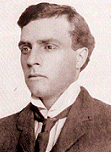
Pleasant Armstrong
Murderer John S. Williams
Murderer · USA · 1910
John S. Williams was convicted of murder and sentenced to life imprisonment on…
18 victims
John S. Williams
Murderer · USA · 1910
John S. Williams was convicted of murder and sentenced to life imprisonment on…
18 victims
 Floyd Allen
Murderer · USA · 1912
Floyd Allen (July 5, 1856 – March 28, 1913) was an American landowner and patri…
5 victims
Floyd Allen
Murderer · USA · 1912
Floyd Allen (July 5, 1856 – March 28, 1913) was an American landowner and patri…
5 victims
 Jackson Lee Davis
Murderer · USA · 1896
Jackson Lee Davis, also known as Diamondfield Jack, was an inmate. · June 4, 18…
2 victims
Jackson Lee Davis
Murderer · USA · 1896
Jackson Lee Davis, also known as Diamondfield Jack, was an inmate. · June 4, 18…
2 victims
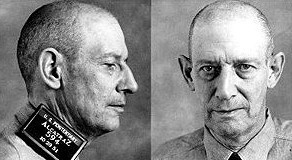 Robert Stroud
Murderer · USA · 1909
Robert Stroud, known to the public as the “Birdman of Alcatraz,” was a federal…
2 victims
Robert Stroud
Murderer · USA · 1909
Robert Stroud, known to the public as the “Birdman of Alcatraz,” was a federal…
2 victims
 Yan Yanming
Mass murderer · China · 2004
Yan Yanming (b. 1983 in Ruzhou, Henan, China) was a Chinese mass murderer who k…
9 victims
Yan Yanming
Mass murderer · China · 2004
Yan Yanming (b. 1983 in Ruzhou, Henan, China) was a Chinese mass murderer who k…
9 victims
 Joseph Ferguson
Mass murderer · USA · 2001
Joseph Ferguson was a former security guard who committed a 24-hour rampage beg…
5 victims
Joseph Ferguson
Mass murderer · USA · 2001
Joseph Ferguson was a former security guard who committed a 24-hour rampage beg…
5 victims
 Gerald Patrick Lewis
Serial killer · USA · 1987
Gerald Patrick Lewis was sentenced to death in Alabama and Georgia. He died in…
6 victims
Gerald Patrick Lewis
Serial killer · USA · 1987
Gerald Patrick Lewis was sentenced to death in Alabama and Georgia. He died in…
6 victims
 Troy Merck
Murderer · USA · 1991
Troy Merck, Jr. was convicted of first-degree murder and was sentenced to death…
1 victim
Troy Merck
Murderer · USA · 1991
Troy Merck, Jr. was convicted of first-degree murder and was sentenced to death…
1 victim
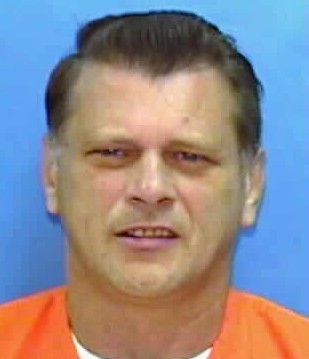 Gary Eldon Alvord
Murderer · USA · 1973
Gary Eldon Alvord was tried in the Thirteenth Judicial Circuit, Hillsborough Co…
3 victims
Gary Eldon Alvord
Murderer · USA · 1973
Gary Eldon Alvord was tried in the Thirteenth Judicial Circuit, Hillsborough Co…
3 victims
- Gender
- male
- Country
- USA
- Location
- Baker County, Oregon, USA
- Date of birth
- ???
- Characteristics
- —
- Victim profile
- Minnie Ensminger (his sweetheart)
- Method of murder
- Shooting (.44 caliber Colt)
- Date(s) of murder
- December 24, 1902
- Years active
- 1902
- Date of arrest
- Same day (suicide attempt)
- Status
-
Executed
Executed by hanging on January 22, 1904
Case overview
Pleasant Armstrong was hanged on January 22, 1904. He was convicted of murder in the first degree for the Christmas Day killing of Minnie Ensminger in 1902.
Background
Pleasant Armstrong had been keeping company with Minnie Ensminger, who was described as a young school teacher and the daughter of Mr. and Mrs. Jacob Ensminger. Minnie Ensminger came from a prominent, well-to-do family in Baker County. The Ensminger family did not approve of Armstrong’s relationship with Minnie Ensminger and asked her to stop seeing him.
Minnie Ensminger broke off their engagement, which angered Armstrong. Armstrong continued to pursue her after she ended the relationship, but she ignored his attempts at getting her back. A strange letter was sent by Armstrong, which Minnie Ensminger thought nothing of. Armstrong later sent Minnie Ensminger a further letter, writing: "Dear Minnie, I hate to tell you, but you have to talk to me. Let me know when it will be. Let me know before the 25th. Don't forget. Ples Armstrong"
The offence
Armstrong killed Minnie Ensminger on Christmas Day in 1902.
On Christmas Eve, Minnie attended a dance at a nearby farm, along with dozens of others from the county. Armstrong, described as a violinist, was at the dance to play his instrument. He played for the dancers for a while, breaking strings on his violin and playing poorly, described as obviously upset.
At 10 p.m., Armstrong set his violin aside and left the dance hall, entering a side room where he laid down on a couch. He remained there for several hours and appeared despondent, although he claimed he had a headache.
At about 1 a.m., the party was breaking up and the Ensmingers were ready to start home. One of Minnie Ensminger’s younger sisters went to Armstrong to help him with his coat. Armstrong then left the house ahead of the family.
Armstrong apparently was waiting outside for the Ensminger family when they headed out of the house for their sleigh on the six-mile trip home. As the family walked down the path to their sleigh, Armstrong jumped out at Minnie Ensminger and fired twice at her point-blank. Both shots hit her and she fell to the ground with a shriek.
Armstrong then turned the gun, described as a .44 caliber Colt that had been purchased by a friend, on himself and fired at his own head. The bullet found a mark and he sank to the ground with blood flowing from his head.
Several people ran to Minnie and carried her back into the house. A doctor was summoned while those attending the critically-wounded woman stayed with her. Armstrong’s wounds were described as superficial, and he was treated and then carefully guarded.
Minnie Ensminger was later moved to her home and a watch was set up to see if she would live or die. It was stated that if she died there was already talk of a getting a lynch mob together to take care of Armstrong, who had been taken to the jail in Baker City. Minnie Ensminger died three days after she was gunned down.
Investigation and pre-trial events
Armstrong pretended to be crazy for several days after the killing but later settled down and talked freely of the passion crime he had committed.
It took a while to bring the case to trial, which frustrated county residents. In March 1903, a lynch mob was organized because of the inaction in the case. The residents decided to take the law into their own hands, but Baker County Sheriff Harvey Kimbell Brown, with the help of his deputies, was able to calm the crowd and talked them out of the lynching. Armstrong was hidden away somewhere in the county courthouse and later moved to Portland for safe keeping.
Trial
The trial began on March 23, 1903. An attempt was made to get a change of venue because of the emotional aspects of the trial, and the request was denied.
Selecting a jury proved to be tough because it was hard to find anyone who did not have an opinion on the case already. The jury of 12 men was complete on March 26, 1903, three days after the trial began.
The prosecuting attorney was able to prove easily that "Armstrong deliberately shot the young woman without cause."
Armstrong took the stand in his own defense, weeping freely as he talked about his early life and the night that he shot the young school teacher. He testified:
"I was at the residence of Joseph Henner on December 24, 1902. I went to play the violin. I played until about 9:30. I went outdoors then on the lounge to lay down. I saw Miss Ensminger there that night. I saw her after she left the house. "Mr. Caster came and said they were ready to go home. I went out, then came back for the overcoat. Then I went out into the kitchen and Miss Blanche Ensminger gave me the overcoat. "The girls went out a little ahead. I stopped to tell Minnie goodbye. She turned away. I turned to kill myself, saying "Goodbye, Minnie." I don't know what made me shoot at Minnie, but I did. I had contemplated taking my own life, but surely not hers. I bought the pistol on the 16th of December."
Armstrong was presented the letter he had supposedly written to Minnie and admitted that he had, indeed, sent the letter. He told the jury:
"In another letter, Minnie asked me to write that letter," he told the jury. "I received that letter at the Maxwell Mine. The letter said, as I remember, that I had wrote her. This was an answer. She was sorry that she had not wrote sooner. She said we have got to keep the promise we made in Baker City and we cannot get married on Christmas nor yet in the world... "People had objected to us getting married but she would die before she would go back on me or that she would be dead before she would go back on me. She invited me, in a small enclosed envelope, to visit her. I burned the letters up. She invited me to take dinner with her on New Year's Day."
Armstrong refused to say what was on the slip of paper with the invitation. He also told the jury that when Minnie left the Christmas Eve party, she was a few feet in front of her sisters. He said he did not know why he fired on her.
The jury deliberated all night. At 1:30 p.m. the next day, which was Saturday, the jury brought in a verdict of guilty of murder in the first degree.
Sentencing
The time for sentencing was set for 10 a.m. on the following Tuesday. Armstrong was sentenced to death, with the time of execution set for May 8, 1903.
Appeals
The case was appealed all the way to the Supreme Court, which upheld the ruling of the lower court.
The appeals delayed the execution until January 22, 1904, two years after the murder.
Execution and immediate aftermath
The day before his death, Armstrong was visited by three brothers and he told them he welcomed the execution. He appeared to be in good spirits as he waited for the death sentence to be carried out.
Shortly before 7 a.m. on January 22, Armstrong was dead. The neck of the criminal was broken instantly. Doctors witnessing the execution pronounced him dead eight minutes after the trap was sprung and he was left hanging.

Spotted an error, or have more information about this case?