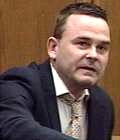
Arthur Caenen
Homicide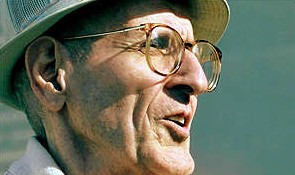 Jack Kevorkian
Homicide · USA · 1990
Jack Kevorkian (born May 26, 1928) was a controversial American pathologist. He…
130 victims
Jack Kevorkian
Homicide · USA · 1990
Jack Kevorkian (born May 26, 1928) was a controversial American pathologist. He…
130 victims
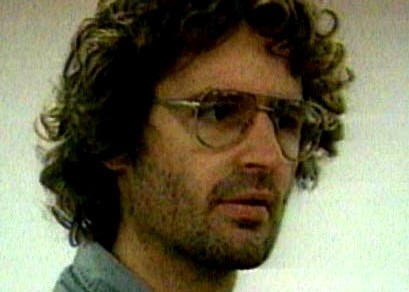 David Koresh
Homicide · USA · 1993
David Koresh (born Vernon Wayne Howell; August 17, 1959 – April 19, 1993) led t…
79 victims
David Koresh
Homicide · USA · 1993
David Koresh (born Vernon Wayne Howell; August 17, 1959 – April 19, 1993) led t…
79 victims
 Todd Hall
Homicide · USA · 1996
Todd Hall was described by neighbors as "mentally slow" and was said to have su…
9 victims
Todd Hall
Homicide · USA · 1996
Todd Hall was described by neighbors as "mentally slow" and was said to have su…
9 victims
 Joshua Jenkins
Homicide · USA · 1996
Joshua Jenkins was a 15-year-old American killer who killed five members of his…
5 victims
Joshua Jenkins
Homicide · USA · 1996
Joshua Jenkins was a 15-year-old American killer who killed five members of his…
5 victims
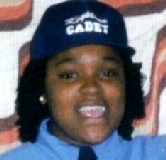 Leisa Jones
Mass murderer · USA · 2010
Leisa Jones died in a fire that she set intentionally in a second-floor apartme…
4 victims
Leisa Jones
Mass murderer · USA · 2010
Leisa Jones died in a fire that she set intentionally in a second-floor apartme…
4 victims
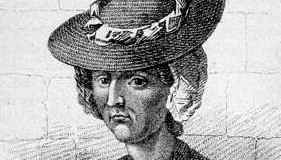 Elizabeth Brownrigg
Murderer · United Kingdom · 1767
Elizabeth Brownrigg was an eighteenth century murderer. Her victim, Mary Cliffo…
1 victim
Elizabeth Brownrigg
Murderer · United Kingdom · 1767
Elizabeth Brownrigg was an eighteenth century murderer. Her victim, Mary Cliffo…
1 victim
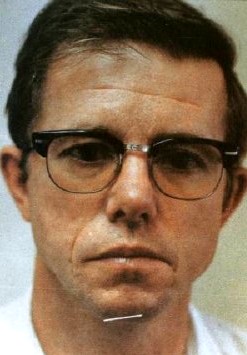 Robert Hansen
Serial killer · USA · 1973
Robert Hansen was a serial killer who abducted women and hunted them down in th…
21 victims
Robert Hansen
Serial killer · USA · 1973
Robert Hansen was a serial killer who abducted women and hunted them down in th…
21 victims
 Lindsay Beckett
Murderer · Australia · 1997
Lindsay Hoani Beckett (born 27 March 1974) was convicted of the murders of scho…
2 victims
Lindsay Beckett
Murderer · Australia · 1997
Lindsay Hoani Beckett (born 27 March 1974) was convicted of the murders of scho…
2 victims
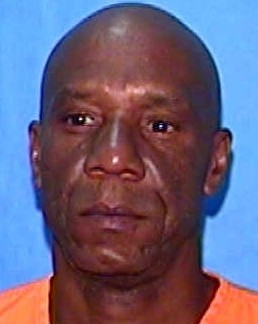 Etheria Jackson
Murderer · USA · 1985
Defendant: Etheria Jackson · Live-in girlfriend: Linda Riley · Trial judge: The…
1 victim
Etheria Jackson
Murderer · USA · 1985
Defendant: Etheria Jackson · Live-in girlfriend: Linda Riley · Trial judge: The…
1 victim
 Granville Riddle
Murderer · USA · 1988
April 1985 — Granville Riddle committed the burglary and vandalism of the Oakda…
1 victim
Granville Riddle
Murderer · USA · 1988
April 1985 — Granville Riddle committed the burglary and vandalism of the Oakda…
1 victim
- Gender
- male
- Country
- USA
- Location
- Kansas, USA
- Date of birth
- 1960
- Age at first offence
- 38
- Characteristics
- history of mental illness
- Victim profile
- Jordan Palmer (male, 16)
- Method of murder
- R un over with car
- Date(s) of murder
- March 22, 1998
- Years active
- 1998
- Date of arrest
- Same day
- Status
-
Life imprisonment
Sentenced to life imprisonment February 1999; conviction affirmed on automatic review by the Kansas Supreme Court with opinion filed March 9, 2001
Case information
Defendant: Arthur J. Caenen Jr. Case name: Kansas v. Arthur Caenen Jr. (“Motorist Insanity Trial”) Opinion court: Supreme Court of the State of Kansas Appeal number: No. 83,208 Trial court: Sedgwick district court (appeal from)
Timeline
- March 22, 1998 — Jordan Palmer was struck and killed when Arthur Caenen Jr. drove into him while Palmer was carrying a gas can after his car ran out of gas.
- February 1999 — Arthur Caenen Jr. was sentenced to life imprisonment.
- March 9, 2001 — The Supreme Court of the State of Kansas filed its opinion affirming the conviction.
The offence
On March 22, 1998, Jordan Palmer, a 16-year-old, was on his way to meet his father and younger brother to see a movie. Palmer’s car ran out of gas near Kellogg Drive in Wichita. Palmer left his car near a motel and carried a gas can from the trunk.
Palmer walked on the grass median east along the Kellogg Drive service road to a Costal-Mart gas station. After filling his gas can, Palmer headed back west toward his car on or along the left-side grass median of Kellogg Drive.
At about the same time, Caenen was driving west from the gas station on the left or wrong side of the Kellogg Drive service road. As Caenen approached the intersection at Heather Street and Kellogg Drive, his car jumped the curb and hit Palmer from the rear. A witness testified Palmer was on the grass, while Officer Evans testified Palmer was in the service roadway, not on the grass median, when struck.
Palmer was flung into the air, smashed backward into the car, rolled off the hood, was run over, and was dragged underneath the car for more than 100 feet. Palmer suffered massive injuries to his head and died.
The instrument of death was a passenger car. The victim, a pedestrian, was struck down from behind. The evidence showed Caenen did not appear to swerve or slow down before hitting Palmer, and witnesses saw no vehicles Caenen may have tried to avoid by moving into the wrong lane. One witness saw Caenen speeding in the wrong lane heading straight for Palmer and thought Caenen would hit Palmer even before he saw the impact. Another witness described Caenen skidding down the grass median dragging Palmer underneath the car, appearing to be trying to steer back out onto the street. After Caenen’s car skidded to a stop on the median with Palmer lying beside it, Caenen got out, calmly stepped over Palmer’s body, and stood nearby.
At the scene, one witness asked Caenen if he had seen what happened; Caenen said, "Yes, I ran him over." Another witness asked if he knew the kid was there; Caenen replied, "Yes." A witness described Caenen as extremely calm and a little dazed at the scene. Caenen told officers, "I did it, I'm mentally disturbed." Caenen also told officers that he had directed the car at Palmer.
Investigation
Caenen approached the first Wichita police officer at the scene and told him he was the driver. Caenen said he suffered from mental problems and wished to speak with a detective. Caenen was placed in police custody.
Caenen told Detective Kelly Otis that he was "mind-altered" and that he had a "mind-altering" thought that sprung into his head as he was driving down the frontage road. Caenen stated that he deliberately aimed his car at Jordan, was fully responsible for what he did, and knew hitting the boy would injure or kill him.
In a second interview, Caenen offered a different explanation. He said he and Jordan met at the Coastal station and a dispute arose over who was going to use the gas pump first. Caenen said Jordan spit on him, causing him to get upset. Caenen said he was still upset when he drove away from the station and saw Jordan walking along the road ahead of him. Authorities said they did not believe this story.
A few months later, while in jail, Caenen called Detective Otis and offered another explanation, describing the collision as an accident. Otis recorded the conversation. In that recorded conversation, Caenen said he hit Palmer accidentally while handling some food and soda in the car.
DNA testing revealed none of Palmer’s saliva on Caenen’s shirt.
Arrest and custody
After Caenen was placed in police custody, Detective Otis conducted interviews with him. All of the videotapes and telephone tapes were played for the jury. Caenen conceded that his telephone conversation with Otis was admissible.
Trial
Charges and trial posture
Caenen was charged with first-degree murder. The trial judge could instruct the jury on lesser included offenses, including second degree murder, involuntary manslaughter, or vehicular manslaughter.
The jury also had the option of finding Caenen not guilty by reason of insanity, which would have sent him to a state mental hospital for criminal until declared "cured."
Caenen presented two defenses to the first-degree premeditated murder charge:
- the killing was an accident; and
- due to mental illness, he could not form the requisite intent to kill.
Evidence regarding mental state
Experts testified that Caenen suffered from paranoid schizophrenia, a chronic mental illness characterized by delusions and hallucinations.
Dr. William Levine, a psychiatrist, was involved in Caenen’s second interview and testified for the State. Levine conducted a follow-up interview after Caenen wrote to him saying he had misrepresented the facts in the first interview and wanted to clear up the matter. Levine received and reviewed materials from other medical professionals and interviewed Caenen to determine whether he was mentally ill.
Dr. Robert Barnett, a clinical psychologist, was hired by the defense to evaluate Caenen. Barnett examined Caenen again 6 months after his initial evaluation and reviewed all videotapes of Caenen. Barnett reviewed investigative reports, Caenen’s medical history, witness interviews, and police reports.
During the interviews and testimony:
- Dr. Levine concluded that Caenen was and is mentally ill and testified that nothing about paranoid schizophrenia interfered with planning and carrying out an action or deprives a person of the ability to intend and act. Dr. Levine said, "[T]here's nothing about paranoid schizophrenia that interferes with a person planning and carrying out an action or deprives a person of the ability to do that."
- When asked if anything indicated Caenen could not think something out beforehand and act upon it, Dr. Levine said nothing indicated it.
- Dr. Barnett agreed that Caenen is mentally ill and testified that it was possible Caenen had hallucinations or delusions during or around the time of the collision. Barnett testified that people with paranoid schizophrenia can have intentional thoughts and can carry out actions based on their thoughts, and can think things out beforehand and act on those thoughts. Barnett agreed that Caenen could do all of those things.
Caenen testified at trial that he thought the Kellogg Drive service road was a one-way road. He testified that a car came at him, he swerved, hit his brakes, hit the curb, and hit someone. He testified that he waited for police to come. On cross-examination, Caenen testified that he made up stories to tell Detective Otis.
Inconsistent statements
During the evidence presented at trial, the court described inconsistent statements by Caenen. On the way to police headquarters, Caenen told police that "he had caused me pain," without explaining who “he” was. Caenen blamed what happened on a VA hospital in Kansas City and said he should have jumped off a building instead of doing what he did. Caenen told officers that his brain was messed up because, in the past, he was given Thorazine at a Kansas City VA hospital.
At police headquarters, Caenen’s explanations were inconsistent. He said at different times:
- he drove to the gas station for a pop and saw Palmer walking ahead of him, and that when he left the station he intentionally ran Palmer over;
- he drove to a fast food restaurant and passed Palmer, said he passed Palmer again after turning around to return to the gas station to get gas, and then ran over Palmer after leaving the gas station the second time;
- initially he said he had never met Palmer before, except that he had seen Palmer walking along Kellogg Drive in the course of Caenen’s travels shortly before running over him;
- he later said there was a confrontation with Palmer at the gas station and that Palmer spat on him;
- in jail communications, he told Otis he hit Palmer accidentally while handling some food and soda in the car.
Prosecutor’s closing argument and jury instructions
Caenen argued that the prosecutor’s closing argument misled the jury to believe intent and premeditation were the same. The jury instructions included:
- “Premeditation means to have thought over the matter beforehand.”
- “[t]here is no specific time element required to establish premeditation.” The court stated that there is no specific time element required to establish premeditation.
The court also discussed that premeditation instructions followed the Pattern Instructions for Kansas (PIK Crim. 3d 56.04(b)) as approved in earlier cases.
Autopsy photographs
Caenen argued that the district court abused its discretion by admitting autopsy photographs, specifically Exhibits 24 and 25. He asserted that because the cause of death was not in dispute and because of the nature of the photographs, the exhibits were more prejudicial than probative.
The pathologist Dr. Deborah Johnson agreed Exhibit 25 was gruesome. Exhibit 25 showed the top of Palmer’s head with the scalp removed from view. Johnson testified that Exhibit 25 gave an idea of the amount of force the victim’s head endured and showed damage to both the brain and skull.
The court noted that two exhibits, 23 and 24, showed external and internal damage to the back of Palmer’s legs. The photographs were used together to show the location of vehicle strike points on the back of Palmer’s legs. The height of the strike points was significant in deciding whether Caenen applied brakes while hitting the victim. The court found none of the photographs were repetitious or contained gruesome characteristics like those disapproved in another case.
Testimony of Palmer’s mother
Caenen argued that the district court erred by denying his motion to exclude testimony from Palmer’s mother because it would be irrelevant and prejudicial and would place before the jury the story that Palmer called his mother shortly before the collision. Defense counsel argued he would stipulate to the content of the conversation regarding when it took place, where Palmer would have been, and why he was walking with his gas can.
At trial, Palmer’s mother briefly testified over defense counsel’s objection about her conversation with her son. She identified Palmer’s clothing and personal effects, including his cap, glasses, and gas can.
The court determined her testimony was relevant and neither unduly prejudicial nor emotional.
Batson challenge
Caenen argued that the State impermissibly used a peremptory challenge to keep an African-American juror, R.B., off his jury. The State responded with reasons and the district court accepted them as racially neutral.
The State offered three reasons for striking R.B.:
- he was particularly non-responsive to things, such as conversations with other jurors;
- he was a single man with limited, little, or no contact with children; and
- he indicated he never made a large decision in his life.
The defense made no attempt to counter these assertions. The court noted that Palmer and Caenen were both white and that the Batson argument failed.
Opening statement poster
Caenen argued that the district court erred by allowing the State to use a poster displaying three of Caenen’s statements during counsel’s opening remarks. The district judge overruled the objection, saying:
“Well, from having heard pretrial motions, I believe these are matters which come from the statement of the defendant to the police officers. The State, during the course of opening statement, has the right to tell the jury what it hopes and intends to prove. I don't believe this would be improper demonstrative evidence at this time.”
Apparently, the poster included these three statements:
- “I hit the guy intentionally”
- “I went into the left lane and hit the guy”
- “I know what I was doing when I did it”
The poster was not included in the record on appeal. Caenen acknowledged that the admission of his statements was addressed in pretrial motions. The videotaped interviews were admitted into evidence at trial, and officers and doctors testified regarding his statements. The appellate court concluded the district court did not abuse its discretion.
Verdict
The jury convicted Arthur Caenen Jr. of first-degree murder (premeditated first-degree murder case).
Sentencing
Arthur Caenen Jr. was sentenced to life imprisonment in February 1999.
Appeals
Grounds raised on appeal
Caenen appealed his conviction for premeditated first-degree murder and argued:
- insufficient evidence supported the conviction; and
- the district court erred in:
- denying his motion to suppress his three videotaped interviews of his police headquarters interrogation;
- admitting autopsy photographs into evidence;
- denying his motion in limine to bar testimony from Palmer’s mother;
- denying his Batson objection to one of the State’s peremptory challenges;
- permitting the prosecutor to use a poster during opening statements; and
- denying his motion for a new trial.
Caenen also argued that cumulative errors warranted reversal.
Suppression: Miranda waiver and right to counsel
Caenen argued that the videotaped interviews should have been suppressed because:
- his mental illness prevented a voluntary, knowing, and intelligent waiver of Miranda rights; and
- he asserted his Fifth Amendment right to counsel.
The Supreme Court discussed the totality-of-the-circumstances approach to whether statements were voluntary, including:
- the accused’s mental condition;
- the manner and duration of the interrogation;
- the ability to communicate with the outside world;
- the accused’s age, intellect and background; and
- the fairness of the officers.
The court held that mental disability alone did not render a confession involuntary. It also held that substantial competent evidence supported findings that Caenen’s statements were intelligent and voluntary.
The court addressed the counsel issue. At the beginning of the first interview, Caenen said:
“I wonder if I should talk to an attorney.”
Caenen later agreed to talk after being read Miranda rights, and Otis stopped him and went over his rights first.
Caenen later told Otis he would briefly tell what happened before talking to his attorney. Caenen said he was mind-altered and had a thought and hit him, referring to Palmer.
After clarification, Otis asked if it was okay to ask questions then without an attorney. Caenen said “Yes” to those clarifying questions. The appellate court concluded Otis attempted to clarify the request and that the district court did not err in finding an intelligent, voluntary waiver of constitutional rights.
Suppression procedural details
At the suppression hearing:
- the first interview lasted 1 hour and 45 minutes, with two breaks of 5 or 10 minutes each;
- Caenen initialed each line of the Miranda form and said he understood his rights;
- Otis testified Caenen had several references to mental problems, so Otis sat with Dr. Levine in a second interview the following day;
- the second interview with Dr. Levine lasted just under 2 hours; Caenen then took a 10- to 15-minute break;
- after the break, Otis and Ralph returned and the interview lasted about 1 hour and 15 minutes.
Otis testified Caenen appeared to be fine and did not show coercive behavior or unfairness by police officers.
Autopsy photographs issue
The appellate court upheld the admission of Exhibits 24 and 25, concluding there was no abuse of discretion.
Motion for new trial: missing witness
Caenen argued he was entitled to a new trial because Officer Johnson failed to appear as a defense witness. Officer Johnson did not respond to a subpoena. The record reflected only one comment during trial about Mindy Johnson not appearing at the time.
The district court found that Johnson’s testimony would not have altered the outcome because Caenen conceded the issue was not raised at trial. At the hearing on the motion for new trial, defense counsel stated Officer Johnson was on pregnancy leave at the time of trial and conceded Johnson would have testified that based on her initial observations at the scene, she concluded the impact was an accident. The court also noted that photographs of skid marks at the scene were admitted, Johnson prepared a diagram admitted without objection, Officer Evans testified and investigated the scene on the day of the collision, and Detective Otis remeasured after going back to the scene.
The appellate court concluded the district court did not abuse its discretion in denying the motion for a new trial.
Cumulative errors
Caenen’s final contention that cumulative errors required reversal was not persuasive.
Appellate decision
The Supreme Court affirmed the conviction. The syllabus stated that the district court did not err in: (a) denying the defendant’s motion to suppress the video tapes of his police headquarters interrogation; (b) admitting autopsy photographs into evidence; (c) denying the defendant’s motion in limine to bar testimony from the victim’s mother; (d) denying the defendant’s Batson objection to one of the State’s peremptory challenges; (e) permitting the prosecutor to use a poster during opening statements; and (f) denying the defendant’s motion for a new trial.
The syllabus also stated that mental disability alone was not determinative of voluntariness and described factors considered in assessing whether a confession was voluntary, as well as rules on counsel invocation and clarifying ambiguous statements.
Outcome
The Kansas Supreme Court affirmed Caenen’s conviction of first-degree murder and upheld the life sentence imposed in February 1999. The opinion was filed March 9, 2001.
Spotted an error, or have more information about this case?