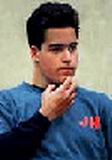
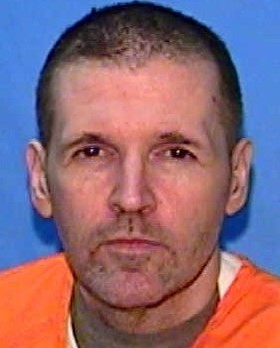
Joshua Jenkins
Homicide Jack Kevorkian
Homicide · USA · 1990
Jack Kevorkian (born May 26, 1928) was a controversial American pathologist. He…
130 victims
Jack Kevorkian
Homicide · USA · 1990
Jack Kevorkian (born May 26, 1928) was a controversial American pathologist. He…
130 victims
 David Koresh
Homicide · USA · 1993
David Koresh (born Vernon Wayne Howell; August 17, 1959 – April 19, 1993) led t…
79 victims
David Koresh
Homicide · USA · 1993
David Koresh (born Vernon Wayne Howell; August 17, 1959 – April 19, 1993) led t…
79 victims
 Todd Hall
Homicide · USA · 1996
Todd Hall was described by neighbors as "mentally slow" and was said to have su…
9 victims
Todd Hall
Homicide · USA · 1996
Todd Hall was described by neighbors as "mentally slow" and was said to have su…
9 victims
 Clinton Bankston
Homicide · USA · 1987
15 August 1987 — Ann Morris (63), her sister Sally Nicholson (59), and Sally’s…
5 victims
Clinton Bankston
Homicide · USA · 1987
15 August 1987 — Ann Morris (63), her sister Sally Nicholson (59), and Sally’s…
5 victims
 Ronald Glenn West
Murderer · Canada · 1970
Ronald Glenn West was a Toronto police officer and served as a traffic cop at T…
2 victims
Ronald Glenn West
Murderer · Canada · 1970
Ronald Glenn West was a Toronto police officer and served as a traffic cop at T…
2 victims
 Eric Christopher Payne
Murderer · USA · 1997
Eric Christopher Payne v. Commonwealth of Virginia (Record No. 980559); Eric Ch…
2 victims
Eric Christopher Payne
Murderer · USA · 1997
Eric Christopher Payne v. Commonwealth of Virginia (Record No. 980559); Eric Ch…
2 victims
- Gender
- male
- Country
- USA
- Location
- San Diego County, California, USA
- Date of birth
- 1980
- Age at first offence
- 16
- Characteristics
- juvenile (15), parricide, revenge
- Victim profile
- His adoptive parents, grandparents and sister Megan, 10
- Method of murder
- Hitting with a hammer and st abbing with knife / Beating with an axe
- Date(s) of murder
- February 2-3, 1996
- Years active
- 1996
- Date of arrest
- Next day
- Status
-
Imprisoned
Sentenced to 112 years in prison without parole on June 30, 1997
Case record
Joshua Jenkins was a 15-year-old American killer who killed five members of his adoptive family while visiting his grandparents’ condominium in California in 1996. He later pleaded guilty to five counts of first-degree murder and one count of arson.
People
- Joshua Jenkins — offender; 15-year-old at the time of the killings
- George Jenkins — adoptive parent; victim
- Alene Jenkins — adoptive parent; victim
- William Grossman — grandparent; victim
- Evelyn Grossman — grandparent; victim
- Megan Jenkins — 10-year-old sister; victim
- Phaedra — Megan Jenkins’s friend; telephoned Megan
- Jack Campbell — defense lawyer; said the plea change was in Jenkins’s best interest
- Judith Skomars — school psychologist; testified for the defense
- Park Dietz — forensic psychiatrist; testified that Jenkins may be schizophrenic but was not insane at the time of the crimes
- Mark Pettine — Assistant District Attorney; criticized the defense experts and addressed the jury
- Mark Kalish — psychiatrist; testified for the defense
- Paul Strauss — psychiatrist; testified for the defense
- Norton Roitman — psychiatrist; testified for the defense
- Jeff Rowe — psychiatrist at Juvenile Hall; testified for the defense
- William LaFond — public defender; rebuttal speaker
- John Einhorn — judge who ruled Jenkins was fit to stand trial and sentenced him
Background
Jenkins’s family lived in Las Vegas. On the weekend of the killings, the family picked him up from school and took him to his grandparents’ condominium in an exclusive community called The Terraces.
Jenkins had been sent to Vista del Mar boarding school for troubled youths in West Los Angeles. Prosecutors and defense arguments addressed whether Jenkins was sane at the time of the killings. Jenkins said he killed his family in revenge for his parents sending him to boarding school.
The offence
Jenkins killed his adoptive parents George Jenkins and Alene Jenkins and his grandparents William Grossman and Evelyn Grossman. He bludgeoned them to death with a hammer and stabbed them with a kitchen knife.
Jenkins later killed his 10-year-old sister Megan Jenkins. The next morning after the deaths of the adults, Jenkins took Megan to buy an axe, and he used the axe to kill her.
Megan’s friend Phaedra telephoned to speak to Megan. Jenkins told Phaedra:
"something has come up. Megan's really busy right now and can't talk."
After killing Megan, Jenkins torched the condo to cover up the crime and fled in the family’s silver Mercedes Benz.
Investigation and arrest
Jenkins was arrested the next morning after he stopped at an AM/PM Minimarket off California 78. He inquired about what route to take to Las Vegas. The clerk recognized Jenkins from the description in the local paper and called 911.
When police arrested Jenkins, he was verbally abusive. He had his grandparent’s white poodle with him.
Trial
The case involved a sanity phase. Jurors were deciding whether Jenkins was sane on Feb. 3, 1996, when he killed his parents, his grandparents and his sister during a Jenkins family visit to the grandparents’ condominium in Vista.
Initially, Jenkins pleaded not guilty by reason of insanity. Although all psychologist and psychiatrist who examined Jenkins agreed that he was mentally ill, some did not consider him insane.
On April 16, 1997, a day before the trial was set to begin, Jenkins changed his plea to guilty. He pleaded guilty to five counts of first-degree murder and one count of arson for starting several fires in the condo before fleeing.
Closing arguments and mental-state evidence
Public defender Jack Campbell began closing comments citing testimony from four psychiatrists and argued that Jenkins was insane at the time of the killings. Campbell emphasized educational and mental health experts who had seen problems developing in Jenkins, who had been taken for treatment starting when he was 5 years old. Campbell cited experts in the Clark County School District, including school psychologist Judith Skomars, who testified she was worried by Jenkins’s behavior.
Campbell criticized the prosecution’s main witness, forensic psychiatrist Park Dietz, who had found many high-profile killers sane, including Jeffrey Dahmer and John du Pont. Dietz testified that Jenkins may be schizophrenic but was not insane at the time of the crimes. Campbell said:
"His work is biased. It's inadequate, and it's flawed," Campbell said.
"And his conclusion that Joshua was not insane is flawed."
Assistant District Attorney Mark Pettine criticized the defense experts. Pettine said the jury was more qualified to determine Jenkins’s mental state because psychiatrist Mark Kalish lacked knowledge of the facts, psychiatrist Paul Strauss lacked a knowledge of the law, and psychiatrist Norton Roitman lacked "common sense." Pettine said:
Roitman's testimony "was about as 'out there' as it got in this case," Pettine said.
Pettine presented evidence that Jenkins planned the crimes, committed them, cleaned up afterward, covered up what he had done by lying to people who called on the telephone, and attempted to escape back to Las Vegas. Pettine reminded the jury that Jenkins asked a counselor at the school for disturbed youngsters where he was living if the quickest way to kill a person was by cutting his throat and told the counselor:
"Watch, I won't be back here next week" before the slayings.
Pettine argued to the jury that Megan, 10, was killed the day after the adults because she trusted him. Pettine said:
"she trusted him ... she trusted her big brother to take care of her."
Pettine referred to testimony from Jeff Rowe, Jenkins’s psychiatrist at Juvenile Hall, and said it was the most ridiculous part of the defense. Rowe said Jenkins had attempted suicide eight or nine times in custody. Pettine said:
"How come it didn't work?" Pettine shouted.
"How come he's still alive? "
Pettine stated:
"Megan Jenkins died of nine stab wounds to the heart. Do you think he knows how the body works?" Pettine asked.
Pettine also asked the jury what kind of person Joshua Jenkins was and said:
"He's very smart. He's filled with anger, he's filled with hatred, and he loves violence ... he's self-absorbed. In Joshua Jenkins' mind, the world revolves around Joshua Jenkins."
Pettine finished his argument by thanking the jury and telling them:
"I trust you'll do the right thing."
In rebuttal, public defender William LaFond said the prosecution’s argument was "wrong, disingenuous and desperate." LaFond criticized Dietz, saying Dietz spent his time "flying all over the country, big case after big case, prosecutor's office to prosecutor's office" with a "built-in bias." LaFond called schizophrenia "the mother of all issues in this case," and said:
"How many questions did the prosecution ask the six experts about schizophrenia and its effects on people? None. They wish it would just all go away."
LaFond told the jury:
"Don't come back with a mixed verdict," LaFond told the jury.
"The evidence doesn't support mixed verdicts."
The jury could find that Jenkins was insane during some of the crimes but sane during others, and the jury had to vote separately on each of the six crimes.
Plea and sentencing
On April 16, 1997, Jenkins pleaded guilty to the five counts of first-degree murder and one count of arson.
Jenkins was sentenced on June 30, 1997. The sentencing judge, John Einhorn, ruled Jenkins fit to stand trial despite the defense attempting to plead insanity. The sentence was 112 years in prison without parole.
Judge Einhorn called the killings:
"vicious, savage and almost incomprehensible."
Outcome
The case resulted in a sentence of 112 years in prison without parole on June 30, 1997.
Other details
- Jenkins was arrested the next morning after torched the condo to cover up the crime.
- The jury spent about 10 minutes in the jury room and was sent home.
- The trial’s sanity phase was described as five weeks. The jury was a 10-woman, two-man jury.
- Megan Jenkins died of nine stab wounds to the heart.
- Jenkins was reported to be verbally abusive when police arrested him.
- Jenkins’s grandparent’s white poodle was with him at the time of arrest.
- In discussion of maximum exposure, prosecutors said that if found sane, Jenkins could receive 140 years to life in prison.
- If found insane, Jenkins could be sentenced to a state hospital. If found sane, he faced a maximum of 140 years in prison.
Spotted an error, or have more information about this case?