
Todd Hall
Homicide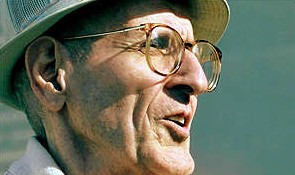 Jack Kevorkian
Homicide · USA · 1990
Jack Kevorkian (born May 26, 1928) was a controversial American pathologist. He…
130 victims
Jack Kevorkian
Homicide · USA · 1990
Jack Kevorkian (born May 26, 1928) was a controversial American pathologist. He…
130 victims
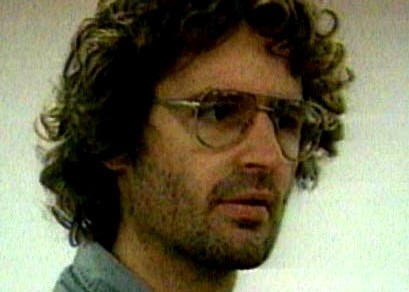 David Koresh
Homicide · USA · 1993
David Koresh (born Vernon Wayne Howell; August 17, 1959 – April 19, 1993) led t…
79 victims
David Koresh
Homicide · USA · 1993
David Koresh (born Vernon Wayne Howell; August 17, 1959 – April 19, 1993) led t…
79 victims
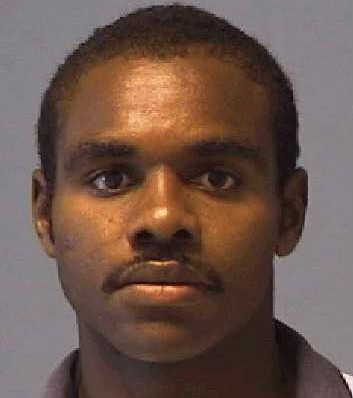 Clinton Bankston
Homicide · USA · 1987
15 August 1987 — Ann Morris (63), her sister Sally Nicholson (59), and Sally’s…
5 victims
Clinton Bankston
Homicide · USA · 1987
15 August 1987 — Ann Morris (63), her sister Sally Nicholson (59), and Sally’s…
5 victims
 Joshua Jenkins
Homicide · USA · 1996
Joshua Jenkins was a 15-year-old American killer who killed five members of his…
5 victims
Joshua Jenkins
Homicide · USA · 1996
Joshua Jenkins was a 15-year-old American killer who killed five members of his…
5 victims
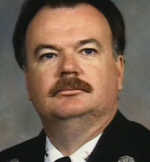 John Leonard Orr
Mass murderer · USA · 1984
John Leonard Orr was born April 26, 1949. He was a former fire captain and arso…
4 victims
John Leonard Orr
Mass murderer · USA · 1984
John Leonard Orr was born April 26, 1949. He was a former fire captain and arso…
4 victims
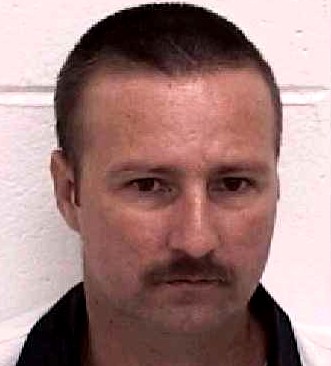 Jimmy Meders
Murderer · USA · 1997
Jimmy Fletcher Meders, 36, was convicted in Glynn County of malice murder and a…
1 victim
Jimmy Meders
Murderer · USA · 1997
Jimmy Fletcher Meders, 36, was convicted in Glynn County of malice murder and a…
1 victim
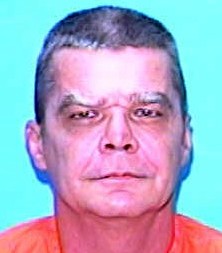 William L. Thompson
Murderer · USA · 1976
William L. Thompson was convicted and sentenced to death for the 03/30/76 kidna…
1 victim
William L. Thompson
Murderer · USA · 1976
William L. Thompson was convicted and sentenced to death for the 03/30/76 kidna…
1 victim
 Tasha Bates
Murderer · USA · 2012
Tasha Bates was the mother of two boys, Leland Bates (5) and River Bates (3). T…
2 victims
Tasha Bates
Murderer · USA · 2012
Tasha Bates was the mother of two boys, Leland Bates (5) and River Bates (3). T…
2 victims
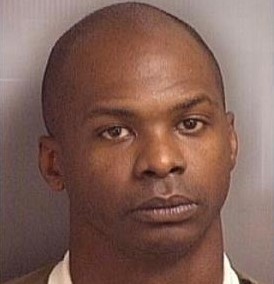 Donald Younge
Murderer · USA · 1999
Donald Eugene Younge was an inmate at Utah State Prison. He was originally from…
4 victims
Donald Younge
Murderer · USA · 1999
Donald Eugene Younge was an inmate at Utah State Prison. He was originally from…
4 victims
 Henry Wirz
Murderer · USA · 1864
Henry Wirz (also known as Heinrich Hartmann Wirz) (November 25, 1823 – November…
11 victims
Henry Wirz
Murderer · USA · 1864
Henry Wirz (also known as Heinrich Hartmann Wirz) (November 25, 1823 – November…
11 victims
- Gender
- male
- Country
- USA
- Location
- Lawrence County, Ohio, USA
- Date of birth
- 1972
- Age at first offence
- 24
- Characteristics
- history of mental illness, mentally ill
- Victim profile
- Men, women and children
- Method of murder
- Fire
- Date(s) of murder
- July 3, 1996
- Years active
- 1996
- Date of arrest
- Same day
- Status
-
Ruled incompetent to stand trial; confined in a state mental hospital
Case record: Todd Hall
Background
Todd Hall was described by neighbors as "mentally slow" and was said to have suffered a head injury as a child. Hall underwent a lobotomy after a skateboarding accident and had been in a coma for six weeks. Hall's father, James Hall, said he had tried to get help for his son in the best hospitals in the country. James Hall also said Todd Hall was becoming physically aggressive.
The offence
On July 3, 1996, Todd Hall carried out an incident at an Ohio fireworks store. He decided "that it would be fun to ignite a box of fireworks inside a fireworks store in Lawrence County, Ohio." The fire began when Hall ignited fireworks at the Ohio River Fireworks store in Scottown, Lawrence County, Ohio.
Hall's conduct led to multiple deaths and injuries. The bone headed prank left eight people (six adults and two children) dead and a dozen injured as the store exploded in flames while customers were shopping for Independence Day fireworks. A later account described nine people killed and 11 injured as a result of the fire.
The identities of the other two men in custody were not released, and no charges were filed against them Thursday night.
Investigation
Witnesses said three men started the blaze by setting off fireworks inside the store with a cigarette or a lighter. Police charged one of the three late Wednesday with eight counts of involuntary manslaughter.
Lawrence County Sheriff Roy Smith said: " I believe that two of them put the third one up to it. It appears that it was a joke turned deadly, " "They just wanted a little excitement. They just got a lot more than they wanted."
Beverly Pruitt said: "They were stampeding. They were blocking it, basically because they all were trying to get out at once,"
A store worker who left the store minutes before the fire returned after hearing popping a mile away. Gary McGuire said: "The first thing I saw was a bunch of things going and smoke rolling. I heard a lot of people screaming and coming out of the building. It's a shame it had to happen,"
Deputy John Tordiff said: "He doesn't appear that he knows what he did," and "What he is is kind of slow."
Authorities used dental records to identify the victims.
Investigators said Hall had been egged on by friends. The prosecutor, J. B. Collier Jr., said he would not rule out charges against the friends and that investigators had received conflicting reports about who was with Hall on that day.
Arrest
Todd Hall, 24, of Proctorville, was charged with eight counts of involuntary manslaughter and held in the Lawrence County Jail pending arraignment Friday in Municipal Court. Hall stood up in court during arraignment on eight counts of involuntary manslaughter and declared: "I didn't do it, I didn't do it, it's not fair."
Trial
Todd Hall was ruled incompetent to stand trial.
In 1994, Hall was declared "incompetent" to stand trial on a domestic violence charge. Hall also was issued a citation for criminal trespass on May of 1996.
Sentencing
Hall could face up to 25 years in prison and a $10,000 fine for each count if convicted.
Appeals
The Court of Appeals of Ohio decision and judgment entry included a ruling that Hall was incompetent to stand trial and that he was confined in a state mental hospital.
Outcome
Hall was confined in a state mental hospital after being ruled incompetent to stand trial.
A Lawrence County Common Pleas judge ruled there was clear and convincing evidence Todd Hall needed continued commitment to a state mental hospital for up to two more years.
Judge W. Richard Walton approved continued commitment of Hall at the Appalachian Behavioral Healthcare campus in Athens, Ohio. Walton said: "The hospital is the least restrictive setting for Hall ,"
J. Michael Evans, a Columbus lawyer representing Hall, said: "His behavior can improve and has improved," and "I’ve seen some improvement in him."
Hall's hospital evaluation was prepared by Dr. Beverly A. Williams, a clinical psychologist who examined Hall. When confronted by medical staff, Hall initially would become hostile, verbally threatening, and at times would throw or damage property or challenge and assault staff. The report also said Hall inappropriately touched female patients, volunteers, nursing students and staff.
Williams said Hall had made consistent progress and that someday he might be considered for conditional discharge to a supervised group home setting. Williams said: "(He) is no longer considered a serious imminent threat to others on the unit,"
Williams also said Hall demonstrated a substantial disorder of thought and mood resulting in substantial impairment in judgment and that he lacked the judgment control necessary for discharge from the hospital’s highly supervised setting.
J.B. Collier Jr. planned to seek continued commitment for Hall's safety and the safety of others. Collier said Hall did not understand the consequences of his actions, which was shown by his actions at the fireworks store.
Marcia Smoot said: "I don’t want to see him back on the streets,"
The Ohio law allowed Walton to review Hall’s progress and confine him for up to two years in a state mental hospital. A previous two-year commitment order by Walton was to expire March 15. Evans said the hospital provided enough supervision where Hall's needs were met and public safety was protected.
Aftermath
Three victims of the fire remained listed in critical condition, and authorities used dental records to confirm the identities of the dead.
A worker at the store said Hall behaved in certain ways that harassed customers and involved stealing cigarettes and lighters. Tom Nibert said Hall rode his bike through other people's property and walked into the Nibert home uninvited, asking for money or gasoline. Glen Stiltner said: "He's the biggest nuisance you've ever seen in your life,"
James Hall said the skateboard accident was a cause for Hall’s severe brain injury and that part of his brain was removed to save Hall’s life.
The Hall family appeared on the ABC News program "Nightline" on Sept. 23, 1992, to discuss the accident in a segment on health insurance. The Hall family said the skateboard was defective and sued the maker, retailers and West Virginia University Hospitals. The suit was settled in 1994. The amount was unclear, but Todd Hall bought a house for $125,000 in 1994 without taking a mortgage. The deed said Todd Hall was incompetent and under guardianship. The suit said James Hall was appointed his son's guardian in 1990.
In 1994, Todd Hall was charged with domestic violence against his father. The charge was dismissed after James Hall said his son was incompetent, court records said. James Hall said only that his son was becoming physically aggressive.
A legal discussion involving Ohio tort law included a quote describing the incident: "On July 3, 1996, Todd Hall carried a lit cigarette into the Ohio River Fireworks store in Scottown, Lawrence County, Ohio. Before store employees could intervene, Hall used the cigarette to ignite a stack of ‘crackling wheel’ fireworks. Those fireworks ignited other fireworks in the store and caused a devastating fire, which killed nine people and injured several others. Although the store was equipped with a sprinkler system, the system was disabled at the time of the blaze. Experts testified that the sprinkler system would have limited or prevented the injuries."
The discussion also described a delay in a safety inspection and included multiple verbatim statements about that process, including: "In June 1996, a commercial competitor of the Ohio River Fireworks store informed the fire marshal that Ohio River Fireworks was advertising and selling Class B fireworks to individuals who were not authorized to purchase them…. Michael Kraft — then acting as the assistant chief of the fire marshal's code enforcement bureau — organized a ‘buy bust’ operation during which fire marshal agents would attempt to purchase Class B fireworks without a proper license. To prevent the planned operation from being compromised, Kraft and [acting chief of the code enforcement bureau Daniel] Lehman postponed any seasonal inspection of the Ohio River Fireworks store until after they had completed the buy bust."
"As a result of this directive, [certified safety inspector James] Saddler did not perform a seasonal inspection of the Ohio River Fireworks facility prior to the fire…. Five days before the fatal fire, arson investigator Donald Eifler posed as a customer at Ohio River Fireworks and successfully purchased Class B fireworks without being required to show authorization to do so. When the buy bust was complete, Kraft retrieved the money used in the operation for evidentiary purposes and ordered the store's proprietor to stop selling Class B fireworks to unauthorized purchasers. None of the three fire marshal agents who were present at the buy bust conducted a fire safety inspection at any time that day."
The legal discussion included statements about lower court rulings and the Ohio Supreme Court, including: "[T]he Court of Claims ruled that the fire marshal's inspection duties were ‘owed to the general public’ and that the appellants had failed to establish a ‘special relationship’ between them and the fire marshal that would preclude application of the public-duty rule."
"Statutes authorizing inspections by the fire marshal were designed to protect the public generally and not any particular individual. The [appeals] court further agreed with the Court of Claims that there existed no special relationship between the fire marshal and the injured parties that would preclude application of the public-duty rule"
"The [appeals] court stated, the public-duty rule “precludes a private party from sustaining a cause of action against a public officer for breach of a public duty…. In other words, a public entity owes a duty only to the general public when performing its functions and is therefore not liable for torts committed against an individual absent a special duty owed to the injured person.”"
"The state hereby waives its immunity from liability and consents to be sued, and have its liability determined, … in accordance with the same rules of law applicable to suits between private parties , except that the determination of liability is subject to the limitations set forth in this chapter…."
"Today's majority, relying primarily on a statute that is irrelevant to the matter at hand, suddenly abolishes a long-established, well-respected, and prevalent legal doctrine in a case that demonstrates, better than most others, the necessity of its retention. By abandoning the so-called public-duty rule in claims against the state, the majority subjects the fire marshal to liability for deciding to postpone a cursory, discretionary, and seasonal inspection at the Ohio River Fireworks store in order to conduct a ‘buy bust’ to expose that facility's illegal sale of more dangerous Class B fireworks to unauthorized purchasers. “By the same token, the majority's decision would apply to subject the fire marshal to liability had he decided to conduct the inspection rather than the buy bust and members of the public were subsequently harmed or killed by Class B fireworks in the hands of an unauthorized purchaser. It is exactly this kind of judicial interference with governmental decision-making and deployment of community resources that marks the public-duty doctrine as a cogent, viable, and compelling feature of the common law. For these and the following reasons, I must respectfully, but strenuously, dissent."
The legal discussion also included: "The dissent quoted the Supreme Court of the United States for the rationale for the public-duty doctrine: “It is an undisputed principle of the common law, that for a breach of a public duty, an officer … is amenable to the public, and punishable by indictment only.” Id. at 402-403, 18 How. 396, 15 L.Ed. 433."
"The dissent also noted that an exception may lie where there exists a “special individual right, privilege, or franchise in the plaintiff, from the enjoyment of which he has been restrained or hindered by the malicious act of the sheriff.” Id. at 403, 18 How. 396, 15 L.Ed. 433."
"It is a substantial majority of jurisdictions now adhere to the principle that the duties of public officers and employees ordinarily are owed exclusively to the body politic with whom they contracted, and are enforceable only administratively or by criminal proceedings. Those duties are not owed to individuals who may be affected by their breach but on whose behalf the employees have not assumed to act. Accordingly, state or local governmental bodies cannot be held liable at common law for the breach of a duty owed generally to the public as such, but can be held liable for the breach of a duty owed specially to individual members of the public. Correlatively, a governmental entity cannot be held liable for negligence in failing to enforce or carry out its public duties under a regulatory or penal statute absent a special relationship between the government and the injured plaintiff or a statutory provision to the contrary…. “At the heart of the public-duty doctrine lies an assemblage of cogent policy considerations that operate to define the extent to which it is economically and socially feasible to subject governmental units to the loss-distributing function of tort law…. “This is why the two doctrines — sovereign immunity and public duty — are considered to be independent of one another, so that the abrogation of one does not affect the viability of the other. This is also why most courts have adopted or retained the public-duty rule, as we did in Anderson and Hurst , despite the passage of statutes similar to R.C. 2743.02 in their respective jurisdictions.”"
Other details
Todd Hall was 24 at arraignment.
A report said the store sells small fireworks to the public that could be purchased legally in Ohio but must be taken out of state to be set off. It also sold larger types of fireworks used in public displays, which were stored in another building and were not ignited.
The Hall family said the suit was settled in 1994 and noted Todd Hall bought a house for $125,000 that same year. The deed said Todd Hall was incompetent and under guardianship, and the suit said James Hall was appointed Todd Hall’s guardian in 1990.
In June 1996, a commercial competitor informed the fire marshal about advertising and selling Class B fireworks to individuals not authorized to purchase them.
Michael Kraft (then acting as the assistant chief of the fire marshal's code enforcement bureau) organized a 'buy bust' operation. Daniel Lehman (acting chief of the code enforcement bureau) postponed any seasonal inspection until after the buy bust. Certified safety inspector James Saddler did not perform a seasonal inspection of the Ohio River Fireworks facility prior to the fire.
Arson investigator Donald Eifler posed as a customer at Ohio River Fireworks and successfully purchased Class B fireworks without being required to show authorization.
A previous two-year commitment order was set to expire March 15.
Hall was confined at the Appalachian Behavioral Healthcare campus in Athens, Ohio.
Hall had a hearing on July 12 related to bail ordered at arraignment, and a lawyer was appointed for him.
Spotted an error, or have more information about this case?