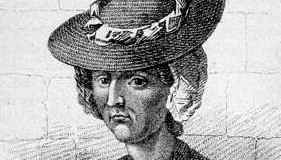
Elizabeth Brownrigg
Murderer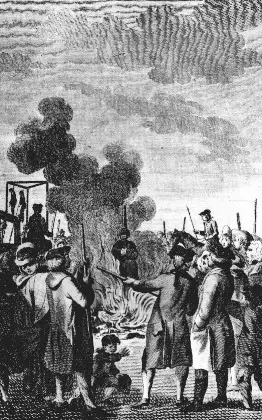 Ann Beddingfield
Murderer · United Kingdom · 1762
Ann Beddingfield was convicted of petty treason for the murder of her husband,…
1 victim
Ann Beddingfield
Murderer · United Kingdom · 1762
Ann Beddingfield was convicted of petty treason for the murder of her husband,…
1 victim
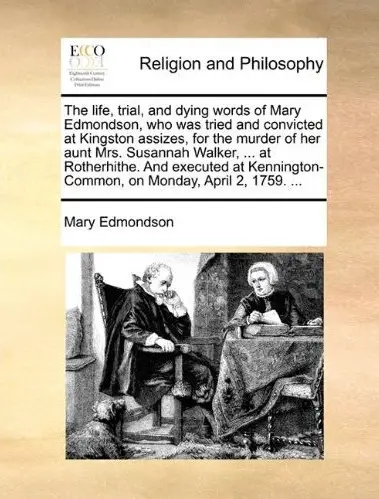 Mary Edmondson
Murderer · United Kingdom · 1759
Mary Edmondson Mary Edmondson was the daughter of a farmer who lived near Leeds…
1 victim
Mary Edmondson
Murderer · United Kingdom · 1759
Mary Edmondson Mary Edmondson was the daughter of a farmer who lived near Leeds…
1 victim
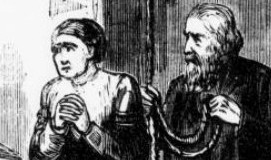 Margaret Waters
Murderer · United Kingdom · 1866
Margaret Waters was an English murderess who was hanged by executioner William…
19 victims
Margaret Waters
Murderer · United Kingdom · 1866
Margaret Waters was an English murderess who was hanged by executioner William…
19 victims
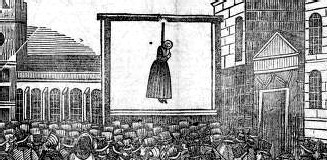 Catherine Wilson
Murderer · United Kingdom · 1854
Catherine Wilson was a British nurse who poisoned victims after befriending the…
7 victims
Catherine Wilson
Murderer · United Kingdom · 1854
Catherine Wilson was a British nurse who poisoned victims after befriending the…
7 victims
 Timothy Stuart Ring
Murderer · USA · 1994
Timothy Stuart Ring was a former Department of Corrections officer who particip…
1 victim
Timothy Stuart Ring
Murderer · USA · 1994
Timothy Stuart Ring was a former Department of Corrections officer who particip…
1 victim
 Cécile Brossard
Murderer · Switzerland · 2005
Cécile Brossard was a long-time lover of French banker Édouard Stern (October 1…
1 victim
Cécile Brossard
Murderer · Switzerland · 2005
Cécile Brossard was a long-time lover of French banker Édouard Stern (October 1…
1 victim
 Timothy Boham
Murderer · USA · 2006
Timothy Boham also known as Marcus Allen (born May 27, 1981) was a former adult…
1 victim
Timothy Boham
Murderer · USA · 2006
Timothy Boham also known as Marcus Allen (born May 27, 1981) was a former adult…
1 victim
 Randolph Dial
Murderer · USA · 1981
Randolph Dial Randolph Dial was sentenced to life in prison on August 22, 1986.…
1 victim
Randolph Dial
Murderer · USA · 1981
Randolph Dial Randolph Dial was sentenced to life in prison on August 22, 1986.…
1 victim
 Jack Unterweger
Serial killer · USA / Czechoslovakia · 1976
Johann “Jack” Unterweger was an Austrian serial killer. He was born in 1950 in…
12 victims
Jack Unterweger
Serial killer · USA / Czechoslovakia · 1976
Johann “Jack” Unterweger was an Austrian serial killer. He was born in 1950 in…
12 victims
 Melissa Calusinski
Murderer · USA · 2009
Melissa Calusinski worked as a daycare worker and had been a teacher’s aide at…
1 victim
Melissa Calusinski
Murderer · USA · 2009
Melissa Calusinski worked as a daycare worker and had been a teacher’s aide at…
1 victim
- Gender
- female
- Country
- United Kingdom
- Location
- London, England, United Kingdom
- Date of birth
- 1720
- Age at first offence
- 47
- Characteristics
- abuse, torture, child abuse, domestic violence, pedophile
- Victim profile
- Mary Clifford, 14 (one of her domestic servants)
- Method of murder
- Cumulative injuries and associated infected wounds
- Date(s) of murder
- August 9, 1767
- Years active
- 1767
- Date of arrest
- —
- Status
-
Executed
Executed by hanging at Tyburn on September 14, 1767
Case overview
Elizabeth Brownrigg was an eighteenth century murderer. Her victim, Mary Clifford, was one of her domestic servants and died from cumulative injuries and infected wounds. Elizabeth Brownrigg was hung at Tyburn in September 1767 following witness testimony and medical evidence at her trial.
Background
Elizabeth Brownrigg was born in 1720 to a working class family; her family name was either Hartley or Harkly. She married James Brownrigg, an apprentice plumber, while still a teenager.
Elizabeth and James Brownrigg had sixteen children, but only three survived infancy. By the time Elizabeth had reached her mid-forties, James Brownrigg prospered and the family had become quite wealthy.
In 1765, Elizabeth, James and their son John moved to Flower de Luce Road in London's Fetter Lane (also described as Flower-de-luce Court, Fleet Street). Elizabeth practiced as a midwife and was appointed overseer of women and children by Saint Dunstans Parish. She was given custody of female children as domestic servants from the London Foundling Hospital.
The offence
Elizabeth Brownrigg engaged in severe physical abuse of domestic servants held in her household. The abuse included stripping her charges naked, chaining them to wooden beams or pipes, and whipping them with switches, bullwhip handles and other implements for the slightest infraction of her rules.
Mary Jones was one of the charges. She ran away from Elizabeth Brownrigg’s house and sought sanctuary with the London Foundling Hospital. After examination, the governors demanded that James Brownrigg keep his wife’s abusive tendencies in check; they enforced no further action.
Mary Mitchell was another domestic servant abused by Elizabeth Brownrigg. Like Jones, Mitchell sought refuge from the abusive behaviour, but John Brownrigg forced her to return to Flower de Luce Road.
Mary Clifford was entrusted to Brownrigg's care despite earlier concerns about her treatment of charges. Elizabeth Brownrigg kept Clifford naked, forced her to sleep on a mat inside a coal-hole, and repeatedly beat her after feeding her only bread and water. She was chained to a roof beam in the kitchen. By June 1767, Mitchell and Clifford were experiencing infection of untreated wounds; Brownrigg’s repeated assaults gave Clifford no time to heal.
Clifford’s stepmother, Mrs Deacon, visited the house on July 12, 1767. Elizabeth refused entry and denied that there were apprentices in the house.
A search ultimately found Mary Clifford locked in a cupboard. She was rushed to hospital.
Investigation
The London Foundling Hospital sought further investigation after neighbours began to suspect abuse. Brownrigg yielded Mary Mitchell to the Foundling Hospital, while Inspector Grundy demanded where Clifford was and took James Brownrigg prisoner; Elizabeth and John Brownrigg escaped.
Clifford was taken to hospital and died after the assault and neglect. Medical evidence described cumulative injuries and infection consistent with repeated assaults and negligence.
A resident reported that the house contained the sought apprentice after an altercation when Brownrigg produced a different servant. Medical observation described extensive injury and open wounds.
The coroner’s inquest returned a verdict of wilful murder against James and Elizabeth Brownrigg, and their son John.
Arrest
Elizabeth and John Brownrigg escaped and moved around London, disguising themselves and taking lodgings in Wandsworth at the house of Mr Dunbar, who kept a chandler's shop.
On August 15, Mr Dunbar read an advertisement and identified his lodgers as the Brownriggs. A constable was summoned and mother and son were arrested and remanded to Newgate.
Mr Brownrigg had earlier been apprehended when police/officials discovered Mary Clifford during the search.
Trial
The three Brownriggs were tried at the Old Bailey. The trial lasted eleven hours and included testimony from Mary Mitchell, who described mistreatment after her probationary period ended and explained abuse of Mary Clifford after she became legally bound.
Medical evidence and autopsy results indicated that Brownrigg’s repeated assaults and neglect of Clifford's injuries contributed to Clifford’s death at age fourteen.
In her defence, Elizabeth Brownrigg stated:
“I did give her several lashes, but with no design of killing her; the fall of the saucepan with the handle against her neck, occasioned her face and neck to swell; I poulticed her neck three times, and bathed the place, and put three plaisters to her shoulders.”
Mr. Young, the surgeon, disputed that Mary’s neck injury could have been caused by a saucepan handle. Character witnesses produced by the Brownriggs were not believed by the jury.
During the trial, James and John were acquitted of Mary’s murder. They were ordered to be detained on an indictment of assaulting and abusing Mary Mitchell, and they were subsequently sentenced to six months' imprisonment and fined one shilling each.
Elizabeth Brownrigg was found guilty and sentenced to death. On Friday, September 11, the judge told her:
“It is my duty to pronounce sentence in accordance with the law, that you are to be taken from hence to the prison from whence you came; that you be removed on Monday next, the 14th of this instant September, to the usual place of execution, and there to be hanged by the neck until you are dead; your body afterwards, to be dissected and anatomised, according to the statute - and God have mercy on your soul.”
Sentencing
Elizabeth Brownrigg was sentenced to be hanged at Tyburn and her body to be dissected and anatomised according to statute. Execution timing and the dissection requirement were tied to the Murder Act of 1752.
Timeline
- 1765 — Elizabeth, James and their son John moved to Flower de Luce Road in London's Fetter Lane; Elizabeth was also described as a midwife and appointed overseer of women and children.
- 1759 — London Foundling Hospital began tendering older children and young adolescents for vocational training as apprentices (context for the apprenticeship system).
- 1765 — Mary Mitchell was apprenticed to Elizabeth Brownrigg.
- 1766 — Mary Clifford joined the household (described as early 1766).
- 1767 — By June 1767, Mitchell and Clifford were experiencing infection of untreated wounds.
- July 12, 1767 — Mrs Deacon visited the house to see Mary Clifford; Elizabeth refused entry and denied apprentices.
- August 5, 1767 — Mary Clifford was transferred to St. Bartholomew's hospital.
- August 9, 1767 — Mary Clifford died in hospital.
- August 15, 1767 — Mr Dunbar read an advertisement, identified the lodgers, and mother and son were arrested and remanded to Newgate.
- August 1767 — The trio stood trial in the Old Bailey (also described as the trial occurring at the Old Bailey September Sessions).
- September 11, 1767 — The judge sentenced Elizabeth Brownrigg and set execution for Monday, September 14.
- September 14, 1767 — Elizabeth Brownrigg was taken by open cart to Tyburn and hanged.
Outcome
Elizabeth Brownrigg was executed by hanging at Tyburn on September 14, 1767.
Aftermath
After execution, Elizabeth Brownrigg’s body was taken to Surgeons' Hall for dissection and anatomised. Her skeleton was hung up in Surgeons' Hall as a permanent exhibit.
Reverend Joseph Moore, Ordinary of Newgate, wrote:
“This unchristian behaviour greatly shocked me and I could not help exclaiming : Are these people called Christians?”
After execution, Reverend Moore later described the scene on the way to execution, including crowds and the involvement of the Ordinary in prompting prayers.
Silas Told later described the cart journey with verbatim remarks:
“When we had fixed ourselves, I perceived that the whole powers of darkness were ready to give us a reception. Beckoning to the multitude, I desired them to pray for her, at which they were rather silent, until the cart began to move. Then they triumphed over her with three huzzas; this was followed by a combination of hellish curses. When we had passed through the gates [of Newgate Gaol], carts had been placed each side of the street, filled principally with women. Here I may say, with the greatest truth, nothing could have equalled them but the damned spirits let loose from the infernal pit. Some of the common cries from the thoughtless concourse were ‘Pull her hat off, pull her hat off, that we may see the b*****s face!’, accompanied by the most dreadful imprecations.”
On the morning of the execution, Elizabeth was allowed a final meeting with James and John; she quoted:
“Dear James, I beg that God, for Christ's sake, will be reconciled, and that he will not leave me, nor forsake me, in the hour of death, and in the day of judgment.”
On arrival at the execution site, Elizabeth prayed with the Ordinary and asked him to tell the crowd that she confessed her guilt and acknowledged the justice of her sentence.
Other details
Elizabeth Brownrigg was described as being attended in the condemned hold by Reverend Joseph Moore, Ordinary of Newgate, and she was reported to have confessed to the Reverend Joseph Moore over the weekend after sentencing.
Elizabeth’s irons were removed by the blacksmith and her hands and arms were tied with cord. She was allowed only bread and water while in the condemned hold.
Mary Clifford’s injuries were described by a witness, William Denbeigh, who said:
“The top of her head and shoulders and back, appeared very bloody; I turned down the sheet, and found from the bottom of her feet to the top of her head almost one continued sore, scars that seemed as if cut with an instrument upon the body, legs, and thighs; upon one hip was a very large wound; it spread about half the palm of my hand.”
Mary Clifford’s stepmother, Mrs Deacon, described the girl’s condition in direct quotation:
“a sad condition indeed, her face was swelled as big as two, her mouth was so swelled she could not shut it, and she was cut all under her throat, as if it had been with a cane, she could not speak; all her shoulders had sores all in one, she had two bits of rags upon them.”


Spotted an error, or have more information about this case?