Ray Martin DeFord
Homicide Jack Kevorkian
Homicide · USA · 1990
Jack Kevorkian (born May 26, 1928) was a controversial American pathologist. He…
130 victims
Jack Kevorkian
Homicide · USA · 1990
Jack Kevorkian (born May 26, 1928) was a controversial American pathologist. He…
130 victims
 David Koresh
Homicide · USA · 1993
David Koresh (born Vernon Wayne Howell; August 17, 1959 – April 19, 1993) led t…
79 victims
David Koresh
Homicide · USA · 1993
David Koresh (born Vernon Wayne Howell; August 17, 1959 – April 19, 1993) led t…
79 victims
 Todd Hall
Homicide · USA · 1996
Todd Hall was described by neighbors as "mentally slow" and was said to have su…
9 victims
Todd Hall
Homicide · USA · 1996
Todd Hall was described by neighbors as "mentally slow" and was said to have su…
9 victims
 Clinton Bankston
Homicide · USA · 1987
15 August 1987 — Ann Morris (63), her sister Sally Nicholson (59), and Sally’s…
5 victims
Clinton Bankston
Homicide · USA · 1987
15 August 1987 — Ann Morris (63), her sister Sally Nicholson (59), and Sally’s…
5 victims
 Joshua Jenkins
Homicide · USA · 1996
Joshua Jenkins was a 15-year-old American killer who killed five members of his…
5 victims
Joshua Jenkins
Homicide · USA · 1996
Joshua Jenkins was a 15-year-old American killer who killed five members of his…
5 victims
 Dallas Ray Stevens
Murderer · USA · 1988
Dallas Ray Stevens was convicted in 1988 of aggravated murder in the slaying of…
1 victim
Dallas Ray Stevens
Murderer · USA · 1988
Dallas Ray Stevens was convicted in 1988 of aggravated murder in the slaying of…
1 victim
 The Marquise de Brinvilliers
Murderer · France · 1664
Marie-Madeleine-Marguerite d'Aubray, Marquise de Brinvilliers (c. 1630–1676) wa…
54 victims
The Marquise de Brinvilliers
Murderer · France · 1664
Marie-Madeleine-Marguerite d'Aubray, Marquise de Brinvilliers (c. 1630–1676) wa…
54 victims
 Carlos Santana
Murderer · USA · 1981
Carlos Santana was a 40-year-old Dominican who was executed by lethal injection…
1 victim
Carlos Santana
Murderer · USA · 1981
Carlos Santana was a 40-year-old Dominican who was executed by lethal injection…
1 victim
 Ivan Hill
Serial killer · USA · 1979
Ivan Hill was known as the “60 Freeway Killer” and the “60 Freeway Slayer.” He…
9 victims
Ivan Hill
Serial killer · USA · 1979
Ivan Hill was known as the “60 Freeway Killer” and the “60 Freeway Slayer.” He…
9 victims
 Larry Joe Johnson
Murderer · USA · 1979
Larry Joe Johnson Larry Joe Johnson was executed by electrocution in Florida on…
1 victim
Larry Joe Johnson
Murderer · USA · 1979
Larry Joe Johnson Larry Joe Johnson was executed by electrocution in Florida on…
1 victim
 Jason Bautista
Murderer · USA · 2003
Jason Bautista killed his mother, Jane Bautista. Jane Bautista was 41 years old…
1 victim
Jason Bautista
Murderer · USA · 2003
Jason Bautista killed his mother, Jane Bautista. Jane Bautista was 41 years old…
1 victim
- Gender
- male
- Country
- USA
- Location
- Portland, Oregon, USA
- Date of birth
- February 13, 1985
- Age at first offence
- 11
- Characteristics
- juvenile, arson
- Victim profile
- Jeremais Aguilar, 37, his wife Virginia, 26, and their four children, Jacqueline, 8, Karen, 8, Augustin, 7, and Patricia, 5; Francisca Aguiler, 16, and her 3 month-old baby
- Method of murder
- Fire (setting a lethal fire in a suburban apartment complex)
- Date(s) of murder
- June 29, 1996
- Years active
- 1996
- Date of arrest
- J uly 2, 1996
- Status
-
Affirmed as to trial court's finding of jurisdiction based on an act that, if committed by an adult, would constitute crime of criminally negligent homicide; reversed as to trial court's finding of jurisdiction based on acts that, if committed by an adult, would constitute crimes of arson in the first degree and felony murder; remanded for entry of amended order of commitment.
Parties and court
Ray Martin DeFord, a minor child, appealed a juvenile court judgment finding him within the jurisdiction of the court for acts that, if committed by an adult, would constitute first-degree arson, felony murder, and criminally negligent homicide.
The case was before the Court of Appeals of the State of Oregon: In the Matter of Ray Martin Deford, a Minor Child. STATE ex rel JUVENILE DEPARTMENT OF WASHINGTON COUNTY, Respondent, v. RAY MARTIN DEFORD, Appellant. J96-0379; A99706. Filed: October 31, 2001. Appeal from Circuit Court, Washington County. Timothy P. Alexander, Judge.
The case was argued and submitted March 8, 2000, McMinnville High School, McMinnville. The panel consisted of Landau, Presiding Judge, and Linder and Brewer, Judges. LINDER, J. delivered the opinion.
Timeline
- June 28, 1996 — Eight residents of the Oakwood Park Apartment complex in Aloha died in an early morning fire; investigators determined the fire originated in the stairwell near the laundry room and that it was intentionally set using some type of accelerant.
- June 28, 1996 (morning after the fire) — Detective O'Connell first interviewed youth as part of the initial investigation into the fire’s cause.
- June 29, 1996 — Deputy Fire Marshall Kellas responded to a fire alarm at the hotel where youth and his parents were staying; the hotel manager reported that youth had pulled the fire alarm.
- June 29, 1996 (same day as Kellas interview) — Police searched youth’s apartment and found a burned portion of a sheet from youth’s bed, two lighters, rubbing alcohol, and a squirt gun containing a liquid that smelled like alcohol.
- June 30, 1996 (next morning after Kellas interview) — O'Connell and Officer Garrett located youth in his grandmother’s apartment and obtained permission of youth’s mother to question him in the apartment manager’s office.
- July 2, 1996 — The story about the fire and youth’s involvement took an unexpected turn as youth confessed to setting the fire next to the only exit for the 12-unit apartment building.
- August 22, 1997 — A state judge found the now 12-year-old Ray criminally responsible for one count of arson and eight counts of felony murder and criminally negligent homicide.
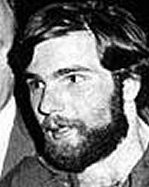
- February 13, 1985 — Ray was born.
- 1994 — Ray set a fire in the recycling bin at Oakwood Park.
- 1996 — Ray was charged with eight counts of murder after allegedly setting a lethal fire in a suburban apartment complex west of Portland, Oregon.
Background
Ray Martin DeFord was 11 years old at the time of the incident described in the appellate decision.
Eight residents of the Oakwood Park Apartment complex in Aloha died on June 28, 1996 when an early morning fire destroyed a portion of the complex. The fire was described as having been intentionally set in the stairwell near the laundry room using some type of accelerant.
In the appellate judgment, the court addressed youth’s assignments of error challenging (1) the admissibility of youth’s inculpatory statements to police and (2) the denial of youth’s motion to dismiss based on the state’s alleged failure to demonstrate that youth burned property of “value” as required to prove first-degree arson and felony murder.
The offence
On June 28, 1996, an early morning fire destroyed a portion of the Oakwood Park Apartment complex in Aloha. Fire investigators determined that the fire originated in the stairwell near the laundry room and that it was intentionally set using some type of accelerant.
The state filed a 17-count petition alleging juvenile court jurisdiction over youth based on acts that, if committed by an adult, would constitute first-degree arson, felony murder, and criminally negligent homicide.
The petition alleged first-degree arson based on youth intentionally damaging “certain property, to wit: newspapers” and that, by starting that fire, youth “recklessly” placed “protected property, to wit: a dwelling * * * in danger o[f] damage.”
The petition also alleged eight counts of felony murder, relying on the first-degree arson charge as the underlying felony.
Investigation and police interviews
First interview (morning after the fire)
Detective O’Connell interviewed youth on the morning after the fire as part of the initial investigation into the fire’s cause. Youth told O’Connell that the smell of smoke woke him, and he escaped. Youth told O’Connell he believed that the fire was intentionally set and that whoever started the fire had probably destroyed any evidence. Youth told O’Connell that the person may have used rubbing alcohol or lighter fluid.
During this first interview, O’Connell explained to youth that they were just there to “chat” and emphasized that youth was not under arrest and could leave at any time. O’Connell did not give youth Miranda warnings at that time.
Youth reiterated his earlier description of the night of the fire and continued to present theories about the fire’s cause, including that the fire was started by “kids” who lived in the apartment complex and that whoever started the fire could have used flammable materials including car oil, kitchen oil, and rubbing alcohol.
During a short colloquy, O’Connell asked whether it would be “better” for whoever started the fire to confess. Youth responded that it would be “better” for the person to admit starting the fire “because they wouldn't get in a lot of trouble if they admit it, but if they don't admit it they're gonna get in a lot of trouble.” Youth then expressed that he was bored with the questions, asked to leave, agreed to talk again later, and the interview ended.
Hotel fire alarm incident
The next day, Deputy Fire Marshall Kellas responded to a fire alarm at the hotel where youth and his parents were staying. The hotel manager reported that youth had pulled the fire alarm.
Kellas interviewed youth about the incident. Youth told Kellas that he had accidentally triggered the alarm. Kellas asked youth about the apartment complex fire. Youth told Kellas that someone had set two fires in the stairwell of the complex using rubbing alcohol.
Search of youth’s apartment
Police searched youth’s apartment that same day. Among the items found were a burned portion of a sheet from youth’s bed, two lighters, rubbing alcohol, and a squirt gun containing a liquid that smelled like alcohol.
Miranda advisement and subsequent interview (next morning)
The next morning, O’Connell and Officer Garrett located youth in his grandmother’s apartment and obtained permission of youth’s mother to question him in the apartment manager’s office.
In a prior discussion, youth told O’Connell that his favorite television show was “Cops” and that he watched it almost every night. O’Connell began by asking youth whether he had ever seen the officers on “Cops” advise people of their Miranda rights. Youth indicated he had and that he “sort of” knew what they were.
O’Connell advised youth of his rights by reading each of the four Miranda rights one at a time, stopping after each one and asking youth to define it. Youth explained that the right to remain silent meant that he did not have to talk. When O’Connell stated: “Anything you say can and will be used against you in a court of law,” youth described it as meaning that “you could be judged.”
When O’Connell read: “You have a right to talk to a lawyer and to have him or her present with you while you are being questioned,” youth explained that a lawyer was someone who knows the law.
O’Connell read the fourth right: “If you cannot afford to hire a lawyer, one will be appointed to represent you before any questioning if you wish.” Youth said it meant that, “if you cannot afford a lawyer, you get one.”
Youth indicated he understood each of those rights. O’Connell asked youth to read a written statement listing the Miranda rights and to sign it. Youth read it out loud and had trouble reading some of the words. Youth signed the form.
O’Connell asked youth if they could continue to talk, and youth agreed. O’Connell continued where they had left off in the prior interview, asking whether it would be “worse” if someone had started the fire on purpose or if it were an accident.
O’Connell reminded youth of the extent of the investigation and the resources expended by the fire department, police, and the ATF. Youth initially denied involvement. Eventually, youth made several inculpatory statements.
Youth said: “I'll tell them,” when O’Connell asked who should be responsible for telling his parents. Youth replied: “No.” when asked if he meant to hurt anybody.
Youth complained he was hungry and had a headache, and they ordered pizza. While they were waiting for the pizza to arrive, O’Connell asked whether youth used matches or a lighter to set the fire. Youth replied: “Why don't you just guess?” O’Connell declined to guess.
O’Connell described youth entering a “false whimpering stage” during which youth made strange noises. Several minutes later, youth “suddenly and instantly” snapped out of it and said: “Okay, I'll level with you.” Youth explained he could not use a lighter or a match because they were too noisy. Youth offered to describe the fire if O’Connell promised to keep it secret, and O’Connell explained he could not promise that.
Youth asked if he would be allowed to leave if he answered three questions. O’Connell told youth he could not leave because O’Connell already had implicated youth.
Youth related that he started the fire as an “experiment.” Youth explained that he used matches found in the stairwell of the apartment complex, took a one-half- to three-quarter-inch stack of newspapers from the laundry room, placed them in the middle of the carpet near the door to his apartment, placed a match on the newspapers, lit another match, and placed it on top of the first match. Youth denied using any type of fuel in starting the fire.
Youth explained that the fire quickly grew out of control. After trying but failing to extinguish it, youth went back to his apartment, lay down on the living room floor, and hoped the wind would blow the fire out. Youth stated that instead it grew, and within a few minutes the smell of smoke began to penetrate the apartment, and youth woke his parents.
After youth finished describing those events, O’Connell acknowledged it must have been difficult for youth to talk about the incident. Youth responded: “You are already helping me as best you can.”
This portion of the interview lasted less than an hour. Youth did not specifically state that he did not want to talk to O’Connell.
O’Connell next asked whether youth would give a recorded statement. Youth agreed. O’Connell began recording the interview and read Miranda warnings again. Youth proceeded again to describe how he had started the fire.
Several minutes into the recorded statement, O’Connell asked what O’Connell was forgetting to ask, and youth replied: “Nothing. We're done.” O’Connell said: “No. Sit down. We're not done. It's not that simple, son. What else happened that night? Anything else?” The interview continued for several more minutes.
During the continuation, O’Connell informed youth that he would be taken into custody, at which point youth asked to speak to his father. After his father confronted him, youth initially denied starting the fire but eventually confessed again.
Youth was transported to the sheriff's office where he confessed a fourth time, revealing that he used rubbing alcohol to accelerate the fire and that he had started the fire by placing the newspapers on top of a pie plate.
Arrest
The appellate decision addressed the duty of arresting Tom Martin. About nine months after the fire, Michael O’Connell had the duty of arresting Tom Martin and sending him back to New Mexico. Martin served a little over two years and was released in 1999 and returned to Oregon, living in the Hillsboro area.
Trial (juvenile court) and evidentiary issues
Ray DeFord faced trial for murder and arson and was described as the youngest person ever charged with murder in Oregon. The juvenile justice system in Oregon was set up for children 12 and over, so Ray’s parents had to waive Ray’s right to a verdict and sentence within 56 days so Ray could be tried as a juvenile after his 12th birthday.
Motion to suppress
Youth filed a pretrial motion to suppress his statements to police.
Youth argued two grounds: (1) that, due to his impaired capacity, his statements were not voluntary as required by protections against coerced confessions and (2) that he did not knowingly and voluntarily waive his Miranda rights.
Youth offered medical evidence that his cognitive capacity was similar to a seven-year-old child, that he lacked the ability to engage in abstract thought and reasoning, that he had considerable difficulty reading, and that his intelligence quotient hovered in the “borderline functioning” range. Youth also presented testimony that his verbal scores were generally higher than his performance skills, which at times fell within the “mildly mentally retarded” range.
Two experts testified about youth’s ability to understand Miranda warnings. Dr. Konkol believed youth could recognize “aspects of meaning or some parts” of the significance of the Miranda warnings but would have difficulty drawing inferences or implications from the warnings. Dr. Bolstad described youth as having a good “verbal memory” that at times made him appear to understand what he was saying when he did not. Bolstad concluded youth appeared to have memorized Miranda warnings and definitions but lacked appreciation of the adversarial nature of the interviews and of potential consequences of self-incrimination, explaining that youth did not understand that he could have an attorney with him “right then and right there.” Bolstad also concluded youth lacked practical understanding of Miranda warnings and did not understand that the rights applied in the context where youth confessed.
In response, the state presented testimony of several officers at the hearing, including O’Connell, and expert witnesses about youth’s cognitive ability. Dr. Sabastian clarified that youth had always been identified as learning disabled and had never been identified as mentally retarded. She agreed youth “would never understand reading Miranda rights,” but believed youth could comprehend their meaning if read to him. The state also presented testimony from Dr. Hulteng that youth had cognitive capacity to understand Miranda warnings. Hulteng asked youth why he had agreed to talk to O’Connell. Youth explained: “When he read me my rights, that made me nervous. I was probably going to get arrested. He didn't even ask me if I wanted a lawyer.” Hulteng testified that this indicated youth understood both the Miranda warnings and the adversarial nature of the relationship, but also stated his understanding about when that awareness developed was “somewhat equivocal.”
The juvenile court granted youth’s motion to suppress only statements made after youth said: “We're done.” As to statements before that point, the trial court denied the motion.
On appeal, youth challenged the partial denial of the motion, arguing all statements were involuntary under both the Oregon Constitution and United States Constitution and that his Miranda waiver was invalid.
Appellate ruling on suppression and admissibility
The appellate court affirmed the trial court’s rejection of the federal involuntariness challenge because youth did not argue police overreaching or coercion and the appellate record did not find any coercive conduct. The appellate court found O’Connell modified his behavior to accommodate youth’s age and capacity, the interviews were relatively short and took place in a nonthreatening atmosphere, O’Connell was dressed in civilian clothing, and O’Connell did not make express or implied threats or promises.
Regarding the Miranda waiver, the appellate court concluded the trial court correctly suppressed only statements made after youth asserted the right to be silent, and that statements made prior to that point were admissible because youth’s confession was voluntary and youth validly waived Miranda rights. The appellate court emphasized that O’Connell slowly and carefully read Miranda warnings, stopped after each one, and asked youth to define them; youth was able to repeat warnings and give appropriate definitions; youth admitted that when O’Connell read the warnings, “I kind of figured out I was going to get arrested. The cops don't read you your rights for no reasons.” The appellate court also relied on youth’s prior police contacts.
Sufficiency of evidence: first-degree arson and felony murder
Youth argued the state failed to demonstrate that youth burned property of “value,” as required to prove first-degree arson and felony murder.
The appellate court considered whether evidence adequately supported the juvenile court’s finding that youth committed acts that, if committed by an adult, would constitute first-degree arson and felony murder, given that felony murder depended on the underlying arson offense.
Statutory framework
Under ORS 164.325(1)(b), first-degree arson required that, “by starting a fire or causing an explosion,” the person intentionally damaged property and that such act recklessly placed another person in danger of physical injury or protected property of another in danger of damage.
The petition alleged youth intentionally damaged “certain property, to wit: newspapers” and that starting that fire recklessly placed “protected property, to wit: a dwelling * * * in danger o[f] damage.”
ORS 164.005(5) defined property as “any article, substance or thing of value , including, but not limited to, money, tangible and intangible personal property, real property, choses-in-action, evidence of debt or of contract.”
ORS 164.115 described value as market value at the time and place of the crime, or if not ascertainable, cost of replacement within a reasonable time.
Evidence offered about the newspapers’ value
The state’s theory was that the newspapers burned had “recycling value.” The newspapers were issues of This Week, a free publication of The Oregonian, delivered weekly to the apartment building and usually placed in the laundry room.
An apartment manager testified that she cleaned the laundry room regularly, removed leftover editions, and placed them in a recycling bin. The recycling bins were emptied by Aloha Garbage Disposal (Aloha), which delivered recycled paper to Far West Fibers, Inc. (Far West), a paper recycling company that purchases paper, sorts and bundles it, and resells it to “repulp mills.” Far West weighed and resold paper.
Richard Paul, Far West’s business manager, testified that at the time of the incident he was purchasing newspaper for one penny per pound, and that because a daily edition of a newspaper weighs approximately one pound, each newspaper was worth approximately one penny. Paul testified that he purchased newspaper based on weight; he kept a smaller scale inside his office for smaller amounts.
The state showed Paul a stack of about a half dozen This Week papers—more than youth burned—and asked: “[State:] And if I were to walk into your business, sight unseen, without an appointment, and say, 'Mr. Paul, here's my newspapers. What will you give me for them?,' what process would you undertake? ”
Paul replied: “Initially I'd try to encourage you to donate this amount to me, because it's almost more hassle than anything else. If you insisted, I would send you back to the small scale. I would send an employee with you, who would then weigh them, * * * and we would then, out of our petty cash fund, pay you the value of that.”
Paul said he would pay a minimum of five cents. He explained he did not generally keep pennies in the petty cash fund. On cross-examination, Paul conceded he would not purchase such a small quantity off-site because he was not in the business of collecting or hauling paper. Paul also noted other recycling companies imposed 40- or 50-pound minimum purchase requirements.
The appellate decision noted that, at trial, youth moved for a dismissal on the charges of arson and felony murder, arguing the state did not demonstrate the newspapers had “value.” The state argued recycling value and that coupons in the papers also had value. The trial court agreed with the state and denied the motion.
Appellate conclusion on value
The appellate court concluded the evidence did not establish legally sufficient proof of the newspapers’ “value.” The court relied on State v. Whitley and held that because the arson statute required damage to “property,” the state had to prove what was burned had “value.”
The appellate court found that the state’s evidence did not show market value because it did not establish the existence of willing sellers for small quantities like those burned by youth. The court reasoned that Paul’s testimony showed other companies required minimum quantities and that Paul would generally encourage donation rather than purchase small amounts for profit. The court found that Paul’s willingness as an exception based on conservation ethics did not establish an arm’s-length market for small amounts; moreover, no instance or evidence showed a willing seller bringing such small quantities for purchase.
The appellate court also concluded the state’s coupons theory suffered the same problem. The state presented only the apartment manager’s testimony that the newspaper contained coupons and did not describe them further. The trial court had concluded coupons “have value to most families,” relying on the trial court’s finding that such value satisfied the statutory definition in addition to recycling value.
The appellate court held that use value (coupons potentially saving money on purchases of other items) was not the same as market value of the coupons themselves. The appellate court concluded the record lacked evidence of a market in which willing sellers exchanged the coupons for value from willing buyers in arm’s-length transactions.
Because the state failed to prove the “property” element of first-degree arson, the appellate court held the state could not prove felony murder. The juvenile court erred in denying youth’s motion to dismiss the charges of first-degree arson and felony murder.
Outcomes
The appellate court:
- Affirmed as to the trial court’s finding of jurisdiction based on an act that, if committed by an adult, would constitute crime of criminally negligent homicide.
- Reversed as to the trial court’s finding of jurisdiction based on acts that, if committed by an adult, would constitute crimes of arson in the first degree and felony murder.
- Remanded for entry of an amended order of commitment.
Other details
Criminally responsible and sentencing
On August 22, 1997, a state judge found the now 12-year-old Ray criminally responsible for one count of arson and eight counts of felony murder and criminally negligent homicide, and sentenced him to 13 years in prison.
Alleged confession and theories
Youth confessed to starting a fire in which eight people died. In the appellate decision’s recitation of the police interview, youth described starting the fire as an “experiment,” using matches found in the stairwell and a stack of newspapers taken from the laundry room, and later disclosed using rubbing alcohol to accelerate the fire and that he placed the newspapers on top of a pie plate.
Youth also told Detective O’Connell earlier in the investigation that he escaped when smoke woke him and continued to present various theories, including that the fire was started by “kids” who lived in the apartment complex and that flammable materials could have included car oil, kitchen oil, and rubbing alcohol.
Fire alarms and evidence items
The appellate decision described that the hotel manager reported youth pulled the fire alarm and that Kellas interviewed youth. Police found items in youth’s apartment including a burned portion of a sheet, two lighters, rubbing alcohol, and a squirt gun containing a liquid that smelled like alcohol.
Specific quotations included in the appellate decision
- Youth said: “Fire! Fuego!”
- Youth said: “My dad says I'm the hero for the day.”
- Youth said: “He killed my family.”
- Youth said: “I don't feel any physical pain. I just want to die.”
- Youth said: “We're going to die.”
- Youth replied to O’Connell: “No.”
- Youth replied: “Why don't you just guess?”
- Youth said: “Okay, I'll level with you.”
- Youth said: “You are already helping me as best you can.”
- Youth replied: “Nothing. We're done.”
- Youth said: “No. Sit down. We're not done. It's not that simple, son. What else happened that night? Anything else?”
- He didn't even ask me if I wanted a lawyer.”
- Youth admitted: “I kind of figured out I was going to get arrested. The cops don't read you your rights for no reasons.”
Related persons and background facts from the case summary
Tom Martin, also referred to as DeFord, was described as Ray’s father and was said to have been arrested for robbery in New Mexico in 1969, sentenced to ten years, and later escaped from New Mexico State Penitentiary; the summary described Martin as using multiple names and birthdates and working as a short order cook. It also stated Martin married Carolyn DeFord and that Ray was born to them on February 13, 1985. The summary included descriptions of Tom Martin and Carolyn DeFord’s disability and collecting cans and bottles for recycling.
The summary stated that in 1991 Carolyn DeFord was convicted of harrassing a neighbor, and that Ray was known as a bully and carried a knife “for protection,” owned a python named Satan, and chased and beat up kids as young as 5. The summary also claimed Ray was ostracized at school as a slow learner, dressed in raggedy, dirty clothes, and was described as functioning academically and socially on the level of a 7 year old.
The summary included additional details that Ray set fires at least four times, including in 1994 in the recycling bin at Oakwood Park, and it stated that at trial there were disputes about witness credibility because Raliegh Houk was in prison for kidnapping by the time of trial.
Spotted an error, or have more information about this case?