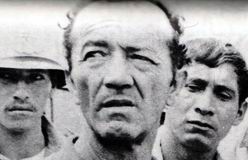
Daniel Camargo Barbosa
Serial killer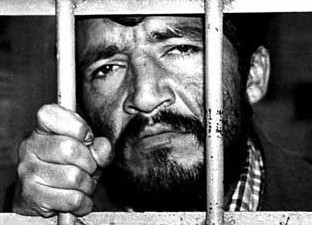 Pedro Alonso Lopez
Serial killer · Peru - Ecuador - Colombia · 1969
Name: Pedro Alonso Lopez · Nationality/Background: Colombian-born · Birth: born…
300 victims
Pedro Alonso Lopez
Serial killer · Peru - Ecuador - Colombia · 1969
Name: Pedro Alonso Lopez · Nationality/Background: Colombian-born · Birth: born…
300 victims
 Donald Henry Gaskins
Serial killer · USA · 1969
Donald Henry Gaskins, also known as Donald “Pee Wee” Gaskins, was a serial kill…
200 victims
Donald Henry Gaskins
Serial killer · USA · 1969
Donald Henry Gaskins, also known as Donald “Pee Wee” Gaskins, was a serial kill…
200 victims
 Carl Eugene Watts
Serial killer · USA · 1974
Carl Eugene Watts (born November 7, 1953; died September 21, 2007), also known…
100 victims
Carl Eugene Watts
Serial killer · USA · 1974
Carl Eugene Watts (born November 7, 1953; died September 21, 2007), also known…
100 victims
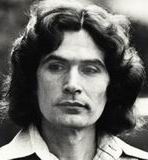 Rodney Alcala
Serial killer · USA · 1977
Rodney James Alcala (born August 23, 1943) was also known as Rodrigo Jacques Al…
100 victims
Rodney Alcala
Serial killer · USA · 1977
Rodney James Alcala (born August 23, 1943) was also known as Rodrigo Jacques Al…
100 victims
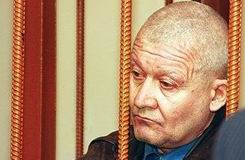 Serhiy Tkach
Serial killer · Ukraine · 1980
Serhiy Tkach (Russian: Серге́й Фёдорович Ткач, born 12 September 1952 in Kisely…
100 victims
Serhiy Tkach
Serial killer · Ukraine · 1980
Serhiy Tkach (Russian: Серге́й Фёдорович Ткач, born 12 September 1952 in Kisely…
100 victims
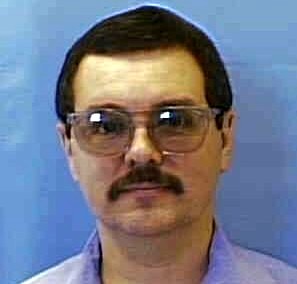 Donald Harvey
Serial killer · USA · 1970
Donald Harvey was known as an American serial killer and a self-professed “Ange…
87 victims
Donald Harvey
Serial killer · USA · 1970
Donald Harvey was known as an American serial killer and a self-professed “Ange…
87 victims
 Tucker Cipriano
Murderer · USA · 2012
Tucker Cipriano was the oldest son in the Cipriano family and was adopted when…
1 victim
Tucker Cipriano
Murderer · USA · 2012
Tucker Cipriano was the oldest son in the Cipriano family and was adopted when…
1 victim
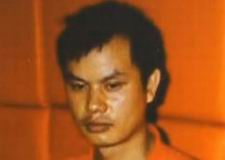 Li Hao
Murderer · China · 2009
Li Hao was convicted of murder, rape, illegal detention, organized prostitution…
2 victims
Li Hao
Murderer · China · 2009
Li Hao was convicted of murder, rape, illegal detention, organized prostitution…
2 victims
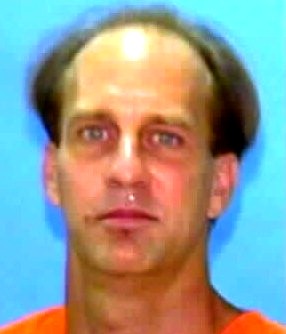 Jason Dirk Walton
Murderer · USA · 1982
Name: Jason Dirk Walton Date of birth: 10/09/58 Court: Sixth Judicial Circuit,…
3 victims
Jason Dirk Walton
Murderer · USA · 1982
Name: Jason Dirk Walton Date of birth: 10/09/58 Court: Sixth Judicial Circuit,…
3 victims
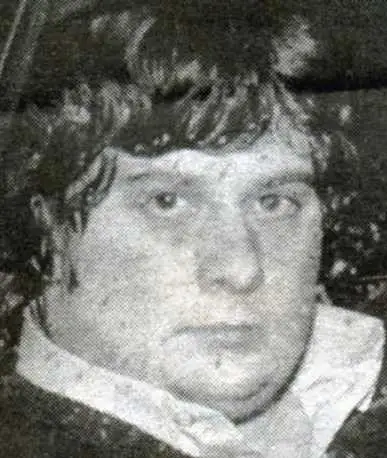 Kevin Weaver
Spree killer · United Kingdom · 1987
Kevin Weaver was sentenced to closed psychiatric confinement on March 28, 1988.…
4 victims
Kevin Weaver
Spree killer · United Kingdom · 1987
Kevin Weaver was sentenced to closed psychiatric confinement on March 28, 1988.…
4 victims
 Raul Osiel Marroquin
Serial killer · Mexico · 2005
Raúl Osiel Marroquín Reyes was born around 1981 in Tampico, Tamaulipas. At the…
4 victims
Raul Osiel Marroquin
Serial killer · Mexico · 2005
Raúl Osiel Marroquín Reyes was born around 1981 in Tampico, Tamaulipas. At the…
4 victims
- Gender
- male
- Country
- Colombia / Ecuador
- Location
- Colombia / Ecuador
- Date of birth
- January 22, 1930
- Age at first offence
- 44
- Characteristics
- rape, torture, mutilation, serial rapist
- Victim profile
- Young girls
- Method of murder
- Strangulation - St abbing with knife
- Date(s) of murder
- 1974 / 1984 - 1986
- Years active
- 1974–1986
- Date of arrest
- February 26, 1986
- Status
-
Died in custody
Sentenced to 16 years in prison in 1989, the maximum sentence available in Ecuador; killed in prison by another prisoner on November 13, 1994
Case record: Daniel Camargo Barbosa
Overview
Daniel Camargo Barbosa was a psychopathic serial killer from Colombia. It was believed that he raped and killed over 150 young girls in Colombia and Ecuador during the 1970s and 1980s.
Background
Camargo’s mother died when he was a little boy. His father was overbearing and emotionally distant. He was raised by an abusive stepmother, who punished him and sometimes dressed him in girls clothing, making him a victim of ridicule in front of his peers.
Camargo had a de facto union with a woman named Alcira, and he had two children with her. He later fell in love with another woman, Esperanza, age 28, whom he planned to marry. He found out that she was not a virgin, which became a deep root of his fixations. Camargo and Esperanza formed an agreement that he would stay with her if she aided him in finding other virgin girls to have sex with.
Camargo was believed to have pacts with the Devil during his imprisonment in Colombia. While serving his sentence in the Garcia Moreno de Quito jail, he claimed to have converted to Christianity.
The offence
Early crimes in Colombia with accomplice
Esperanza was Camargo’s accomplice. She lured young girls to an apartment under false pretenses and then drugged them with sodium seconal sleeping pills so that Camargo could rape them. Camargo committed five rapes in this way, but did not kill any of the girls.
The fifth child who was abused in this way reported the crime. Both Camargo and Esperanza were arrested and taken to separate prisons.
Camargo kidnapped a nine-year-old girl by passing by a school, and he raped and murdered her so that she could not inform the police like his previous victim had. This was described as his first assault involving murder.
It was also believed that he raped and killed more than 80 girls in Colombia, but the narrative additionally states that Camargo was imprisoned after being convicted of raping and killing a nine-year-old girl.
Pattern in Ecuador
Camargo selected helpless, young, lower-class girls in search of work. He approached them pretending to be a foreigner who needed to find a Protestant pastor in a church on the outskirts of town. He explained that he had to deliver a large sum of money, which he showed as proof, and he offered them a reward if they would accompany him to show him the way.
He pretended to be a stranger to the area and hinted at the possibility of the girls getting a job at the factory. The girls were described as not being suspicious of an older man accompanying a girl or young woman who could have been his granddaughter.
Camargo would then enter into the woods, claiming to be looking for a shortcut to avoid arousing suspicion. If the girls grew suspicious and drew back, he did not prevent them from leaving.
After raping his victims, he strangled them, and sometimes stabbed them when they resisted. After the victims were dead, he left their bodies in the forest to be picked clean by scavengers. The victims’ remains were described as having been dismembered.
Candy wrappers were found at crime scenes, leading investigators to believe that he lured the victims with candy. He also used new ballpoint pens as bait. Camargo claimed he liked virgins because he liked “because they cried,” which was described as giving him greater satisfaction. According to Camargo, he killed because he wanted revenge on women’s unfaithfulness, and he hated them for not being what women were supposed to be. His victims were described as all virgins.
Counts and victims mentioned
The narrative described rapes and murders over extended periods in Colombia and Ecuador. The narrative stated that Camargo:
- raped and killed over 150 young girls in Colombia and Ecuador during the 1970s and 1980s,
- committed a series of at least 54 rapes and murders in Guayaquil from 1984 to 1986,
- confessed to killing 71 girls in Ecuador after escaping from the Colombian prison,
- led authorities to dumping grounds of victims whose bodies had not yet been recovered, with the confessed murders “amount[ing] to seventy-one,”
- was linked to the murder of a nine-year-old girl named Elizabeth shortly before his arrest in Ecuador,
- was linked to the murder of a 12-year-old girl named Gloria Andino,
- was also described as having “a first victim” who was a nine-year-old girl and described as very brutally raped in Colombia,
- had multiple bodies not found or not all bodies showing up during the fourteen months he lived in Guayaquil, according to one version of the narrative.
Specific dates for many offences were not provided. The narrative included several specific victims and their ages:
- Elizabeth (9-year-old) was murdered shortly before Camargo’s arrest in Quito in 1986.
- Gloria Andino (12-year-old) was killed.
- Two additional victims were described as disappearing in Ecuador: a nine-year-old girl abducted from Quevedo on December 18 (year not stated in the narrative) and a next-day disappearance of a 10-year-old girl (year not stated in the narrative).
Investigation
Initial assumptions and early police belief in Ecuador
In Guayaquil, police at first believed that the deaths were the work of a gang, not understanding that one man could have killed so many. Camargo slept on the streets and lived off money reselling ballpoint pens in the streets. He occasionally supplemented his income by selling clothing or small valuables belonging to his victims.
Evidence leading to identification
In June 1988, police discovered the remains of another young girl, 12-year-old Gloria Andino. She was killed in the same manner as the previous victims, with a slight difference at the crime scene: she was clutching a candy wrapper. The wrapper was bagged and tagged as evidence, and when prints were later checked, investigators discovered one print that did not belong to the victim. Investigators searched through thousands of print files and came up with a match: Daniel Camargo Barbosa.
Around the same time, a patrolman stopped Daniel when he observed him behaving suspiciously near the area Gloria Andino’s body had been discovered. The officer questioned him, then searched him. When a photo of an earlier victim was found in his pocket, the officer decided to arrest him. Under intense questioning, Daniel confessed.
The narrative also stated that when Camargo was arrested, a bag contained the bloody clothes of his latest victim and he had a copy of “Crime and Punishment” by Dostoyevsky. Another version of the narrative stated that when he was captured, “in his briefcase was found together with his last victim’s underwear, the book Crime and Punishment by Dostoyevsky.”
Arrest
Camargo was arrested by two policemen in Quito on 26 February 1986 only a few minutes after he had murdered a 9-year-old girl named Elizabeth. The policemen were on patrol and approached him at the height of the avenue Los Granados, thinking he was acting suspiciously. They were surprised to find that he was carrying with him a bag containing the bloody clothes of his latest victim.
Camargo was taken into custody and later moved to Guayaquil for identification. At the time of arrest, he gave a false name, Manuel Bulgarin Solis, but he was later identified by one of his rape victims who escaped.
During questioning after he was arrested, Camargo “very calmly confessed to killing 71 girls in Ecuador since escaping from the Colombian prison.” He led authorities to the dumping grounds of victims whose bodies had not yet been recovered. The bodies had been dismembered.
While he told Ecuadorean authorities of the locations of the bodies and how the crimes were committed, he showed no feelings of remorse. He reportedly told authorities that after raping his victims he had hacked, slashed and crushed the girls with a machete. The narrative additionally stated he gave a cynical explanation for choosing children and stated he wanted virgins “because they cried,” with the narrative describing this as giving him greater satisfaction.
Camargo added additional murders beyond the ones he was suspected of. The narrative stated police asked him if he could take them to the location where they could find the latest girls that came up missing, and he led them to six more victims. Upon more questioning, police learned that he lured the girls with candy, and the narrative stated he used new ballpoint pens as bait.
Trial
Camargo was convicted of sexual assault in Colombia on April 10, 1964. A judge sentenced him to three years in prison. Camargo initially expressed gratitude for the judge’s perceived leniency, swearing to repent and mend his ways. A new judge was given precedence over the case, and Camargo was sentenced to eight years in prison. This provoked rebellious anger described as Carmgo to rebellious anger. Camargo served his full sentence and was released.
In 1973 Camargo was arrested in Brazil for being undocumented. The narrative stated that due to a delay in sending Camargos criminals records from Colombia he was deported and released with his false identity.
When he returned to Colombia, he took up a job as a street vendor in Barranquilla selling television monitors. After kidnapping, raping, and murdering a nine-year-old girl, he was arrested on May 3, 1974 in Barranquilla when he returned to the scene of the crime to recover television screens that he had forgotten beside the victim.
Even though it was believed he raped and killed more than 80 girls in Colombia, Camargo was imprisoned in Colombia after being convicted of raping and killing a nine-year-old girl. The narrative stated:
- he was initially sentenced to 30 years in prison,
- the sentence was reduced to 25 years,
- he was interned in the prison on the island of Gorgona, Colombia on December 24, 1977.
Camargo went to trial in 1989. He took the stand and told of the murders he committed in five different cities across the country.
Sentencing
Camargo was convicted in 1989 and sentenced to 16 years in prison, described as the maximum sentence available in Ecuador.
In prison in Ecuador, he claimed to have converted to Christianity. He was imprisoned in the Garcia Moreno de Quito jail with Pedro Alonso Lopez (“the Monster of the Andes”), who was believed to have raped and killed more than 300 girls in Colombia, Ecuador and Peru.
Appeals
No appeals were described.
Timeline
- May 24, 1958 — Camargo was first arrested in Bogotá for petty theft.
- April 10, 1964 — Camargo was convicted of sexual assault in Colombia.
- December 24, 1977 — Camargo was interned in the prison on the island of Gorgona, Colombia.
- May 3, 1974 — Camargo was arrested in Barranquilla, Colombia when he returned to recover television screens beside a victim.
- November 1984 — Camargo escaped from Gorgona in a primitive boat after carefully studying ocean currents.
- 5 or 6 December 1984 — Camargo traveled by bus to Guayaquil.
- December 18 — Camargo abducted a nine-year-old girl from the city of Quevedo in the province of Los Ríos, Ecuador.
- 26 February 1986 — Camargo was arrested in Quito by two policemen at the height of the avenue Los Granados.
- June 1986 — Francisco Febres Cordero arranged an interview with Camargo.
- June 1988 — Police discovered the remains of 12-year-old Gloria Andino.
- 1989 — Camargo was convicted and sentenced to 16 years in prison in Ecuador.
- November 13, 1994 — Camargo was killed in prison by another prisoner.
Escape to Ecuador
In November 1984, Camargo escaped from Gorgona in a primitive boat after having carefully studied the ocean currents. The authorities assumed he died at sea, and the press reported that he had been eaten by sharks. He eventually arrived in Quito, Ecuador. He then traveled by bus to Guayaquil on 5 or 6 December 1984.
Aftermath
Interview in June 1986
In June 1986, Francisco Febres Cordero, a journalist for Hoy (Today) Newspaper, managed to arrange an interview with Camargo. It was difficult to get the interview due to the Police blocking all access to Camargo, and because Camargo demanded a large fee before he would let himself be interviewed. The journalist pretended to be part of a group of psychologists that were allowed access to the prisoner, allowing him to ask Camargo questions without arousing suspicion. Afterward, Francisco Febres Cordero described Camargo as highly intelligent:
“He had an answer for everything and was able to speak of God and the Devil equally”.
Francisco Febres Cordero also described Camargo as well-read, citing Hesse, Vargas Llosa, García Márquez, Guimarães Rosa, Nietzsche, Stendhal and Freud, along with stating that he acquired the knowledge from a literary education during his time in prison on the Isle of Gargona.
Death in prison in November 1994
It was reported that in November 1994 Camargo was murdered in prison by Luis Masache Narvaez. The narrative stated that Narvaez was the cousin of one of Camargo’s victims.
Additional narrative elements included
One narrative version stated that Camargo’s first victim was a nine-year-old girl in Colombia and that he was quickly arrested and soon after convicted and sentenced to life in prison. Another version stated his first assault involving murder occurred when he kidnapped a nine-year-old girl and murdered her after raping her to prevent her from informing police.
Another narrative version stated that during the period from 1984 to 1986 he committed a series of at least 54 rapes and murders in Guayaquil, that he slept on the streets, and that he lived off of reselling ballpoint pens.
One narrative version also stated that approximately 55 young girls came up missing during the fourteen months he lived in Guayaquil, and that not all of the bodies showed up, but those that did suffer extremely brutal death and were hacked and slashed with a machete. A different narrative segment stated that in June 1988 investigators discovered Gloria Andino’s remains with a candy wrapper that led to identifying Camargo through fingerprints.
A later update in the narrative stated an email was received on July 26, 1999 from Frank Villagomez informing that Barbosa was dead on November 13, 1994, and that he had been killed in prison by another prisoner who happened to be a cousin of one of his many victims.

Spotted an error, or have more information about this case?