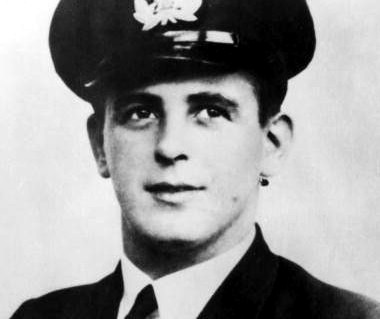
James Camb
Murderer Ernesto Picchioni
Murderer · Italy · 1944
March 12, 1949 — He was sentenced to life in prison. · 2016 — The case record l…
16 victims
Ernesto Picchioni
Murderer · Italy · 1944
March 12, 1949 — He was sentenced to life in prison. · 2016 — The case record l…
16 victims
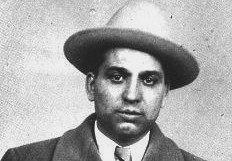 Harry Maione
Murderer · USA · 1937
Harry “Happy” Maione (1908 – February 19, 1942) was a New York mobster who serv…
12 victims
Harry Maione
Murderer · USA · 1937
Harry “Happy” Maione (1908 – February 19, 1942) was a New York mobster who serv…
12 victims
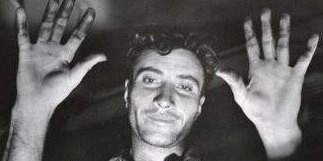 Albert Dyer
Murderer · USA · 1937
Albert Dyer was a 32-year-old WPA crossing guard and traffic guard at Centinela…
3 victims
Albert Dyer
Murderer · USA · 1937
Albert Dyer was a 32-year-old WPA crossing guard and traffic guard at Centinela…
3 victims
 Douglas Turner
Homicide - Murderer · USA · 1987
Douglas Turner was a juvenile who was released from an alcohol treatment progra…
9 victims
Douglas Turner
Homicide - Murderer · USA · 1987
Douglas Turner was a juvenile who was released from an alcohol treatment progra…
9 victims
 Daniel Patrick Hauser
Murderer · USA · 1995
Daniel Patrick Hauser was from Dublin, California and was adopted. He pleaded n…
1 victim
Daniel Patrick Hauser
Murderer · USA · 1995
Daniel Patrick Hauser was from Dublin, California and was adopted. He pleaded n…
1 victim
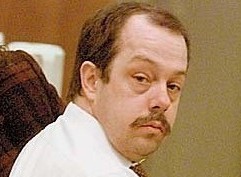 David Mark Hill
Murderer · USA · 1996
Name: David Mark Hill · Pronounced dead: 6:17 p.m. in the state’s death chamber…
3 victims
David Mark Hill
Murderer · USA · 1996
Name: David Mark Hill · Pronounced dead: 6:17 p.m. in the state’s death chamber…
3 victims
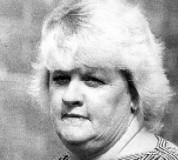 Valmae Beck
Murderer · Australia · 1987
Valmae Beck Valmae Beck was sentenced to life imprisonment with a non parole pe…
1 victim
Valmae Beck
Murderer · Australia · 1987
Valmae Beck Valmae Beck was sentenced to life imprisonment with a non parole pe…
1 victim
 David Aaron Perkins
Murderer · USA · 1995
David Aaron Perkins was tried in the Clayton Superior Court before Judge Ison a…
1 victim
David Aaron Perkins
Murderer · USA · 1995
David Aaron Perkins was tried in the Clayton Superior Court before Judge Ison a…
1 victim
- Gender
- male
- Country
- In the sea
- Location
- In the sea
- Date of birth
- 1916
- Age at first offence
- 31
- Characteristics
- the bodies were never found, attempted rape, rape, sexual assault
- Victim profile
- Eileen Isabella Ronnie Gibson, 21 (her stage name was Gay Gibson)
- Method of murder
- Strangulation
- Date(s) of murder
- October 18, 1947
- Years active
- 1947
- Date of arrest
- —
- Status
-
Released
Sentenced to death on March 23, 1948; commuted to life in prison; released in September 1959; sentenced to 2 years probation for indecently assaulting a young girl; sending him back to prison to complete his life sentence; released from prison in 1978; died on July 7, 1979
Background
James Camb was a ship’s steward aboard the Union Castle liner Durban Castle. He was accused of the murder at sea of Eileen Isabella Ronnie Gibson, who performed under the stage name “Gay Gibson”.
Camb worked aboard the liner Durban Castle and Miss Gibson had been returning to England aboard it from South Africa. The ship sailed from Cape Town to Southampton.
The offence
Camb was found guilty of the murder of Eileen Isabella Ronnie Gibson on board the Union Castle liner Durban Castle while it was sailing from Cape Town to Southampton.
The case involved the disappearance of Gibson and the disposition of her body through a cabin porthole. The body was never recovered. At first, it had been thought that Gibson had fallen overboard and drowned. During the struggle, Gibson had pressed both the steward and the stewardess buttons, summoning them immediately.
Gibson was last seen alive leaning against a rail and smoking a cigarette. It was thought that she could not be found after she disappeared, and searches proved fruitless. The vessel was turned about after she was reported missing, but searches found no trace.
Camb pushed Gibson’s body through the cabin’s porthole. The body was never recovered.
Investigation
After Gibson could not be found the next day, a suspicion was raised about the incident involving her cabin.
A ship’s watchman had answered a call from Gibson’s cabin. When he got to the cabin he found Camb in the doorway. Camb had called out “All right” and the watchman had left.
When the vessel docked at Southampton police immediately interviewed Camb. When questioned, Camb claimed that Gibson had invited him to her cabin and that they had sexual intercourse. He further claimed that Gibson had had a fit and died. He said that he panicked after failing to resuscitate her and pushed the corpse out of the porthole.
When Gibson could not be found the next day, the watchman’s memory of the incident was treated as suspicious because both bells had been pressed, which suggested danger to the occupant.
At trial, Camb claimed that Gibson had died of natural causes whilst having consensual sex with him. A defence expert agreed that this was a possibility. The prosecution argued that Gibson had been strangled, and an expert said bloodstained saliva on the sheets and the fact that Gibson urinated just before death, staining the bed, showed strangulation.
When Camb was examined by the ship’s doctor, he was found to have scratch marks on his body: on the right side of the neck, on his shoulder, and on his wrist. This was consistent with a struggle, with Gibson scratching him while trying to defend herself.
Arrest
On March 1948 (during the period described as his trial in March 1948 at Winchester Crown Court), Camb was arrested and charged with murder at sea following police interviews after the vessel docked at Southampton.
Trial
Camb appeared charged with murder in March 1948 at Winchester Crown Court.
His trial took place before Mr Justice Hilbery. An array of exhibits lay in front of the jury including a replica of Cabin 126 and cabin linen smeared with Gibson’s blood and saliva.
At the beginning of the case Camb pleaded not guilty. After the jury found him guilty and when asked if he had anything to say before sentence, Camb replied:
“My Lord, at the beginning of this case ... I pleaded not guilty. I repeat that statement now. That is all.”
The jury found Camb guilty of murder.
The Crown contended that the steward had strangled the girl and had disposed of the body to hide his crime.
At the trial, Camb claimed Gibson died of natural causes while having consensual sex with him. The defence expert agreed this was a possibility. The prosecution claimed she was strangled and presented forensic evidence based on bloodstained saliva on the sheets and urine staining the bed just before death.
Sentencing
Camb was sentenced to death. Mr Justice Hilbery pronounced sentence of death on Don Jimmy.
At the time Camb was sentenced, parliament was debating an amendment to the Criminal Justice Bill that involved abolishing capital punishment and, because of the uncertainty of the outcome, executions were suspended. The clause was finally deleted and hanging started up again, but Camb’s sentence had already been suspended and he was reprieved, with commutation to life in prison.
Appeals
Executions were suspended while parliament was debating the relevant amendment, and the Home Secretary commuted all capital sentences still pending to life terms. Camb’s death sentence was commuted to life imprisonment.
Outcome
Camb was released from prison on licence in September 1959.
In 1967, Camb was sentenced to 2 years probation for indecently assaulting a young girl.
Not long after, Camb was found guilty of indecently assaulting minors, his licence was revoked, and he was sent back to prison to complete his life sentence.
Camb was released from prison in 1978.
Camb died on July 7, 1979.
Other details
Victim identity and stage name
The victim was Eileen Isabella Ronnie Gibson, who used the stage name “Gay Gibson”.
Cabin and ship details
Gibson’s cabin was described as Cabin 126 on B deck, first class.
Service bell and night watchman evidence
At 3am, a ship’s watchman had answered a call from Miss Gibson’s cabin. Camb had been in the doorway, calling out “All right” and closing the door. At 2:58 am on 18th October, service bells had been pushed multiple times, indicating both the steward and the stewardess had been summoned.
Contradictory statements attributed to Camb
Camb denied being in Cabin 126 in one account but later changed his story at Southampton, claiming consensual sex, a fit, and death, then pushing the body through the porthole after failing to revive her.
Forensic and medical evidence described
Forensic evidence was described as saliva and blood traces on the bedding in the cabin consistent with strangulation. Scratches on Camb’s wrists were described as could have been caused by the woman as she struggled.
A defence expert report was described as finding it possible that Gibson had died of natural causes while having consensual sex, though the prosecution argued strangulation.
A further detail described forensic interpretation that dried urine on bed linen was consistent with strangulation and that urine staining would not stem from a heart attack.
Pre-trial and background character claims included in the narrative
The narrative included that Camb had been a sexual predator who had attempted to seduce many female passengers. It also included that two girls had accused him of rape in the past and that he had previously been involved in accusations of attempted rape.
Additional alleged incidents described after the murder case
The narrative described additional allegations that several women came forward after Camb’s commutation, alleging sexual attacks on previous voyages of the Durban Castle, including claims of rape and an alleged incident in a tool room where he attempted to strip a woman and then strangled her after she passed out.
Married and family details mentioned in one narrative
One narrative described that Camb was married with one daughter and was 31 at the time of trial. Another narrative described Camb as 21-year-old Gibson “known as ‘Gay’”.
Named individuals mentioned
Frederick Steer was described as the steward or watchman who answered the cabin call and recognized Camb. James Murray was described as another officer or watchman who answered the call from Gibson’s cabin and saw two lights on outside the cabin. Mr Conway, the Bosun’s mate, was named in a narrative. Detective Sergeant Quinlan and Khaki Roberts (as KC) were named in another narrative. G.D. Roberts and J.D. Casswell were named as prosecutor and defence counsel.
Union Castle Line and legal personnel mentioned
Union Castle Line head office communications were described, along with Scotland Yard’s Criminal Investigations Department, and references to Detective Chief Inspector style individuals appeared within the narrative (including Scotland Yard CID instructions).
Ship and geography details included
The ship was described as being about 150 miles off the west coast of Africa when Gibson was reported missing and later being about ninety miles off the coast of Portuguese Guinea in a narrative. The search included shark-infested Atlantic waters, and the ship was reported to have been turned about after Gibson disappeared but without locating her body.
Time references included in the narrative
Gibson was reported missing on October 18, 1947, and the watchman answered a call from the cabin at 3am on the 18th. Another narrative placed events near 1am and 2:58am. Camb’s trial was discussed as occurring in March 1948 and sentence was on March 23, 1948. Camb’s release on licence was in September 1959, and he was released from prison in 1978. He died on July 7, 1979.
Spotted an error, or have more information about this case?