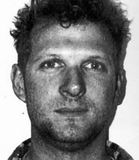
Leslie Alfred Camilleri
Murderer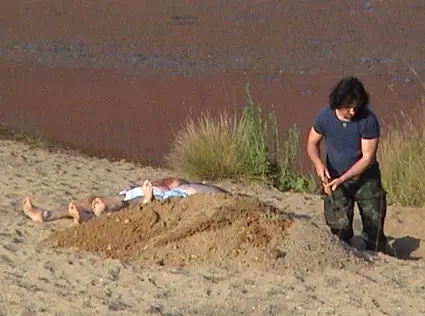 Joseph Schwab
Murderer · Australia · 1987
Joseph Schwab was a German man who murdered five tourists in the Northern Terri…
5 victims
Joseph Schwab
Murderer · Australia · 1987
Joseph Schwab was a German man who murdered five tourists in the Northern Terri…
5 victims
 Carl Williams
Murderer · Australia · 2003
Carl Antony Williams (b. October 13, 1970) was an Australian convicted hitman a…
4 victims
Carl Williams
Murderer · Australia · 2003
Carl Antony Williams (b. October 13, 1970) was an Australian convicted hitman a…
4 victims
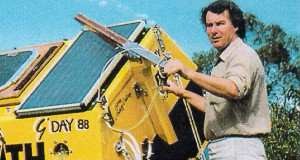 Ashley Coulston
Murderer · Australia · 1992
Ashley Coulston was an Australian sailor and triple murderer who was serving th…
3 victims
Ashley Coulston
Murderer · Australia · 1992
Ashley Coulston was an Australian sailor and triple murderer who was serving th…
3 victims
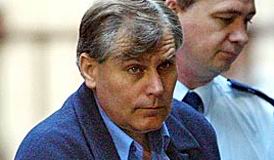 Bandali Debs
Murderer · Australia · 1997
Bandali Michael Debs (born 18 July 1953) was an Australian murderer. Debs was f…
3 victims
Bandali Debs
Murderer · Australia · 1997
Bandali Michael Debs (born 18 July 1953) was an Australian murderer. Debs was f…
3 victims
 Robert Farquharson
Murderer · Australia · 2005
Robert Donald William Farquharson (born 1969) was an Australian father convicte…
3 victims
Robert Farquharson
Murderer · Australia · 2005
Robert Donald William Farquharson (born 1969) was an Australian father convicte…
3 victims
 Sef Gonzales
Murderer · Australia · 2001
Sef Gonzales (born September 16, 1980) was an Australian man who was convicted…
3 victims
Sef Gonzales
Murderer · Australia · 2001
Sef Gonzales (born September 16, 1980) was an Australian man who was convicted…
3 victims
 Stanley Lingar
Murderer · USA · 1985
Stanley Lingar was executed by lethal injection in Missouri on February 7, 2001…
1 victim
Stanley Lingar
Murderer · USA · 1985
Stanley Lingar was executed by lethal injection in Missouri on February 7, 2001…
1 victim
 Cory Morris
Serial killer · USA · 2002
Cory Morris was a part-time karaoke disc jockey. Relatives had allowed Morris t…
5 victims
Cory Morris
Serial killer · USA · 2002
Cory Morris was a part-time karaoke disc jockey. Relatives had allowed Morris t…
5 victims
 Arthur Barnhill
Murderer · USA · 1995
Arthur Barnhill was convicted and sentenced to death for the 08/06/95 murder of…
1 victim
Arthur Barnhill
Murderer · USA · 1995
Arthur Barnhill was convicted and sentenced to death for the 08/06/95 murder of…
1 victim
 Vladimir Mirgorod
Serial killer · Russia · 2002
Vladimir Mirgorod was sentenced to life in prison for killing at least sixteen…
16 victims
Vladimir Mirgorod
Serial killer · Russia · 2002
Vladimir Mirgorod was sentenced to life in prison for killing at least sixteen…
16 victims
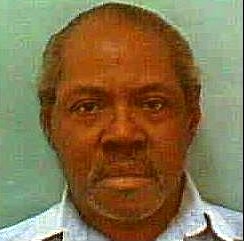 Posteal Laskey
Serial killer · USA · 1965
Posteal Laskey was believed to be the person dubbed the “Cincinnati Strangler,”…
7 victims
Posteal Laskey
Serial killer · USA · 1965
Posteal Laskey was believed to be the person dubbed the “Cincinnati Strangler,”…
7 victims
- Gender
- male
- Country
- Australia
- Location
- New South Wales/Victoria, Australia
- Date of birth
- May 31, 1969
- Age at first offence
- 28
- Characteristics
- kidnapping, rape
- Victim profile
- Lauren Margaret Barry, 14, and Nichole Emma Collins, 16
- Method of murder
- St abbing with knife
- Date(s) of murder
- October 6, 1997
- Years active
- 1997
- Date of arrest
- October 28, 1997
- Status
-
Released
Sentenced to life imprisonment for the murders, never to be released, on April 27, 1999
Overview
Leslie Alfred Camilleri was convicted in Victoria for the abduction, rape and murder of New South Wales schoolgirls, 14-year-old Lauren Margaret Barry and 16-year-old Nichole Emma Collins. The murders became known as the Bega schoolgirl murders.
People
- Leslie Alfred Camilleri — defendant; born 31 May 1969; lived in Yass, New South Wales at the time of the murders.
- Lindsay Beckett (Lindsay Hoani Beckett) — co-accused; born 27 March 1974; lived in Yass at the time of the murders; pleaded guilty and confessed to the murders.
- Lauren Margaret Barry — victim; 14-year-old schoolgirl; born October 11, 1982; from Bega, New South Wales.
- Nichole Emma Collins — victim; 16-year-old schoolgirl; born November 14, 1980; from the hamlet of Kalaru.
- Justice Vincent — judge in sentencing remarks for Beckett.
- Justice Vincent — judge in sentencing remarks for Beckett and in a sentencing statement in Beckett’s arraignment and sentencing.
- Judge Frederick Kirkham — judge in a separate sexual abuse case mentioned involving Camilleri.
- Paul — not identified by name; referenced as “the Police Minister” in relation to media.
- Delma Collins — mother of Nichole Collins.
- Cheryl Barry — mother of Lauren Barry.
- Garret and Cheryl Barry — Lauren’s parents.
- Graeme and Delma Collins — Nichole’s parents.
- Nathan — referenced as Lauren and Nichole’s brother (given only as “Nathan”).
- Todd Hadenham — referenced as a friend from Sydney.
- Sarah Darcy, Malcolm Denning and Damien Brown — referenced as friends at the camp.
- Rebecca Kemble — referenced as another school friend of Lauren.
- Andrew Irving — referenced as Nichole’s boyfriend.
- Helen Souvlis — referenced as Camilleri’s partner prior to the murders.
- Jade — referenced as Camilleri’s daughter, born to Helen Souvlis.
- Rosamari Gandarias — an earlier abduction victim in Canberra in 1997.
- Michael — referenced as “a local council worker” (no name provided).
- The father of Nichole Collins — referenced for setting up a camp site at White Rock.
Timeline
- 3 October 1997 — A camp site was set up by Nichole Collins’s father at White Rock near Bega for his teenage daughter to invite friends over for the coming Labour Day long weekend.
- 5 October 1997 (approx. 9pm) — Nichole Collins, wearing her high school jacket, and her younger friend Lauren Margaret Barry left a group of friends at the camp site and walked off for a nearby party.
- 5 October 1997 (approx. 10pm) — Camilleri and Beckett stopped near the girls along the Bega-Tathra Road at Evan’s Hill and the girls entered the car willingly, according to Beckett.
- 6 October 1997 (approx. 8am) — The girls were taken to Fiddler’s Green Creek, hands tied, and Camilleri ordered them to remove their clothing and wash their vaginas.
- 6 October 1997 (approx. 8am) — Beckett killed Lauren Barry by stabbing her in the neck; Beckett then killed Nichole Emma Collins by slashing her throat and stabbing her multiple times, then waiting until she stopped moving.
- 8 October 1997 — Camilleri and Beckett drove from Yass to Sydney and stayed with Camilleri’s brother for several days.
- 25 October 1997 — Police located a car earlier stolen by Beckett in Canberra.
- 27 October 1997 — Members of the Australian Federal Police arrested Beckett on car theft charges and remanded him in custody; police located and investigated maps of the Bega area and items belonging to Beckett.
- 27 October 1997 — Camilleri was arrested for breach of his periodic detention and remanded into custody.
- 28 October 1997 — Camilleri was finally arrested for breach of his periodic detention and remanded into custody.
- 8 October 1997 — The knives used by the pair were later thrown from the Commonwealth Avenue Bridge into Lake Burley Griffin before returning to their homes in Yass, New South Wales.
- 12 November 1997 — Beckett agreed to take police to the crime scene at Fiddler’s Green Creek where the remains of the girls’ bodies were discovered.
- 14 September 1997 — Rosamari Gandarias was abducted in Canberra; she was held captive for over 12 hours and raped repeatedly by two men in their twenties.
- 15 February 1999 — The trial of Camilleri for the murder of Barry and Collins began.
- 9 April 1999 — After deliberating for seven hours after a seven-week trial, Camilleri was found guilty of murdering the girls.
- 10 April 1999 — The trial of Camilleri ran until.
- 26 June 1998 — Beckett appeared in the Supreme Court of Victoria, arraigned and pleaded guilty to the murders of Lauren Barry and Nichole Collins.
- 20 August 1998 — Beckett was sentenced to life imprisonment with a non-parole period of 35 years.
- 27 April 1999 — Camilleri was sentenced to life imprisonment for the murders, never to be released.
- 2001 — Camilleri appeared before the Supreme Court in 2001 to appeal his sentence; the appeal was unsuccessful.
- May 2002 — Camilleri later appealed to the High Court in May 2002 and again his appeal was dismissed.
- 3 October 1997 — Friday October 3, 1997 was described as when Nichole’s father helped set up a tent and other camping equipment at White Rock, near Tathra Bega Road.
- 4 October 1995 — Camilleri was charged with 10 counts sexual crime in relation to a separate case described in the material.
- 8 September 1997 — The child sexual abuse case against Camilleri was heard before Judge Frederick Kirkham in the Queanbeyan District Court.
- 13 September 1997 — Saturday night, 13 September 1997, Camilleri and Beckett met Rosamari Gandarias at Garema Place in Canberra and abducted her later that night.
- 5 September 1997 and 6 September 1997 — Camilleri’s first days at Campbelltown detention centre for periodic detention were described.
- 8 October 1997 — Camilleri and Beckett stayed with Camilleri’s brother for several days in Sydney.
- 5 October 1997 (approx. 8pm) — Helen threw Camilleri and Beckett out when she got sick and tired of their lazy and abusive ways.
- 5 October 1997 (approx. 10am) — Beckett cashed a cheque for $44 and bought a bottle of Bundaberg rum and a slab of VB stubbies at the Monaro Pub in Cooma.
- 5 October 1997 (approx. 10pm) — The men saw two girls walking single-file along the Bega-Tathra Road and stopped to offer them a lift; the girls entered the car willingly.
- 6 October 1997 (approx. 8am) — The final stop was at Fiddler’s Green Creek and the girls were murdered after washing and being tied and gagged.
- 15 October 1997 — Not applicable; no such date is given.
- 9 June 1998 / 26 June 1998 / 20 August 1998 — Arraignment and sentencing dates for Beckett were included below.
Background
Camilleri’s prior history and circumstances
Camilleri was born to a family of six children in Liverpool, New South Wales, and did not meet his natural father until he was 13 years of age. A psychiatric report prepared in 1993 described Camilleri’s deprived childhood and a “pattern of theft and vandalism” linked to social ostracism, frustration and poor impulse control leading to “explosive outbursts of destructive behaviour.” Camilleri was described as “uncontrollable” as a child and spent a large part of his childhood in juvenile detention. He escaped the institution and between the ages of 10 to 12 lived on the streets of King’s Cross in Sydney as a street kid. Police took him before the Children’s Court and ordered him to return to the institution where he remained until he was 15.
Four days prior to the abduction of Rosamari Gandarias in Canberra, Camilleri appeared in the District Court of New South Wales on trial for charges relating to sexual offences against his defacto’s daughter. After two days the trial was aborted and Camilleri was released from custody on bail.
Camilleri had 146 prior convictions for offences such as dishonesty, theft and wilful damage. At the time of the murders, Camilleri lived in Yass, New South Wales. He had known Beckett for a period of two to three years and would often associate with him to steal cars.
A separate narrative also described that by the time he was twelve-years-old Camilleri was in trouble with police and appeared before juvenile courts, including an initial appearance in the Minda Children’s court for breaking and entering and stealing. It described that he continued to steal for several years, accumulating criminal offences including theft, motor vehicle offences, carrying a weapon, possession and absconding. It also described an attempt in 1986 to illegally leave NSW while on a good behaviour bond and head to Queensland to “start fresh,” followed by further court appearances in Queensland. It then described 1989 charges including 15 motor vehicle thefts, eight break and enters and 92 counts of stealing, followed by a sentence of three year in prison. It described that after release he met and moved in with Helen Souvlis and her nine-year-old daughter for a relationship lasting four months, after which Camilleri moved back to NSW, with Helen and her daughter following. It described that by March 1994 Helen gave birth to Camilleri’s daughter Jade and the family moved to a bigger house in Yass.
The narrative further described that in Yass Camilleri met Lindsay Beckett, described as being called “Kiwi” by those who knew him, and the two became friends in criminal pursuits.
Beckett’s background and role
Beckett was born in New Zealand and lived in Opotiki before coming to Australia. At the time of the murders, Beckett lived in Yass and associated with Camilleri in criminal pursuits. The material stated that it was Beckett who eventually broke and confessed to police about the schoolgirl murders and led police to the bodies of the victims. The material also stated that it was claimed Camilleri exerted a strong influence over Beckett. In sentencing Beckett, Justice Vincent described Beckett as having “quite a low IQ” and as someone “who had fallen under the influence of an older individual of much stronger personality”. Beckett was 23 at the time of the murders, and the material described that he “will be 59 when eligible for parole.”
A separate narrative described additional family background for Beckett and described a father described as a rapist who raped his mother when she was 15, followed by a step-father who drank heavily and beat and abuse her and the children. It described that Beckett was stabbed in the hand by his step-father when keys could not be found and that Beckett was beaten with an electrical cord and kicked into unconsciousness. It described that by 14 years of age Beckett was a heavy smoker and would often turn to marijuana. It described that when he was 16 he left school and moved to Australia, first lived with an uncle in Colac, then travelled along the NSW coast, and was sometimes caught for damaging property or assault. It described that by 1992 Beckett began going out with a young girl called Lauralee Tatt, became pregnant, and Beckett moved in with her in Griffith, with the couple producing three more children. It described frequent fighting and that Beckett would often beat his girlfriend. It then described that by 1995 the couple moved to Yass where Beckett met Les Camilleri and described their relationship as an “extremely dangerous combination,” with Beckett doing what Camilleri told him to do.
The offence
Abduction, rape and murder of Barry and Collins
On 3 October 1997, a camp site was set up at White Rock near Bega by the father of Nichole Collins for his teenage daughter to invite friends over for the coming Labour Day long weekend. The camp site was located three kilometres from the Collins home. The girls called at the house to change clothing, shower and eat. Nichole Collins’s father regularly called at the camp site to check on the children and did so on the day the girls disappeared.
At approximately 9pm on 5 October 1997, Nichole Collins, wearing her high school jacket, and her younger friend Lauren Margaret Barry left a group of friends at the camp site and walked off for a nearby party. A Ford Telstar belonging to Camilleri’s defacto partner and driven by Camilleri was nearby with Beckett in the passenger seat. The material described that Camilleri had an argument hours earlier with his defacto partner and talked to Beckett about his feelings of depression, and that the men consumed beer and injected each other with amphetamines while driving aimlessly.
According to Beckett, Camilleri spotted the girls walking single file along the Bega-Tathra Road in Evan’s Hill and stopped to offer them a lift. At approximately 10pm, after a brief discussion, the girls entered the car willingly, according to Beckett. The material stated that a pink portable television set taken by Camilleri and Beckett from a friend in lieu of a drug-related debt was removed from the back seat and discarded at the side of the road to provide room for the girls to sit.
Beckett told police that the group travelled to Tathra Beach and spent some time there before returning to the camp site at White Rock. On the road leading back to the camp site, Camilleri became disturbed at the car bottoming out on uneven gravel and became angry at the girls. The rear doors had been previously locked using child locks and there were no window winders, preventing rear doors from being opened from inside. Camilleri produced a knife and told the girls they would be stabbed if they tried to escape. Beckett also produced a knife and went along with Camilleri in threatening the girls.
A quotation from Beckett about the knife threat was included:
"Whilst Les (Camilleri) was going off, he pulled his knife out of a pocket in the driver's door. This was a black handled pocket knife with a serrated edge. Les turned around to the girls and showed them the knife. He told them to shut up and not to say anything. Les said if they did not do what he said, he would stab them. During this Les told me to get my knife. I got my knife out of the glove box. I have a black handled knife with a jagged edge. I showed the girls I a knife, too. I said to the girls to do as Les says."
Rubbish dump assaults and continued driving
The girls were driven to a rubbish dump off Old Wallagoot Road, not far from their homes in Kalaru, and were raped. They were then driven further south, passing through Merimbula, and the car stopped at Ben Boyd National Park where the girls were further assaulted. A black rubber torch belonging to Barry and a tampon were later located at the scene by police.
The men continued through Eden where the men again raped the girls in an area south of Eden. Camilleri then ordered Beckett to drive, while Camilleri continued to force Barry to perform oral sex on him in the back seat. They drove towards Orbost before turning off and eventually stopping at Wingan Point in Victoria where the girls were again assaulted. Camilleri slept and later woke up and realised he was deep into the state of Victoria. Beckett recalled in his statement to police:
"I drove down the highway and just before Cann River Les woke up. He wanted to know where we were. I told him we were in Victoria heading to Orbost. Les cracked the shits and was abusing me. He was saying he wanted to go to Sydney. He kept saying 'the bridge'. I took this to mean he wanted to throw the girls off the bridge because he had spoken about this before (a reference to Rosamari Gandarias). There are some bridges on the way to Sydney on the Hume Highway which have great drops."
The girls began to question the men, asking if they were going to be murdered. Camilleri assured the girls they would only be tied up so the men could make their escape. During this time Beckett recalled Camilleri repeating the words “They can't go back,” referring to Camilleri’s intention to murder the girls to avoid detection for their crimes.
Double murder at Fiddler’s Green Creek
The final stop was at Fiddler’s Green Creek, located just south of the Victorian border with New South Wales. At approximately 8am the following morning, the girls’ hands were tied and they were ordered along a remote bush track over rugged terrain to a creek. They walked alongside the creek for several hundred metres. Camilleri ordered the girls to remove their clothing and wash their vaginas thoroughly to remove evidence of prior sexual assaults. After washing, the girls were ordered to lie on their stomachs before being retied and gagged.
They were separated by approximately 30 metres as Camilleri and Beckett discussed what to do next. Camilleri demanded Beckett drown the girls, but Beckett protested that it was unfair he had to kill both. Beckett eventually complied after an argument in which Camilleri threatened to stab Beckett if he did not do as wanted.
Murder of Lauren Barry: Beckett attempted to first drown Barry, who was tied up near the creek. After a struggle, he stabbed Barry in the neck, accidentally cutting his thumb. Beckett described the scene to police:
"I went over to Lauren and dragged her down to the water. I held her head under the water. She was struggling and she knocked me into the water. One of my knees, I think the left went into the water. This pissed me off a little bit and I opened my knife, it was in my left hand and I stabbed Lauren in the left side of the neck. I said in my interview that it was the right side of the neck with my right hand but I am been thinking since. It wasn't my right thumb which was cut but my left. After a couple of seconds after I stabbed her she stopped moving."
Murder of Nichole Collins: Beckett ran up the embankment towards Collins tied to a tree and out of view of Barry. Beckett slashed Collins to the throat several times and then began to punch and kick her when he realised she had not died instantly. Beckett’s statement to police continued:
"After I stabbed Lauren, I ran up the bank to where I tied Nichole up. She must have heard what I had done to Lauren because when I got to her she said, 'you're going to kill me, aren't you.' I said 'shut up' and walked around to her left side and I cut her throat two or three times. This was across her throat. The knife was in my left hand. Nichole was sitting down when I cut her throat. After this she was thrashing around on the ground. She was trying to scream but nothing was coming out. I think I kicked her because she wouldn't keep still. And then I put my foot on to her to keep her still. This didn't work so I stabbed her in the throat. I aimed and stabbed at the hard thing in her neck. I pushed the knife all the way in but she still wouldn't keep still so I worked out where her heart would be and I stabbed her on the left side of the chest. She still didn't stop moving so I stabbed her in the front of the chest. I was aiming for her heart. I needed two hands to get the knife through her chest. She kept moving so I kicked her in the head a couple of times. She still kept moving but she was slowing down. I waited until she stopped moving which didn't take long."
Post-murder conduct
After the murders, Camilleri, who was not present during the murders and was waiting in the car, asked Beckett “Did you see the demon?”. The pair left the crime scene with Beckett driving and returned to New South Wales.
Evidence disposal
Beckett drove from the murder scene while Camilleri slept in the vehicle and woke as the pair approached Canberra. They stopped at Theodore Lookout on the Monaro Highway to the south of Canberra and burned their blood-stained clothing, ropes and gags used to restrain the girls. The knives used by the pair were later thrown from the Commonwealth Avenue Bridge into Lake Burley Griffin before returning to their homes in Yass.
On 8 October 1997, Camilleri and Beckett drove from Yass to Sydney and stayed with Camilleri’s brother for several days. While in Campbelltown in Sydney’s south-west, they spent six hours cleaning the car at a Car Lovers car wash, including removing the vehicle’s seats and carpets to clean them thoroughly. The pair returned to Canberra to destroy further evidence, before returning to Bega on an unsuccessful search for the discarded pink television set that Camilleri believed would lead police to them. The material stated that the television set was removed earlier by a local council worker.
Investigation and arrest
Initial police response and manhunt
The girls were reported missing on the day of their disappearance, and a massive manhunt including family, friends, police and members of the Bega community combed the area but failed to locate any sign of the missing girls.
Police investigations lasting several weeks led to Camilleri and Beckett. The material described them as career criminals with “over 200 criminal convictions between them.”
Police location, interviews and confession
On 25 October 1997, police located a car earlier stolen by Beckett in Canberra. The vehicle was searched and police discovered maps of the Bega area and items belonging to Beckett.
Members of the Australian Federal Police arrested Beckett on 27 October 1997 on car theft charges and remanded him in custody. Police interviewed Camilleri on the following day. Both men denied knowledge of the girls’ abduction and murder. They also denied discarding a television set by the roadside, although Camilleri admitted travelling with one that he had dropped at a St. Vincent De Paul store.
On 12 November 1997, police again interviewed Beckett, who made a full confession. Beckett agreed to take police to the crime scene at Fiddler’s Green Creek, where the remains of the girls’ bodies were discovered. Camilleri, who was remanded in custody for breaching bail conditions and awaiting trial at Goulburn Correctional Centre, was also interviewed and police informed him of Beckett’s confession. Camilleri again denied involvement in the murders and attempted to implicate Beckett as the lone murderer, maintaining that he was in a drug induced stupor for most of the time the girls were in the car.
A quotation from Camilleri was included:
"We picked up the girls and went to the beach. I had a shot behind the shed. While the girls were drinking I was trying to OD. We drove around with them. I was asleep most the time. Beckett told me he dropped them off at home. I remember waking up and seeing the girls and then later I asked Beckett where we were and he said Victoria, on the main road somewhere. And I went off my head. I told him to go home, get the fuck out of here. Then I saw him walking out of the bush. He had blood all over him. Told me he cut his finger."
Police later charged Camilleri and Beckett with multiple counts of abduction, rape and murder.
Trial
Trial of Leslie Camilleri
The trial of Camilleri for the murder of Barry and Collins began on 15 February 1999 and ran until 10 April 1999. A total of 70 witnesses were called.
Prosecution evidence included a shirt belonging to Barry containing semen matching the DNA profile of Camilleri. Police recovered evidence from almost every location the pair had taken the girls and assaulted them.
Beckett was called to give evidence against his co-accused and spent five days in the witness box. Camilleri claimed he was in a drug induced stupor when the girls were with the pair and that he barely remembered them, hoping to lay the entire blame for the murders on Beckett. Camilleri was found guilty by the Supreme Court jury.
Verdict and sentence
On April 27, 1999, Camilleri was sentenced to life imprisonment for the murders, never to be released. The judge remarked during sentencing:
"Using the control which you clearly had over your weaker willed but equally evil companion (Beckett), you instructed him to perform acts that, in a somewhat perverse way, it could be said that you probably did not possess the courage to perform yourself."
"It is terrible to contemplate the prospect that, as a consequence of the order which in my view justice and a proper appreciation of sentencing principles would require in your case, you may never be released from prison. However, I consider that my duty is clear. Through your own actions, you have forfeited your right ever to walk among us again."
Camilleri was 28 at the time of his crimes and 29 when sentenced.
Appeals
Camilleri appeared before the Supreme Court in 2001 to appeal his sentence; the appeal was unsuccessful. He later appealed to the High Court in May 2002 and again his appeal was dismissed.
Camilleri received numerous death threats from other prisoners and remained in protective custody.
Outcome
Camilleri was convicted of the murders of Lauren Barry and Nichole Collins and was sentenced to life imprisonment for the murders, never to be released, on April 27, 1999.
Other related offences mentioned in the material
Abduction of Rosamari Gandarias
On 14 September 1997, 19-year-old Rosamari Gandarias was abducted in Canberra. She was held captive for over 12 hours and driven to a number of locations and raped repeatedly by two men in their twenties. The material described that Gandarias escaped when the vehicle stopped at a rest area on a highway near Bowral and she asked her abductors if she could go to the toilet. Wearing only a t-shirt and shoes, she evaded the pair by hiding in bushland and later sought assistance from a nearby farmhouse. The material stated that the crime involved many similarities with the murder of the Bega schoolgirls just three weeks later.
A separate narrative expanded further: on Saturday night, 13 September 1997, Camilleri and Beckett met Rosamari at Garema Place in Canberra, where she agreed to do speed injection for them. It described that she went with them to Canberra Showground, after which they ignored her request to be taken back to Garema Place and drove away towards Yass. The narrative included a direct statement from Camilleri: “We're going to fuck you now”. It described a 10-centimetre folding knife being produced and a period of twelve hours captivity involving orally, vaginally and anally raping Rosamari, and threats including “If you don't do as you're told we'll drag you behind the car”. It included additional statements attributed to Camilleri, including “Do it properly don't use your teeth.” It described that Rosamari escaped at a rest area near Bowral after being allowed to go to the toilet and hid in bushland, then ran to a farmhouse where she raised the alarm. The narrative stated police were called to the farmhouse but that Rosamari did not want to make a statement, and that the men claimed the sex was consensual and in return for drugs.
Beckett’s guilty plea and sentencing remarks (co-accused proceedings)
Plea and sentencing
On 26 June 1998, Lindsay Hoani Beckett appeared in the Supreme Court of Victoria where he was arraigned and pleaded guilty to the murders of Lauren Barry and Nichole Collins.
On 20 August 1998, Beckett was sentenced to life imprisonment with a non-parole period of 35 years. The material described the non-parole period as the longest ever given to a Victorian prisoner at the time.
After sentencing, the mother of one of the schoolgirls yelled to Beckett:
- "I hope you rot in hell"
Justice Vincent made a statement at sentencing:
"Lindsay Hoani Beckett, you have pleaded guilty to the murder at Fiddlers Green Creek in the State of Victoria on or about 6 October 1997 of two young persons named Lauren Margaret Barry and Nichole Emma Collins You represent the dark in which our women and children fearfully walk"
The material stated that Beckett was sentenced to two life sentences in prison and that the judge set a non-parole period of no less than thirty-five years due to cooperation by confessing and informing on Camilleri. It also included statements made in court at the sentencing:
- Nichole’s mother, Mrs Delma Collins, shouted: "Yes."
- Lauren’s mother, Ms Cheryl Barry, said to Beckett as he was led away: "I hope you rot in hell.''"
Evidence and investigative details mentioned in the material
- A Ford Telstar belonging to Camilleri’s defacto partner was used, driven by Camilleri, with Beckett in the passenger seat.
- The rear doors were locked with child locks and there were no window winders.
- A pink portable television set was removed and discarded; it later became important evidence.
- A black rubber torch belonging to Barry and a tampon were later located at a scene.
- Beckett’s confession resulted in discovery of the remains at Fiddler’s Green Creek.
Notes on statements and assertions included in the material
- Camilleri denied any involvement and attempted to implicate Beckett as the lone murderer, asserting he was in a drug induced stupor for most of the time the girls were in the car.
- Beckett described the knife threats and the killings in interviews and his statements to police.
- The material included an assertion that Camilleri was not present during the murders and was waiting in the car.
Spotted an error, or have more information about this case?