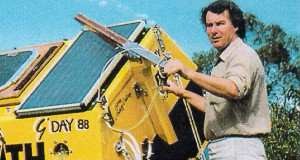
Ashley Coulston
Murderer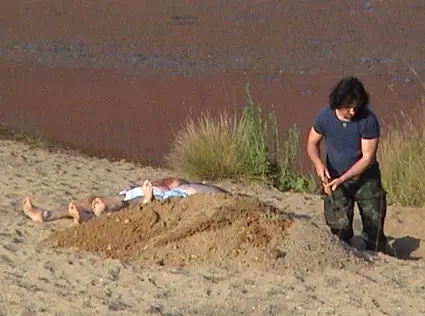 Joseph Schwab
Murderer · Australia · 1987
Joseph Schwab was a German man who murdered five tourists in the Northern Terri…
5 victims
Joseph Schwab
Murderer · Australia · 1987
Joseph Schwab was a German man who murdered five tourists in the Northern Terri…
5 victims
 Lindsay Robert Rose
Murderer · Australia · 1984
Lindsay Robert Rose was sentenced to five consecutive sentences of life impriso…
5 victims
Lindsay Robert Rose
Murderer · Australia · 1984
Lindsay Robert Rose was sentenced to five consecutive sentences of life impriso…
5 victims
 Samuel Leonard Boyd
Murderer · Australia · 1982
Samuel Leonard Boyd was sentenced to 5 consecutives sentences of life imprisonm…
4 victims
Samuel Leonard Boyd
Murderer · Australia · 1982
Samuel Leonard Boyd was sentenced to 5 consecutives sentences of life imprisonm…
4 victims
 Bandali Debs
Murderer · Australia · 1997
Bandali Michael Debs (born 18 July 1953) was an Australian murderer. Debs was f…
3 victims
Bandali Debs
Murderer · Australia · 1997
Bandali Michael Debs (born 18 July 1953) was an Australian murderer. Debs was f…
3 victims
 Sef Gonzales
Murderer · Australia · 2001
Sef Gonzales (born September 16, 1980) was an Australian man who was convicted…
3 victims
Sef Gonzales
Murderer · Australia · 2001
Sef Gonzales (born September 16, 1980) was an Australian man who was convicted…
3 victims
 Bruce Burrell
Murderer · Australia · 1995
Bruce Allan Burrell was an Australian convicted double murderer who was sentenc…
2 victims
Bruce Burrell
Murderer · Australia · 1995
Bruce Allan Burrell was an Australian convicted double murderer who was sentenc…
2 victims
 Jerome Bowden
Murderer · USA · 1976
Jerome Bowden was convicted of murder for which he received the death sentence,…
2 victims
Jerome Bowden
Murderer · USA · 1976
Jerome Bowden was convicted of murder for which he received the death sentence,…
2 victims
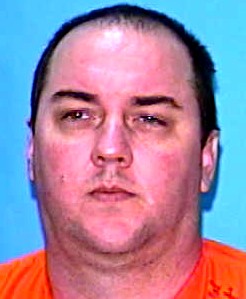 John Steven Huggins
Murderer · USA · 1997
John Steven Huggins was sentenced to death on February 26, 1999 and was resente…
1 victim
John Steven Huggins
Murderer · USA · 1997
John Steven Huggins was sentenced to death on February 26, 1999 and was resente…
1 victim
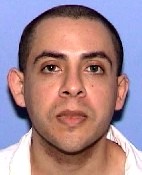 Rodolfo Alvarez Medrano
Mass murderer · 2002
Rodolfo Alvarez Medrano (a/k/a "Kreeper") provided assault weapons used by fell…
10 victims
Rodolfo Alvarez Medrano
Mass murderer · 2002
Rodolfo Alvarez Medrano (a/k/a "Kreeper") provided assault weapons used by fell…
10 victims
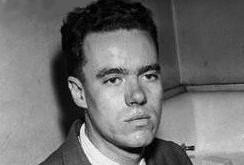 Howard Unruh
Mass murderer · USA · 1949
Howard Barton Unruh (born January 21, 1921, Camden, N.J.) carried out a shootin…
13 victims
Howard Unruh
Mass murderer · USA · 1949
Howard Barton Unruh (born January 21, 1921, Camden, N.J.) carried out a shootin…
13 victims
 Kimberly Cargill
Murderer · USA · 2010
Name: Kimberly Cargill · TDCJ Number: 999572 · Sex: Female · Race: White · Hair…
1 victim
Kimberly Cargill
Murderer · USA · 2010
Name: Kimberly Cargill · TDCJ Number: 999572 · Sex: Female · Race: White · Hair…
1 victim
- Gender
- male
- Country
- Australia
- Location
- Burwood, Victoria, Australia
- Date of birth
- 1956
- Age at first offence
- 36
- Characteristics
- attempt to collect insurance money
- Victim profile
- Kerryn Henstridge, 22, Anne Smerdon, 22, and Peter Dempsey, 27
- Method of murder
- Shooting
- Date(s) of murder
- July 29, 1992
- Years active
- 1992
- Date of arrest
- September 1, 1992
- Status
-
Life imprisonment
Sentenced to three consecutive life sentences plus seven years without parole
Case overview
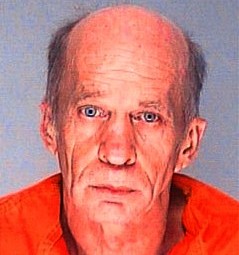
Ashley Coulston was an Australian sailor and triple murderer who was serving three consecutive sentences of life imprisonment plus seven years without parole. He was sentenced for the 1992 murders of three people in Burwood, Victoria and the attempted abduction and robbery of a couple in St Kilda Road several months later. He was originally sentenced to three consecutive life sentences with a non-parole period of 30 years, but he was granted a retrial on the murder charges after appeal.
Timeline
- 26 January 1988 — Coulston left Port Stephens in G'Day 88.
- 12 March 1988 — Coulston activated his vessel's emergency beacon; he was rescued by a passing tanker just north of New Zealand's North Island after spending 46 days at sea in stormy weather.
- 25 October 1988 — Coulston attempted his voyage once again, sailing from New Zealand to Australia.
- 6 January 1989 — Coulston successfully arrived in Brisbane.
- 29 July 1992 — Coulston forced Kerryn Henstridge, Anne Smerdon, and Peter Dempsey into separate rooms, hogtied them using cable ties, and shot them execution style in the back of the head.
- 1 September 1992 — Coulston armed himself with the same weapon used to commit the earlier murders and drove to St Kilda Road, where he attempted to abduct a couple, restrained them using cable ties, and fired at security guards, hitting one in the hip; he was arrested by police at the scene.
Background
Ashley Coulston came to media attention in 1988 when he attempted to sail his custom-built vessel named G'Day 88 from Australia to New Zealand across the Tasman Sea. He was involved in a later high-profile criminal case in 1992.
The offence
Triple murder in Burwood
On 29 July 1992, two students advertised in the Herald Sun newspaper for a tenant to share their home after a housemate decided to leave the premises and return home to live with their parents. Kerryn Henstridge, 22, Anne Smerdon, 22, and Peter Dempsey, 27, the brother-in-law of one of the women, were forced into separate rooms. They were hogtied using cable ties before Coulston shot them execution style in the back of the head.
No motive has ever been offered for the killings.
Attempted abduction and robbery in St Kilda Road
On 1 September 1992, Coulston armed himself with the same weapon used to commit the earlier murders and some cable ties. He drove to St Kilda Road and parked his car near the National Gallery of Victoria. He approached a couple and attempted to abduct them.
The couple offered Coulston their money, which he took. Coulston proceeded to restrain the couple using the cable ties. While attempting to restrain one, he was overpowered by the other, allowing the couple to escape and raise the alarm with nearby security guards. The security guards gave chase; Coulston fired at the guards, hitting one in the hip.
Investigation
The gun used in the abduction attempt was later used to link Coulston to the triple murders in Burwood several months earlier. The gun used in the abduction attempt would later link Coulston to the triple murders in Burwood several months earlier.
Arrest
Coulston was eventually arrested by police at the scene and taken into custody.
Trial
Coulston did not speak at all during either trial.
He was sentenced to three consecutive life sentences, to be served cumulatively with the seven-year sentence for the remaining offences. Justice Norman O'Bryan refused to fix a non-parole period, calling the murders “cold-blooded”, “heinous” and “wicked”, and telling Coulston that “ you have forfeited forever your entitlement to live outside the confines of a prison”.
“cold-blooded”
“heinous”
“wicked”
“ you have forfeited forever your entitlement to live outside the confines of a prison”
Sentencing
Coulston was originally sentenced to three consecutive life sentences with a non-parole period of 30 years.
After appeal, he was granted a retrial on the murder charges. He was re-sentenced to seven years on appeal, increased from four years six months, by the Crown on the remaining nine charges.
Appeals
Coulston was granted a retrial on the murder charges after appeal.
Outcome
Coulston was sentenced to three consecutive life sentences, to be served cumulatively with the seven-year sentence for the remaining offences. He had previously been sentenced with a non-parole period of 30 years, but the final sentencing did not fix a non-parole period.
Aftermath
Prison disciplinary matter involving downloaded images
Violent images of a woman being beaten which were found on the prison cell computer of a triple murderer were downloaded from an old war film on free-to-air television.
Coulston used a device known as a frame-grabber to capture the images from his television and download them on to his computer at Barwon Prison, near Geelong. A Corrections Victoria spokesman said today that the images came from a black and white World War II movie depicting the French Resistance.
A Corrections Victoria spokesman said: “It's not exactly A Clockwork Orange or Romper Stomper, but they are still unauthorised materials.”
The 15 contraband images were downloaded along with dozens of others from the film and concealed on the computer. The images were discovered through a routine check of Coulston's computer in December last year. The 15 suspect pictures depicted a fully-clothed woman being assaulted and dragged by her hair.
Coulston, now 48, had a Governor's disciplinary hearing, where he denied knowledge of how the images got on to his computer but they were well concealed. The Corrections Victoria spokesman said he had 14 days loss of privileges, where he was placed in a management cell and subject to strict regulation, and he had lost the computer for the foreseeable future.
The Corrections Victoria spokesman said: “He had 14 days loss of privileges, where he was placed in a management cell and subject to strict regulation, and he has lost the computer for the foreseeable future.”
The spokesman said all prisoners were required to take up prison work, vocational training or study. Coulston applied to use the computer for his courses. Computers were not supplied by the state government, but were provided by the prisoner or a member of his family. No prisoners were connected to the internet.
The Corrections Victoria spokesman said: “We have to balance between allowing prisoners to use computers for educational purposes, training purposes and the checks and balances that come with that,” and “We need to be vigilant and we are. “We have regular checks, otherwise we're talking about going back to the quill and parchment days.”
Noel McNamara, president of Crimes Victims Support Association, said prisoners such as Coulston should have no right to use a computer. Noel McNamara said: “He's in for life, so he's not going to enter the workforce or go back to crime because he'll be too old, and can't do anything,” and “So I question his need to even have a computer for whatever studies he's doing. “In another life or another country there would have been capital punishment and he wouldn't be around.”
Suspect in the Balaclava Killer case
Coulston was also a suspect in the case of the Balaclava Killer, who stalked, raped and killed victims in Queensland over a 10 month period during 1979 and 1980. The killings stopped abruptly in 1980, coinciding with the time Coulston moved to Sydney, working as a mascot and living on a boat at Cronulla. It was suggested that he may have raped girls there.
It was stated that Coulston owned a black Kawasaki motor bike and went back to Tweed Heads and his parents farm most weekends at that time, not long after which he travelled to Melbourne. Coulston shared a rare blood type with the person believed to be responsible for the crimes.
A case reopened reported headline included: “Balaclava Killer case reopened By Greg Stolz - The Courier-Mail April 7, 2008”. Police re-opened investigations into one of Australia's most baffling murder mysteries – the case of the Gold Coast's notorious Balaclava Killer. The cold case was described as being re-opened in the hope DNA evidence might solve the murder of one man and the rape of several women during a reign of terror on the Gold Coast and northern NSW in the late 1970s and early 1980s.
The report stated that “Adventurer Ashley Coulston – now serving three life sentences for the ‘thrill kill’ murders of three people in Melbourne – has previously been identified by police as a suspect in the Balaclava Killer/Balaclava Rapist case.”
The report also said Coulston was dubbed “Captain Bathtub” in 1988 when he sailed his 2.4m boat, G'day 88, across a storm-tossed Tasman Sea to New Zealand, and set out from Port Stephens, north of Sydney, on Australia Day and was rescued by a tanker 46 days later north of New Zealand after enduring cyclonic seas. His abandoned boat was found washed up on the New Zealand coast but Coulston repaired it and sailed back to Brisbane in 1989.
It stated that three years later he was convicted of murdering three people after answering their share-house advertisement in a Melbourne newspaper. It repeated that Student teachers Kerryn Henstridge and Anne Smerdon, both 22, and Peter Dempsey, 27, were bound, gagged, moved to separate rooms and shot in the head.
The report stated Coulston was arrested after a botched attempt to abduct a couple in Melbourne. It said they tackled him as he was pulling plastic ties from his bag and that he was still wearing a balaclava and toting a gun. A security guard who came to their aid was shot in the hip. It stated police found handcuffs, a black balaclava, knife, cartridges, plastic cable and condoms in Coulston's bag.
The report stated Coulston was living in northern NSW when the Balaclava Rapist began terrorising women at gunpoint in the summer of 1979-80. It also stated he was living in Sydney in the early 1980s when several women were attacked by a balaclava-clad, gun-wielding man dubbed the Sutherland Rapist.
The report stated: “Evidence at the time indicated the Balaclava Rapist, Sutherland Rapist and Coulston had the same blood type.”
In 1980, English migrant Jeffrey Parkinson, 33, and a female friend were abducted at Tweed Heads by a masked man. Mr Parkinson grappled with the man and was shot dead.
Garry, the victim's son, said: “At least three people would be alive today and several women might not have been raped,” and “I've been after justice for 28 years for the man who killed my father.” The report also said Garry stated: “He said last week his father had drawn blood from his attacker but a small blood sample had been lost by Tweed Heads police during a police station move.” The report further included: “He said if Coulston was responsible, the Melbourne murders could have been prevented had the blood sample been preserved.”
Tweed Heads detectives refused to say if new evidence has come to light. The detective heading the investigation, Brett Edmonds, said: “With any unsolved murder, the investigation is never really closed.”
Murderer hoards violent TV images
A separate headline was included: “Murderer hoards violent TV images TheAge.com.au February 7, 2005.”
Spotted an error, or have more information about this case?