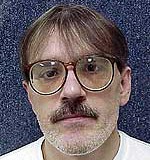
Stanley Lingar
Murderer Brian Kevin Rosenfeld
Murderer · USA · 1985
Brian Kevin Rosenfeld Brian Kevin Rosenfeld was sentenced to three concurrent l…
23 victims
Brian Kevin Rosenfeld
Murderer · USA · 1985
Brian Kevin Rosenfeld Brian Kevin Rosenfeld was sentenced to three concurrent l…
23 victims
 Marvin Gray
Murderer · USA · 1975
Marvin Gray was convicted killer who claimed responsibility for 23 slayings and…
23 victims
Marvin Gray
Murderer · USA · 1975
Marvin Gray was convicted killer who claimed responsibility for 23 slayings and…
23 victims
 Yahweh ben Yahweh
Murderer · USA · 1980
Yahweh ben Yahweh was born and legally named Hulon Mitchell Jr. (October 27, 19…
23 victims
Yahweh ben Yahweh
Murderer · USA · 1980
Yahweh ben Yahweh was born and legally named Hulon Mitchell Jr. (October 27, 19…
23 victims
 Russell Ellwood
Murderer · USA · 1991
Russell Ellwood was a former taxi driver. Authorities suspected him of killing…
20 victims
Russell Ellwood
Murderer · USA · 1991
Russell Ellwood was a former taxi driver. Authorities suspected him of killing…
20 victims
 Brian Rooney
Murderer · USA · 2006
Brian Rooney (born June 27, 1970) was a former construction worker. He was conv…
1 victim
Brian Rooney
Murderer · USA · 2006
Brian Rooney (born June 27, 1970) was a former construction worker. He was conv…
1 victim
 Michael Sams
Murderer · United Kingdom · 1991
Michael Sams was sentenced to life in prison in 1992. Michael Sams (born August…
1 victim
Michael Sams
Murderer · United Kingdom · 1991
Michael Sams was sentenced to life in prison in 1992. Michael Sams (born August…
1 victim
 Kevin Weaver
Spree killer · United Kingdom · 1987
Kevin Weaver was sentenced to closed psychiatric confinement on March 28, 1988.…
4 victims
Kevin Weaver
Spree killer · United Kingdom · 1987
Kevin Weaver was sentenced to closed psychiatric confinement on March 28, 1988.…
4 victims
 Carlton Francis
Murderer · USA · 1997
Carlton Francis was a neighbor of twin sisters Claire Brunt and Bernice Flegel.…
2 victims
Carlton Francis
Murderer · USA · 1997
Carlton Francis was a neighbor of twin sisters Claire Brunt and Bernice Flegel.…
2 victims
 Reza Khan
Murderer · Afghanistan · 2001
Reza Khan died on October 8, 2007. He was charged on August 5, 2004 in Kabul, A…
5 victims
Reza Khan
Murderer · Afghanistan · 2001
Reza Khan died on October 8, 2007. He was charged on August 5, 2004 in Kabul, A…
5 victims
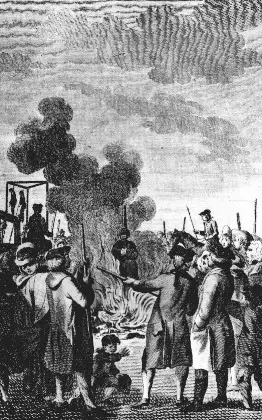 Ann Beddingfield
Murderer · United Kingdom · 1762
Ann Beddingfield was convicted of petty treason for the murder of her husband,…
1 victim
Ann Beddingfield
Murderer · United Kingdom · 1762
Ann Beddingfield was convicted of petty treason for the murder of her husband,…
1 victim
- Gender
- male
- Country
- USA
- Location
- Ripley County, Missouri, USA
- Date of birth
- April 16, 1963
- Age at first offence
- 22
- Characteristics
- kidnapping, rape, alcoholic
- Victim profile
- Thomas Scott Allen (male, 16)
- Method of murder
- Shooting (rifle)
- Date(s) of murder
- January 6, 1985
- Years active
- 1985
- Date of arrest
- Next day
- Status
-
Executed
Executed by lethal injection in Missouri on February 7, 2001
Overview
Stanley Lingar was executed by lethal injection in Missouri on February 7, 2001. He was convicted in Missouri for the first-degree murder of Thomas Scott Allen, a 16-year-old junior in high school student.
Timeline
- January 5, 1985 — Lingar and David Smith were drinking and driving around Doniphan, Missouri; they stopped at the home of Smith's girlfriend and then picked up hitchhiking teens; they later encountered Scott Allen, whose Jeep had its hood up and who told them he had run out of gas.
- January 6, 1985 — Lingar and Smith took Scott Allen from Doniphan and drove to Doniphan’s area including Lingo Lake; they ordered Allen to undress and masturbate; after retrieving a .22 caliber rifle, Lingar shot Allen; Allen was shot multiple times, beaten with a tire iron, and run over twice with the car; they attempted to dispose of Allen’s body and burn parts of the rifle; Allen’s body was later found in the river.
- January 14, 1985 — The Missouri State Water Patrol found Allen’s body in the river.
- January 10, 2001 — The Missouri Supreme Court set February 7, 2001 as Lingar’s execution date.
- February 7, 2001 — Lingar was executed by lethal injection in Missouri; the first of 3 lethal drugs was administered at the Potosi Correctional Center at 12:06 a.m.
- May 11, 1999 — The U.S. Court of Appeals for the Eighth Circuit affirmed the district court’s denial of Lingar’s petition for writ of habeas corpus.
- March 12, 1986 — Lingar’s trial started in St. Francois County Circuit Court after a change of venue.
- March 13, 1986 — The jury found Lingar guilty of Murder First Degree.
- March 14, 1986 — The jury recommended the death penalty.
- April 18, 1986 — Lingar was sentenced to death by the court.
- April 24, 1986 — Lingar filed a notice of appeal.
- March 17, 1987 — The Missouri Supreme Court affirmed the conviction and sentence.
- October 5, 1987 — The U.S. Supreme Court denied certiorari review.
- October 13, 1987 — Lingar filed a motion for post-conviction relief in the St. Francois County Circuit Court.
- June 8, 1988 — The Circuit Court denied post-conviction relief.
- March 14, 1989 — The Missouri Supreme Court affirmed the denial of post-conviction relief.
- October 10, 1989 — The U.S.
- October 18, 1989 — Lingar filed a petition for writ of habeas corpus in the United States District Court for the Eastern District of Missouri.
- August 2, 1996 — The U.S. District Court denied the petition for writ of habeas corpus.
- March 27, 2000 — The U.S. Supreme Court declined discretionary review.
- May 10, 2000 — The State requested the Missouri Supreme Court to set an execution date.
Background
Thomas Scott Allen was a 16-year-old junior in high school. He ran out of gas on Highway 160 in Ripley County, Missouri. Lingar was with David Smith and a group of hitchhikers they had earlier picked up. During the day of the crime, court records showed Smith drank 3 bottles of wine and 6–8 beers, and Lingar drank around 30 beers plus part of a bottle of wine. Lingar later claimed he was too drunk to remember anything about that night.
The offence
Lingar stopped when he encountered Allen’s Jeep with its hood up parked on the side of a rural highway. Allen explained he had run out of gas and Lingar offered to take him back into town to a gas station.
Lingar told Allen he would drive him to a gas station, but the parties did not reach an open station. Finding no gas station open, Lingar drove from Doniphan and headed toward Lingo Lake. The hitchhikers got out of the car.
Lingar told Allen to remove his coat and Allen declined at first. Lingar threatened that if Allen did not comply he would not take Allen back to town, and Allen removed his coat. Lingar then ordered Allen to remove the rest of his clothing, and Allen complied after Lingar threatened he would leave Allen at the lake.
At Lingo Lake, Lingar ordered Allen to masturbate. Allen had difficulty responding to the order. Lingar drove to his parents’ home and retrieved a .22 caliber rifle. After returning to Lingo Lake, Lingar again ordered Allen to masturbate while pointing the rifle at him.
Allen asked permission to get out of the car so that he could urinate. Lingar agreed, and the men got out of the car. While Allen stood urinating, Lingar shot Allen in the back. Allen was able to get back in the car and attempted to escape. When Allen had difficulty getting the car started, Lingar went to the passenger side of the car and fired a shot striking Allen in the head. Allen fell out of the car. Lingar shot Allen additional times, and Allen was beaten in the head with a tire iron. As Allen made a final attempt to get up, Lingar backed the car up and ran over the victim two times. Lingar and Smith then drove away leaving Allen naked on the ground.
After conferring with his brother Eddie, Lingar and Smith returned to the lake to dispose of Allen’s body. Upon arrival, Lingar and Smith redressed Allen, placed his body in the trunk of the car, and drove to a bridge on the Eleven Point River. They threw Allen’s body into the swift moving river. They then tried to clean the car of blood, discard Allen’s personal effects, and burn the forearm and stock of the rifle.
Investigation
The Ripley County Sheriff began an investigation into the disappearance of Allen, which led to the blue Mustang. After learning that authorities wanted to talk to him, Lingar returned to Ripley County and made a statement with Smith.
Following the interview, the Sheriff obtained a search warrant for the car. During their search, the Sheriff found Allen’s blood in the car and the trunk and found .22 caliber shell casings.
The Missouri State Water Patrol found Allen’s body in the river on January 14, 1985.
Arrest / Charging
Lingar was charged with Murder First Degree.
Trial
The case went to trial in St. The jury found Lingar guilty of Murder First Degree. The jury recommended the death penalty, and the court sentenced Lingar to death.
In exchange for Smith’s testimony at Lingar’s trial, the State dropped the first-degree murder charge against Smith. Smith later pleaded guilty to second-degree murder and was sentenced to ten years in prison. Smith testified at Lingar’s trial about what had occurred, including that Lingar made Allen disrobe and masturbate, shot him four times, beat him with a tire iron, and rammed him with his car.
A gun expert established that bullets found in Allen were fired from a Winchester .22 and could have been fired from Lingar’s rifle. A blood expert testified that blood stains in Lingar’s car could have come from Allen.
During closing argument in the guilt phase, defense counsel argued that because of intoxication Lingar could not deliberate. Defense counsel also pointed out Smith’s deal with the State gave him an incentive to testify that Lingar killed Allen.
During the penalty phase, the jury was presented with aggravating circumstances that included that the murder was outrageously wanton, vile, and horrible and that the murder happened during a kidnaping. The penalty-phase jury recommended death, and the trial court followed the jury’s recommendation.
Sentencing
Lingar received a death sentence. The court imposed death after the jury recommended the death penalty.
Appeals and post-conviction
Missouri Supreme Court and U.S. Supreme Court
Lingar appealed the conviction and sentence. The Missouri Supreme Court affirmed the conviction and sentence. The U.S. Supreme Court denied certiorari.
Lingar also filed a pro se motion for postconviction relief under Missouri Rule of Criminal Procedure 27.26, and counsel filed an amended Rule 27.26 motion in 1988. After an evidentiary hearing, the state circuit court denied both motions, and the Missouri Supreme Court rejected Lingar’s appeal of the denial. The U.S. Supreme Court denied certiorari again.
Federal habeas corpus
Lingar filed a premature pro se federal habeas petition in 1989. After counsel was appointed, he filed a habeas petition under Missouri Supreme Court Rule 91, which the Missouri Supreme Court denied. He next filed a motion to recall the mandate, which was summarily denied, and then filed the federal habeas petition that was denied.
In the federal appellate decision dated May 11, 1999, the U.S. Court of Appeals for the Eighth Circuit affirmed the district court’s denial of the petition.
The dissenting opinion by HEANEY, Circuit Judge, stated that trial counsel was ineffective in telling the jury in the sentencing phase that it could only consider statutory mitigating factors and argued that the failure to develop and present nonstatutory mitigating evidence prejudiced Lingar.
Outcome
He died at 12:06 a.m. after the 1st of 3 lethal drugs was administered at the Potosi Correctional Center.
Lingar’s clemency request was denied after Gov. Bob Holden deliberated the fate of Stanley Lingar late into the night and waited until an hour before the scheduled execution time to deny his request for clemency. Jerry Nachtigal, a spokesman for Holden, said Holden reviewed Lingar’s case and determined there was no evidence that merited setting aside his sentence.
Other details
Legal case referenced in appellate decision
The federal habeas appeal was captioned: Stanley D. Lingar, Appellant, v. Michael Bowersox, Appellee, the American Civil Liberties Union Foundation; American Civil Liberties Union, of Eastern Missouri, Amicus Curiae. The case number was 96-3609, decided by the U.S. Court of Appeals for the Eighth Circuit on May 11, 1999, before FAGG, HEANEY, and WOLLMAN, Circuit Judges.
Spotted an error, or have more information about this case?