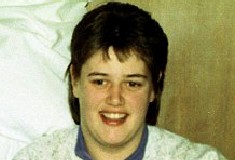
Beverley Allitt
Serial killer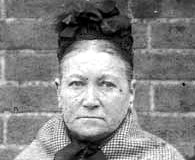 Amelia Dyer
Serial killer · United Kingdom · 1880
Amelia Dyer was convicted for the murder of Doris Marmon. She was known as a “b…
100 victims
Amelia Dyer
Serial killer · United Kingdom · 1880
Amelia Dyer was convicted for the murder of Doris Marmon. She was known as a “b…
100 victims
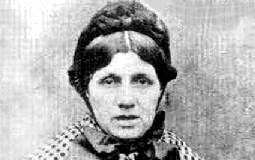 Mary Ann Cotton
Serial killer · United Kingdom · 1857
Mary Ann Cotton was executed by hanging in Durham prison on March 24, 1873. Mar…
21 victims
Mary Ann Cotton
Serial killer · United Kingdom · 1857
Mary Ann Cotton was executed by hanging in Durham prison on March 24, 1873. Mar…
21 victims
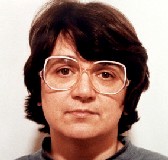 Rosemary West
Serial killer · United Kingdom · 1971
Rosemary Pauline “Rose” West (née Letts) Rosemary Letts was born in Barnstaple,…
10 victims
Rosemary West
Serial killer · United Kingdom · 1971
Rosemary Pauline “Rose” West (née Letts) Rosemary Letts was born in Barnstaple,…
10 victims
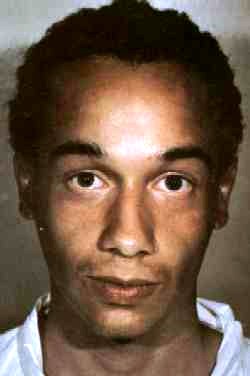 Kenneth Erskine
Serial killer · United Kingdom · 1987
Kenneth Erskine (born 1962) was an English serial killer known as the “Stockwel…
7 victims
Kenneth Erskine
Serial killer · United Kingdom · 1987
Kenneth Erskine (born 1962) was an English serial killer known as the “Stockwel…
7 victims
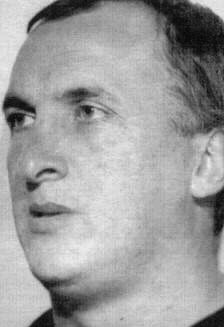 Colin Ireland
Serial killer · United Kingdom · 1993
Name: Colin Ireland · Also known as / tabloid name: London's "Gay Slayer" · Cri…
5 victims
Colin Ireland
Serial killer · United Kingdom · 1993
Name: Colin Ireland · Also known as / tabloid name: London's "Gay Slayer" · Cri…
5 victims
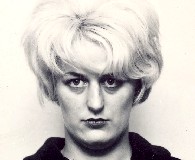 Myra Hindley
Serial killer · United Kingdom · 1963
Myra Hindley was an English serial killer who, in partnership with Ian Brady, c…
5 victims
Myra Hindley
Serial killer · United Kingdom · 1963
Myra Hindley was an English serial killer who, in partnership with Ian Brady, c…
5 victims
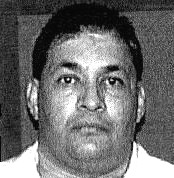 Joe Fedelfido Gonzales
Murderer · USA · 1992
September 18, 1996 — Joe Fedelfido Gonzales was executed by lethal injection in…
1 victim
Joe Fedelfido Gonzales
Murderer · USA · 1992
September 18, 1996 — Joe Fedelfido Gonzales was executed by lethal injection in…
1 victim
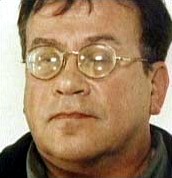 Ronald Mikos
Murderer · USA · 2002
Ronald Mikos was a podiatrist referred to by some as the Medicare Murderer. He…
1 victim
Ronald Mikos
Murderer · USA · 2002
Ronald Mikos was a podiatrist referred to by some as the Medicare Murderer. He…
1 victim
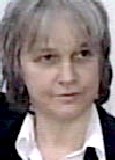 Marlene Smith
Murderer · USA · 1997
Marlene Smith was convicted of the 1997 murder of Anthony Proviano, a Universit…
1 victim
Marlene Smith
Murderer · USA · 1997
Marlene Smith was convicted of the 1997 murder of Anthony Proviano, a Universit…
1 victim
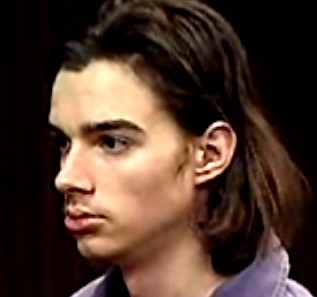 Bryan Kim
Murderer · USA · 2006
Bryan Kim was 19 years old at sentencing and was described as a former Mount Sp…
2 victims
Bryan Kim
Murderer · USA · 2006
Bryan Kim was 19 years old at sentencing and was described as a former Mount Sp…
2 victims
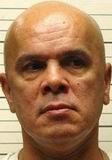 Gerald Lee Powers
Murderer · USA · 1996
Gerald Lee Powers was convicted in Tennessee of first degree felony murder in t…
1 victim
Gerald Lee Powers
Murderer · USA · 1996
Gerald Lee Powers was convicted in Tennessee of first degree felony murder in t…
1 victim
- Gender
- female
- Country
- United Kingdom
- Location
- Lincolnshire, England, United Kingdom
- Date of birth
- October 4, 1968
- Age at first offence
- 23
- Characteristics
- nurse, angel of death, child abuse, history of mental illness
- Victim profile
- Liam Taylor, 7-months-old / Timothy Hardwick, 11-years-old / Becky Phillips, 2-months-old / Claire Peck, 15-months-old
- Method of murder
- Poisoning (insulin - lignocaine)
- Date(s) of murder
- February-April 1991
- Years active
- 1991
- Date of arrest
- November 1991
- Status
-
Life imprisonment
Sentenced to 13 concurrent terms of life imprisonment on May 28, 1993; minimum term confirmed as 30 years before becoming eligible for parole
Background
Beverley Allitt was a nurse who suffered from the mental illness Munchausen’s Syndrome by Proxy.
She was dubbed the “Angel of Death”. Her arrest followed an investigation into several incidents of alleged tampering with patients' ventilators and pumps delivering intravenous medication at various hospitals in Lincolnshire and Nottinghamshire. Four children died and nine others were attacked. Her motives have never been fully explained.
A theory held that she suffered from Munchausen Syndrome by Proxy, a controversial personality disorder described as involving a pattern of abuse in which a perpetrator ascribes to, or physically falsifies illnesses in someone under their care, in order to attract attention.
While awaiting trial and after incarceration, medical professionals examined her and found she was exhibiting symptoms of both Munchausen’s syndrome and Munchausen’s syndrome by Proxy. As she awaited trial, she rapidly lost weight and developed anorexia nervosa.
The offence
Allitt carried out attacks over a 59-day period between February and April 1991 in the children's ward at Grantham Hospital and Kesteven Hospital, Lincolnshire, where she was employed as a State Enrolled Nurse. She administered large doses of insulin to at least two victims, and police were unable to establish how all the attacks were carried out.
The attacks involved cardiac arrests and unexplained symptoms in children who were in her care, including cases where she was left alone with them. In at least one case, traces of Lignocaine were discovered in the child’s tissues. In at least one case, apneic episodes were later found to be due to insulin and potassium overdoses.
Victims attacked on the children’s ward included both children who were murdered and children who survived attempts on their lives.
Investigation
Police became suspicious after the death of Claire Peck. Medical staff noticed the number of cardiac arrests on the children’s ward and police were called in.
The investigation found that Allitt was the only nurse on duty for all the attacks on the children and that she had access to the drugs. The investigation examined records of suspicious cases, with victims in many instances having high levels of insulin or potassium or both. When police notified investigators, they examined the records of 25 suspicious cases.
Further evidence included that Allitt had reported the key missing to the insulin refrigerator. When record checks revealed missing daily nursing logs corresponding to a time period when Paul Crampton had been in Ward 4, suspicions were raised. A security camera was installed in Ward 4.
In a separate account of the case narrative, an autopsy following Claire Peck’s death resulted in the discovery of traces of Lignocaine in her tissues, a drug used during cardiac arrest but never to a baby. Police were then summoned 18 days later after a test that revealed a high level of potassium in Claire’s blood. Her exhumation led to the discovery of traces of Lignocaine.
Stuart Clifton, the police superintendent assigned to the investigation, suspected foul play. He examined other suspicious cases that had occurred in the previous two months and found inordinately high doses of insulin in most.
Trial
Allitt was charged with attempted murder and grievous bodily harm in November 1991. After further hearings, she was charged with four counts of murder, 11 counts of attempted murder, and 11 counts of causing grievous bodily harm.
During the trial at Nottingham Crown Court, prosecutors demonstrated to the jury how she had been present at each suspicious episode, and the absence of episodes when she was taken off the ward. Evidence included high readings of insulin and potassium in each of the victims, as well as drug injection and puncture marks. She was also accused of cutting off her victims’ oxygen, either by smothering or by tampering with machines.
Professor Roy Meadow explained Munchausen’s syndrome and Munchausen’s by Proxy syndrome to the jury, pointing out how Allitt demonstrated symptoms of both. It was Professor Meadow’s opinion that Beverley Allitt would never be cured and that she was a clear danger to anyone with whom she might come in contact.
Allitt attended only 16 days due to continued illness during a trial that lasted nearly two months. The jury found her guilty on each charge and she received 13 life sentences.
In sentencing, Mr Justice Latham told Allitt that she was “a serious danger” to others and unlikely ever to be considered safe enough to be released.
In later High Court proceedings, Mr Justice Stanley Burnton ruled on the minimum period. He said:
I have to say that I regard the determination of the minimum period in a case such as the present - and fortunately cases as extreme as this are rare - as a very difficult task.
Once it is accepted that the offender was suffering from mental disorder, difficult ethical and indeed philosophical questions arise as to the degree to which responsibility for the offences in question should be regarded as diminished.
I have found that there is an element of sadism in Ms Allitt's conduct and her offending. But that sadism is itself, if not the result, certainly a manifestation of her mental disorder, and it would be unduly simplistic to treat it in the same way as one would if the offender were mentally well.
By her actions, what should have been a place of safety for its patients became not just a place of danger, but if not a killing field something close to it.
Sentencing
On Friday 28 May 1993, Allitt was found guilty on each charge and sentenced to 13 concurrent terms of life imprisonment. She served her sentence at Rampton Secure Hospital in Nottinghamshire.
A trial judge recommended she serve a minimum term of 40 years, which would keep her in prison until at least 2032 and the age of 64, and would still require consideration that she was no longer considered a threat to the public before release eligibility.
On 6 December 2007, the High Court ruled that Allitt would have to serve at least 30 years in prison, meaning she would have to wait until at least 2022 and the age of 54 until she could apply for parole.
A High Court judge confirmed a minimum sentence of 30 years, taking into account one year and 190 days spent in custody before being sentenced.
Appeals
In August 2006, Allitt launched an appeal on the length of her sentence.
On 6 December 2007, the High Court ruled that she would have to serve at least 30 years in prison.
Outcome
Allitt was detained at Rampton Secure Hospital in Nottinghamshire.
The minimum term she was required to serve before becoming eligible for parole was thirty years, and she would only be released at that point if she was no longer considered a threat to the public.
Aftermath
Accusations were made that Rampton Secure Hospital was more like a Butlin’s holiday camp than a prison, with a facility described as having around 1400 staff to deal with around 400 inmates, costing taxpayers around £2000 per week per inmate.
In 2001, there were reports that Allitt was to marry fellow inmate Mark Heggie, although she was still single.
A Mirror newspaper enquiry in May 2005 revealed that she had received over £25,000 in State benefits since her incarceration in 1993.
In August 2006, Allitt applied for a review of her sentence, which led the Probation Service to contact victims' families about the process. The review remained pending.
In 2006, the BBC dramatised the story titled “Angel of Death: The Beverly Allitt Story”, starring Charlie Brooks.
In 2008, the Beverley Allitt story was told as part of the production company Title Role’s recreation documentaries, “Crimes That Shook Great Britain”, in its own episode, with a young Lexi Wolfe playing Allitt.
Victims
Liam Taylor
- Liam Taylor (aged seven months old) was admitted to the ward for a chest infection and was murdered on 21 February 1991.
In one narrative account, Allitt reassured his parents, who went home for the night. When they returned, Liam was described as having suffered respiratory problems during the night but had recovered and appeared to be doing well. Liam later suffered a respiratory crisis and was left alone with Allitt before her summoning of the emergency resuscitation team. Liam suffered cardiac arrest; despite resuscitation efforts he suffered severe brain damage and remained alive only due to life-support machines. His parents removed him from life support. His death was listed as heart failure. His fellow nurses were confused about the failure of apnea monitors to alarm when he stopped breathing, but Allitt was never questioned about her role.
Timothy Hardwick
- Timothy Hardwick (aged eleven years old) suffered cerebral palsy and was admitted to the ward after an epileptic seizure. He was murdered on 5 March 1991.
In one narrative account, Allitt volunteered to care for him and, after a period when she was left alone with the boy, the emergency resuscitation team was summoned. His heart stopped and he could not be revived. His death was attributed to epilepsy and no obvious cause of death was found.
Kayley Desmond
- Kayley Desmond (then aged one year old) was admitted to the ward for a chest infection. Allitt attempted to murder her on 8 March 1991, but the child was resuscitated and transferred to another hospital where she recovered.
In one narrative account, Kayley was well on the road to recovery before later cardiac arrest while Allitt was in attendance; she was resuscitated and transferred to another hospital in Nottingham. Physicians noticed a puncture mark under her armpit and an air bubble, which appeared to be an accidental injection, but no investigation was initiated.
Paul Crampton
- Paul Crampton (then aged five months old) was admitted to the ward for a chest infection on 20 March 1991. Allitt attempted to murder him with an insulin overdose on three occasions that day before he was transferred to another hospital where he recovered.
In one narrative account, Paul appeared to be suffering from insulin shock and went into near-coma on three separate occasions. Doctors revived him but could not explain fluctuations in insulin levels.
Bradley Gibson
- Bradley Gibson (then aged five years old) was admitted to the ward for pneumonia. He suffered two cardiac arrests on 21 March 1991 due to Allitt administering insulin overdoses before he was transferred to another hospital where he recovered.
Yik Hung Chan
- Yik Hung Chan (then aged two years old) was admitted to the ward following a fall on 21 March 1991. He suffered an oxygen desaturation attack before he was transferred to another hospital where he recovered.
Becky Phillips
- Becky Phillips (aged two months old) was admitted to the ward for gastroenteritis on 1 April 1991. She was administered an insulin overdose by Allitt and died at home two days later.
Katie Phillips
- Katie Phillips (then aged two months old), the twin of Becky Phillips, was admitted as a precaution following the death of her sister.
- She had to be resuscitated twice after unexplained apneic episodes that were later found to be due to insulin and potassium overdoses.
- After the second time where she stopped breathing, she was transferred to another hospital where she suffered permanent brain damage, partial paralysis, and partial blindness due to oxygen deprivation.
In one narrative account, Katie’s mother Sue Phillips had asked Allitt to be her child’s godmother after being grateful for Allitt’s care of Becky.
Claire Peck
- Claire Peck (aged fifteen months old) was admitted to the ward following an asthma attack on 22 April 1991. After being put on a ventilator, she suffered a cardiac arrest after being left alone with Allitt for a short interval and died after a second cardiac arrest following another period when she was left alone with Allitt.
- Her death was followed by discovery on autopsy of traces of Lignocaine in her tissues, a drug used during cardiac arrest but never to a baby.
- Police were summoned 18 days after a test revealed a high level of potassium in Claire’s blood, and her exhumation resulted in discovery of traces of Lignocaine.
Additional named family members and comments on verdict
Joanne Taylor, the mother of Allitt’s first victim Liam Taylor, said:
“That’s what we all felt at the time. There's a fine line between evil and illness, and I'll never forget him saying that word today.”
David Peck, of Newark, Nottinghamshire, the father of 15-month-old Claire who died in March 1991, said:
“I'm absolutely delighted with the outcome - and pleased for the other families as well.
We can now put this behind us after 15 years. I couldn't ask for anything better.”

Spotted an error, or have more information about this case?