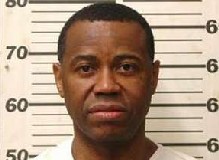
Henry Lee Jones
Murderer Robert Martines Perez
Murderer · USA · 1994
Name: Robert Martines Perez · Other name used in proceedings: Robert Martinez P…
15 victims
Robert Martines Perez
Murderer · USA · 1994
Name: Robert Martines Perez · Other name used in proceedings: Robert Martinez P…
15 victims
 Billy Frank Vickers
Murderer · USA · 1993
Billy Frank Vickers Vickers was executed by lethal injection in Texas on Januar…
14 victims
Billy Frank Vickers
Murderer · USA · 1993
Billy Frank Vickers Vickers was executed by lethal injection in Texas on Januar…
14 victims
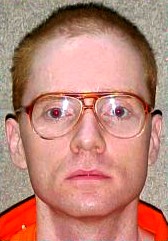 Robert Glen Jones
Murderer · USA · 1996
Defendant: Robert Glenn Jones (ADC#070566) · Co-defendant: Scott Nordstrom (ADC…
7 victims
Robert Glen Jones
Murderer · USA · 1996
Defendant: Robert Glenn Jones (ADC#070566) · Co-defendant: Scott Nordstrom (ADC…
7 victims
 Travis Lee Gibson
Murderer · USA · 2000
Travis Lee Gibson received sentences of death on 2001. On automatic and direct…
1 victim
Travis Lee Gibson
Murderer · USA · 2000
Travis Lee Gibson received sentences of death on 2001. On automatic and direct…
1 victim
 Carlos de Luna
Murderer · USA · 1983
Carlos de Luna was executed by lethal injection in Texas on December 7, 1989. H…
1 victim
Carlos de Luna
Murderer · USA · 1983
Carlos de Luna was executed by lethal injection in Texas on December 7, 1989. H…
1 victim
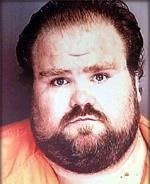 Alan Eugene Miller
Murderer · USA · 1999
Alan Eugene Miller was sentenced to death on July 31, 2000. Miller shot two co-…
3 victims
Alan Eugene Miller
Murderer · USA · 1999
Alan Eugene Miller was sentenced to death on July 31, 2000. Miller shot two co-…
3 victims
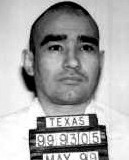 Joel Escobedo
Murderer · USA · 1998
Joel Escobedo (TDCJ Number 999305) · Date of Birth: 02/06/1962 · Race: Hispanic…
1 victim
Joel Escobedo
Murderer · USA · 1998
Joel Escobedo (TDCJ Number 999305) · Date of Birth: 02/06/1962 · Race: Hispanic…
1 victim
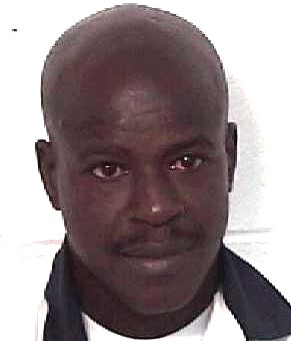 Nelson Earl Mitchell
Murderer · USA · 1986
Nelson Earl Mitchell, 34, was sentenced to death on February 14, 1990. He was s…
1 victim
Nelson Earl Mitchell
Murderer · USA · 1986
Nelson Earl Mitchell, 34, was sentenced to death on February 14, 1990. He was s…
1 victim
- Gender
- male
- Country
- USA
- Location
- Tennessee/Florida, USA
- Date of birth
- August 23, 1963
- Age at first offence
- 40
- Characteristics
- robbery, serial rapist, sexual abuse, drugs, escape attempt, kidnapping, armed robbery
- Victim profile
- Clarence James, 82, and Lillian James, 67 / Carlos Perez, 19
- Method of murder
- St abbing with knife
- Date(s) of murder
- August 22/27, 2003
- Years active
- 2003
- Date of arrest
- September 2003
- Status
-
Sentenced to death
Sentenced to death in Tennessee on May 14, 2009; sentenced to death in Florida on May 6, 2014
Henry Lee Jones
Background
Henry Lee “Bam” Jones grew up without a father in Cleveland, Miss. He grew up with older relatives who he said beat him with belts, cords, hangers and water hoses. After moving to Fort Lauderdale, Fla., he went to prison at age 18 for robbery and kidnapping, serving 16 years.
In the late 1990s, Florida’s overcrowded prison system gave early release to thousands of inmates, including those who committed violent crimes and continued to be violent while incarcerated. Henry Lee Jones was released from the Florida Department of Corrections after serving less than 15 years.
The offence
Jones was charged with killing a Shelby County couple during a robbery at their home. In 2014, he was sentenced to death in Florida for the murder of Carlos Perez, 19.
In Tennessee, a jury convicted Jones of first-degree felony murder in the strangulation and stabbing deaths of Clarence James, 82, and his wife, Lillian James, 67, who were found dead in their Bartlett home on Aug. 23, 2003—Jones’ 40th birthday. Prosecutors told jurors the murders were committed to eliminate witnesses and that the murders were committed during a robbery, and they also sought the death penalty because Jones had five prior violent felony convictions and because the murders were heinous, atrocious and cruel. Another factor was that Clarence James was over the age of 70. The retired Memphis city worker had a pacemaker.
Clarence James and Lillian James were bound, strangled, and had their throats slashed in their Bartlett home. Tevarus Young testified that he watched as Jones robbed and then brutally murdered Lillian James. Young said he also saw the body of Clarence James in a utility room in their home on Bartlett Boulevard. Young quoted Jones as saying “You know what time it is, old lady,” before killing her. Young said he asked Jones why he killed her and Jones replied, “Because she seen my face.”
Jones was also implicated in other killings. Prosecutors told jurors and jurors heard evidence about the Perez killing in Florida and about another similar killing, the 2002 death of Keith Gross, 24, of Fort Lauderdale. Jones was described as the prime suspect in the Keith Gross case, though he had not been indicted. Prosecutors called the Perez murder a “signature crime” that established Jones’ identity in the Bartlett case.
Carlos Perez (Florida)
Carlos Perez was a 19-year-old day laborer who lived in Wilton Manors, Fla., outside Fort Lauderdale. He left early in the morning to look for work at Dependable Temps. In the afternoon, Perez and another man came to the Super 8 Motel in Melbourne, Fla., about five miles from where Tevarus Young left the Dodge Aries and near a gas station where a credit card belonging to Clarence and Lillian James was used. Perez checked into room 217.
Housekeepers at the Super 8 Motel told owner Ravindra Patel what they had seen in room 217. Patel went to the room, opened the door, and saw blood covering the bed and a body wrapped in a comforter. The body was Carlos Perez. He suffered strangulation, cuts to the neck and a severed windpipe. Footwear impressions on the bathroom floor suggested there were at least four people in the room the day of Perez’s murder. Five cigarette butts were left in the room, and several of those matched Perez’s DNA. DNA on one cigarette butt was a woman’s, and it matched DNA found on Perez’s penis, suggesting Perez and the unknown woman had sex at some point. Perez had abrasions to his anus and bite marks on his back. Marks to his wrists and ankles suggested Perez was bound, possibly with tape.
In the sentencing order described in the Florida case, Brevard County Medical Examiner Sajid Qaiser determined that Perez had been strangled—pressure was applied and released repeatedly. The order said Qaiser called this “sexual asphyxia, a kind of sadism to enhance sexual pleasure.” The order also described that Perez was cut multiple times, progressively more deeply. The medical examiner felt this was a sadistic act.
Jones denied killing Perez in court.
Clarence and Lillian James (Tennessee)
On Aug. 22, 2003, Tevarus Young, who had been asleep in Henry Lee Jones’ beige Dodge Aries, woke to knocking. A Burger King employee was at the window looking for Bam. Young was in Shelby County now, having driven from Florida with Jones for a day and a half. Young had only met Jones a few days before at Holiday Park in Fort Lauderdale, Fla. Young was homeless and wanted by police for a February 2003 incident in which he allegedly tried to firebomb his girlfriend’s house. Jones offered Young money for sex at the park and Young got in the car. Jones drove to Tennessee after stopping by pawn shops and at the Miami-Dade County Courthouse where Jones paid tickets.
Young described the killing in Bartlett. Clarence James, an 82-year-old World War II veteran who retired from the Memphis Park Commission, was inside a garage. Young followed Jones into the house after Jones walked past with a rope and a towel in his hands. Young saw Jones throw 64-year-old Lillian to the ground. Young heard Jones say, “Old lady, do you know what time it is?” and “Do you know what time it is? … Where’s your money? Where’s your purse?” Young watched Jones wrap a rope around Lillian’s neck and choke her. Jones then pulled out a knife and cut open her throat. Jones handed Young a paper bag and ordered him to follow. They went to the laundry room near the garage where Clarence James was lying in a pool of blood; his throat was slashed. Jones untied rope bindings from Clarence’s arms and legs and placed the ropes in the bag. Jones and Young then took the elderly couple’s valuables and left. In the car, Jones showed Young the knife and said: “I swear, if you tell somebody, I’m going to kill you and cut your d — - off.”
Investigation
Melbourne, Fla., detectives traveled 150 miles south to Fort Lauderdale in an attempt to determine how Perez ended up in a bloody bed at the Super 8. They learned Perez had gone to Dependable Temps to find work the morning of Aug. 26, 2003. Outside Dependable Temps, Det. Johnny Lawson noticed the same type of car hotel staff saw pull up to the Super 8—a white Lincoln Town Car with a customized Florida plate reading “69BAM.” The plate belonged to Henry Lee Jones. He worked as a day laborer for the temp agency.
Police compared photographs of the crime scenes and realized the same person might be responsible for all three murders. Detectives’ closest connection to Jones was Tevarus Young, who was still in jail in Broward County after being pulled over five days earlier in Brevard County. Upon questioning Young in Fort Lauderdale, Florida detectives contacted their counterparts in Tennessee and secured a first-degree murder indictment against Jones for the killings of Clarence and Lillian James.
After a brief car chase, Fort Lauderdale Police Det. Chuck Morrow apprehended Jones on Sunrise Boulevard, northwest of downtown. In the trunk of Jones’ Lincoln Town Car, police found of pair of Nike shoes. They matched one of the footwear impressions made in the bathroom of the Super 8 in Melbourne. Jones and Young were extradited to Tennessee.
The Florida Department of Law Enforcement, suspecting Jones could be responsible for murders throughout the Southeast, began working with other law-enforcement agencies examining unsolved cases involving the killer’s alleged signature: bindings and cuts to the neck. To date, Jones had been linked only to the murders of Keith Gross and Carlos Perez in Florida and Clarence and Lillian James in Tennessee. Investigators suspected Jones in other murders but had not specified those cases.
Arrest
Jones was arrested in Fort Lauderdale three weeks later in his hometown of Fort Lauderdale, in connection with the Bartlett couple slayings.
After a brief car chase, Det. In the trunk of his Lincoln Town Car, police found of pair of Nike shoes that matched one of the footwear impressions from the Melbourne Super 8 bathroom.
Trial
Tennessee trial (Bartlett, Shelby County)
On Tuesday, jurors convicted Jones of first-degree felony murder in the strangulation and stabbing deaths of Clarence James, 82, and Lillian James, 67, found dead in their Bartlett home on Aug. 23, 2003—Jones’ 40th birthday. The trial involved a nine-day capital murder trial.
During the penalty phase, Jones took the stand and talked for more than an hour. Defense attorneys later told jurors they had seen “a broken man” who deserved mercy. Prosecutors told jurors they had had the rare opportunity to see a controlling, heartless killer who still enjoyed seeing crime-scene pictures of his victims.
Jones told jurors: “I ain’t no hater” and said he had no hard feelings toward them for their guilty verdict. He said: “I ain’t mad at y’all,” Jones said, holding his hands out toward the eight women and four men in the jury box. “I still love y’all. Y’all just ain’t heard the whole story.”
Jones denied involvement, stating: “I never murdered nobody.” He added: “Them people are lying. ... They only paint a picture of me as an animal on the street. That’s not true.”
Jones told jurors he came back to visit relatives in August of 2003 before returning to Florida after a few days. He said he sparred with prosecutors during the sentencing phase, angrily denying any involvement in the murders.
Young’s testimony included that when he asked Jones why he killed her, Jones replied: “Because she seen my face.” Young also testified that Jones threatened to kill him if he ever told anyone what he had seen.
Prosecutors were allowed to tell jurors of the killing of 19-year-old Carlos Perez four days later in Melbourne, Fla., because it was described as a unique “signature crime” of Jones’ that helped establish his identity in the Bartlett case. Stolen credit card purchases and other evidence were described as placing him in the Melbourne area at the time. Perez was also described as bound, strangled and slashed multiple times across the neck, with bindings removed and the crime scene cleaned, and he was left face down and robbed.
A juror was seen hugging Perez’s father, William Perez of Fort Lauderdale, who testified earlier in the trial.
The Florida jury later heard testimony about the Bartlett, TN killings as well as another similar stabbing and strangulation, the 2002 death of Keith Gross, 24, of Fort Lauderdale.
After the Tennessee Court of Criminal Appeals upheld Jones’ convictions and death sentences, automatic appeals were described as taking years. Judge John Colton Jr. set no execution date at sentencing because automatic appeals would take years, beginning with a defense motion for a new trial set for June 11.
Florida trial (Carlos Perez murder)
In 2014, Jones was convicted by a Brevard County jury in the murder of Carlos Perez on Aug. 27, 2003, in Melbourne. The Florida jury sentenced Jones to death following 28 minutes of deliberation.
During the Florida case, Jones represented himself in the capital murder trial in Titusville, Fla. He denied killing Perez in court. In a letter to Florida Today, he said he was framed and he described harsh conditions in jail under suicide watch.
Sentencing
Tennessee sentencing (May 14, 2009)
On May 14, 2009, a Criminal Court jury sentenced Jones to death by lethal injection for the 2003 murders of Clarence James, 82, and Lillian James, 67. The sentence was issued in Shelby County. It was described that the jury took less than three hours to find Jones to be among the worst of the worst after getting to know Henry Lee Jones over the past two weeks.
Judge John Colton Jr. set no execution date because automatic appeals would take years, beginning with a defense motion for a new trial set for June 11.
Florida sentencing (May 6, 2014)
On May 6, 2014, Judge John M. Griesbaum sentenced Henry Lee Jones to death following his conviction for the 2003 murder of Carlos Perez. In his order, the judge described the medical examiner’s findings that Perez had been strangled—pressure was applied and released repeatedly—and that Qaiser called this “sexual asphyxia, a kind of sadism to enhance sexual pleasure.” The order said Perez was cut multiple times, progressively more deeply and that the medical examiner felt this was a sadistic act.
In court at sentencing, “May God have mercy on your soul.” were described as heavy words among the last in a court order sentencing Jones to death.
Appeals
In April (year not specified in the text provided), the Tennessee Court of Criminal Appeals upheld Jones’ convictions and death sentences.
Other details
Jones’ co-defendant in the Bartlett case was Tevarus Young, who testified and faced lesser charges.
Jones’ brother, Eddie Jones, testified on Jones’ behalf in the sentencing trial and said no one else in the family wanted to participate. Eddie Jones said he did not know what role if any his brother played in the Bartlett murders.
Clarence and Lillian James were found in August of 2003 in their home in the 2400 block of Bartlett Boulevard.
William Perez of Fort Lauderdale wiped tears from his eyes in court the day Jones was found guilty in October.
Prosecutors described Jones as having five prior violent felony convictions. They told jurors the murders were heinous, atrocious and cruel; were committed to eliminate witnesses; and were committed during a robbery.
Jones’ representative himself in Florida.
Timeline
- Aug. 4, 1981 — Fort Lauderdale police officers Wayne Swenson and Pat Woosley met with 17-year-old Annie Mae Robbins; Henry Lee Jones, 18, was charged after officers found two infants and Jones fought with officers.
- Sept. 30, 1981 — Jones burglarized a home in Fort Lauderdale; he was again released on bail.
- Oct. 3, 1981 — Jones and Jackie Johnson began looking at vehicles at Johnny Harris Pontiac; Jones and Johnson used a gun to rob salesman Joseph Giovanni, forced him into a trunk, and took credit cards.
- Oct. 4, 1981 — State Trooper J.H. Cooper pursued Jones’ tan Grand Prix; Jones and Anna Mae Robbins fled; Jones climbed atop a box car and evaded police before being tackled.
- Feb. 13, 1982 — Jones was among five men who beat an inmate, Santiago Yeio Vallina, severely injuring him; Jones was not charged criminally for the assault.
- March 11, 1982 — Jones escaped while being escorted from jail to a hearing and was recaptured within hours.
- March 29, 1982 — Jones was found guilty on two counts of battery on a law enforcement officer and was sentenced to one year and a day in prison.
- Sept. 2, 1982 — Jones was found guilty of robbery and kidnapping for the October 1981 incident and received two 30-year prison sentences to run concurrently; he also pled guilty to attempted jail escape and received an additional five-year term.
- Oct. 13, 1982 — Henry Lee Jones became an inmate of the Florida Department of Corrections; he went to Baker Correctional Institute and was transferred among numerous correctional facilities.
- July 1, 1997 — Jones was released early from the Florida Department of Corrections.
- June 16, 1999 — The Jacksonville Sheriff’s Office charged Jones with stalking; after pleading guilty, he received 12 months of probation.
- May 31, 2000 — Deputy James E. Burroughs watched Jones and Kenneth Leslie during a failed robbery plot at Palm Coast Auto Body; Jones was charged with loitering and possession of marijuana and drug paraphernalia.
- Aug. 29, 2000 — Battery charges against Jones were dropped.
- March 21, 2001 — Jones violated a restraining order in Jacksonville and was ordered to spend 72 days in county jail.
- Oct. 10, 2001 — Sgt. Bill Johnston followed Jones; the injured woman was Brandy Collins; Jones was arrested and misdemeanor charges were pursued.
- Jan. 10, 2002 — Jones wrote letters to Brandy Collins while in jail.
- May 14, 2002 — A complaint was filed alleging Jones raped a boy after drinking and taking Percodan and alcohol.
- June 25, 2002 — Prosecutors declined rape-related charges after difficulty proving lack of consent and mental incapacity issues.
- Sept. 9, 2002 — Keith Gross’ body was found at Kitchens to Go; Walker found Gross hog-tied and strangled with his neck covered.
- Aug. 22, 2003 — Two people were killed in Bartlett; Tevarus Young described finding Clarence and Lillian James after Jones entered the garage and house.
- Aug. 25, 2003 — Tevarus Young described racing on Interstate 95, leading to a traffic stop; Det. Carlos Reyes stopped the Dodge Aries and arrested Young; Jones purchased a Town Car for the trip.
- Aug. 26, 2003 — Carlos Perez was killed; Perez checked into Super 8 room 217 after arriving in Jones’ white Lincoln Town Car.
- Aug. 27, 2003 — The jury in Florida later convicted Jones for the Perez murder dated Aug. 27, 2003.
- Aug. 28, 2003 — Melbourne detectives learned of a white Lincoln Town Car with customized Florida plate “69BAM” tied to Henry Lee Jones.
- Aug. 30, 2003 — Florida and Tennessee police compared evidence and connected three murders; a first-degree murder indictment was secured.
- Sept. 17, 2003 — Fugitive hunter Det. Chuck Morrow apprehended Jones following a chase; shoes matched footwear impressions.
- June 24, 2005 — Tevarus Young testified against Jones at a hearing in Shelby County Criminal Court Judge John Colton Jr.’s courtroom.
- Dec. 14, 2007 — Jones was accused of assaulting a cellmate while jailed at 201 Poplar and was moved to another cell.
- Aug. 29, 2008 — Judge John Colton Jr. ruled prosecutors could enter evidence from the Carlos Perez killing for the Memphis trial but excluded evidence from Keith Gross’ murder as too remote.
- Nov. 13, 2008 — Judge John Colton Jr. moved the trial date from Dec. 1 to May 4, 2009.
- May 13, 2009 — Jones took the stand during the penalty phase in the Bartlett case.
- May 14, 2009 — A Criminal Court jury sentenced Jones to death by lethal injection in Shelby County for the murders of Clarence James and Lillian James.
- Aug. 27, 2003 — Carlos Perez murder date used for the Florida conviction.
- Oct. 8, 2013 — Jones was described as sentenced to death in Florida in 2014 after a conviction described as having taken place in a capital murder trial in Titusville.
- May 6, 2014 — Judge John M. Griesbaum sentenced Jones to death in Florida for the murder of Carlos Perez.
Spotted an error, or have more information about this case?