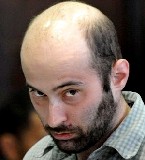
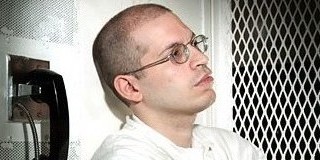
Levi Aron
Murderer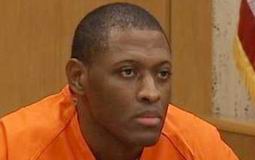 Leon Davis Jr.
Murderer · USA · 2007
Leon Davis Jr. was sentenced to death on April 29, 2011, for the execution-styl…
5 victims
Leon Davis Jr.
Murderer · USA · 2007
Leon Davis Jr. was sentenced to death on April 29, 2011, for the execution-styl…
5 victims
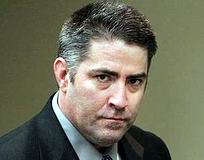 Raymond Lee Oyler
Murderer · USA · 2006
Raymond Lee Oyler was convicted for starting the 2006 Esperanza fire in Riversi…
5 victims
Raymond Lee Oyler
Murderer · USA · 2006
Raymond Lee Oyler was convicted for starting the 2006 Esperanza fire in Riversi…
5 victims
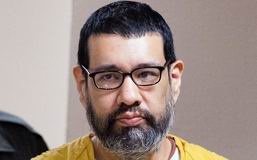 Anthony Garcia
Murderer · USA · 2008
Anthony Garcia was a former doctor who was found guilty on all counts including…
4 victims
Anthony Garcia
Murderer · USA · 2008
Anthony Garcia was a former doctor who was found guilty on all counts including…
4 victims
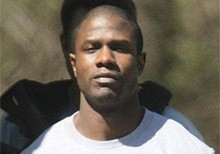 Brian Gene Nichols
Murderer · USA · 2005
Brian Gene Nichols was born December 10, 1971. He was known for his escape and…
4 victims
Brian Gene Nichols
Murderer · USA · 2005
Brian Gene Nichols was born December 10, 1971. He was known for his escape and…
4 victims
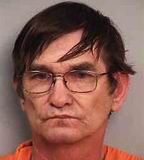 Bruce Mendenhall
Murderer · USA · 2007
Bruce Mendenhall grew up in Crawford County, Illinois. He was married and has t…
4 victims
Bruce Mendenhall
Murderer · USA · 2007
Bruce Mendenhall grew up in Crawford County, Illinois. He was married and has t…
4 victims
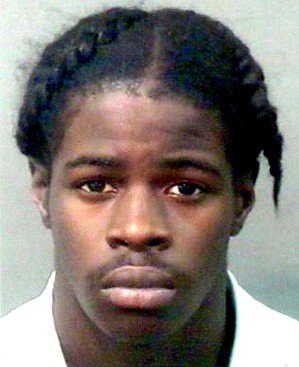 Demarcus Ralls
Murderer · USA · 2002
Demarcus Ralls Demarcus Ralls was 21 during his trial and testified in the pena…
4 victims
Demarcus Ralls
Murderer · USA · 2002
Demarcus Ralls Demarcus Ralls was 21 during his trial and testified in the pena…
4 victims
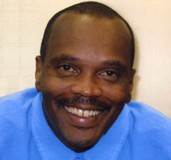 Jarvis Jay Masters
Murderer · USA · 1985
Jarvis Jay Masters (born 1962) was an African American man from Long Beach, CA.…
1 victim
Jarvis Jay Masters
Murderer · USA · 1985
Jarvis Jay Masters (born 1962) was an African American man from Long Beach, CA.…
1 victim
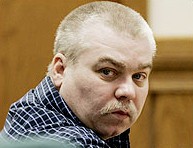 Steven Avery
Murderer · USA · 2005
Steven Avery was accused of luring Teresa Halbach, a young photographer working…
1 victim
Steven Avery
Murderer · USA · 2005
Steven Avery was accused of luring Teresa Halbach, a young photographer working…
1 victim
 Chante Mallard
Murderer · USA · 2001
Chante Jawan Mallard was convicted of murder and tampering with evidence in Tar…
1 victim
Chante Mallard
Murderer · USA · 2001
Chante Jawan Mallard was convicted of murder and tampering with evidence in Tar…
1 victim
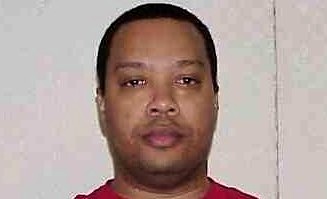 Kevin Stanford
Homicide · USA · 1981
Kevin Stanford was sentenced to death in 1982. The death sentence was commuted…
1 victim
Kevin Stanford
Homicide · USA · 1981
Kevin Stanford was sentenced to death in 1982. The death sentence was commuted…
1 victim
 Mark Andrew Fowler
Murderer · USA · 1985
Mark Andrew Fowler was executed by lethal injection in Oklahoma on January 23,…
3 victims
Mark Andrew Fowler
Murderer · USA · 1985
Mark Andrew Fowler was executed by lethal injection in Oklahoma on January 23,…
3 victims
- Gender
- male
- Country
- USA
- Location
- Brooklyn, New York City, New York, USA
- Date of birth
- 1975
- Age at first offence
- 36
- Characteristics
- kidnapping, dismemberment
- Victim profile
- Yehudah "Leiby" Kletzky, 8
- Method of murder
- Smothered with a towel
- Date(s) of murder
- July 12, 2011
- Years active
- 2011
- Date of arrest
- Next day
- Status
-
Life imprisonment
Sentenced to 40 years to life in prison on August 29, 2012
Case identification
Levi Aron was charged and later pleaded guilty in connection with the kidnapping and murder of Leiby Kletzky, an eight-year-old boy.
Timeline
- Monday, July 11, 2011 — Leiby Kletzky was kidnapped in the Hasidic neighborhood of Boro Park, Brooklyn, as he walked home from his school day camp.
- Wednesday morning, July 13, 2011 — Leiby Kletzky’s dismembered body was found in Levi Aron’s Kensington apartment and in a dumpster in another Brooklyn neighborhood, Sunset Park; Aron was apprehended early Wednesday morning.
- Wednesday, July 20, 2011 — The New York City medical examiner released autopsy results.
- Tuesday, August 4, 2011 — Aron was declared competent to stand trial at an arraignment at the New York State Supreme Court in Brooklyn.
- Tuesday, August 9, 2011 — Aron pleaded guilty to one charge of second-degree murder and one charge of second-degree kidnapping.
- Wednesday, August 29, 2012 — Judge Neil Firetog sentenced Aron to 40 years to life in prison.
- January 2007 — Aron was served with an Order of Protection.
- 2004 — Aron married Diana Diunov.
- 2007 — Aron married Deborah M. Parnell.
Background
Leiby Kletzky was the son of Nachman Kletzky and Esti Forster Kletzky. He was the third of six children and the only son. He was reported missing late Monday afternoon while walking home from a day camp held at his school, Yeshiva Boyan Tiferes Mordechai Shlomo. It was his first time walking home alone rather than taking the school bus.
Leiby Kletzky missed a turn upon leaving camp and headed in the wrong direction. His mother waited for him at a predetermined point a few blocks away at 50th Street and 13th Avenue.
Levi Aron was a confessed murderer and was described as an Orthodox Jew who grew up in Brooklyn. His father worked at the Hasidic-owned B&H Photo in Brooklyn and his mother died five or six years previously. Aron lived in the attic apartment of his parents’ three-family home on the corner of Avenue C and East 2nd Street in the Kensington neighborhood.
Aron was married twice: in 2004 he married Diana Diunov, an Israeli woman, and in 2007 he married Deborah M. Parnell of Tennessee, a divorced mother of two whom he had met online. Both marriages ended in divorce. Aron worked as a clerk at a hardware-supply company in Brooklyn and was described by coworkers as quiet and socially awkward.
Aron injured his head when he was hit by a car while riding his bike at age 9 and had problems stemming from that accident. He had no prior arrest record.
Aron received a fine for a seat belt violation and one speeding ticket. In Brooklyn, authorities cited a summons for public urination. Aron had been served with an Order of Protection in January 2007.
The offence
Leiby Kletzky was kidnapped on Monday, July 11, 2011, as he walked home from his school day camp in the Hasidic neighborhood of Boro Park, Brooklyn.
His dismembered body was found in Levi Aron’s Kensington apartment of confessed murderer Levi Aron and in a dumpster in another Brooklyn neighborhood, Sunset Park.
The case was officially ruled a homicide after autopsy results.
The autopsy findings indicated that Leiby had ingested a lethal mix of four different drugs and had then been smothered. The cause of death was determined to be intoxication from a combination of cyclobenzaprine (a muscle relaxant), quetiapine (an antipsychotic), and hydrocodone and acetaminophen (two analgesics), followed by smothering. Upon later release of additional findings, it was revealed that Kletzky had ingested a fifth drug, Duloxetine.
There was no evidence that the victim had been sexually abused. Marks suggested that Leiby had died following a smothering and dismemberment.
Investigation
After Leiby’s disappearance, New York City police conducted an all-out search and Shomrim volunteers coordinated a block-by-block search.
The Brooklyn South Shomrim volunteer civilian patrol received a missing child call at 6:14 p.m. The patrol checked stores, candy stores, and homes of friends and relatives where the boy might have gone. By 8:30 p.m., Shomrim contacted the New York City Police Department, which declared a Level 1 search, something normally undertaken after a child is missing for 24 hours.
The police search involved canine units, mounted police, and helicopters.
On Tuesday morning, Brooklyn South Shomrim made an all-out call for volunteers to join the search. Five thousand Orthodox Jewish volunteers joined from the local community and from as far away as Queens, Long Island, the Catskills, Monsey and Boston. Bangladeshi residents of nearby Kensington also joined the search.
State Assemblyman Dov Hikind posted a $5,000 reward for information leading to the return of the child, which was eventually upped to $100,000 by members of the community.
Yaakov German, a Bobover Hasid and father of Kletzky’s yeshiva rebbi, went door-to-door on Tuesday morning to examine videos from surveillance cameras along the boy’s route. The videos showed that after leaving his school at 1205 44th Street, between 12th and 13th Avenues, at about 5:05 p.m., Kletzky missed his turn at 13th Avenue and continued down 44th Street. Other videos showed the boy walking by Shomrim Locksmith at 44th Street and 15th Avenue, and then along 44th Street at 17th Avenue.
On 18th Avenue, the boy was seen talking to a man who crossed the street and entered a dentist’s office. When the man came out, Kletzky followed him and appeared to get into his car.
After examining the videos, police located the dentist, who alerted his receptionist, who gave them the name and address of the suspect who had come in to pay his bill that day.
After midnight on Tuesday, police identified the car in the surveillance video as a 1990 gold Honda Accord. Forty-five minutes later, two Flatbush volunteers searching for the missing boy in Kensington spotted the car and sent in the license-plate number, which matched Aron’s details.
Arrest
Police went to the suspect’s apartment in Kensington around 2:00 a.m. Wednesday morning. They arrived to an open door. When they asked Aron where the boy was, he allegedly nodded toward the kitchen, where police found blood-soaked carving knives and bloody towels in bags.
The boy’s severed feet were found in the freezer. Aron told police where to find the rest of the remains: in a red suitcase thrown in a dumpster on 20th Street between Fourth and Fifth Avenues.
Aron was taken into police custody at 2:40 a.m. Wednesday morning.
Confession
Aron gave a 450-word handwritten confession to police after his arrest.
In the confession, Aron claimed that Kletzky asked him for directions and accepted a ride, saying he wanted to be dropped off at a bookstore. Aron claimed they drove together to a wedding in Monsey, New York, and that they returned around 11:20 p.m. Aron claimed he planned to return the boy to his family on Tuesday, but when he saw the missing child posters the next day, he said he “panicked,” returned to the apartment, and smothered the boy with a towel. Aron then dismembered the body and stuffed it into bags, which he placed in a suitcase and left in a dumpster in another neighborhood.
Aron’s account included that he planned to return the boy to his family, and that he panicked after seeing missing child posters.
A video from the Ateres Charna wedding hall in Rockland County confirmed that Aron was at the wedding but no sign showed Kletzky. A color surveillance video at a Sunoco gas station on the Palisades Interstate Parkway showed Aron and Kletzky getting out of Aron's car and going into the bathroom; the video was time-stamped 8:15 p.m.
“He looked familiar. I thought I knew him”. (Aron did not explain why he took and kept the boy.)
“I panicked”. (Aron described panic after seeing missing child posters.)
“I don’t know what happened, I just panicked.” (Aron said in a media interview.)
“I understand it may be wrong and I am sorry for the hurt I have caused.” (Aron said in his hand-written statement.)
Trial
Court appearance and legal proceedings
Aron appeared in Brooklyn Criminal Court on July 14, 2011, and pleaded not guilty. At the hearing, his lawyer stated that Aron “suffers from hallucinations” and “hears voices”. The court ordered Aron to be sent to the prison ward at Bellevue Hospital Center for a psychiatric evaluation.
After Aron had been hospitalized, his lawyers stated that he “is seeking to quiet the voices in his head by listening to music”. They described his demeanor as “abnormal”.
In December of 2011, another attorney, Howard Greenberg, remarked: “Look, everybody knows when blood relations have offspring, there can be genetic defects... There’s inbreeding in that community.” Aron was held at Rikers Island on round-the-clock suicide watch.
In March 2012 Aron appeared in court via video conferencing while attorneys scheduled a new trial date. In May 2012 he appeared before the court again via videoconferencing; the video showed that he had gained at least 50 pounds (23 kg) since his arrest.
In October 2011, Aron appeared at a brief hearing in State Supreme Court via video conferencing. His lawyers claimed that police forced Aron to write his 450-word confession, stating that he is not sane enough to be aware of his actions. They stated they were pursuing an insanity defense.
In November, the Appellate Division of the State Supreme Court denied Aron's counsel’s request to move the trial to Suffolk County or The Bronx due to unfavorable media coverage in Brooklyn, while allowing the defense to re-apply after the jury pool was questioned.
Psychiatric evaluation and fitness
After the psychiatric evaluation, results indicated Aron was diagnosed with an adjustment disorder. He was described as “confused and apathetic”, with a “practically blank” personality. Details emerged that Aron had a younger sister who died while institutionalized for schizophrenia.
Pretrial media interview and remarks attributed to Aron
Aron gave his first media interview to the New York Post on 12 August. He did not refer to Kletzky by name and kept referring to the smothering and dismembering as “the incident”.
When asked about his actions, he did not explain why he took and kept the boy, saying, “He looked familiar. I thought I knew him”.
Aron repeatedly answered “I don’t know” to questions about what he did and why.
“He states he did not wish the boy harm but that he ‘panicked’.” (As reported from the psychologist’s evaluation.)
Plea bargain and guilty plea
On August 1, 2012, prosecutors struck a deal with the defense in which Aron would plead guilty in exchange for a sentence of at least 40 years to life in prison.
On August 9, 2012, Aron changed his plea to guilty of one charge of second-degree murder and one charge of second-degree kidnapping at Brooklyn Supreme Court. He answered a series of questions from the judge in which he admitted to killing Leiby Kletzky.
Sentencing
On August 29, 2012, Judge Neil Firetog sentenced Aron to 40 years to life in prison. Aron would be eligible for parole in 2051, which included credit for time served.
The sentencing narrative also described an earlier allocation of sentence terms in which Aron would receive 25 years to life on the second-degree murder charge and 15 years to life on the second-degree kidnapping charge.
“no” (Aron whispered “no” when asked to comment.)
Appeals
No appeal history was included in the provided material.
Outcome
Aron pleaded guilty and was sentenced to 40 years to life in prison on August 29, 2012.
Aftermath
Nachman Kletzky filed a $100 million civil lawsuit against Levi Aron in Brooklyn Supreme Court seeking damages for the “abduction, kidnapping, torture, murder and dismemberment” of his son.
On August 23, Kletzky filed a $100 million civil suit against Aron's father, Jack, for neglecting to monitor his son or protect Leiby while Leiby was in his home.
State Assemblymen Dov Hikind and Peter Abbate and State Senator Diane Savino said they would introduce a bill called “Leiby's Initiative”, which would grant a $500 annual tax credit to any New York City property owner who installs and maintains surveillance cameras.
Councilman David Greenfield said he would propose “Leiby's Law,” a bill under which businesses could volunteer to be designated as safe places for children who are lost or otherwise in trouble, with employees undergoing background checks and businesses putting a green sticker in their store windows.
On 16 August 2011, the Brooklyn District Attorney’s office announced a similar program called “Safe Stop”. By that point, 76 stores had signed up to display a green “Safe Haven” sticker.
Funeral: Kletzky’s funeral was held on Wednesday in the parking lot of a Boro Park synagogue. Attendance was estimated at 8,000 by the Shomrim civilian patrol and 10,000 by Arutz Sheva.
Search participation: Up to 5,000 Orthodox Jewish volunteers coordinated by the Brooklyn South Shomrim volunteer civilian patrol joined the search. The search involved a coordinated all-out effort by police and volunteers.
Spotted an error, or have more information about this case?