
Dewayne Michael Carey
Murderer Brian Kevin Rosenfeld
Murderer · USA · 1985
Brian Kevin Rosenfeld Brian Kevin Rosenfeld was sentenced to three concurrent l…
23 victims
Brian Kevin Rosenfeld
Murderer · USA · 1985
Brian Kevin Rosenfeld Brian Kevin Rosenfeld was sentenced to three concurrent l…
23 victims
 Russell Ellwood
Murderer · USA · 1991
Russell Ellwood was a former taxi driver. Authorities suspected him of killing…
20 victims
Russell Ellwood
Murderer · USA · 1991
Russell Ellwood was a former taxi driver. Authorities suspected him of killing…
20 victims
 Robert Martines Perez
Murderer · USA · 1994
Name: Robert Martines Perez · Other name used in proceedings: Robert Martinez P…
15 victims
Robert Martines Perez
Murderer · USA · 1994
Name: Robert Martines Perez · Other name used in proceedings: Robert Martinez P…
15 victims
 Billy Frank Vickers
Murderer · USA · 1993
Billy Frank Vickers Vickers was executed by lethal injection in Texas on Januar…
14 victims
Billy Frank Vickers
Murderer · USA · 1993
Billy Frank Vickers Vickers was executed by lethal injection in Texas on Januar…
14 victims
 Junko Ogata
Serial killer · Japan · 1996
Junko Ogata (緒方 純子 Ogata Junko, born February 25, 1962) was a Japanese woman wh…
7 victims
Junko Ogata
Serial killer · Japan · 1996
Junko Ogata (緒方 純子 Ogata Junko, born February 25, 1962) was a Japanese woman wh…
7 victims
 Jason Hann
Murderer · USA · 1999
Jason Hann was convicted of killing his 2-month-old daughter, Montana, and also…
2 victims
Jason Hann
Murderer · USA · 1999
Jason Hann was convicted of killing his 2-month-old daughter, Montana, and also…
2 victims
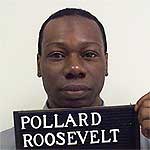 Roosevelt Pollard
Murderer · USA · 1985
Roosevelt Pollard · Maurice Alexander · Michael Hammon · Robert Sands · Howard…
1 victim
Roosevelt Pollard
Murderer · USA · 1985
Roosevelt Pollard · Maurice Alexander · Michael Hammon · Robert Sands · Howard…
1 victim
- Gender
- male
- Country
- USA
- Location
- Harbor City, California, USA
- Date of birth
- 1961
- Age at first offence
- 34
- Characteristics
- robbery, kidnapping
- Victim profile
- Ernestine Campbell, 51
- Method of murder
- Stabbing with knife
- Date(s) of murder
- April 16, 1995
- Years active
- 1995
- Date of arrest
- —
- Status
-
Sentenced to death
Sentenced to death on December 16, 1996
Case identifiers and parties
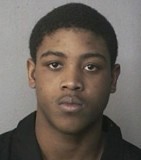
- Defendant: Dewayne Michael Carey, who was sentenced to death on December 16, 1996.
- Victim: Ernestine Campbell, Carey’s Harbor City next-door neighbor.
- Trial judge: Los Angeles Superior Court Judge John Cheroske.
- Appeal court: California Supreme Court.
- Appeal opinions: People v. Carey, 07 S.O.S. 2874.
Timeline
- 1995 — Carey killed his Harbor City next-door neighbor, Ernestine Campbell, after she surprised him as he was burglarizing her home.
- December 16, 1996 — Carey was sentenced to death.
The offence
Carey confessed to stabbing Ernestine Campbell to death after she surprised him as he was burglarizing her home.
Campbell came home in the morning after attending a class at Los Angeles Harbor College. Her husband found her and reported that a number of items of property had been stolen.
Carey initially claimed that he was only a lookout and blamed the murder on Leach. He later recanted that claim and admitted that he entered through the kitchen window and placed several items in a pillow case before Campbell confronted him. He said that, fearing she would identify him, he tied her up with an electrical cord before stabbing her and completing the burglary.
Investigation and evidence
Police focused on Carey, who lived next door with his aunt and uncle, after a witness said he saw him leaving the Campbell residence.
A friend of Carey’s, Robert Leach, admitted to police that he had stored a shotgun and some money for the defendant.
Other friends and family members testified that Carey had money in the days following the killing, which was unusual for him.
At the time of Carey’s arrest, he was with a female friend. Officers contacted the woman’s fiancée, asking him to bring her purse, which turned out to contain property belonging to the Campbells.
Arrest
At the time of his arrest, Carey was with a female friend.
Officers contacted the woman’s fiancée, asking him to bring her purse, which contained property belonging to the Campbells.
Trial
The defense presented no evidence.
A jury found Carey guilty of:
- First degree murder with robbery and burglary special circumstances
- First degree residential robbery
- First degree burglary
Sentencing and penalty phase
In the penalty phase, prosecutors presented evidence that Carey had been previously convicted of voluntary manslaughter. The record said he was originally charged with murder but negotiated a plea to the lesser charge and a 13-year sentence, and that he also had possession of a weapon while in custody.
Prosecutors also presented witnesses to testify to three incidents of criminal violence in which Carey was not charged:
- One incident involved possession of a knife and threatening to stab an acquaintance after the person asked Carey to leave his house.
- The other two incidents involved prison stabbings.
The defense case in mitigation was largely based on Carey’s emotional and physical suffering as a child, at the hands of his father and stepmother.
Appeals
The California Supreme Court unanimously affirmed the conviction and death sentence.
Justice Joyce L. Kennard said none of Carey’s challenges to Los Angeles Superior Court Judge John Cheroske’s rulings were valid, and that most of the arguments he raised on appeal had been rejected in earlier cases.
Carey argued on appeal that Cheroske erred in admitting autopsy photos. Carey’s appellate counsel said the photos were irrelevant because the cause of death was undisputed and were inflammatory.
Justice Kennard addressed why the photos were properly considered, including the following statements:
“Kennard, however, noted that the defense did not object to the photos on relevance grounds at trial and said they would have been admissible ‘to prove how the crime occurred, by showing the location of the wounds and to illustrate the paramedic’s testimony’ even if an objection had been made.”
“While ‘unpleasant,’ she added, the pictures were ‘not overly graphic’ and were probative of the manner of the victim’s death, which the jury was entitled to consider in determining whether to impose the death penalty, the justice said.”
The case, People v. Carey, 07 S.O.S. 2874, was argued in the Supreme Court by Deputy State Public Defender Gary D. Garcia and Deputy Attorney General John Yang.
Other details
- Carey was reported as being now 45 at the time of the appellate discussion.
- Carey's confession included describing entry through the kitchen window and putting several items in a pillow case before Campbell confronted him.
- After Campbell confronted him, Carey said he tied her up with an electrical cord before stabbing her and completing the burglary.
- A witness reported seeing Carey leaving the Campbell residence.
- Robert Leach admitted storing a shotgun and some money for Carey.
- Friends and family members testified about Carey having money in the days after the killing, which was unusual for him.
- Carey’s initial claim that he was only a lookout was later recanted.
- The record noted that Carey’s defense presented no evidence.
Spotted an error, or have more information about this case?