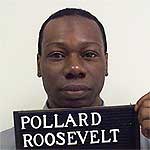
Roosevelt Pollard
Murderer Brian Kevin Rosenfeld
Murderer · USA · 1985
Brian Kevin Rosenfeld Brian Kevin Rosenfeld was sentenced to three concurrent l…
23 victims
Brian Kevin Rosenfeld
Murderer · USA · 1985
Brian Kevin Rosenfeld Brian Kevin Rosenfeld was sentenced to three concurrent l…
23 victims
 Marvin Gray
Murderer · USA · 1975
Marvin Gray was convicted killer who claimed responsibility for 23 slayings and…
23 victims
Marvin Gray
Murderer · USA · 1975
Marvin Gray was convicted killer who claimed responsibility for 23 slayings and…
23 victims
 Yahweh ben Yahweh
Murderer · USA · 1980
Yahweh ben Yahweh was born and legally named Hulon Mitchell Jr. (October 27, 19…
23 victims
Yahweh ben Yahweh
Murderer · USA · 1980
Yahweh ben Yahweh was born and legally named Hulon Mitchell Jr. (October 27, 19…
23 victims
 Russell Ellwood
Murderer · USA · 1991
Russell Ellwood was a former taxi driver. Authorities suspected him of killing…
20 victims
Russell Ellwood
Murderer · USA · 1991
Russell Ellwood was a former taxi driver. Authorities suspected him of killing…
20 victims
 Tillie Klimek
Serial killer · USA · 1914
Ottilie “Tillie” Klimek, also known as Ottilie “Tillie” Klimek (or Tillie Gbure…
6 victims
Tillie Klimek
Serial killer · USA · 1914
Ottilie “Tillie” Klimek, also known as Ottilie “Tillie” Klimek (or Tillie Gbure…
6 victims
 Frances Kidder
Murderer · United Kingdom · 1867
Frances Kidder (c. 1843 – 2 April 1868) was executed by hanging in front of Mai…
1 victim
Frances Kidder
Murderer · United Kingdom · 1867
Frances Kidder (c. 1843 – 2 April 1868) was executed by hanging in front of Mai…
1 victim
 George Franklin Page
Homicide · USA · 1995
George Franklin Page was male, white, and aged 63. He served 16 years in the mi…
1 victim
George Franklin Page
Homicide · USA · 1995
George Franklin Page was male, white, and aged 63. He served 16 years in the mi…
1 victim
 Damon Matthews
Murderer · USA · 2003
Damon Matthews (TDCJ Number 999476) was convicted of capital murder in Harris C…
1 victim
Damon Matthews
Murderer · USA · 2003
Damon Matthews (TDCJ Number 999476) was convicted of capital murder in Harris C…
1 victim
 Lakhvir Singh
Murderer · United Kingdom · 2009
Defendant: Lakhvir Singh Known alias/nickname: "The Curry Killer" Method used:…
1 victim
Lakhvir Singh
Murderer · United Kingdom · 2009
Defendant: Lakhvir Singh Known alias/nickname: "The Curry Killer" Method used:…
1 victim
- Gender
- male
- Country
- USA
- Location
- Cole County, Missouri, USA
- Date of birth
- March 13, 1964
- Age at first offence
- 21
- Characteristics
- carjacking
- Victim profile
- Richard E. Alford
- Method of murder
- Shooting ( .22 caliber automatic rifle)
- Date(s) of murder
- December 12, 1985
- Years active
- 1985
- Date of arrest
- —
- Status
-
Life imprisonment
Sentenced to death on January 27, 1986; commuted to life in prison in State of Missouri v. Roosevelt Pollard 735 S.W.2d 345 (Mo.banc 1987); execution stayed due to mental incompetence; petition dismissed after federal habeas proceedings in 28 F.3d 887
Case record: Roosevelt Pollard
People
- Roosevelt Pollard
- Maurice Alexander
- Michael Hammon
- Robert Sands
- Howard Henry (rest area maintenance person)
- Richard Alford (victim)
Timeline
- December 12, 1985 — Pollard drove south from St. Louis on Interstate 55 in Pollard’s car with Maurice Alexander, Michael Hammon, and Robert Sands; while driving, the battery went dead; Pollard removed a .22 caliber automatic rifle from his truck and loaded it with ammunition; Pollard and Hammon sought another battery; they found a battery in a car at a nearby farm and brought it back; later Pollard exited the highway at a rest area near Steele, Missouri after a tire went flat; Alexander and Hammom went with Howard Henry, the rest area maintenance person, to a nearby service station to purchase a new tire; after Alexander and Hammom left, Alford drove into the rest area in his new 1984 Pontiac Bonneville and parked on one spot away from Pollard’s car; Pollard removed the loaded rifle from the car and waited for Alford to return to his car; Pollard stood in the space between the two cars and shot Alford through the window, then shot Alford two more times; Pollard moved Alford’s body from the driver’s seat, got into the car, and drove off with the body; twelve to thirteen minutes later Pollard returned to see if his friends had made it back with the new tire; because they had not, Pollard left again in Alford’s car and left it at the rest area on the northbound side of Interstate 55; Pollard and his friends stopped in Blytheville, Arkansas to spend the night; Pollard had stolen a ring from the victim’s finger and was wiping the blood from it; Pollard later sold it in a pawn shop.
- January 27, 1986 — Pollard was sentenced to death.
- Mo.banc 1987 — Pollard’s death sentence was commuted to life in prison in State of Missouri v. Roosevelt Pollard 735 S.W.2d 345 (Mo.banc 1987).
- July 7, 1994 — The United States Court of Appeals, Eighth Circuit decided 28 F.3d 887.
- Aug. 22, 1994 — Rehearing and Suggestion for Rehearing En Banc was denied.
- April 11, 1994 — The United States Court of Appeals, Eighth Circuit submitted the case in 28 F.3d 887.
Background
Roosevelt Pollard was convicted and sentenced to death for the 1983 murder of Blytheville, Arkansas businessman Richard E. Alford. The conviction was affirmed by the Missouri Supreme Court. The Supreme Court of the United States denied certiorari. Pollard filed a motion for state post-conviction relief, and the motion court appointed counsel. After being denied state post-conviction relief, Pollard appealed again to the Missouri Supreme Court, which affirmed the motion court’s denial of relief. The Supreme Court of the United States denied certiorari again. Pollard then filed a petition for a writ of habeas corpus in the Missouri Supreme Court. When the Missouri Supreme Court denied relief, he filed a federal petition for habeas corpus relief. The United States District Court for the Western District of Missouri denied his petition, and the appeal followed.
Roosevelt Pollard had been declared mentally incompetent and his execution stayed. He remained on the capital punishment list because he could be re-evaluated by the court on his death sentence if his mental condition improved.
The offence
On the morning of December 12, 1985, Pollard decided to visit relatives in Arkansas. Pollard, accompanied by Maurice Alexander, Michael Hammon, and Robert Sands, drove south from St. Louis on Interstate 55 in Pollard’s car. While driving, the battery went dead. Pollard removed a .22 caliber automatic rifle from his truck and loaded it with ammunition. Pollard brought the loaded rifle with him while he and Hammon sought another battery. They found a battery in a car at a nearby farm. They got the battery and brought it back to his car. Pollard returned the rifle to his car and they took off down Interstate 55 again.
Later, one of the tires went flat and he exited the highway at the rest area near Steele, Missouri. Having no spare tire, Alexander and Hammom went with Howard Henry, the rest area maintenance person, to a nearby service station to purchase a new tire. Shortly after Alexander and Hammon left for a new tire, Richard Alford drove into the rest area in his new 1984 Pontiac Bonneville and parked on one spot away from Pollard’s car.
Pollard told Sands that he wanted that car and he was going to get it. Pollard removed the loaded rifle from the car and waited for Alford to return to his car. Pollard stood in the space between the two cars and shot Alford through the window, turned and looked at Sands, then turned back and shot Alford two more times.
Pollard moved Alford’s body from the driver’s seat, got into the car, and drove off with the body. Twelve to thirteen minutes later, Pollard returned to see if his friends had made it back with the new tire. They had not, so Pollard left again in Alford’s car and left it at the rest area on the northbound side of Interstate 55. Pollard and his friends left and stopped in Blytheville, Arkansas to spend the night. Pollard had stolen a ring from the victim’s finger and was wiping the blood from it. He later sold it in a pawn shop.
The body of Alford was found near the rest area in a drainage ditch under an Interstate 55 overpass.
Investigation
No additional investigation facts were provided beyond the offence description and subsequent legal proceedings.
Arrest
No arrest details were provided.
Trial
Pollard was convicted and sentenced to death for the 1983 murder of Richard E. Alford.
During the penalty phase issue raised later in federal habeas review, Pollard argued that his trial counsel provided ineffective assistance by failing to request an instruction at the penalty phase concerning the fact that he was 19 years of age when he committed the underlying offense.
The federal habeas opinion also addressed statements made by the prosecutor during oral argument at trial. The opinion quoted the following prosecutorial statements:
“deep down inside, even this defendant couldn’t say that your decision [to impose the death penalty] was unfair.”
The opinion also quoted:
“the defendant, being a predator, ... saw something he wanted, [and] took it.”
The opinion quoted a second reference:
“people out there, predators, like this defendant, ..., who are ready to prey on the weak....”
The opinion quoted the prosecutor’s statements about personalized argument to the jury:
“I remember when I was a child that in the summertime we'd leave the front door open, ... people used to leave their keys in their car. We don't have that anymore. We've got to keep our doors locked, got to keep our cars locked, ... [c]an't let your kids walk home from the show at night anymore without worrying about them. Why is that? The reason is because of people like this man here...”
Sentencing
Pollard was sentenced to death on January 27, 1986. In State of Missouri v. Roosevelt Pollard 735 S.W.2d 345 (Mo.banc 1987), the sentence was commuted to life in prison. Pollard’s execution remained stayed due to mental incompetence.
Appeals
After Pollard’s conviction and death sentence were affirmed by the Missouri Supreme Court, the Supreme Court of the United States denied certiorari. After denial of state post-conviction relief, the Missouri Supreme Court again affirmed the denial of relief.
Pollard’s federal habeas petition was denied by the United States District Court for the Western District of Missouri.
In 28 F.3d 887 (United States Court of Appeals, Eighth Circuit), the court addressed procedural default and counsel effectiveness.
Federal habeas proceedings and claims
Pollard filed an amended petition for a writ of habeas corpus articulating over sixty claims. The first issue raised was whether the district court erred in dismissing the first ten and the thirteenth claims as procedurally defaulted. Pollard did not dispute that he failed to assert nine of the ten claims in state post-conviction relief. He asserted the failure was due to ineffective assistance by post-conviction counsel, arguing that ineffectiveness excused procedural default. The court stated that federal courts consider procedurally defaulted claims only on a showing of cause for procedural default and actual prejudice, or by proving the petitioner probably actually innocent of the underlying offence or the death sentence. The court held there was no right to counsel in state or federal post-conviction relief proceedings, so ineffective assistance could not serve as cause for default, and it affirmed denial of an evidentiary hearing on those procedurally defaulted claims.
For one claim among the first ten that Pollard did not concede was procedurally defaulted—trial counsel allegedly ineffective for failing to request a penalty-phase instruction about Pollard’s being 19 years of age—the court concluded it could not consider the claim. It stated the Missouri Supreme Court considered the merits only “as a matter of grace,” but also found the claim procedurally barred because Pollard failed to comply with the procedural requirement of alleging specific facts concerning the claim in his Missouri Rule 29.15 motion for post-conviction relief. The court therefore affirmed denial of relief as to the seventh claim.
The court considered a claim it could address—Pollard’s twelfth claim that appellate counsel was constitutionally ineffective for omitting objections in the brief on direct appeal concerning the prosecutor’s closing argument.
Pollard filed a motion to recall the mandate. The Missouri Supreme Court denied the motion without providing reasons. The Eighth Circuit stated it could discern no independent and adequate state law basis for the denial, so it was not barred from considering the merits of that claim.
Appellate counsel effectiveness analysis (prosecutor statements)
The court evaluated the effectiveness of appellate counsel in light of circumstances, including that trial counsel had failed to object contemporaneously. The court stated appellate counsel could have sought review only under a plain error standard. It quoted a standard about presumption of reasonable professional assistance and noted that the winnowing of issues to eliminate sure losers is expected from competent counsel.
The court addressed three categories of prosecutor statements:
A. “deep down inside...” statement Pollard claimed it was an impermissible reference to Pollard’s failure to testify during the penalty phase. The court discussed Fifth Amendment principles from Griffin v. California and standards for direct and indirect references. It concluded the statement was not a direct or indirect reference to Pollard’s failure to testify and was instead an attempt to argue that even by the defendant’s lights the death penalty was appropriate for the crime. The court therefore found appellate counsel was not constitutionally ineffective for failing to raise an objection to this statement for the first time on appeal.
B. “predator” term Pollard claimed appellate counsel was constitutionally ineffective for failing to cite the prosecutor’s use of “predator” in oral argument. The prosecutor’s comments were quoted in the opinion, and Pollard asserted the term was intended to engender fear that Pollard posed a threat to jurors, their property, and their children, and was improper under due process. The court discussed an animal inference and cited Darden v. Wainwright, including the standard whether remarks so infected the trial with unfairness to deny due process. The court found it was not plain error to allow the word “predator” to be used and concluded the reference did not render the results unreliable, so it found no constitutional ineffectiveness in appellate counsel for failing to advance the claim.
C. Personalized argument to the jury Pollard argued appellate counsel was ineffective for failing to object that the prosecutor impermissibly personalized the argument to the jury, violating due process. The court analyzed the quoted statement and relied on Darden’s standard that it was not persuaded the comments so infected the trial with unfairness as to deny due process. The court concluded it was unable to say appellate counsel was constitutionally ineffective.
Disposition of habeas petition
The appellate court stated it affirmed the district court’s decision and dismissed the petition.
Outcome
- Alford.
- Pollard’s death sentence was commuted to life in prison in State of Missouri v.
- Pollard was declared mentally incompetent and execution stayed; Pollard remained on the capital punishment list for possible re-evaluation if his mental condition improved.
- In 28 F.3d 887, the United States Court of Appeals, Eighth Circuit affirmed the district court’s denial of habeas relief and dismissed the petition.
Other details
- The federal appellate opinion listed the panel as: FAGG, HANSEN and MORRIS SHEPPARD ARNOLD, Circuit Judges.
- Pollard’s federal habeas petition involved procedural default determinations and counsel ineffectiveness claims.
- The court referenced Wainwright v. Sykes, Sawyer v. Whitley, Coleman v. Thompson, McClesky v. Zant, Wainright v. Torna, Strickland v. Washington, Horne v. Trickey, Darden v. Wainwright, Griffin v. California, Mo.S.Ct.R. 29.12(b) & 30.20, and Missouri Rule 29.15.
- Pollard’s case name in the Eighth Circuit appeal was 28 F.3d 887, captioned 28 F.3d 887 Roosevelt POLLARD, Petitioner-Appellant, v. Paul DELO, Respondent-Appellee.

Spotted an error, or have more information about this case?