Mary Ann Britland
Serial killer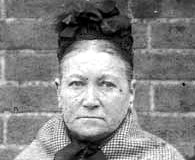 Amelia Dyer
Serial killer · United Kingdom · 1880
Amelia Dyer was convicted for the murder of Doris Marmon. She was known as a “b…
100 victims
Amelia Dyer
Serial killer · United Kingdom · 1880
Amelia Dyer was convicted for the murder of Doris Marmon. She was known as a “b…
100 victims
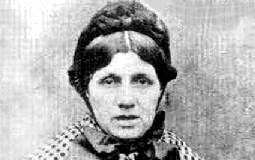 Mary Ann Cotton
Serial killer · United Kingdom · 1857
Mary Ann Cotton was executed by hanging in Durham prison on March 24, 1873. Mar…
21 victims
Mary Ann Cotton
Serial killer · United Kingdom · 1857
Mary Ann Cotton was executed by hanging in Durham prison on March 24, 1873. Mar…
21 victims
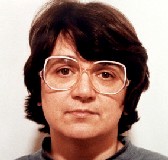 Rosemary West
Serial killer · United Kingdom · 1971
Rosemary Pauline “Rose” West (née Letts) Rosemary Letts was born in Barnstaple,…
10 victims
Rosemary West
Serial killer · United Kingdom · 1971
Rosemary Pauline “Rose” West (née Letts) Rosemary Letts was born in Barnstaple,…
10 victims
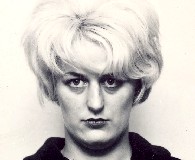 Myra Hindley
Serial killer · United Kingdom · 1963
Myra Hindley was an English serial killer who, in partnership with Ian Brady, c…
5 victims
Myra Hindley
Serial killer · United Kingdom · 1963
Myra Hindley was an English serial killer who, in partnership with Ian Brady, c…
5 victims
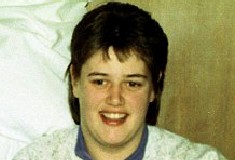 Beverley Allitt
Serial killer · United Kingdom · 1991
Beverley Allitt was a nurse who suffered from the mental illness Munchausen’s S…
4 victims
Beverley Allitt
Serial killer · United Kingdom · 1991
Beverley Allitt was a nurse who suffered from the mental illness Munchausen’s S…
4 victims
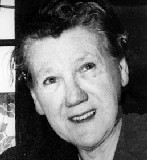 Mary Elizabeth Wilson
Serial killer · United Kingdom · 1955
Mary Elizabeth Wilson (c. 1893 - 1963), also known as the Merry widow of Windy…
4 victims
Mary Elizabeth Wilson
Serial killer · United Kingdom · 1955
Mary Elizabeth Wilson (c. 1893 - 1963), also known as the Merry widow of Windy…
4 victims
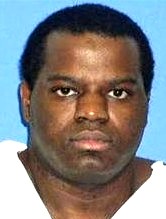 Donell Okeith Jackson
Murderer · USA · 1993
Donell Okeith Jackson was convicted of capital murder and was sentenced to deat…
1 victim
Donell Okeith Jackson
Murderer · USA · 1993
Donell Okeith Jackson was convicted of capital murder and was sentenced to deat…
1 victim
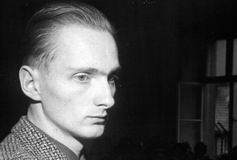 Heinrich Pommerencke
Serial killer · Germany · 1959
Heinrich Pommerencke grew up in the German village of Bentwich and lived as a l…
4 victims
Heinrich Pommerencke
Serial killer · Germany · 1959
Heinrich Pommerencke grew up in the German village of Bentwich and lived as a l…
4 victims
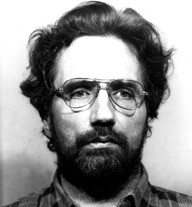 Gary Heidnik
Murderer · USA · 1986
Gary Heidnik was executed by lethal injection in Pennsylvania on July 6, 1999.…
2 victims
Gary Heidnik
Murderer · USA · 1986
Gary Heidnik was executed by lethal injection in Pennsylvania on July 6, 1999.…
2 victims
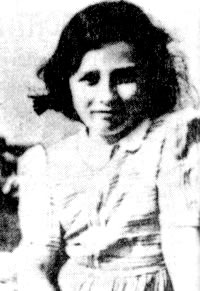 William Hepper
Murderer · United Kingdom · 1954
William Sanchez de Pina Hepper was a 62-year-old painter. He had a studio in Br…
1 victim
William Hepper
Murderer · United Kingdom · 1954
William Sanchez de Pina Hepper was a 62-year-old painter. He had a studio in Br…
1 victim
 Renee Kara O'Brien
Homicide · New Zealand · 2002
Renee Kara O'Brien was 14 years and nine months old when she beat Kenneth Pigot…
1 victim
Renee Kara O'Brien
Homicide · New Zealand · 2002
Renee Kara O'Brien was 14 years and nine months old when she beat Kenneth Pigot…
1 victim
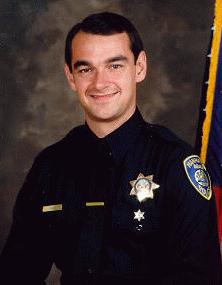 Roger Hoan Brady
Murderer · USA · 1993
Roger Hoan Brady was a convicted killer who pleaded innocent to gunning down a…
2 victims
Roger Hoan Brady
Murderer · USA · 1993
Roger Hoan Brady was a convicted killer who pleaded innocent to gunning down a…
2 victims
- Gender
- female
- Country
- United Kingdom
- Location
- Ashton-under-Lyne, Greater Manchester, England, United Kingdom
- Date of birth
- 1847
- Age at first offence
- 39
- Characteristics
- poisoner, abuse, financial gain
- Victim profile
- Elizabeth Hannah Britland, 19 (her eldest daughter) / Thomas Britland, 44 (her husband) / Mary Dixon, 29 (her neighbor's wife)
- Method of murder
- Poisoning ( strychnine and arsenic)
- Date(s) of murder
- March-May 1886
- Years active
- 1886
- Date of arrest
- June 1886
- Status
-
Executed
Executed by hanging at Strangeways Prison on August 9, 1886
Background
Mary Ann Britland (1847–1886) lived in Ashton-under-Lyne. She was the first woman executed by hanging at Strangeways Prison in Manchester, England. Mary Ann Britland was the first woman to be executed at Strangeways Prison in Manchester, and James Berry hanged her on 9 August 1886.
Mary Ann Hague was born in Bolton, Lancashire, as the second eldest daughter of Jonathan and Hannah (née Lees) Hague. She married Thomas Britland at St Michaels Ashton-under-Lyne in 1866. They lived in a rented house, 133 Turner Lane, Ashton-under-Lyne, with their two daughters. Britland held two jobs: she was a factory worker by day and a barmaid by night.
The offence
In February 1886, Britland bought packets of "Harrison's Vermin Killer" from a nearby chemist's to eliminate mice infestation in her home. The poison contained strychnine and arsenic, and she was required to sign the poison register.
Britland’s first poisoning victim was her eldest daughter, 19-year-old Elizabeth Hannah, in March 1886. Elizabeth Hannah’s death was attributed to natural causes by the doctor who was called to attend the teenager. Britland then claimed £10 on Elizabeth Hannah’s life insurance policy.
Britland’s next poisoning victim was her husband, Thomas Britland, aged 44. Thomas’s death occurred on 3 May and was diagnosed as epilepsy. Britland also claimed on his life insurance.
Britland had an affair with her neighbour, Thomas Dixon. After her own husband’s death, Britland was invited to stay at the Dixon’s house just across the street at number 128 by Thomas Dixon’s 29-year-old wife, Mary.
On 14 May, Mary Dixon was to become Britland’s third and final poisoning victim. The deaths of the three victims occurred in rapid succession and with near identical and unusual symptoms, raising suspicion.
Investigation
The three deaths raised suspicion, and Britland was interviewed by police in connection with Mary Dixon’s death. Her body was examined by a pathologist.
It was found that Mary Dixon’s body contained a lethal quantity of the two poisons. Britland was immediately arrested along with Thomas Dixon. Britland confessed to Ashton police that she wanted to marry Dixon and that she had first poisoned her daughter Elizabeth because she believed Elizabeth suspected her intentions. She then killed her husband, and finally Mary Dixon.
Mary Ann Britland was arrested along with Thomas Dixon, and three deaths were linked by their near identical symptoms and poisoning with strychnine and arsenic.
Arrest
Britland was immediately arrested after it was found that Mary Dixon’s body contained a lethal quantity of strychnine and arsenic.
Thomas Dixon was also arrested along with Britland.
Trial
Britland came to trial on 22 July 1886 at Manchester Assizes before Mr. Justice Cave.
Britland was charged with the murder of the three victims. Thomas Dixon was found to have played no part in the murder of his wife.
During her defence, Britland argued that, because there was an absence of motive, the small sum of money from the insurance payouts was in no way compensation for the loss of her husband and daughter.
An eyewitness at the trial said:
The case lasted two days...The evidence was overwhelming. The three deceased persons had been poisoned by strychnine. Mrs. Britland had purchased 'mouse powder' in sufficient quantities to kill them all, and there was no evidence of any mice on whom it could have been legitimately used. The case of the poisoning of Mrs. Dixon was the one actually tried, but the deaths of the others were proved to show 'system' and rebut the defence of accident. Even if there had not been sufficient evidence to secure a conviction, Mrs. Britland had had many indiscreet conversations about 'mouse powder' and poisoning, and had been anxious to discover whether such poisoning could be traced after death...
The eyewitness further said:
It took the jury some time to convict her, although eventually they found her guilty.
The case also included details that no evidence was produced to show that Mr Dixon ever responded to any of Mary Ann’s approaches, and he was acquitted.
Sentencing
After she was found guilty, she was sentenced to death by hanging, as was the rule of the day.
After she was sentenced, Britland declared to the court:
"I am quite innocent, I am not guilty at all."
While being taken down to the cells, Britland burst into a flood of tears and continued to scream for mercy when the death sentence was pronounced. Her cries reverberated around the crowded courtroom and were even heard by those outside the building.
In the condemned cell, Britland maintained that she was innocent and expected a sudden reprieve.
Appeals
No appeal details were provided.
Outcome
Mary Ann Britland was executed by hanging at Strangeways Prison in Manchester, England.
Execution
On the morning of her execution, Britland was in a state of collapse and had to be heavily assisted to the gallows. Two male warders held her up on the trapdoors while James Berry prepared her for execution.
Britland was the first woman to be executed at Strangeways Prison in Manchester.
In the condemned cell and during the lead-up to execution, Britland’s only coherent words were:
‘I must have been mad!’
As the procession made its way to the scaffold, Britland sobbed, and a reporter described that when Berry pulled the white hood over her head:
‘she uttered cries such as one might expect at the very separation of body and spirit through mortal terror’.
During the execution, two wardresses were then replaced by two male warders, who watched Berry for the signal. They instantly released their hold on their prisoner and stepped off the drop as Berry operated the lever, and the trapdoors opened. Britland went down into the pit before she could even buckle at the knees.
Aftermath
James Berry later expressed an opinion in his book My Experiences as an Executioner, published shortly before his resignation in 1892, that those murderers who were most brutal and cold-blooded while committing the act for which they had been condemned to death were the most cowardly when they had to face the consequences. He referred to Mary Ann Britland as someone he hanged at Strangeways Prison in Manchester on 9 August 1886.
The narrative also stated that Britland, her husband and daughter lived in Ashton-under-Lyne in the house of a Mr and Mrs Dixon, and that Britland feared her daughter had discovered her fixation for Mr Dixon and poisoned the girl and then poisoned her husband. It further stated that no evidence was produced at trial to show that Mr Dixon ever responded to any of Mary Ann’s approaches, and that he was acquitted. It also stated that Britland continued to cry for mercy when the death sentence was pronounced, and that while awaiting execution she was reduced to a shadow of her former self, hardly eating or sleeping.
Other details
Britland purchased "Harrison's Vermin Killer," which contained strychnine and arsenic, and she signed the poison register because the compound required registration.
The trial focused on the poisoning of Mrs. Dixon but the deaths of the others were proved to show 'system' and rebut the defence of accident.
The narrative described that Britland had indiscreet conversations about 'mouse powder' and poisoning and was anxious to discover whether such poisoning could be traced after death.
The narrative also described that during the execution a mishap occurred regarding binding her wrists, and Britland reached up and grabbed the rope above her, leading to a struggle. The execution proceeded after the sheriff managed to secure her arms and ankles and the crowd threatened to rush the scaffold, with an officer threatening to shoot the first person who tried to rescue her.
Spotted an error, or have more information about this case?