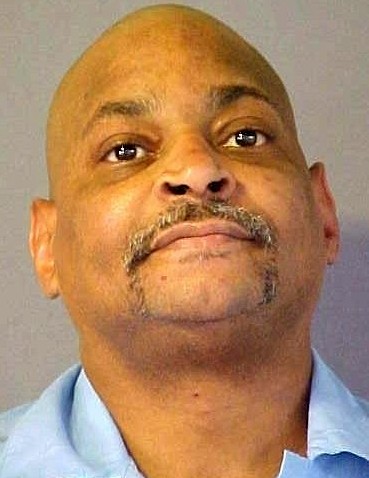
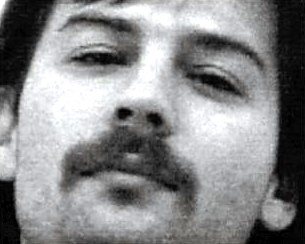
Eric Allen Patton
Murderer Brian Kevin Rosenfeld
Murderer · USA · 1985
Brian Kevin Rosenfeld Brian Kevin Rosenfeld was sentenced to three concurrent l…
23 victims
Brian Kevin Rosenfeld
Murderer · USA · 1985
Brian Kevin Rosenfeld Brian Kevin Rosenfeld was sentenced to three concurrent l…
23 victims
 Russell Ellwood
Murderer · USA · 1991
Russell Ellwood was a former taxi driver. Authorities suspected him of killing…
20 victims
Russell Ellwood
Murderer · USA · 1991
Russell Ellwood was a former taxi driver. Authorities suspected him of killing…
20 victims
 Robert Martines Perez
Murderer · USA · 1994
Name: Robert Martines Perez · Other name used in proceedings: Robert Martinez P…
15 victims
Robert Martines Perez
Murderer · USA · 1994
Name: Robert Martines Perez · Other name used in proceedings: Robert Martinez P…
15 victims
 Billy Frank Vickers
Murderer · USA · 1993
Billy Frank Vickers Vickers was executed by lethal injection in Texas on Januar…
14 victims
Billy Frank Vickers
Murderer · USA · 1993
Billy Frank Vickers Vickers was executed by lethal injection in Texas on Januar…
14 victims
 John Richard Baltazar
Murderer · USA · 1997
John Richard Baltazar was executed in Texas. · September 27, 1997 — John Baltaz…
1 victim
John Richard Baltazar
Murderer · USA · 1997
John Richard Baltazar was executed in Texas. · September 27, 1997 — John Baltaz…
1 victim
 Carman Jenkins
Murderer · USA · 2008
Carman Jenkins pleaded guilty to murder in the death of Mekole Harris and was s…
1 victim
Carman Jenkins
Murderer · USA · 2008
Carman Jenkins pleaded guilty to murder in the death of Mekole Harris and was s…
1 victim
 Andrew Randall
Murderer · United Kingdom · 2005
Andrew Randall (born 1974) was a British murderer. He murdered his seven-week-o…
1 victim
Andrew Randall
Murderer · United Kingdom · 2005
Andrew Randall (born 1974) was a British murderer. He murdered his seven-week-o…
1 victim
 Ann Bilansky
Murderer · USA · 1859
Ann Bilansky was executed by hanging in Minnesota on March 23, 1860 for the ars…
1 victim
Ann Bilansky
Murderer · USA · 1859
Ann Bilansky was executed by hanging in Minnesota on March 23, 1860 for the ars…
1 victim
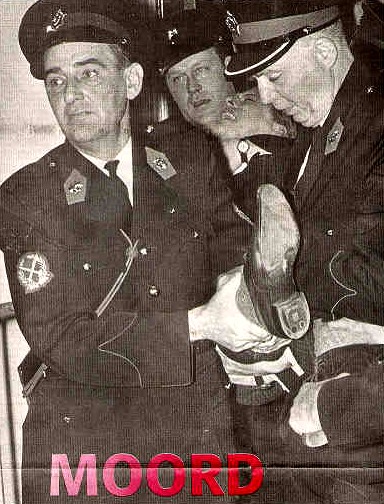 Hans Van Zon
Serial killer · Netherlands · 1964
Hans van Zon was born in Utrecht, Holland, in April 1942. He was described as a…
5 victims
Hans Van Zon
Serial killer · Netherlands · 1964
Hans van Zon was born in Utrecht, Holland, in April 1942. He was described as a…
5 victims
- Gender
- male
- Country
- USA
- Location
- Oklahoma County, Oklahoma, USA
- Date of birth
- April 7, 1957
- Age at first offence
- 37
- Characteristics
- robbery
- Victim profile
- Charlene Kauer (female, 56)
- Method of murder
- St abbing with several knives, a barbecue fork and a pair of scissors
- Date(s) of murder
- December 16, 1994
- Years active
- 1994
- Date of arrest
- December 29, 1994
- Status
-
Executed
Executed by lethal injection in Oklahoma on August 29, 2006
Parties and roles
- Eric Allen Patton — defendant; convicted killer; former handyman
- Charlene Kauer — victim; 56-year-old Oklahoma City woman
- Les Kauer — victim’s husband
- Chris Williams — co-worker whose car Patton borrowed and whose clothes Patton later wore
- Sandra Moore — Patton’s girlfriend
- Les Kauer — discovered his wife’s body
- Jerry Massie — Department of Corrections spokesman
- Walter Simco — Patton’s probation and parole officer
- Sybil Newcomb — custodian and supervisor of the Records Division of the Oklahoma County Sheriff’s Office
- Leamon Freeman, J. — trial judge
- Lumpkin, J. — Court of Criminal Appeals judge who authored the direct appeal decision
- Chapel, P.J. and Strubhar, V.P.J. — concurred in result
- Henry — Circuit Judge (habeas appeal)
- Ralph G. Thompson, J. — district court judge (habeas)
- Susan Otto — attorney who witnessed the execution
- Dr. John Smith — psychiatrist for the defense
- Dr. Chai Choi — medical examiner
- Detective Cook — testified about scene conditions
- Catholic priest — witnessed the execution
- Governor Brad Henry — recipient requested in the text
Timeline
- December 16, 1994 — Charlene Kauer was murdered during a robbery at her Oklahoma City home; Patton was employed as a brick mason.
- December 23, 1994 — police interviewed Patton voluntarily.
- December 29, 1994 — Patton was arrested; fingerprint comparison results were received that day.
- December 30, 1994 — Patton contacted officers and volunteered to take officers to the clothes he had worn during the murder.
- January 7, 1995 — Patton spoke again with officers after Miranda rights were read and a waiver was signed.
- January 9, 1995 — Patton spoke again with officers after Miranda rights were read and a waiver was signed.
- January 13, 1995 — Patton spoke again with officers after Miranda rights were read and a waiver was signed.
- May 19, 1997 — Patton’s Petition in Error was filed in the Court of Criminal Appeals.
- November 26, 1997 — Patton’s brief was filed.
- March 11, 1998 — the State’s brief was filed.
- March 13, 1998 — the case was submitted to the Court.
- March 31, 1998 — Patton’s reply brief was filed.
- July 28, 1998 — oral argument was held.
- August 29, 2006 — Patton was executed by lethal injection in Oklahoma.
- August 30, 2006 — Associated Press reporting on the execution was published.
Background
Eric Allen Patton was convicted of the 1994 robbery and murder of Charlene Kauer and was later executed by lethal injection in Oklahoma on August 29, 2006.
At the time of the murder, Patton was employed as a brick mason. During the morning of December 16, 1994, Patton borrowed co-worker Chris Williams’ car and left a job site, stating that he was going to buy electrical connection boxes at a local hardware store. He was absent for four hours. When he returned, he was wearing different clothes and did not have the electrical boxes.
Patton had previously done some painting work for the Kauers and had worked with them at Dial American Marketing. Patton had a lengthy criminal record of burglaries and robberies in Oklahoma and California. He was on parole for California felony convictions at the time Kauer was killed.
The offence
On December 16, 1994, Patton went to the home of Les and Charlene Kauer in northeast Oklahoma City after leaving the job site in Edmond, Oklahoma.
Charlene Kauer answered Patton’s knock at the front door. Patton asked to borrow money, and she gave him ten dollars ($10.00). Not satisfied, Patton forced his way into the home, grabbed Mrs. Kauer by the throat, and dragged her through the house looking for money and valuables.
Patton took Charlene Kauer to the bedroom where he forced her to undress and struggled with her. He stabbed her numerous times with several knives. As the attack broke a succession of knives, Patton resorted to a barbecue fork. He stabbed her in the chest with a pair of scissors.
After leaving, Patton cleaned himself up and exchanged his bloody clothes for coveralls found in Chris Williams’ car. Patton disposed of the bloody clothes in a field in northwest Oklahoma City and returned to his job in Edmond.
Court descriptions in the text also included that the prosecution said Charlene Kauer was found dead with multiple stab wounds from several knives, a barbecue fork, and a pair of scissors left protruding from her chest.
Investigation
Forensic evidence and arrests
Fingerprints associated with Patton matched those found on the barbecue fork left protruding from Kauer’s chest. Patton was arrested 13 days after the murder when fingerprints he gave police matched those on a bloody barbecue fork found at the scene.
Police interviews and statements
Patton initially was not a suspect in the murder, but at the request of police he came to their office for questioning. During pre-arrest questioning, Patton voluntarily went to the police station and agreed to give body samples at a later date. No Miranda warnings were required and none were given during the pre-arrest interviews.
- The investigating officer described Patton’s demeanor as “normal” and said he was more intelligent than the people he usually dealt with.
- Patton read and signed a waiver related to giving body samples.
- Later in the day on December 29, 1994, after fingerprint comparisons were received, Patton was arrested.
Patton initially denied involvement in the murder. He then suggested a suspicious vehicle and implied that Mr. Kauer was involved. When asked about a scratch on his lip and cuts on his hands, Patton explained he was changing a tire and the jack slipped and hit him.
In subsequent interviews, Patton implicated and then retracted involvement by others:
- He inculpated Chris Williams, saying he had information but was protecting someone, and that another person committed the murder.
- He later admitted Chris Williams was not involved and said a woman was involved; Patton referred to this woman as a “strawberry”.
- The record defined a “strawberry” as a woman who exchanged sex for drugs.
- Patton stated the woman stabbed the victim while he wrestled with the victim’s dog and eventually stabbed the dog. He said the cuts on his hand and the scratch on his lip came from the dog’s bites.
- At the end of the interview, Patton admitted there had been no “strawberry” with him; asked who the woman was, Patton indicated only that she was a family member.
- In a later interview, Patton described seeing himself at the murder scene and stabbing Charlene Kauer, saying there were demonic forces and that the victim was a demon.
- Patton also said he had ingested cocaine before the murder and believed the drug was “laced” with another drug, and that he was “tripping” from the effects of the drugs.
Patton’s appeals included claims that he was under the influence of cocaine and could not form the intent to kill.
Miranda and voluntariness
The appeals court described that at various pre-arrest and post-arrest interviews, Patton did not appear to be under the influence of alcohol or drugs, was coherent, and spoke voluntarily. The record included that:
- On December 29, 1994, Patton read and signed a waiver after being arrested and given Miranda warnings.
- The interview was delayed at Patton’s request until his minister could be present.
- The following day (December 30, 1994), Patton volunteered to show officers the location of the bloody clothes and was informed of Miranda rights and signed a waiver.
- Officers again interviewed Patton at Patton’s request on January 7, 9, and 13, 1995; Miranda rights were read and waivers were signed each time.
- The appeals court concluded there was no police coercion, threats, or promises, and that the videotapes showed a cooperative Patton who responded appropriately and did not seem under the influence.
Trial
Court and charges
Patton was tried by a jury in the District Court of Oklahoma County. He was convicted of:
- First Degree Murder (Count I)
- First Degree Burglary, After Former Conviction of Two or More Felonies (Count II)
The direct appeal decision stated the case number as CF-95-55.
Evidence presented
The prosecution presented forensic evidence, including that Patton’s fingerprints were present in the Kauer home and that blood at the scene matched Patton’s type. The prosecution also presented video and audiotapes of Patton’s interviews in which he admitted stabbing Charlene Kauer.
The defense presented expert testimony from Dr. John Smith, a psychiatrist. Dr. Smith testified Patton was in a cocaine delirium on the day of the killing and said Patton was not capable of forming intent in a “cognitive, logical sense like we think of.”
Quotation: Dr. John Smith
“Not in a cognitive, logical sense like we think of. I think from then on he was in fact simply reacting to the cocaine intoxication once he saw her.”
In the habeas discussion, the text also included:
“Some of [the] things [that Mr. Patton] said in the police report [indicated that] he was out of his body watching it. He couldn't control it. He didn't know why he was doing it. He couldn't stop it.”
and:
“a discharge from the brain of inten[se] aggression and inability to control his reaction.”
Quotation: appeal quotation about evidence and deliberation
The direct appeal decision included the following quotation:
“In particular, after initially denying any involvement in the killing of Mrs. Kauer, Mr. Patton admitted driving to Mrs. Kauer’s house and stabbing her. Moreover, after the killing, Mr. Patton had the presence of mind to clean himself up and exchange his bloody clothes for those of his coworker. Finally, the prosecution introduced testimony from both Mr. Patton’s girlfriend and from the co-worker that Mr. Patton’s demeanor seemed normal on the day of the killing, evincing no signs of delirium or strange behavior. Although Dr. Smith’s testimony that Mr. Patton was suffering from a cocaine delirium conflicted with some of this evidence, a rational jury could have rejected that testimony, relying on the prosecution’s evidence that Mr. Patton possessed the requisite intent, and convicted Mr. Patton of the first-degree murder charge.”
Verdict and sentencing recommendations
After hearing the evidence, the jury convicted Patton of:
- first-degree murder
- first-degree burglary
During sentencing, the jury recommended the death penalty for Count I and recommended one thousand one hundred and twenty (1,120) years imprisonment for Count II.
The jury found four aggravating circumstances:
- Patton was previously convicted of a felony involving the use or threat of violence.
- The murder was especially heinous, atrocious, or cruel.
- The murder was committed for the purpose of avoiding or preventing a lawful arrest or prosecution.
- The murder was committed while Patton was on parole for California felony convictions.
The jury did not find a fifth aggravating circumstance alleged by the prosecution: that it was probable that Patton would commit criminal acts of violence that would constitute a continuing threat to society.
Mitigation evidence
The direct appeal decision stated that during the mitigating evidence phase, Patton presented four witnesses: his mother, father, sister, and brother. Their testimony included that:
- Patton had a family that loved and cared for him.
- Patton fully cooperated with authorities after his involvement.
- Patton had a mental disorder and it had caused him to be previously committed to a mental hospital.
- Patton abused crack cocaine and his mental and psychological development had been permanently damaged.
- Patton was under the influence of crack cocaine at the time of the homicide and was in a state of psychotic delusion induced by crack cocaine.
- Patton was unable to remember the circumstances surrounding the victim’s death due to his degree of intoxication at the time.
- Twenty-three months after his arrest, Patton was sober and drug free.
- While incarcerated, Patton had not been a threat to anyone in the prison system.
- Patton was a brick mason by trade and could use that trade in a closed prison environment to benefit and contribute to society.
- Patton’s brother, Phillip, was deliberately electrocuted and Patton suffered severe emotional disturbance ever since.
- Patton had strong feelings of sorrow, remorse, and sadness for his involvement in the victim’s death.
The direct appeal decision stated this evidence was summarized into fourteen (14) factors for the jury’s consideration as mitigating evidence.
Sentencing
The trial court sentenced Patton to:
- Death for Count I (first-degree murder)
- One thousand one hundred and twenty (1,120) years imprisonment for Count II (first-degree burglary)
The direct appeal decision stated that, under the mandate of Oklahoma law, it determined whether the death sentence was imposed under the influence of passion, prejudice, or any other arbitrary factor and whether the evidence supported the jury’s finding of the aggravating circumstances.
Appeals
Direct appeal: Patton v. State, 973 P.2d 270 (Okla. Crim. App. 1998)
The Court of Criminal Appeals affirmed Patton’s convictions and death sentence. The decision stated holdings that:
- The trial court did not impermissibly restrict voir dire.
- Prospective jurors who were opposed to capital punishment were properly removed for cause.
- Evidence was sufficient to support convictions.
- Crime scene photographs were admissible.
- Patton’s statements were voluntary.
- Evidence supported findings of four aggravating circumstances.
- The trial judge’s failure to prepare a statutorily required report was harmless error.
- Patton was not denied effective assistance of counsel.
- Patton was not entitled to a hearing on ineffective assistance claims.
- The death sentence was not imposed under the influence of passion, prejudice, or any other arbitrary factor.
The decision also addressed the sufficiency of evidence regarding the “malice aforethought” element, explaining the exception for voluntary intoxication when mental abilities are totally overcome, and concluded a rational jury could have found specific intent based on Patton’s presence of mind to clean up and witnesses’ testimony about normal demeanor.
The decision also addressed challenges to aggravating circumstances, including the “especially heinous, atrocious, or cruel” aggravator and whether the order of injuries could be determined, and whether the avoidance of arrest or prosecution aggravator was supported as to the burglary being separate and distinct.
The court also addressed the “prior violent felony” aggravator and stated that testimony from Walter Simco and records described by Sybil Newcomb supported the aggravator based on Patton’s prior assault with a deadly weapon conviction. It rejected arguments about jury instruction omissions regarding which prior convictions supported that aggravator.
Post-conviction relief: Patton v. State, 989 P.2d 983 (Okla. Crim. App. 1999)
The application for post-conviction relief was denied.
- Patton did not establish ineffective assistance of direct appellate counsel.
- Res judicata barred a claim of ineffective assistance of trial counsel.
- Patton was not entitled to an evidentiary hearing on the claim of ineffective assistance of direct appellate counsel.
The decision stated Patton’s original application for post-conviction relief was filed on September 3, 1998, and concluded there were no controverted, previously unresolved factual issues material to legality of confinement and that current post-conviction statutes warranted no relief.
Federal habeas: Patton v. Mullin, 425 F.3d 788 (10th Cir. 2005)
The habeas decision affirmed denial of relief.
- State court evidentiary rulings did not violate Patton’s due process right to a fair trial.
- A prosecution witness’s reference to Patton’s prior conviction was not so prejudicial as to deprive him of a fair trial.
- The first-degree malice aforethought murder instruction did not impermissibly relieve the prosecution of its burden of proving intent beyond a reasonable doubt.
- Prosecutor comments regarding the presumption of innocence did not deprive Patton of a fair trial.
The text described the underlying facts as not in dispute and referenced the conviction for killing Charlene Kauer on December 16, 1994.
Outcome
Patton was executed by lethal injection in Oklahoma on August 29, 2006.
Execution-day statements and procedure details mentioned
Associated Press and other reporting in the provided text described that during the execution Patton made no reference to Kauer or the crime but thanked members of his legal team, family, and corrections employees. The text included the following quotations:
“I want to thank the guards here on death row who have been like a family to me, and their lives have been a blessing to me,” Patton said.
“I've had a good life here on earth,” Patton continued. “It's been a blessing. It's been a blast. "I want to thank my savior Jesus Christ for all he's done for me. I look forward to being with him now and for eternity.”
The provided text also described that corrections officials used an altered lethal drug recipe for the first time and that it was intended to deliver a larger dose of anesthesia before fatal drugs were administered. It further described that Patton exhaled deeply when the drugs began to flow and that his breathing stopped a few moments later.
The execution-related reporting said Patton was strapped to a gurney with intravenous lines into each arm and pronounced dead at 6:10 p.m. on the day described.
It also stated that four members of Patton’s legal team witnessed the execution, along with a Catholic priest, and that none of Patton’s or Kauer’s relatives witnessed the execution. It stated the execution began at 6:03 p.m. and that Patton received a last meal of a large pizza with pepperoni, sausage, mushrooms, and a grape soda.
Other details
- The direct appeal decision recorded the statutory citations referenced for the robbery-related burglary and murder charges.
- The direct appeal decision stated that the jury did not find a fifth aggravating circumstance that it was probable Patton would commit criminal acts of violence that would constitute a continuing threat to society.
- In the factual setting described, Patton was accused of attacking Kauer after he knocked on her door and asked her for money.
- The text described that Kauer had taken the day off work at Blue Cross and Blue Shield to do some Christmas shopping.
- The text described that Oklahoma City Police Department detectives conducted interviews after Patton was initially not suspected, due to his prior painting work and marketing-company work with the Kauers.
- It described multiple police interviews, varying versions of events, and that Patton ultimately confessed while also claiming cocaine intoxication.
- It described expert evidence by Dr. Chai Choi including that the victim suffered numerous stab wounds and that defensive wounds indicated she was conscious during part of the attack; it also described defensive wounds on lips, cheek, scalp, and legs and defensive cuts and scratches on hands and arms.
- The excerpt included that one of Patton’s challenges argued that crime scene photographs were admissible and that the defense contended they were more prejudicial than probative.
- The excerpt included a statement about the U.S. Supreme Court rejecting an emergency application filed by Patton’s attorneys for a stay of execution.
- The excerpt included that a federal judge threw out a lawsuit Patton filed arguing lethal injection methods violated the U.S. Constitution’s ban of cruel punishment, and that Oklahoma doubled the dosage of sedatives Patton and future condemned prisoners received.
- The excerpt included that Patton became the 82nd person executed in Oklahoma since the state resumed capital punishment in 1990.
Spotted an error, or have more information about this case?