Thomas Carr
Murderer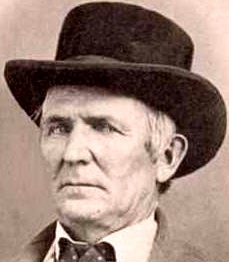 John Doyle Lee
Murderer · USA · 1857
Name: John Doyle Lee Lifespan: September 12, 1812 - March 23, 1877 Legal outcom…
120 victims
John Doyle Lee
Murderer · USA · 1857
Name: John Doyle Lee Lifespan: September 12, 1812 - March 23, 1877 Legal outcom…
120 victims
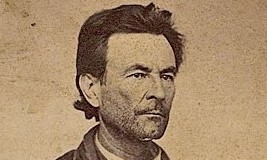 Champ Ferguson
Murderer · USA · 1861
Champ Ferguson was born November 29, 1821 in Clinton County, Kentucky, near the…
100 victims
Champ Ferguson
Murderer · USA · 1861
Champ Ferguson was born November 29, 1821 in Clinton County, Kentucky, near the…
100 victims
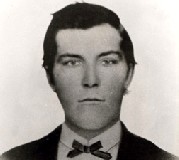 John Wesley Hardin
Murderer · USA · 1867
John Wesley (Wes) Hardin (1853-1895) was an American outlaw, gunfighter, and co…
42 victims
John Wesley Hardin
Murderer · USA · 1867
John Wesley (Wes) Hardin (1853-1895) was an American outlaw, gunfighter, and co…
42 victims
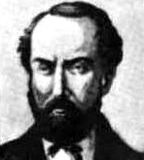 Henry Wirz
Murderer · USA · 1864
Henry Wirz (also known as Heinrich Hartmann Wirz) (November 25, 1823 – November…
11 victims
Henry Wirz
Murderer · USA · 1864
Henry Wirz (also known as Heinrich Hartmann Wirz) (November 25, 1823 – November…
11 victims
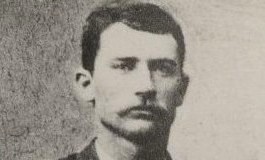 Henry Newton Brown
Murderer · USA · 1870
Henry Newton Brown — 19th century gunman; orphan; raised by relatives in Rolla,…
6 victims
Henry Newton Brown
Murderer · USA · 1870
Henry Newton Brown — 19th century gunman; orphan; raised by relatives in Rolla,…
6 victims
 Isaac Wood
Murderer · USA · 1855
Isaac L. Wood was a Livingston Republican mentioned in July 1858 execution cove…
2 victims
Isaac Wood
Murderer · USA · 1855
Isaac L. Wood was a Livingston Republican mentioned in July 1858 execution cove…
2 victims
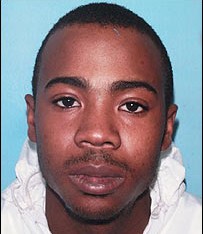 Carl Morgan
Murderer · United Kingdom · 2004
Carl Morgan (born 1981) was a former producer of the rap group So Solid Crew. I…
1 victim
Carl Morgan
Murderer · United Kingdom · 2004
Carl Morgan (born 1981) was a former producer of the rap group So Solid Crew. I…
1 victim
 Meriel Bemis
Murderer · USA · 2014
Meriel Bemis was a 21-year-old mother in DeKalb County, Georgia. She lived with…
1 victim
Meriel Bemis
Murderer · USA · 2014
Meriel Bemis was a 21-year-old mother in DeKalb County, Georgia. She lived with…
1 victim
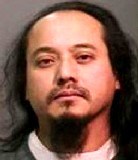 Jordan Criado
Mass murderer · USA · 2011
Jordan Adam Criado was a 53-year-old man from Medford, Oregon, who was sentence…
5 victims
Jordan Criado
Mass murderer · USA · 2011
Jordan Adam Criado was a 53-year-old man from Medford, Oregon, who was sentence…
5 victims
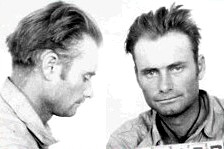 Elvin Jack Odom
Murderer · USA · 1937
Elvin Jack Odom was charged with Murder, a felony, in the Superior Court of the…
1 victim
Elvin Jack Odom
Murderer · USA · 1937
Elvin Jack Odom was charged with Murder, a felony, in the Superior Court of the…
1 victim
 Mathias Kneibl
Murderer · Germany · 1900
Mathias Kneißl was known as Robber Kneißl (in German Räuber Kneißl , in Austro-…
2 victims
Mathias Kneibl
Murderer · Germany · 1900
Mathias Kneißl was known as Robber Kneißl (in German Räuber Kneißl , in Austro-…
2 victims
- Gender
- male
- Country
- USA
- Location
- Belmont County, Ohio, USA
- Date of birth
- March 6, 1846
- Age at first offence
- 14
- Characteristics
- —
- Victim profile
- His girlfriend, Louiza Fox, 13 / 14 men (confessed)
- Method of murder
- Cutting her throat with a razor / Shooting
- Date(s) of murder
- 1860's - 1869
- Years active
- 1860–1869
- Date of arrest
- January 22, 1869
- Status
-
Executed
Executed by hanging on March 24, 1870
Case record: Thomas Carr
Status / outcome
Thomas D. Carr was executed by hanging on March 24, 1870. He was the first person legally hanged in Belmont County.
Timeline
- March 6, 1846 — Thomas D. Carr was born in Sugar Hill, West Virginia, about three miles east of Wheeling.
- 1861 — At the age of 15, Carr enlisted in the 16th Ohio Volunteer Infantry by lying on his papers and saying he was four years older; later that year he was captured at Cheat Run, West Virginia, and held for a time in a Confederate POW camp.
- January 21, 1869 — Carr waited behind a fence on the road Louiza took home from work, approached Louiza and her younger brother Willy, sent Willy home, kissed Louiza, slit her throat with a razor, stabbed her fourteen times, threw her body in a nearby ditch, and hid at a local bank/coal bank.
- January 22, 1869 — The next morning Carr made a suicide attempt by trying to shoot himself and then slashing his own throat; he was found and arrested, and his wounds were treated.
- June 1869 — After a trial, a jury found Carr guilty of first-degree murder.
- June 29, 1869 — Judge John Way sentenced Carr to death by hanging.
- Aug. 20, 1869 — The hanging was scheduled for Aug. 20 but a legal technicality granted a stay of execution.
- March 8, 1870 — While waiting to be hung, Carr made a full confession to Louiza’s murder, admitted to killing fourteen other people, and said he attempted to murder at least five more.
- January 1870 — A new death warrant was issued by the court; the execution was set for March 24.
- March 24, 1870 — Thomas D. Carr was executed by hanging at 1:11 p.m.; he became the only person ever hanged in Belmont County.
Background
Louiza Fox was a thirteen-year-old girl who lived with her family in the Belmont County, Ohio area known as the Egypt Valley Wildlife Area, where she worked as a servant in Alex Hunter’s home. She was dating a local coalminer, Thomas D. Carr, and they met through their connection to the coal mine Mr. Hunter owned, where Thomas worked.
Carr planned to marry Louiza. Louiza’s parents were initially fine with the plan, but later they broke their promise and the engagement was cancelled. Their decision was influenced by stories of Carr’s violent mood swings and actions, uncertainty about his character, and concerns about the age difference between Carr and Louiza. Louiza’s employer, Mrs. Alex Hunter, also told her to stay away from Carr because of her age and his character.
The narrative described Carr as a heavy drinker with a reputation for violent behavior, and as “petulant, ill-natured, irritable, of a nervous temperament and possessed of a heart fatally bent on mischief” as characterized by Judge John Way.
Carr had met Louiza when she came to work as a domestic servant at the home of his employer, Alex Hunter. He later worked in Tuscarawas and Harrison Counties after the war, including work digging coal for Alex Hunter in the vicinity of Sewellsville in western Belmont County, about nine miles southeast of Freeport.
Carr had enlisted in the 16th Ohio Volunteer Infantry in 1861 at the age of 15 by lying on his papers and saying he was four years older. He had been captured at Cheat Run, West Virginia, that same year and held for a time in a Confederate POW camp. After his release, he served in other Union regiments, including a West Virginia cavalry regiment.
After the war, he worked for Rev. Elisha P. Jacobs near Midvale and then for John Edmonds in Old Town Valley, and later worked for Henry Fisher at Stone Creek. The narrative stated that Carr got religion and joined the Uhrichsville Methodist Episcopal Church.
The offence
On January 21, 1869, Carr waited behind a fence on the road Louiza took home every night. He eventually saw Louiza walking down the road with Willy, her little brother. Carr sent Willy home so he could talk to Louiza. The narrative described that they did not do much talking; Carr kissed Louiza, then slit her throat with a razor and stabbed her fourteen times. He threw her body in a nearby ditch.
The account also stated that Willy witnessed the murder from a distance, ran home, and told his parents what had happened. John Fox alerted neighbors, who began searching for the killer.
The account stated that Louiza’s last words were: “Farewell, Tom, I did not think you would serve me so.”
Investigation / aftermath of the offence
After Louiza was killed, Carr spent the night hiding in a coal bank while the Foxes got a search party together to find him.
The next morning Carr was found and arrested and his wounds were treated. The narrative described that Carr had tried to kill himself by slitting his throat and shooting himself; another account described that he attempted suicide after first trying to shoot himself and then slashing his own throat.
After Carr was arrested, he was taken to the Belmont County Jail at St. Clairsville.
After his death, “The Confession of Tom Carr” was published. In it, Carr claimed that he murdered fourteen men in addition to Louisa Carr. People who knew Carr doubted his claims because he was prone to exaggeration.
Louiza Fox was buried in Salem Cemetery, across the road from the church she attended. Her tombstone could still be seen in the cemetery, which was located in the middle of the Egypt Valley Wildlife Area in western Belmont County.
Arrest
Carr was found and arrested the next morning after his suicide attempt, and his wounds were treated. He was taken to the Belmont County Jail at St. Clairsville.
Trial
A jury tried Carr and found him guilty of first-degree murder.
The narrative stated that an “intensely exciting” five-day trial ensued, conducted before Judge Way. It also stated that after a short trial in June 1869, a jury found Carr guilty of first-degree murder.
Sentencing
Judge John Way sentenced Carr to death by hanging on June 29, 1869.
When the death sentence was read aloud, the narrative stated that Carr laughed and said he did “not care a damn if it was to be tomorrow.”
In sentencing, Judge Way described Carr as “petulant, ill-natured, irritable, of a nervous temperament and possessed of a heart fatally bent on mischief.”
The judge scheduled the hanging for Aug. 20, but due to “a legal technicality,” Carr was granted a stay of execution.
The court issued a new death warrant in January 1870, setting the execution for March 24.
Appeals
The narrative stated that execution took more than a year to happen because of “a legal technicality,” which earned him a stay, and that a new death warrant was issued in January 1870.
Outcome / execution
On March 8, 1870, while waiting to be hung, Carr made a full confession to Louiza’s murder. He admitted that he had murdered fourteen other people in his life and attempted to murder at least five more. The narrative stated that many thought this was a lie because he was known to exaggerate.
In March 1870, Carr checked on the gallows as it was being built and performed acrobatics on it.
The narrative quoted the Wheeling Register: “On Wednesday evening, after the work of erecting the scaffold was completed, Carr asked permission to go out into the hall and see it,” the paper reported on March 25, 1870. “He drew himself up on it, and indulged in a number of skillful gymnastic feats. He pronounced the structure a success and complimented the Sheriff for his taste and style.”
On the day of his execution, Carr was visited by several ministers and two teenage girls who idolized him. He gave each girl copies of his picture and a ring and told them they would meet in heaven.
Carr delivered a speech on the evils of alcohol before the rope was put around his neck.
Carr dropped to his death at 1:11 p.m. on March 24, 1870. He was described as the only person ever hanged in Belmont County and the first person legally hanged in Belmont County.
Other details
The narrative described Louiza’s parents as John and Mary Fox. It also described Louiza as dating a local coalminer, with Thomas working at the coal mine Mr. Hunter owned, and Louiza working as a servant in Mr. Hunter’s home.
The narrative stated that Carr waited behind a fence corner along the road that led from the Hunter home to the cabin where the Fox family lived.
The narrative described that Carr approached Louiza and Willy, kissed her farewell, slit her throat from ear to ear, and stabbed her fourteen more times before depositing her body in a ditch.
It also stated that Carr later testified that Louiza’s last words were “Farewell, Tom, I did not think you would serve me so.”
The narrative stated that Carr hid at a local bank/coal bank after the killing.
The narrative stated that Louiza Fox was the only person whose body location was described at the time of burial, and that her tombstone was in Salem Cemetery.
The narrative stated that Carr entertained two teenage girls before his execution, gave them his photograph and a ring, and told them they would meet in heaven.
Spotted an error, or have more information about this case?