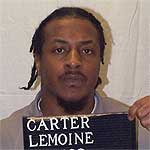
Lemoine Carter
Murderer Brian Kevin Rosenfeld
Murderer · USA · 1985
Brian Kevin Rosenfeld Brian Kevin Rosenfeld was sentenced to three concurrent l…
23 victims
Brian Kevin Rosenfeld
Murderer · USA · 1985
Brian Kevin Rosenfeld Brian Kevin Rosenfeld was sentenced to three concurrent l…
23 victims
 Russell Ellwood
Murderer · USA · 1991
Russell Ellwood was a former taxi driver. Authorities suspected him of killing…
20 victims
Russell Ellwood
Murderer · USA · 1991
Russell Ellwood was a former taxi driver. Authorities suspected him of killing…
20 victims
 Robert Martines Perez
Murderer · USA · 1994
Name: Robert Martines Perez · Other name used in proceedings: Robert Martinez P…
15 victims
Robert Martines Perez
Murderer · USA · 1994
Name: Robert Martines Perez · Other name used in proceedings: Robert Martinez P…
15 victims
 Billy Frank Vickers
Murderer · USA · 1993
Billy Frank Vickers Vickers was executed by lethal injection in Texas on Januar…
14 victims
Billy Frank Vickers
Murderer · USA · 1993
Billy Frank Vickers Vickers was executed by lethal injection in Texas on Januar…
14 victims
 Dyson Allen
Homicide · United Kingdom · 2012
Dyson Allen was convicted for starting a fire in a wardrobe in the children’s b…
4 victims
Dyson Allen
Homicide · United Kingdom · 2012
Dyson Allen was convicted for starting a fire in a wardrobe in the children’s b…
4 victims
 Craig Godineaux
Mass murderer · USA · 2000
Craig Godineaux was accused of entering a Wendy's in Flushing, Queens, and taki…
5 victims
Craig Godineaux
Mass murderer · USA · 2000
Craig Godineaux was accused of entering a Wendy's in Flushing, Queens, and taki…
5 victims
 Jeannie Donald
Murderer · United Kingdom · 1934
Jeannie Donald was tried in July 1934 for the murder of Helen Priestly. Helen P…
1 victim
Jeannie Donald
Murderer · United Kingdom · 1934
Jeannie Donald was tried in July 1934 for the murder of Helen Priestly. Helen P…
1 victim
 Iwao Hakamada
Mass murderer · Japan · 1966
Iwao Hakamada (袴田巖) was a Japanese professional boxer. Hakamada was born on Mar…
4 victims
Iwao Hakamada
Mass murderer · Japan · 1966
Iwao Hakamada (袴田巖) was a Japanese professional boxer. Hakamada was born on Mar…
4 victims
 Richard Lynch
Murderer · USA · 1999
Name: Richard Lynch · Date of birth: 06/19/53 · Case citation: Florida Supreme…
2 victims
Richard Lynch
Murderer · USA · 1999
Name: Richard Lynch · Date of birth: 06/19/53 · Case citation: Florida Supreme…
2 victims
- Gender
- male
- Country
- USA
- Location
- Kansas City, Missouri, USA
- Date of birth
- ???
- Characteristics
- alcohol
- Victim profile
- Ralph Serrano and LeVonn Baker-Howard
- Method of murder
- Shooting (.40 caliber handgun)
- Date(s) of murder
- April 17, 1994
- Years active
- 1994
- Date of arrest
- 5 days after
- Status
-
Life imprisonment
Sentenced to death in 1995; resentenced to life in prison without parole on September 16, 2003
Case information
- Name: Lemoine Carter
- Court / proceeding: United States Court of Appeals for the Eighth Circuit opinion 00-2777 – 00-2906; State of Missouri v. Lemoine Carter, 955 S.W. 2d 548 (Mo. banc 1997)
- Opinion date / author / vote: Handdown date 10/21/97; Opinion author John C. Holstein, Judge; Opinion vote AFFIRMED. All concur.
- Case style and number: Opinion Supreme Court of Missouri: State of Missouri, Respondent, v. Lemoine Carter, Appellant. Case Number: 78625
- Appeal from: Circuit Court of Jackson County, Hon. David W. Shinn
Timeline
- 10/21/97 — Missouri Supreme Court handed down the opinion in State of Missouri, Respondent, v. Lemoine Carter, Appellant (Case Number: 78625).
- 04/17/1994 — Carter went to Kenny’s Newsroom to play pool and an altercation occurred involving Ralph Serrano.
- 04/18/1994 — Police interviewed Carter at police headquarters; he asserted he walked home the night of April 17 and did not have anything to do with the murders.
- 04/21/1994 — Police went to Temple’s house and found Temple’s 1980 two-tone blue Pontiac station wagon.
- 04/22/1994 — Police arrested Carter; he gave a videotaped confession to the murders.
- 09/21/1995 — The jury found Carter guilty of all counts.
- 09/22/1995 — The jury announced it was unable to decide upon punishment.
- 10/16/1995 — Carter filed a motion for new trial, which was overruled.
- 12/15/1995 — Carter appeared for sentencing; he was sentenced to death for each murder.
- 08/1996 — The circuit court overruled all of Carter’s Rule 29.15 claims and dismissed the motion without granting a hearing.
- 09/16/2003 — A Kansas City judge sentenced Lemoine Carter to life in prison without parole.
Background
Carter lived in Kansas City with his wife, Laquitta. Carter was employed at Kenny’s Newsroom, a restaurant and bar in Kansas City, Missouri.
The offence
Pool dispute and knife confrontation at Kenny’s Newsroom (April 17, 1994)
On April 17, 1994, Carter’s wife drove him to Kenny’s Newsroom to play pool. While there, a man Carter did not know challenged Carter to a game of pool. Carter accepted the challenge and placed $20 on the pool table. A bystander, Ralph Serrano, took the $20 and walked away. When Carter asked for his money back, Serrano pulled a knife on Carter. Carter retreated to the downstairs kitchen to retrieve a larger knife. On returning, Serrano still refused to give up the money. A bartender broke up the dispute and Carter returned downstairs. A woman with Serrano, LeVonn Baker-Howard, returned the $20 to Carter.
Departure from Kenny’s Newsroom and travel in Temple’s station wagon
Carter left Kenny’s but returned shortly to retrieve keys and cigarettes he had left inside. While there, Carter had another drink. After the drink, Carter again left Kenny’s with his brother-in-law, Rodney Temple. Carter and Temple left in Temple’s 1980 two-tones blue Pontiac station wagon and headed north on Broadway.
Approximately three blocks from Kenny’s, Carter told Temple to pull into an alley so Carter could urinate. Temple and Carter pulled into an alley just south of the intersection of Armour and Broadway.
Gun taken from the car, argument in the parking lot, and shootings
By this time, Carter had already taken a .40 caliber handgun from beneath the passenger seat in Temple’s car and put it in his waistband. Once Carter was out of the car, he saw that Serrano and Baker-Howard were also in the parking lot. Carter and the two victims argued. Carter then shot one of the victims, paused for four or five seconds, and then shot the other victim.
A witness heard Baker-Howard scream out from the parking lot, "You dirty son-of-a-bitch" after the first shots were fired. A witness that lived on the first floor apartment building went to the window and saw Serrano and Baker-Howard lying in the parking lot with Carter standing over them. Other witnesses saw the same thing from across the street. From across the street, one of the witnesses saw Carter lean over and fire at one of the bodies on the ground.
Carter walked slowly away, got into the passenger side of Temple’s station wagon, which then drove out of the parking lot without its lights on. Carter and Temple then headed east on Armour.
Injuries and death circumstances
Serrano had suffered a gunshot wound to his left upper lip with evidence of powder burns. The projectile fragmented in Serrano’s face, causing extensive soft tissue injury to the face and the bony structures of the face and jaw. Although he was six feet tall, the trajectory of the wound was from the upper front right side of Serrano’s face through the lower left back side of Serrano’s head. Serrano also suffered a gunshot wound through the upper part of his right arm. The wound to Serrano’s face caused extensive bleeding that seeped into his airways, causing him to die of suffocation.
Baker-Howard died as a result of a wound to the right cheek, which partially transected her brain stem. Carter shot Baker-Howard three times: one shot entered her right cheek and exited behind her left ear; another shot grazed the left side of her head; and the third shot went through her right shoulder.
Investigation
In the course of investigating the murders, the police learned of the April 17 altercation at Kenny’s Newsroom.
On April 18, 1994, the police interviewed Carter at police headquarters. At that time, Carter asserted that he walked home the night of April 17th and did not have anything to do with the murders. He did, however, admit to owning a .40 caliber Ruger handgun. He claimed it had been stolen, although he had never reported the theft.
On April 21, 1994, the police went to Temple’s house and found his 1980 two-tone blue Pontiac station wagon. Someone had tried to strip the paint from the vehicle and had removed the luggage rack, wind screen and pinstriping from this car.
Arrest and confession
Police arrested Carter on April 22, 1994. At that time, Carter gave a videotaped confession to the murders.
In his statement, Carter admitted to shooting Serrano and Baker-Howard but asserted that he did so in self-defense. He stated that after the shooting, he threw the .40 caliber handgun he used into the lake in Blue Valley Park.
Trial
Charges
The state charged Carter with two counts of first degree murder and two counts of armed criminal action.
Carter’s testimony
At trial, Carter testified that he did not shoot either victim. He testified that after he left Kenny’s Newsroom on the night of the murders, he walked straight home.
Verdict
On September 21, 1995, the jury found Carter guilty of all counts.
Sentencing
Penalty phase and jury inability to agree
During the penalty phase, the state presented evidence of two aggravating circumstances as to Serrano’s murder and three aggravating circumstances as to Baker-Howard’s murder. Carter presented evidence of three mitigating circumstances as to each murder.
On September 22, 1995, the jury announced that it was unable to decide upon punishment.
Trial court sentencing to death
On December 15, 1995, Carter appeared for sentencing. Among other evidence presented at that hearing was a letter from a sister of Serrano indicating the impact of Serrano’s death on members of the family and also stating that members of the family desired that Carter be given the death penalty.
The circuit court imposed a sentence of death for each murder and life on each count of armed criminal action after the jury was unable to agree on sentencing. Carter was sentenced to death for each murder.
Appeals
Post-conviction relief (Rule 29.15) and evidentiary hearing
Carter filed a pro se Rule 29.15 motion, and after appointment of counsel an amended motion was filed.
In August 1996, the circuit court overruled all of Carter’s Rule 29.15 claims and dismissed the motion without granting a hearing.
The appellate discussion addressed Carter’s arguments about denial of an evidentiary hearing for ineffective assistance of counsel claims raised under Rule 29.15. The court discussed that no evidentiary hearing is required if the motion and the file and records of the case conclusively show the movant is entitled to no relief under Rule 29.15(h), and that findings and conclusions cannot be overturned unless clearly erroneous under Rule 29.15(k). The court described requirements for ordering an evidentiary hearing, including that the motion must allege facts, raise matters not refuted by the files and records, and show prejudice.
Ineffective assistance of counsel claims (as analyzed on appeal)
A. Carter alleged one trial counsel was ineffective because he was “drinking and was drunk during trial preparation and the trial itself.” The appellate court noted Carter’s Rule 29.15 motion alleged only “the consumption of alcohol” and did not claim trial counsel was intoxicated, and Carter made no specific factual allegations of how counsel’s alleged alcohol consumption affected performance. It found these allegations did not warrant a hearing.
B. Carter alleged his primary trial counsel was ineffective for relying on friendship with the prosecutor and believing that friendship would settle the case, and alleged counsel did not meet frequently enough. The appellate court held the claims lacked specific allegations showing what additional preparation or meetings would have accomplished.
C. Carter alleged ineffective assistance by his other trial counsel, Kimberly Kellogg, for failing to adequately prepare for the penalty phase. Carter alleged Kellogg spent an inordinate amount of time prior to trial as an “expert commentator” for News Channel 4’s coverage of the O.J. Simpson trial, and the appellate court held Carter failed to allege what counsel failed to do because she was commenting on the Simpson trial, and also failed to allege any information that might have developed from more frequent meetings that would have had a reasonable probability of changing the outcome.
D. Carter alleged counsel were ineffective for failing to present “a full view” of his life. Counsel called Carter’s mother, wife, aunt, and sister; the testimony showed Carter grew up in poverty and described the effect of his father leaving him and Carter’s later family roles. The appellate court held that failing to put on cumulative evidence of poverty and the effect of his father leaving was not ineffective assistance. The appellate court also addressed Carter’s additional claims that counsel should have introduced evidence that he had been abused by family members and other young people as a child and by his wife as an adult, and that he was addicted to alcohol and illegal drugs, and held that this would have contradicted the strategy of presenting Carter as law abiding, peaceful, hardworking. The appellate court found no reasonable probability the omitted evidence would have changed the sentencing outcome.
E. Carter alleged counsel were ineffective for failing to investigate his alleged mental illness, including claims that Carter suffered from post-traumatic stress disorder, dsythmia [sic], chemical dependence, battered spouse syndrome, and brain damage. The appellate court held the motion stopped short of asserting a factual basis communicated to counsel that should have alerted counsel to questionable mental conditions and concluded it was not ineffective assistance to fail to obtain a mental examination for a defendant exhibiting no signs of mental illness but with a tumultuous and impoverished childhood.
F. Carter alleged error relating to autopsies of the victims: autopsies were performed by Dr. Brij Mitruka, who left the Jackson County medical examiner’s office before trial. Deputy Medical Examiner Michael Bertrand testified concerning the autopsy reports. Carter alleged failure to disclose evidence of Mitruka’s incompetence in violation of the discovery request and alleged counsel were ineffective for failing to discover, investigate, and present evidence of incompetence. The appellate court held trial error claims were outside the scope of Rule 29.15 and found Carter did not allege rare or exceptional circumstances. The appellate court also addressed that Mitruka did not testify, and the reports disclosed cause of death and location of entry and exit wounds; it stated Carter did not dispute cause of death and did not claim expert testimony would have contradicted entry and exit wound locations, and held Carter was entitled to no relief. The appellate court also held that an isolated failure to address a claim deficient as a matter of law did not justify remand.
G. Carter asserted counsel were ineffective for failing to investigate the conclusions of Dr. Michael Bertrand and present evidence to rebut Bertrand’s testimony that Ralph Serrano was shot while kneeling. The appellate court described that Bertrand opined Serrano’s body position and bullet trajectory were consistent with a shooting with Serrano on his knees, and that defense counsel cross-examined Bertrand, who admitted Serrano may have fallen to his knees after being shot. The appellate court held the post-conviction motion failed to allege facts showing additional investigation that could have contradicted Bertrand’s opinion or modified it, and that without such allegations the pleadings failed to assert inadequate performance or prejudice.
H. Carter alleged ineffective assistance for failing to extensively voir dire a juror who was a “self-professed avid news watcher.” The appellate court stated the juror did not remember reading, hearing or viewing anything about Carter’s case prior to trial, and it held Carter failed to allege facts showing how television viewing biased the juror.
I. Carter alleged ineffective assistance for failing to object to the state’s peremptory challenges to strike persons with reservations about recommending the death penalty. The appellate court described Gray v. Mississippi holding that persons with some reservations about the death penalty cannot be challenged for cause if willing to consider death penalty, and concluded it did not prohibit peremptory strikes to remove jurors with reservations. It held the motion court did not clearly err in dismissing without a hearing.
Jury note during penalty phase and polling request
During penalty phase deliberations, the jury sent a note:
"A member of the jury has changed his mind on his decision yesterday on the guilt of the defendant. Please advise. /s/[Jury Foreperson]."
The trial court responded with a note:
"The first stage has been completed. The verdict published, the jury polled and the verdict accepted by the court. The jury is now to deliberate upon its verdict in this stage pursuant to Instructions 1, 2 and 23-32. /s/ Judge Shinn."
Carter claimed the trial court erred in not declaring a mistrial or polling the jury immediately after the note and alleged counsel were ineffective for failing to ask the court to poll the jury. The appellate court discussed Rule 29.01(d) and Federal Crim. P. Rule 31(d), and it held that once an unambiguous, unanimous verdict is returned, polled, and recorded, the verdict was no longer impeachable for lack of unanimity simply because a juror later changed their mind, and it referenced Missouri law that a juror may not impeach a unanimous, unambiguous verdict after it is rendered and accepted. It held no plain error occurred and counsel were not ineffective for failing to make a meritless request.
Change of judge / recusal
Carter claimed the motion court clearly erred in denying a motion for change of judge and denying his Rule 29.15 claim without a hearing. He also claimed ineffective assistance for failing to move for recusal.
Carter claimed the trial judge slept during portions of the trial and threatened and intimidated a venireperson with a hardship problem. The appellate court discussed recusal bias standards requiring an extrajudicial source and cited State v. Hunter and Haynes v. State. It stated that even if Carter could produce witnesses that would testify about the judge sleeping, Carter pointed to no specific instance of inappropriate rulings or failures to rule due to alleged sleeping.
The appellate court described the hardship exchange during voir dire, including these statements:
[VENIREPERSON]: What if I can't get the job interview changed?
THE COURT: You're under court order to be here, and so we will send a sheriff out to find you. In other words, you didn't bring this out in the hardships, so as far as you're concerned you're on the jury until we tell you otherwise. We will try to work with you, but that's the situation.
[VENIREPERSON]: Thank you (crying).
The court stated the judge excused the venireperson for hardship and held Carter did not allege specific prejudice from the exchange. It also addressed Carter’s assertion that the exchange caused jurors to feel intimidated and obligated to do whatever the judge wanted and held the judge’s instructions made clear the jury must decide the case on evidence and applicable law. It held the motion court was correct to deny the claim without a hearing and that counsel were not ineffective for failing to make a meritless recusal motion.
Plain error review regarding penalty phase argument
Carter sought plain error review of failure to sua sponte declare a mistrial due to allegedly improper penalty phase arguments by the state and also alleged ineffective assistance for failing to object. The appellate court discussed that it is constitutionally impermissible to rest a death sentence on factors wholly irrelevant to legitimate sentencing concerns, and that parties have wide latitude in arguing during the penalty phase of a first-degree murder case. It held none of the arguments rose to plain error and counsel were not ineffective for failing to object to permissible argument.
Aggravating circumstance instructions and nonstatutory aggravator
The appellate court discussed aggravating circumstances found and included in Instructions 23 and 25 and Instruction 26 (patterned after MAI-CR3d 313.40 and MAI-CR3d 313.41). The jury was unable to reach a verdict in the penalty phase, and the trial court found aggravating circumstances.
For the Serrano murder, the trial court found:
- The murder of Serrano involved depravity of mind and, as a result, was outrageously vile, horrible and inhuman because Carter inflicted physical pain or emotional suffering on the victim in the manner in which he was killed.
- Carter killed Serrano as part of the defendant’s plan to kill more than one person, thereby exhibiting a callous disregard for the sanctity of human life.
For the Baker-Howard murder, the trial court found:
- The murder of Baker-Howard was committed while Carter was engaged in the commission of another unlawful homicide.
- The murder of Baker-Howard involved depravity of mind and, as a result, was outrageously vile, horrible and inhuman because Carter killed Baker-Howard as part of his plan to kill more than one person.
- The killing of Baker-Howard was to dispose of a potential witness to the murder of Serrano.
Carter attacked these instructions as vague and duplicative and argued counsel was ineffective for failing to object. The appellate court held the aggravating factor instructions were supported by evidence and also noted identical constitutional vagueness and duplication claims had been rejected in prior cases. It also stated the jury did not sentence defendant and thus claims of error regarding instructions were without merit.
Carter also claimed plain error by including a nonstatutory aggravating circumstance in Instruction 26 relating to the Baker-Howard murder. Instruction 26 allowed the jury to consider whether Baker-Howard “was killed as a result of her being a potential witness to the murder of Ralph Serrano.” Carter argued it was error because it did not hypothesize a past or pending investigation or prosecution. The appellate court discussed Missouri sentencing scheme and statutory aggravator provisions and held that when a statutory finding exists, a sentencer may make additional nonstatutory findings in determining whether a death sentence is justified. It also held any claim of manifest injustice due to instruction format was speculative because the jury was unable to agree on punishment and the trial judge sentenced defendant.
Jail clothes
Carter claimed the trial court plainly erred by allowing him to wear jail clothes during trial and claimed ineffective assistance for advising him to wear jail clothes. The appellate court stated the state cannot compel a defendant to stand trial dressed in identifiable prison clothes, but held the record showed Carter and his attorneys established a strategy agreement about wearing jail clothes for credibility with the jury. It noted the trial judge told Carter he had the right to a change of clothes every day and that Carter and counsel insisted on jail clothes as part of strategy to build credibility, with counsel addressing Carter’s appearance in voir dire. The appellate court held counsel was not ineffective because a strategy apparently failed.
Motion to suppress videotaped confession
Carter claimed the trial court erred in overruling his motion to suppress his videotaped statement. He claimed coercion based on two allegedly false promises of leniency by police. The appellate court summarized testimony that both detectives made no promises or threats. It stated the trial court was entitled to believe the officers and disbelieve Carter, and denied the claim.
Letter from Serrano family member at sentencing
Carter claimed trial court plain error in allowing the state to introduce a letter from a member of the Serrano family at sentencing containing a request that Carter be sentenced to death. The appellate court noted the letter was never presented to the jury and discussed that victim impact testimony focusing on the victim and impact on survivors is admissible. It held the admission of the letter at sentencing was not plain error, and it relied on the presumption that judges do not consider improper evidence at sentencing.
Demonstrative handgun evidence
Carter claimed trial court erred in allowing, over objection, a .40 caliber handgun that was not the murder weapon. The appellate court discussed evidentiary standards for demonstrative evidence and stated the gun introduced by the state was the same model as Carter’s .40 caliber handgun. It held the state emphasized it was not the murder weapon, Carter had ample opportunity to cross-examine, the state used the exhibit to show shell casing ejection, and the evidence was relevant and fairly represented conditions. It held the trial court did not err in overruling Carter’s objection.
Jury instructions and aggravator writing / verdict forms
Carter claimed plain error because the trial court did not instruct the jury to write down aggravators they found and failed to give verdict forms establishing why the jury could not agree upon punishment. The appellate court held this was addressed and rejected in State v. Griffin and noted Carter did not offer instructions at trial and had not supplied the court with forms on appeal. It denied the claim.
Carter also argued double jeopardy based on the trial judge finding aggravating circumstances the jury did not find. The appellate court held a jury’s verdict is not binding until accepted by court, and thus there was no merit to an argument of acquittal of statutory aggravating circumstances.
Questionnaire to venire panel
Carter claimed the trial court plainly erred in refusing to submit a questionnaire to the venire panel and that counsel were ineffective for failing to preserve the question for appeal. The appellate court discussed that control of voir dire rests in trial court discretion and it would not be disturbed absent clear showing of abuse. It held the trial court refused the questionnaire based on experience that questionnaires did not expedite voir dire, caused more problems, and were too much paper, and it found no plain error or ineffective assistance.
Proportionality and constitutional challenges
Carter argued appellate proportionality review was inadequate, asserting due process violations because cases not involving the death penalty are not considered. The appellate court stated these claims were repeatedly rejected. Carter also asserted death was disproportionate and imposed under influence of passion, prejudice, and other arbitrary factors, and he relied solely on his argument about inadmissibility of the letter; since the court decided that issue against him, the claim failed.
Carter asserted the Missouri death penalty scheme was unconstitutional and sought plain error review. The appellate court reaffirmed its long line of cases holding Missouri death penalty scheme constitutional, citing State v. Simmons, State v. Wacaser, and State v. McMillin.
Reasonable doubt instructions
Carter claimed trial court plainly erred in submitting Instructions 4 and 19 defining reasonable doubt and that counsel were ineffective for failing to object. The appellate court stated the claim had been repeatedly rejected and denied it.
Rule 29.15 time limits / due process and related rights
Carter contended Rule 29.15 time limits deprived him of constitutional right to due process, access to courts, equal protection, effective assistance of counsel, and created risk of arbitrary and capricious imposition of the death penalty. The appellate court held the time limits were constitutional even in death penalty cases.
Excessiveness/disproportionality review
Under sec. 565.035.3(3), the appellate court determined whether death sentence was excessive or disproportionate to sentences in similar cases. It stated evidence showed Carter killed Serrano and Baker-Howard in close range; compared the case to other cases where death sentence was affirmed; and noted Carter killed both victims in the course of another homicide and killed Baker-Howard because of her status as a potential witness. The appellate court held that considering the crime, evidence, and defendant, the sentence was not disproportionate to those in similar cases.
Conclusion of the appellate opinion
The appellate court affirmed the judgments of the trial court, and it stated all concurred.
Outcome
- Conviction: Carter was convicted of two counts of first degree murder and two counts of armed criminal action.
- Penalty phase: The jury announced it was unable to decide upon punishment.
- Trial court sentencing: The circuit court imposed death for each murder and life on each count of armed criminal action.
- Post-conviction relief: The circuit court overruled all Rule 29.15 claims and dismissed without granting an evidentiary hearing.
- Appellate disposition: The appellate court AFFIRMED.
Aftermath
A Kansas City judge sentenced Carter to life in prison without parole on September 16, 2003. Both of Carter’s death sentences were overturned after the United States Supreme Court ruled that judges could not impose death sentences and that sentences must be imposed by juries. The sentences were originally imposed in 1995 after the jury could not decide what sentence should be.
Other details
Officer Henry Stivers’ involvement and discovery of victims after gunshots
Kansas City police officer Henry Stivers was near the intersection of Armour and Broadway when he heard gunshots. An older-model, two-toned blue station wagon passed Stivers’ car. Shortly thereafter, Stivers received information that a blue car was involved in the shooting. Stivers immediately tried to find the station wagon but was unable to do so. He returned to where he had heard the shots and found Serrano and Baker-Howard. Serrano had suffered the gunshot injuries described in the record.
Letter footnote about potential investigation status (FN1)
The appellate opinion included a footnote stating that, in this case, the statutory aggravator could have been submitted because an investigation need not be pending at the time of a murder; it is sufficient that a reasonable juror may infer that the defendant foresaw an investigation and killed the victim to forestall that development, citing State v. Copeland, 928 S.W.2d 828, 850 (Mo. banc 1996) and State v. Brown, 902 S.W.2d 278, 294 (Mo. banc), cert. denied, 116 S.Ct. 679 (1995).
Spotted an error, or have more information about this case?