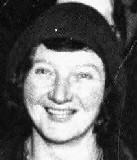
Jeannie Donald
Murderer Florence Ransom
Murderer · United Kingdom · 1940
Florence Ransom was a middle-aged woman who was described as physically beautif…
3 victims
Florence Ransom
Murderer · United Kingdom · 1940
Florence Ransom was a middle-aged woman who was described as physically beautif…
3 victims
 Dorothea Waddingham
Murderer · United Kingdom · 1935
Dorothea Waddingham (also referred to as Dorothea Nancy Waddingham) was born in…
2 victims
Dorothea Waddingham
Murderer · United Kingdom · 1935
Dorothea Waddingham (also referred to as Dorothea Nancy Waddingham) was born in…
2 victims
 Charlotte Bryant
Murderer · United Kingdom · 1935
Charlotte Bryant, also known as Charlotte McHugh, was born in Londonderry in 19…
1 victim
Charlotte Bryant
Murderer · United Kingdom · 1935
Charlotte Bryant, also known as Charlotte McHugh, was born in Londonderry in 19…
1 victim
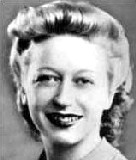 Elizabeth Jones
Murderer · United Kingdom · 1944
Elizabeth Jones was born in Neath, Wales, in 1926. At the age of thirteen, she…
1 victim
Elizabeth Jones
Murderer · United Kingdom · 1944
Elizabeth Jones was born in Neath, Wales, in 1926. At the age of thirteen, she…
1 victim
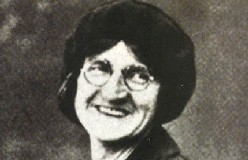 Ethel Major
Murderer · United Kingdom · 1934
Ethel Major was executed by hanging at Hull Prison on December 19, 1934 for the…
1 victim
Ethel Major
Murderer · United Kingdom · 1934
Ethel Major was executed by hanging at Hull Prison on December 19, 1934 for the…
1 victim
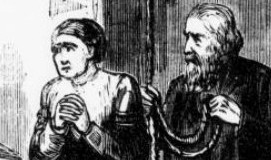 Margaret Waters
Murderer · United Kingdom · 1866
Margaret Waters was an English murderess who was hanged by executioner William…
19 victims
Margaret Waters
Murderer · United Kingdom · 1866
Margaret Waters was an English murderess who was hanged by executioner William…
19 victims
 Jack Unterweger
Serial killer · USA / Czechoslovakia · 1976
Johann “Jack” Unterweger was an Austrian serial killer. He was born in 1950 in…
12 victims
Jack Unterweger
Serial killer · USA / Czechoslovakia · 1976
Johann “Jack” Unterweger was an Austrian serial killer. He was born in 1950 in…
12 victims
 Timothy Johnston
Murderer · USA · 1989
Timothy Johnston was convicted of first degree murder and sentenced to death fo…
1 victim
Timothy Johnston
Murderer · USA · 1989
Timothy Johnston was convicted of first degree murder and sentenced to death fo…
1 victim
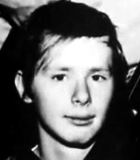 Anthony Barbaro
Homicide · USA · 1974
December 30, 1974 — Anthony F. Barbaro left his house with his mother's car, we…
3 victims
Anthony Barbaro
Homicide · USA · 1974
December 30, 1974 — Anthony F. Barbaro left his house with his mother's car, we…
3 victims
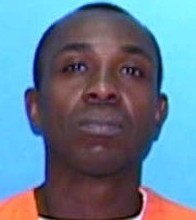 Richard Barry Randolph
Murderer · USA · 1988
Richard Barry Randolph was sentenced to death on April 5, 1989. He was identifi…
1 victim
Richard Barry Randolph
Murderer · USA · 1988
Richard Barry Randolph was sentenced to death on April 5, 1989. He was identifi…
1 victim
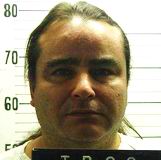 Derrick Quintero
Murderer · USA · 1988
Derrick Quintero and William Hall were sentenced to death for the 1988 murders…
2 victims
Derrick Quintero
Murderer · USA · 1988
Derrick Quintero and William Hall were sentenced to death for the 1988 murders…
2 victims
- Gender
- female
- Country
- United Kingdom
- Location
- Aberdeen, Scotland, United Kingdom
- Date of birth
- July 8, 1895
- Age at first offence
- 39
- Characteristics
- murder for hire, rape, child abuse, dismemberment, torture
- Victim profile
- Helen Priestly, 8
- Method of murder
- A sphyxiation
- Date(s) of murder
- April 20, 1934
- Years active
- 1934
- Date of arrest
- —
- Status
-
Died in custody
Sentenced to death in 1934; commuted to penal servitude for life; released on June 24, 1944; died in 1976
Case details
Jeannie Donald was tried in July 1934 for the murder of Helen Priestly.
Helen Priestly was eight years old when her body was found in a sack under the stairs of the Aberdeen tenement where she lived.
Background
Helen Priestly lived in a drab and overcrowded tenement block at number 61 Urquhart Street in Aberdeen. The building had been divided into eight two-room flats.
Helen Priestly lived with her father, John Priestly, and her mother, Agnes Priestly.
Jeannie Donald lived in the ground-floor flat of 61 Urquhart Street. She had a husband and a daughter named Jeannie Junior, also called Jeannie.
The offence
Helen Priestly went missing after being sent to buy a loaf of bread for her mother.
Her body was concealed in a sack in a lavatory of the tenement where she lived. Her death was determined to be asphyxiation.
There appeared to be signs of rape, but later forensic tests determined that Helen Priestly had not been raped; the child had been injured to make it appear as though she had been sexually assaulted.
Jeannie Donald never explained how and why Helen Priestly was killed.
Investigation
After Helen Priestly disappeared, the police carried out door-to-door interviews in one of the biggest operations Aberdeen had ever seen.
A neighbour reported hearing a high-pitched scream from a house in the Priestly close around lunchtime. A slater who had been working in the back close also reported hearing a “screech” around the same time.
The body was found in a blue hessian bag. The bag bore distinctive marks and a fading Canadian export stamp. With inquiries, the police ascertained that the bag was used for transporting flour, and that there was one outlet in Aberdeen: a bakery close to Helen’s house.
A baker recalled that a woman had come in asking for a bag some time before, and he had given her one of the blue Canadian bags. The police looked closer to home and investigated local people in the building, including the Donald family.
There had been “bad blood” between the Priestly family and the Donald family. The Priestlys refused to talk to the Donalds after Mrs Donald had hit Helen when the girl had been cheeky to her. The two families maintained enmity and were not speaking.
Human hairs were found in the sack with Helen Priestly. These hairs proved to be those of Mrs Donald.
A part of a loaf of bread was found in the Donald kitchen. The brand matched the bread that Mrs Priestly used.
Coal-ash and cinders matched similar items found in the Donalds’ home.
In the Donalds’ flat, the police found nine more identical bags to the one the body had been bundled into, each with similar stains.
Blood stains of the same blood group belonging to Helen were discovered on a packet of soapflakes, a scrubbing brush and some cleaning cloths.
Sir Sydney Smith, regius professor of forensic medicine at Edinburgh University, examined the flat in minute detail and discovered that Helen Priestly had a rare condition: an enlarged thalamus/thymus gland that caused her to produce an extremely rare bacterium and made her prone to fainting.
Microbiological tests showed that the bacterium covered the Donald household, over the floor, cleaning rags and on counter tops.
The police examined dust fibres in the bag and found cotton, wool, silk, cat hair, rabbit hair and some human hair that showed indications of being badly permed, matching Jeannie Donald’s.
Dust samples from the Donald flat matched the detritus in the sack in its composition, including strands of badly permed hair.
Alexander Donald, the husband of Jeannie Donald, was arrested and interviewed. It was said that witnesses confirmed he had been at work when Helen disappeared, leading to his release.
Jeannie Donald was the person charged with Helen Priestly’s murder.
Arrest and charge
Jeannie Donald was arrested and went to trial in July 1934.
She was charged with murder.
Trial
Court and date
Jeannie Donald was tried at Edinburgh on 16 July 1934.
The trial commenced before Judge Lord Craige Mason Aitchison.
Plea and defence
Jeannie Donald pleaded not guilty.
The defence argued that Helen Priestly’s injuries were consistent with rape. The defence also contended that Jeannie Donald could not have committed the murder because she was physically incapable of raping the young girl.
Prosecution evidence
The Crown relied on forensic evidence, including hair analysis.
Professor John Glaister of Glasgow University studied hair and testified that hairs found on Helen’s corpse matched hair found on a brush used by Jeannie Donald in jail. Hair inside the blue hessian sack was also said to be Jeannie Donald’s.
Fibres from the sack were said to match fibres in the Donalds’ home. Bacterial growth inside the sack was said to match that in the Donalds’ home.
Three pathologists examined Helen’s body and said the injuries were caused by the shaft of a hammer or broom handle, making it appear as if the girl had been raped and killed.
Jeannie Donald’s daughter testified regarding the Co-op loaf that had been found in the Donald house, stating it was not theirs.
Verdict and sentence
The jury took 18 minutes to find Jeannie Donald guilty of murder.
Jeannie Donald was sentenced to death and driven off through the screaming crowds to Craiginches Prison, Aberdeen.
Appeals and sentence commutation
On 3 August 1934, Jeannie Donald’s lawyers lodged an appeal.
The next day, the Lord Provost of Aberdeen received a letter from the Secretary of State and informed Craiginches Prison that Jeannie Donald was not to hang and should serve life in jail.
Jeannie Donald was transferred to the women’s jail in Duke Street, Glasgow.
Outcome
Jeannie Donald was sentenced to death in 1934, but her death sentence was commuted to penal servitude for life.
She was released on June 24, 1944.
Jeannie Donald died in 1976.
Other details
It was said that Judge Lord Aitchison had been reduced to tears after sentencing Jeannie Donald.
There were claims in the surrounding narrative that the body had been placed between 2:00 a.m. and 5:00 a.m. after no bag had been seen at 2:00 a.m. when Helen’s father went home for rest.
There was also an account that Dick Cotton later confessed that he had made up a story about seeing Helen being dragged by a middle-aged man in a dark overcoat and that he had not seen a kidnapping.
Jeannie Donald was described as having been granted compassionate leave in June 1944 to care for her dying husband after Alexander Donald fell terminally ill with cancer in June 1944.
After her husband died, Jeannie Donald was allowed to remain free under an assumed name. She never admitted her guilt or publicly explained how and why Helen Priestly was killed.

Spotted an error, or have more information about this case?