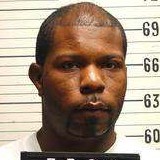
Preston Carter
Murderer Brian Kevin Rosenfeld
Murderer · USA · 1985
Brian Kevin Rosenfeld Brian Kevin Rosenfeld was sentenced to three concurrent l…
23 victims
Brian Kevin Rosenfeld
Murderer · USA · 1985
Brian Kevin Rosenfeld Brian Kevin Rosenfeld was sentenced to three concurrent l…
23 victims
 Russell Ellwood
Murderer · USA · 1991
Russell Ellwood was a former taxi driver. Authorities suspected him of killing…
20 victims
Russell Ellwood
Murderer · USA · 1991
Russell Ellwood was a former taxi driver. Authorities suspected him of killing…
20 victims
 Robert Martines Perez
Murderer · USA · 1994
Name: Robert Martines Perez · Other name used in proceedings: Robert Martinez P…
15 victims
Robert Martines Perez
Murderer · USA · 1994
Name: Robert Martines Perez · Other name used in proceedings: Robert Martinez P…
15 victims
 Billy Frank Vickers
Murderer · USA · 1993
Billy Frank Vickers Vickers was executed by lethal injection in Texas on Januar…
14 victims
Billy Frank Vickers
Murderer · USA · 1993
Billy Frank Vickers Vickers was executed by lethal injection in Texas on Januar…
14 victims
 Megan Hogg
Murderer · USA · 1998
Megan Hogg was sentenced to 25 years to life on September 24, 1999, for the 199…
3 victims
Megan Hogg
Murderer · USA · 1998
Megan Hogg was sentenced to 25 years to life on September 24, 1999, for the 199…
3 victims
 Florence Maybrick
Murderer? · United Kingdom · 1899
Florence Elizabeth Maybrick (Florence Maybrick) was an American woman convicted…
1 victim
Florence Maybrick
Murderer? · United Kingdom · 1899
Florence Elizabeth Maybrick (Florence Maybrick) was an American woman convicted…
1 victim
 Giuseppe Leotta
Mass murderer · Ital y · 2003
Giuseppe Leotta was a 32-year-old casual labourer from Aci Castello in eastern…
5 victims
Giuseppe Leotta
Mass murderer · Ital y · 2003
Giuseppe Leotta was a 32-year-old casual labourer from Aci Castello in eastern…
5 victims
 David Gilroy
Murderer · United Kingdom · 2010
David Gilroy was charged with the murder of Suzanne Pilley and with attempting…
1 victim
David Gilroy
Murderer · United Kingdom · 2010
David Gilroy was charged with the murder of Suzanne Pilley and with attempting…
1 victim
 Albert Martinez Carreon
Murderer · USA · 2001
Albert Martinez Carreon was sentenced to death on May 1, 2003 (ADC#045169). Car…
1 victim
Albert Martinez Carreon
Murderer · USA · 2001
Albert Martinez Carreon was sentenced to death on May 1, 2003 (ADC#045169). Car…
1 victim
- Gender
- male
- Country
- USA
- Location
- Shelby County, Tennessee, USA
- Date of birth
- April 25, 1970
- Age at first offence
- 23
- Characteristics
- murder for hire, armed robbery, rape, drug addict, alcohol, domestic violence, torture
- Victim profile
- Tensia and Thomas Jackson Jr.
- Method of murder
- Shooting ( sawed-off shotgun)
- Date(s) of murder
- May 28, 1993
- Years active
- 1993
- Date of arrest
- Same day
- Status
-
Sentenced to death
Sentenced to death on January 25, 1995
Case details
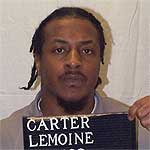
Preston Carter was sentenced to death in 1995 for the felony murders of Thomas and Tensia Jackson.
Timeline
- May 28, 1993 — Carter, accompanied by Darnell Ivory and Louis Anderson, went to a Memphis apartment complex where Thomas and Tensia Jackson resided with their young daughter, Tierney. The men broke into the apartment, demanded money, and Carter and Anderson assaulted the victims, with Carter shooting Thomas and Tensia. Three of Thomas Jackson’s co-workers arrived shortly before 4:00 a.m. and discovered that the front door had been kicked in and the master bedroom ransacked.
- May 28, 1993 — On the evening of the double homicide, Carter was arrested and gave a statement admitting that he shot Mr. and Mrs. Jackson. The sawed-off shotgun Carter used was found in his apartment, and he admitted using this weapon to shoot the two victims.
- 1991 — Carter was convicted of breaking into and burglarizing a vehicle, and he was on probation for a theft conviction when he murdered Thomas and Tensia Jackson.
- October 12, 1999 — Carter wrote a letter dated October 12, 1999 to Reverend Melita Padilla, and the letter was read to the jury.
- July 11, 1999 — Carter told Ms. Padilla in a letter dated July 11, 1999 that “I can't change what happened six years ago nor can I blame anyone but myself.”
- 1996 — Reverend Melita Padilla began visiting Carter in prison when she was a student at Vanderbilt Divinity School.
- 1995 — Carter originally pleaded guilty and was sentenced to death for the felony murders of Thomas and Tensia Jackson.
- 1999 — Carter’s original death sentences were reversed by the Court of Criminal Appeals because the jury had used an outdated verdict form containing the incorrect burden of proof (State v. Carter, 988 S.W.2d 145 (Tenn.1999)); the case then went through resentencing.
- October 20, 1994 — Approximately three months prior to his conviction in this case, Carter was convicted of aggravated robbery by use of a deadly weapon.
- February 4, 2004 — Carter’s death sentence was scheduled to be carried out on the 4th day of February, 2004, unless otherwise ordered by this Court or proper authority.
- January 25, 1995 — Carter was sentenced to death.
Background
Carter was on death row at the Riverbend Maximum Security Institution. Betty Mister testified that she and her husband had custody of the Jacksons’ daughter, Tierney. Kenneth Jackson testified about Thomas and Tensia Jackson and described Thomas as having “never been to jail or to ‘a club.’”
Carter legally changed his name to “Akil Jahi.” “Akil,” he explained, means “one who uses reason,” and “Jahi” means “dignity.”
Reverend Melita Padilla testified that she began visiting Carter in 1996 and visited him regularly as part of a program for visitation with death row prisoners, and that Carter initiated visitation by placing his name on a list of inmates wishing to receive religious visitors.
The offence
During the early morning hours of May 28, 1993, Carter, accompanied by Darnell Ivory and Louis Anderson, went to a Memphis apartment complex where Thomas and Tensia Jackson resided with their young daughter, Tierney.
Carter and Anderson were under the mistaken belief that the Jacksons’ apartment was the residence of a drug dealer whom they intended to rob. Carter and Anderson knocked on the door. Mr. Jackson came to the door but did not open it. Carter and Anderson asked Mr. Jackson “if he [had] anything.” Mr. Jackson replied that he did not know what they were talking about, and he refused to open the door. The men quickly realized they had the wrong apartment. Carter and Anderson nevertheless proceeded after handing a sawed-off shotgun to Anderson, with Carter kicking in the apartment door.
Carter and Anderson entered the Jacksons’ apartment and demanded money. Mr. Jackson was told to call for his wife to “come out” and was forced into a closet. Carter searched the apartment for money or drugs as Anderson raped Mrs. Jackson.
Carter’s account included that Mr. Jackson came at him in an apparent attempt to defend his family. Carter admitted, however, that he shot Mr. Jackson while Mr. Jackson was crouching in his daughter’s bedroom closet. Carter shot him at point-blank range with the sawed-off shotgun. Mr. Jackson’s brain was described as “literally blown out of his skull,” and he died instantly.
Carter then found Mrs. Jackson in the bathroom. She was clad only in a t-shirt and she was screaming, “Please don't shoot me. I'll do anything. Please don't shoot.” Ignoring her pleas to live, Carter shot Mrs. Jackson at close range as she lay on the bathroom floor. The shotgun pellets entered her left eye, and her brain was described as exploding. She also died instantly.
Shortly before 4:00 a.m., three of Mr. Jackson’s co-workers arrived to pick him up for work at a local bakery. The co-workers found the front door kicked in and the master bedroom ransacked. Mr. Lott discovered the Jacksons’ daughter lying in a pool of blood in the closet with her dead father. The child had not been physically injured.
Investigation and arrest
On the evening of May 28, 1993, the date of the double homicide, Carter was arrested. Carter gave a statement to police admitting that he shot Mr. and Mrs. Jackson.
Trial
Carter originally pleaded guilty and was sentenced to death in 1995 for the felony murders of Thomas and Tensia Jackson. On appeal, the Court of Criminal Appeals reversed the death sentences because the jury had used an outdated verdict form containing the incorrect burden of proof (State v. Carter, 988 S.W.2d 145 (Tenn.1999)).
After resentencing, the jury again imposed a sentence of death on both counts, and the Court of Criminal Appeals affirmed.
The Supreme Court of Tennessee reviewed the issues designated for oral argument under Tennessee Code Annotated section 39-13-206(a)(1), and held that none warranted reversal.
Sentencing
Resentencing hearing and aggravating circumstances
After the resentencing hearing, the jury found that the State had proven beyond a reasonable doubt two aggravating circumstances applicable to the murders of both Thomas and Tensia Jackson:
- “The defendant was previously convicted of one (1) or more felonies, other than the present charge, whose statutory elements involve the use of violence to the person” and
- “The murder was especially heinous, atrocious, or cruel in that it involved torture or serious physical abuse beyond that necessary to produce death.”
The jury found that the aggravating circumstances outweighed any mitigating circumstances beyond a reasonable doubt. The jury sentenced Carter to death on both counts.
Mitigating evidence and witnesses
Carter presented testimony of Dr. Joseph Charles Angelillo, a clinical psychologist. Dr. Angelillo interviewed Carter, reviewed background materials including Carter’s school records and interviews with Carter’s friends and family, and administered three tests.
Dr. Angelillo testified that the Wechsler Adult Intelligence Scale revealed a full scale I.Q. of 78 described as being in the “borderline range,” with scores below “borderline” indicating mild retardation. The Woodstock Johnson Test of Achievement showed proficiency in mathematical calculations at grade level 7.3, applied mathematics at grade 5.8, verbal encoding at grade 7.6, and reading comprehension at grade 11, with a broad scale reading score at the seventh grade level. The Millon Clinical Multiaxial Inventory, Third Edition showed generalized anxiety disorder and obsessive-compulsive personality traits. The test also showed Carter hastrionic personality features, including a dramatic and shallow personality and difficulty empathizing with others. The test further showed schizotypal personality features characteristic of persons who prefer solitude and exhibit eccentric behavior and beliefs. On cross-examination, Dr. Angelillo conceded that Carter is not mentally retarded.
Carter testified that he had gone through the eighth grade in school and that at the time of resentencing he was twenty-nine years of age and had three children: two boys, eight and seven years old, and a girl aged nine. He stated that he married in March of 2000 and that his wife visited him in prison on a weekly basis. Carter testified that he had been drinking alcohol and using marijuana all day prior to the double homicide and that he retrieved the sawed-off shotgun from his apartment when he, Anderson, and Ivory decided to commit a robbery.
Carter admitted killing Mr. and Mrs. Jackson but asserted that he did not intend to kill anyone when he first went to the apartment. Carter conceded that he knew very soon after he arrived at the Jacksons’ residence that he was at the wrong apartment but that he nonetheless decided to rob the victims. Carter stated that he did not know why he murdered the Jacksons and that he asked for forgiveness from the victims’ families.
Carter testified that he had changed since his former days of “just drinking and using drugs and taking things that I wanted.” As mitigation, he described the changes he experienced while incarcerated, including learning “[h]ow precious life is,” how to “respect other people and respect authority,” and how to “love and [have] compassion toward people.” He stated he thought about the Jacksons “all the time,” asked to be permitted to help others avoid doing what he had done, and testified that he had had no disciplinary problems while on death row and had missed passing the G.E.D. exam by a single point. He testified that he writes poetry and participates in twice-weekly Christian worship services.
On cross-examination, Carter admitted he had been convicted of breaking into and burglarizing a vehicle in 1991 and that he was on probation for a theft conviction when he murdered the Jacksons.
Two employees of the Riverbend Maximum Security Institution testified. Brenda K. Morrison, the Inmate Relations Coordinator, testified that Carter posed no disciplinary problems, achieved the least restrictive security rating in the shortest possible time, and described Carter as being “very helpful.” In her opinion, Carter “would not have a problem fitting in with the general [prison] population [if a sentence of life were returned].”
Cheryl Donaldson, a counselor for death row inmates, testified about her daily interaction with Carter for over four years when she worked in an area near her office. She testified that Carter never exhibited violent tendencies and she found him trustworthy.
The final mitigation witness was Reverend Melita Padilla, an ordained United Methodist minister. Padilla testified that she saw Carter grow as a person both spiritually and intellectually during their acquaintance and read into evidence a letter Carter had written to her.
Victim impact testimony
Carter challenged the admission of victim impact evidence, claiming it violated constitutional provisions prohibiting ex post facto laws. The State presented victim impact evidence from two witnesses.
Betty Mister, Tensia Jackson’s mother, testified that she and her husband had custody of the Jacksons’ daughter. Mister stated that Tierney missed her parents very much and wished she could share her accomplishments with them. Mister explained that Thomas and Tensia Jackson had been high school sweethearts and that Mr. Jackson was “like a son of mine.” Mister testified to Tensia’s close relationship with her brother Derrick Lott and that Tensia’s death “tears him apart.” Mister testified that the deaths created a void at family gatherings and holidays and concluded, “You know, they are missing very much in our lives.”
Kenneth Jackson, the older brother of Thomas Jackson, testified. He described Thomas and Tensia as “just in love with each other.” He described Thomas as a beautiful, good-hearted man who had never been to jail or to “a club.” Kenneth Jackson testified that Thomas’s main priority had been his wife and his daughter. Kenneth Jackson was present when the bodies of Thomas and Tensia Jackson were discovered.
Photographs of victims’ bodies
Three color photographs of the victims’ bodies at the crime scene were admitted into evidence at the resentencing hearing. Two of the photographs were also admitted at the first sentencing hearing.
The first photograph showed Mr. Jackson crouched in a closet covered with blood, with a large wound in his head described as through which part of his brain protruded. The second photograph showed Mrs. Jackson lying in a pool of blood on the bathroom floor between the wall and the commode, with the wound to her left eye visible. The third photograph was admitted only at the resentencing hearing and showed Mrs. Jackson lying on the bathroom floor in a pool of blood, but unlike the second photograph, it showed Mrs. Jackson unclothed from the waist down.
In the first appeal, the Court of Criminal Appeals held the trial court did not abuse its discretion in admitting the first two photographs, and this Court did not address that issue in the first appeal. In the appeal of Carter’s resentencing, the Court of Criminal Appeals upheld admission of the first two photographs under the doctrine of the “law of the case,” and held the third photograph was admissible as evidence of the circumstances of the crimes. The Court of Criminal Appeals found the third photograph was not unfairly prejudicial because the portion showing the unclothed part of Mrs. Jackson’s body was obscured by shadow.
Carter argued that the photographs were unfairly prejudicial because they were gruesome and graphic and had marginal evidentiary value. He argued they should not have been admitted as cumulative to evidence conveyed through witness testimony, and he asserted an exception to the law of the case doctrine applied because the prior ruling was clearly erroneous.
The Supreme Court of Tennessee concluded that under the policy of liberality in admission of photographs, and the standards governing resentencing evidence including Tennessee Code Annotated section 39-13-204(c), the three photographs were relevant as background information and also relevant to establishing the “heinous, atrocious, or cruel” aggravating circumstance. The Court concluded the probative value was not substantially outweighed by unfair prejudice and held that the trial court did not abuse its discretion in admitting the three photographs into evidence at the resentencing hearing.
Excluded mitigating evidence and harmless error
Ms. Padilla testified that Carter sent numerous cards, poems, and letters to her over approximately four years, and that she brought these documents to court. Defense counsel asked Ms. Padilla to pick one letter to read to the jury. The State objected to the letter as hearsay, and the trial court overruled the objection and allowed Ms. Padilla to read a letter dated October 12, 1999.
In that October 12, 1999 letter, Carter expressed gratitude to her for teaching him how to love himself and others, and Carter stated: “God is ․ our rock that we must keep first as the head of our everyday life.”
Carter also discussed his use of the law library, conversations with investigators, and the pastor’s possible assistance in his defense. Defense counsel attempted to introduce additional letters and poems that Carter had sent to Ms. Padilla. The trial court excluded three cards, six poems, and two letters.
The excluded documents were described as revealing Carter’s religious feelings, remorse, and his friendship with Ms. Padilla. Examples included a small hand-decorated card saying: “We are safe and secure, for we are in the presence of God ․ for I know whatever challenge we're going through. [sic] He is with us, every step of the way. Peace, Akil.”
A letter dated July 11, 1999 contained Carter’s statement: “I can't change what happened six years ago nor can I blame anyone but myself. I have lived a life of sin not to be that person anymore. No matter how the outcome may be I won't let go of my Lord's mighty hands. Because right now my friend, I owe Him my life.”
The trial court found the excluded additional documents were probative of Carter’s friendship with Ms. Padilla and Carter’s religious feelings, but refused to admit them because those mitigating factors had already been proven through Ms. Padilla’s testimony. The Supreme Court of Tennessee held that the trial court’s refusal to admit the proffered correspondence was error but harmless beyond a reasonable doubt, concluding the content had been adequately communicated to the jury through other admitted evidence and the jury instructions allowed consideration of remorse, religious reformation, and spiritual development.
Appellate review and outcome
The Supreme Court of Tennessee affirmed the Court of Criminal Appeals and held that none of the issues designated for oral argument warranted reversal of the death sentences.
In mandatory review under Tennessee Code Annotated section 39-13-206(c)(1), the Court concluded the sentence of death was not imposed in an arbitrary fashion; the evidence supported the jury’s finding of both statutory aggravating circumstances; the evidence supported the jury’s finding that aggravating circumstances outweighed mitigating circumstances beyond a reasonable doubt; and the sentence was not excessive or disproportionate.
The Supreme Court found the evidence sufficient to establish that Carter had previously been convicted of a violent felony, citing his October 20, 1994 conviction of aggravated robbery by use of a deadly weapon. The Court also found evidence sufficient to support the (i)(5) aggravating circumstance based on the same facts relied on in the initial appeal.
In comparative proportionality review, the Supreme Court stated that the motive for the killings was robbery. The Court stated that Carter realized the Jacksons were not the drug dealers he intended to rob but that he and Anderson nonetheless terrorized them; that Carter ransacked the apartment while Anderson raped Mrs. Jackson; and that Mr. Jackson was forced into his daughter’s bedroom closet. The Court described that Carter shot both victims in the head at close range while their young daughter was present, and the Court stated that Carter was twenty-four years old at the time he killed Mr. and Mrs. Jackson, confessed to the murders, and cooperated with investigators. It also stated that Carter was convicted of aggravated robbery prior to his conviction in this case, was father of four children, and had married since his incarceration. It also stated he had a “borderline” I.Q. and had been diagnosed with generalized anxiety disorder, obsessive-compulsive disorder, and histrionic and schizotypal personality features, and that he admitted using drugs and alcohol at the time of the murders.
The Supreme Court compared the case with similar first degree murder cases in which the State sought the death penalty and listed multiple cases, ultimately concluding the penalty in this case was not disproportionate.
Aftermath
The Supreme Court affirmed Carter’s sentence of death, and it was set to be carried out on February 4, 2004 unless otherwise ordered.
Costs of the appeal were taxed to the State of Tennessee because Carter was indigent.
Other details
The Supreme Court opinion identified the Justices: JANICE M. HOLDER, J., delivered the opinion, joined by FRANK F. DROWOTA, III, C.J., and E. RILEY ANDERSON and WILLIAM M. BARKER, JJ. ADOLPHO A. BIRCH, Jr., J., filed a dissenting opinion.
The opinion included a note that in a supplemental filing, Carter argued for the first time that his sentences of death must be reversed based on decisions of the United States Supreme Court in Apprendi v. New Jersey and Ring v. Arizona, asserting the indictment had to be dismissed and convictions vacated because aggravating circumstances were not charged in the indictment. The opinion noted that because Carter failed to file a motion seeking permission to raise the supplemental issue, it could be considered waived, and it further stated the argument was without merit because the Court held that neither the United States Constitution nor the Tennessee Constitution required the State to charge aggravating factors in the indictment in a first degree murder prosecution. The opinion cited State v. Dellinger.
A footnote stated that the name of the Jacksons’ daughter was sometimes spelled “Tyranny” in the record and that there was some uncertainty as to the child’s age at the time of the murders, with the child being either two or three years old.
Another footnote stated that the State did not rely on the (i)(2) aggravating circumstance at Carter’s original sentencing hearing, but that this did not preclude the State from relying on this aggravating circumstance upon resentencing.
A quoted example of the excluded correspondence and quoted plea for life were included: Carter refused to open the door after hearing Carter ask “if he [had] anything,” Mr. Jackson was told to call for his wife to “come out,” and Mrs. Jackson had screamed, “Please don't shoot me. I'll do anything. Please don't shoot.”
Spotted an error, or have more information about this case?