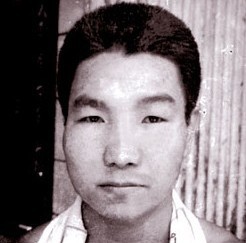
Iwao Hakamada
Mass murderer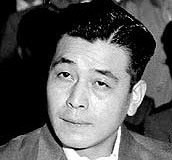 Masaru Okunishi
Mass murderer · Japan · 1961
Masaru Okunishi was a farmer from Kuzuo, a remote mountain village in Nabari ci…
5 victims
Masaru Okunishi
Mass murderer · Japan · 1961
Masaru Okunishi was a farmer from Kuzuo, a remote mountain village in Nabari ci…
5 victims
 Seiji Katagiri
Mass murderer · Japan · 1982
Seiji Katagiri (片桐 清二 Katagiri Seiji) served as Captain of Japan Airlines Fligh…
24 victims
Seiji Katagiri
Mass murderer · Japan · 1982
Seiji Katagiri (片桐 清二 Katagiri Seiji) served as Captain of Japan Airlines Fligh…
24 victims
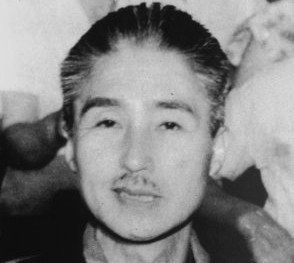 Sadamichi Hirasawa
Mass murderer · Japan · 1948
Sadamichi Hirasawa was a Japanese painter. He was also known as a tempera paint…
12 victims
Sadamichi Hirasawa
Mass murderer · Japan · 1948
Sadamichi Hirasawa was a Japanese painter. He was also known as a tempera paint…
12 victims
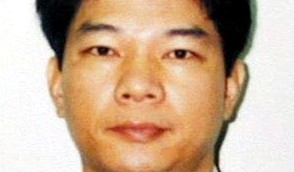 Mamoru Takuma
Mass murderer · Japan · 2001
Mamoru Takuma (宅間 守; November 23, 1963 – September 14, 2004) was a Japanese jan…
8 victims
Mamoru Takuma
Mass murderer · Japan · 2001
Mamoru Takuma (宅間 守; November 23, 1963 – September 14, 2004) was a Japanese jan…
8 victims
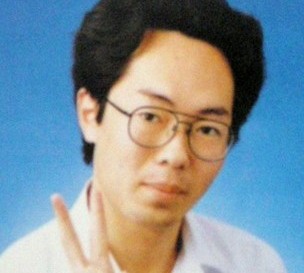 Tomohiro Kato
Mass murderer · Japan · 2008
Tomohiro Katō was held in custody and was in prison awaiting trial. Tomohiro Ka…
7 victims
Tomohiro Kato
Mass murderer · Japan · 2008
Tomohiro Katō was held in custody and was in prison awaiting trial. Tomohiro Ka…
7 victims
 Robert MacGregor
Serial killer ? · USA · 1909
Robert MacGregor was a doctor who established his practice in the Ubly area in…
4 victims
Robert MacGregor
Serial killer ? · USA · 1909
Robert MacGregor was a doctor who established his practice in the Ubly area in…
4 victims
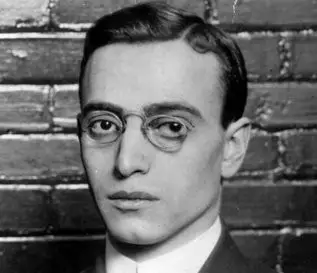 Leo Frank
Murderer? · USA · 1913
Leo Max Frank (April 17, 1884 – August 17, 1915) was an American man who became…
1 victim
Leo Frank
Murderer? · USA · 1913
Leo Max Frank (April 17, 1884 – August 17, 1915) was an American man who became…
1 victim
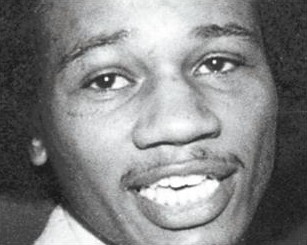 James Dyral Briley
Serial killer · USA · 1979
Name: James Dyral Briley James Dyral Briley was sentenced to death for capital…
11 victims
James Dyral Briley
Serial killer · USA · 1979
Name: James Dyral Briley James Dyral Briley was sentenced to death for capital…
11 victims
 Bernard Eugene Amos
Murderer · USA · 1998
Bernard Eugene Amos was a Texas death row prisoner. He made a final statement b…
1 victim
Bernard Eugene Amos
Murderer · USA · 1998
Bernard Eugene Amos was a Texas death row prisoner. He made a final statement b…
1 victim
 Carl Williams
Murderer · Australia · 2003
Carl Antony Williams (b. October 13, 1970) was an Australian convicted hitman a…
4 victims
Carl Williams
Murderer · Australia · 2003
Carl Antony Williams (b. October 13, 1970) was an Australian convicted hitman a…
4 victims
 Jennifer Hyatte
Murderer · USA · 2005
Name: Jennifer Hyatte Born: 11 February 1974 Known role: Shooter; former prison…
1 victim
Jennifer Hyatte
Murderer · USA · 2005
Name: Jennifer Hyatte Born: 11 February 1974 Known role: Shooter; former prison…
1 victim
- Gender
- male
- Country
- Japan
- Location
- Shimizu, Shizuoka Prefecture, Japan
- Date of birth
- March 10, 1936
- Age at first offence
- 30
- Characteristics
- robbery, arson
- Victim profile
- An executive of a miso company, his wife and their daughter and son
- Method of murder
- St abbing with knife
- Date(s) of murder
- June 30, 1966
- Years active
- 1966
- Date of arrest
- August 1966
- Status
-
Sentenced to death
Sentenced to death on September 11, 1968
Case record: Iwao Hakamada
Background
Iwao Hakamada (袴田巖) was a Japanese professional boxer.
Hakamada was born on March 10, 1936.
Hakamada was sentenced to death in 1968 and remained on Japan’s death row for decades.
By 2009, he had been in prison for 42 years, the longest imprisonment among condemned prisoners in Japan.
In 2007, Norimichi Kumamoto stated that Hakamada remained on Japan’s death row in a small, windowless cell and that Hakamada was slowly losing his mind; Hakamada’s sister and campaigners also said he was slowly losing his mind.
In 2005, Hakamada’s death-row life included pacing the floor of his nine-by-nine-foot cell at the Tokyo Detention Center and refusing most of the few visits he was allowed.
A Catholic Cardinal, Seiichi Sirayanagi of Tokyo, confirmed in a booklet entitled "Save an Innocent Prisoner" that he had thought about Hakamada’s trial for many years and that Hakamada’s spirit was on the verge of its end.
The offence
A court found that Hakamada was guilty of stabbing to death four people: a father, a mother, and their two children.
The house of the managing director, his wife, and their two children was described as having been robbed of 200,000 yen and set on fire.
Police found the bloody bodies of the plant’s managing director, his wife, and their two children at the plant on June 30, 1966.
The managing director’s family included two children; the case involved the murder of four people and the house being robbed and set on fire.
Hakamada’s supporters said he was innocent and claimed that his confession was forced and that police planted crucial evidence, including a pair of bloodstained trousers supposedly worn by Hakamada but described as not fitting him.
During the trial at the Shizuoka District Court in December 1966, Hakamada retracted his confession and claimed he was innocent.
Investigation
Police found the bloody bodies on June 30, 1966.
In August, police arrested Hakamada and charged him with murder, robbery, and arson.
Prosecutors presented five pieces of bloodstained clothing as evidence.
Kumamoto said one item of evidence was a pair of trousers which did not fit the one-time boxer.
Kumamoto stated that the guilty verdict was based solely on Hakamada confessing to the killings and that he confessed after being confined and tortured in a small room for 20 days.
Kumamoto said the court rejected 44 out of 45 records of interrogations, questioning whether those statements had been given voluntarily, and accepted one confession for the conviction.
Kumamoto said the interrogations included Hakamada admitting to killing a soybean company executive and his family of three, in Shizouka prefecture, in the Chubu region of Honshu island.
Kumamoto quoted and described that Hakamada said the guilty verdict was based on a confession after confinement and torture, and he also described the interrogations as being rejected by the court for voluntariness.
Arrest
On June 30, 1966, police found the bloody bodies of the plant’s managing director, his wife, and their two children, and the house had been robbed of 200,000 yen and set on fire.
In August 1966, police arrested Hakamada and charged him with murder, robbery, and arson.
Trial
A three-judge panel of the Shizuoka District Court convicted Hakamada on September 11, 1968, and sentenced him to death.
In December 1966, during the trial at the Shizuoka District Court, Hakamada retracted his confession and claimed he was innocent.
Kumamoto stated that one of three judges had sentenced a boxer to death on charges of murdering a family of four.
Kumamoto said he had been convinced the man was innocent at the time and that his vote was overruled, with a two to one decision.
Kumamoto said the other two judges had rejected his massive 360-page document arguing his reasons for believing the man to be innocent.
Kumamoto stated that one year later, he quit the bench in protest.
Kumamoto said that the court rejected 44 out of 45 records of interrogations and accepted one confession, basing the conviction on that confession.
Kumamoto said the court imposed a death sentence notwithstanding the retraction and innocence claim.
Kumamoto also stated that during his trial at the Shizuoka District Court in December 1966, Hakamada retracted his confession and claimed he was innocent.
Amnesty has also been cited in the narrative, stating that the court rejected 44 out of 45 interrogation records and that statements contained nothing of substance.
Hakamada’s chief lawyer, Hideo Ogawa, supported Kumamoto’s view in the narrative.
Ogawa stated that "Japan has not changed its treatment of suspects since the 1600s, and they (the suspects) are not recognised as human beings."
Ogawa stated that "The judicial system was based largely on obtaining written confessions given to police investigators in unrecorded interrogation sessions, he said."
Ogawa stated that "If you are innocent but accused of a crime, there are few safeguards to protect you," and he said that "The police can detain citizens up to 24 days."
Ogawa stated that "They do not have any rules regarding what time they can start the interrogation in the morning, or finish in the evening. And there is no lawyer in the room."
Ogawa stated: "The Japanese believe that if the prosecutor says someone is guilty then it must be true."
Ogawa also stated: "I am convinced that some innocent people had been wrongly convicted and executed."
Ogawa recalled Sakae Menda, who was accused of murdering and injuring a family of four in Hitoyoshi City in Kumamoto Prefecture in 1948, and stated that Menda was coerced into a confession after days of interrogation.
Ogawa said evidence supporting Menda’s alibi was ignored and that Menda’s conviction was eventually overturned after Menda had spent more than 30 years in prison.
Kumamoto said he filed a petition with Japan’s Supreme Court demanding a retrial for Hakamada.
Kumamoto stated: "The evidence presented by the state prosecutors against Hakamada was insufficient for a conviction," and said: "I thought we could not find him guilty ... the five pieces of evidence that were provided did not make sense."
Kumamoto stated: "The guilty verdict was based solely on Hakamada confessing to the killings."
Kumamoto stated that Hakamada confessed after being confined and tortured in a small room for 20 days.
Kumamoto stated: "During his trial at the Shizuoka District Court in December 1966 he retracted his confession and claimed he was innocent."
Kumamoto said: "I have to let the world know what happens in Japan."
Kumamoto stated: "The police use shocking, barbaric means to extract confessions and those who make them do so only out of despair."
Hakamada also wrote to his sister about his interrogation; he later wrote: "I could do nothing but crouch down on the floor trying to keep from defecating," and "At that moment one of the interrogators put my thumb onto an ink pad, drew it to a written confession record and ordered me, 'Write your name here!' [He was] shouting at me, kicking me and wrenching my arm."
Kumamoto stated that the Shizuoka court dismissed some of Hakamada’s confession claims and chided police for their tactics, but still found enough evidence to find him guilty and sentence him to death.
Sentencing
On September 11, 1968, a three-judge panel of the Shizuoka District Court convicted Hakamada and sentenced him to death.
The narrative stated that when Hakamada was sentenced to death, the court imposed a penalty that enjoyed wide public support in Japan.
A February 2005 government survey was cited indicating 81 percent of respondents agreed that the death penalty is still necessary in at least some cases.
Appeals
Hakamada’s efforts to overturn the verdict were rejected first by the intermediate court of appeals, known as the High Court, and then by the Supreme Court.
The Supreme Court ruled on November 11, 1980, and Hakamada’s death sentence became “final,” as described in the narrative.
Hakamada was transferred from a regular prison cell to solitary confinement on death row in the Tokyo Detention Center.
Hakamada’s request for a retrial was rejected in 1994.
A subsequent appeal to the Tokyo High Court failed on August 27, 2004.
Judge Fumio Yasuhiro wrote for the High Court: "New evidence presented by the defense lacks clarity and contains nothing new as required to open a retrial," and "and it cannot be said that it will generate reasonable doubt about the final judgment."
Kumamoto stated that after reaching joint decisions, judges faced a risk of being charged for breaking a secrecy law barring judges from speaking after they reach joint decisions.
Kumamoto stated that he filed a petition with Japan’s Supreme Court demanding a retrial.
Kumamoto said: "The evidence presented by the state prosecutors against Hakamada was insufficient for a conviction."
The narrative said DNA testing of the bloody pants was inconclusive, and Judge Yasuhiro agreed with prosecutors that Hakamada had been wearing them at the time of the crime.
Itoh was described as appealing the case to the Supreme Court.
The narrative said Hakamada’s appeal to the Supreme Court for retrial had been held up for the last three years at the time of the account.
Outcome
Hakamada was sentenced to death on September 11, 1968.
As of the time of the narrative, Hakamada had not been executed, despite being on death row for decades.
The narrative stated that the Ministry of Justice had a policy of not executing prisoners while their retrial petitions were pending, though it was described as a matter of ministry discretion.
The narrative said "a prisoner was executed in 1999 while his lawyer was preparing a new petition for retrial."
The narrative said a pardon was available in theory through a majority vote of the Japanese cabinet or at the recommendation of the National Offenders Rehabilitation Commission, but that cabinet pardons for condemned prisoners had not been issued since 1954 and that the rehabilitation commission granted one amnesty in each of 1965, 1970, and 1975.
The narrative stated that Hakamada’s attorneys refrained from requesting a pardon.
The narrative stated that "Hakamada’s attorneys, not wanting to concede his guilt, have so far refrained from requesting a pardon."
The narrative reported that if Hakamada’s retrial petition failed, his lawyers could ask a court to declare him ineligible for execution under a Japanese law forbidding imposition of the death penalty on the insane.
Aftermath
The narrative described continued legal efforts to obtain a retrial and ongoing debate about capital punishment and alleged coercion of confessions.
Kumamoto was described as filing a petition and speaking to press in 2007, with quotes given in the narrative.
Kumamoto said: "My vote was overruled. It was a two to one."
Kumamoto said: "I have felt sadness and disappointment over this."
Kumamoto said: "I have thought about his trial for many years."
Hosaka visited on March 10, 2003, which was described as Hakamada’s 67th birthday, and the narrative included dialogue.
Hosaka said: "Happy birthday," to Hakamada.
Hakamada replied: "For me, there is no age; my age is infinite."
The narrative said that Hosaka told the prisoner described himself as “the omnipotent God,” saying he had “absorbed” Iwao Hakamada, taken over the prison, and abolished the death penalty in Japan.
The narrative included Hakamada’s claim to Hosaka: "There is no longer any such person as Iwao Hakamada," and "Therefore, Iwao cannot be executed."
The narrative also stated that long-term solitary confinement for a crime he denied having committed gradually drove him mad.
Timeline
- June 30, 1966 — Police found the bloody bodies of the plant’s managing director, his wife, and their two children; the house had been robbed of 200,000 yen and set on fire.
- August 1966 — Police arrested Hakamada and charged him with murder, robbery, and arson.
- December 1966 — At the Shizuoka District Court, Hakamada retracted his confession and claimed he was innocent.
- September 11, 1968 — A three-judge panel of the Shizuoka District Court convicted Hakamada and sentenced him to death.
- November 11, 1980 — The Supreme Court rejected appeals and ruled that the death sentence was final.
- 1994 — Hakamada’s request for a retrial was rejected.
- August 9, 1994 — The Shizuoka District Court rejected Hakamada’s petition.
- August 27, 2004 — The Tokyo High Court failed the subsequent appeal.
- February 2005 — A government survey reported that 81 percent of respondents agreed the death penalty was still necessary in at least some cases.
- March 10, 2003 — Nobuto Hosaka used a ruse to induce Hakamada to receive him on the prisoner’s 67th birthday.
- November 11, 2007 — Norimichi Kumamoto spoke to press, described as breaking a 40-year silence.
Other details
The narrative stated that Hakamada had been in prison for 25 years as of 2005 and that he spent time pacing in a nine-by-nine-foot cell at the Tokyo Detention Center.
The narrative stated that no execution dates were given in advance and inmates learned that they were to be executed when a guard came one morning and gave the news.
The narrative stated that Japan was described as maintaining capital punishment and that it was the only member of the Group of Seven industrialized nations, other than the United States, to maintain capital punishment.
The narrative stated that between 1946 and 1993, Japanese courts sentenced 766 people to death and 608 were executed.
The narrative stated that between 1946 and 2003, Japanese courts sentenced 766 people to death and 608 were executed.
The narrative stated that as of the end of 2004, there were 118 convicted criminals under sentence of death in Japan.
The narrative stated that 68 of them, including Hakamada, had convictions and sentences affirmed on appeal and were subject to execution at any time.
The narrative stated that currently there were 104 people awaiting execution in Japan according to Norimichi Kumamoto.
The narrative stated that no execution dates were given in advance.
The narrative stated that there were no executions between November 1989 and March 1993.
The narrative stated that the unofficial moratorium on executions ended on March 26, 1993, when three men were hanged.
The narrative stated that after the Supreme Court confirmed the conviction and sentence in 1980, a new team of lawyers headed by Kazuo Itoh stepped into the case.
The narrative stated that in 1981, the lawyers filed a petition for retrial on Hakamada’s behalf.
The narrative stated that Itoh’s team asked doctors to conduct a reexamination of physical evidence and that it resulted in the finding that the alleged murder weapon was the wrong size to produce the deep stab wound in one of the murdered children.
The narrative stated that the lawyers showed a door through which police said Hakamada had entered and exited the victims’ home was locked at the time of the crime.
The narrative stated that lawyers showed a pair of bloodstained pants the police said they recovered at the scene 14 months after the crime were too small for Hakamada.
The narrative stated that the gathering and presentation of the new evidence took the better part of 13 years.
The narrative stated that dna testing of the bloody pants was inconclusive and that Judge Yasuhiro agreed with prosecutors that Hakamada had been wearing them at the time of the crime.
The narrative stated that Hakamada’s legal team included Hideo Ogawa as chief lawyer, and it referenced Nobuto Hosaka as an anti-death penalty activist and former member of the Diet.
The narrative stated that a senior Tokyo prosecutor spoke on condition of anonymity.
The narrative quoted a senior Tokyo prosecutor saying prosecutors sought the death penalty more often because of “pressure from crime victims in the context of rising violent crime committed by strangers,”.
The narrative stated that in 1999 a new victims’ rights lobby was established to support the death penalty and other tough-on-crime measures.
The narrative stated that in October 2002, a three-person delegation from the leftist International Federation for Human Rights met lobby representatives and found that “all the family members expressed the desire or willingness to personally ‘push the button’ for the execution.”
The narrative stated that not one petition for retrial had been granted since 1989.
The narrative stated that appeals courts had frequently overturned life sentences and replaced them with death sentences.
The narrative included a separate case decided in 2004 involving the slaying of a 44-year-old woman in 1997 by Takashi Mochida, and it described Mochida had stalked the woman after his release from prison where he had served seven years for raping her.
The narrative quoted Chief Justice Shigeo Takii: “The motive [of vengeance] leaves no room for leniency. There was considerable premeditation and cruelty. With a prior murder conviction, there was no option but to hand out the death sentence.”
The narrative included comparisons with U.S. execution numbers and population and homicide statistics, but those comparisons were presented as part of the general debate and not as direct outcome facts for Hakamada.
The narrative stated that Amnesty International had received reports that eight of 118 people facing death sentences in Japan were innocent.
The narrative stated that the Ministry of Justice policy was not to execute prisoners while their retrial petitions were pending, but that the policy was discretionary and that an execution occurred in 1999 while a retrial petition was being prepared.
The narrative included a discussion of Japanese law about retrials and that until 1975 retrials were interpreted narrowly, but the narrative did not provide case-specific outcomes for Hakamada from that discussion beyond describing legal context.
“My vote was overruled. It was a two to one,” Norimichi Kumamoto said. “I thought we could not find him guilty ... the five pieces of evidence that were provided did not make sense.” “The guilty verdict was based solely on Hakamada confessing to the killings.” “I have to let the world know what happens in Japan,” Norimichi Kumamoto said. “The police use shocking, barbaric means to extract confessions and those who make them do so only out of despair.” “Japan has not changed its treatment of suspects since the 1600s, and they (the suspects) are not recognised as human beings,” Hideo Ogawa said. “The judicial system was based largely on obtaining written confessions given to police investigators in unrecorded interrogation sessions,” Hideo Ogawa said. “If you are innocent but accused of a crime, there are few safeguards to protect you,” Hideo Ogawa said. “They do not have any rules regarding what time they can start the interrogation in the morning, or finish in the evening. And there is no lawyer in the room,” Hideo Ogawa said. “The Japanese believe that if the prosecutor says someone is guilty then it must be true,” Hideo Ogawa said. “I could do nothing but crouch down on the floor trying to keep from defecating,” Iwao Hakamada wrote to his sister. “At that moment one of the interrogators put my thumb onto an ink pad, drew it to a written confession record and ordered me, ‘Write your name here!’ [He was] shouting at me, kicking me and wrenching my arm.” “New evidence presented by the defense lacks clarity and contains nothing new as required to open a retrial,” Judge Fumio Yasuhiro wrote. “and it cannot be said that it will generate reasonable doubt about the final judgment.” “Happy birthday,” Nobuto Hosaka said. “For me, there is no age; my age is infinite,” Iwao Hakamada replied. “Therefore, Iwao cannot be executed,” Hakamada told Nobuto Hosaka.

Spotted an error, or have more information about this case?