
Walter Lee Caruthers
Murderer Ervil LeBaron
Murderer · USA · 1972
Ervil Morrell LeBaron (1925 to August 16, 1981) was the leader of a polygamous…
35 victims
Ervil LeBaron
Murderer · USA · 1972
Ervil Morrell LeBaron (1925 to August 16, 1981) was the leader of a polygamous…
35 victims
 Brian Kevin Rosenfeld
Murderer · USA · 1985
Brian Kevin Rosenfeld Brian Kevin Rosenfeld was sentenced to three concurrent l…
23 victims
Brian Kevin Rosenfeld
Murderer · USA · 1985
Brian Kevin Rosenfeld Brian Kevin Rosenfeld was sentenced to three concurrent l…
23 victims
 Marvin Gray
Murderer · USA · 1975
Marvin Gray was convicted killer who claimed responsibility for 23 slayings and…
23 victims
Marvin Gray
Murderer · USA · 1975
Marvin Gray was convicted killer who claimed responsibility for 23 slayings and…
23 victims
 Yahweh ben Yahweh
Murderer · USA · 1980
Yahweh ben Yahweh was born and legally named Hulon Mitchell Jr. (October 27, 19…
23 victims
Yahweh ben Yahweh
Murderer · USA · 1980
Yahweh ben Yahweh was born and legally named Hulon Mitchell Jr. (October 27, 19…
23 victims
 Shelly Andre Brooks
Serial killer · 2001
Shelly Andre Brooks was a homeless man whom authorities believed killed at leas…
7 victims
Shelly Andre Brooks
Serial killer · 2001
Shelly Andre Brooks was a homeless man whom authorities believed killed at leas…
7 victims
 Junko Ogata
Serial killer · Japan · 1996
Junko Ogata (緒方 純子 Ogata Junko, born February 25, 1962) was a Japanese woman wh…
7 victims
Junko Ogata
Serial killer · Japan · 1996
Junko Ogata (緒方 純子 Ogata Junko, born February 25, 1962) was a Japanese woman wh…
7 victims
 Alfred Dewayne Brown
Murderer · USA · 2003
Alfred Dewayne Brown was convicted of capital murder committed on April 3, 2003…
2 victims
Alfred Dewayne Brown
Murderer · USA · 2003
Alfred Dewayne Brown was convicted of capital murder committed on April 3, 2003…
2 victims
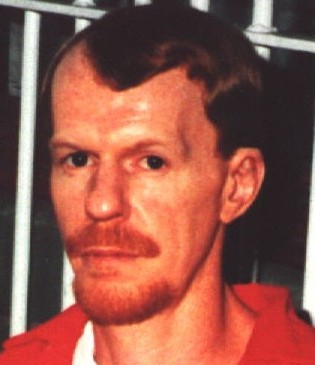 Keith Canaan
Murderer · USA · 1985
Keith Canaan was a white male. He was identified as Keith Canaan, Keith B. Cana…
1 victim
Keith Canaan
Murderer · USA · 1985
Keith Canaan was a white male. He was identified as Keith Canaan, Keith B. Cana…
1 victim
- Gender
- male
- Country
- USA
- Location
- Knox County, Tennessee, USA
- Date of birth
- November 24, 1946
- Age at first offence
- 34
- Characteristics
- kidnapping, rape, robbery
- Victim profile
- Wilhelmina Stahl
- Method of murder
- Drowning
- Date(s) of murder
- October 11, 1980
- Years active
- 1980
- Date of arrest
- 4 days after
- Status
-
Sentenced to death
Sentenced to death on February 8, 1983
Parties
Walter Lee Caruthers was the defendant. Reginald Watkins was his co-defendant.
Ricky Bell was the warden referenced in “Walter Lee Caruthers v. Ricky Bell, Warden Walter Lee Caruthers”.
Timeline
- October 11, 1980 — Walter Lee Caruthers and Reginald Watkins picked up the victims, Wilhelmina Stahl and her brother George Stahl, in Columbus, Ohio, while the Stahls were hitchhiking to Georgia.
- November 1982 — A jury trial took place; Caruthers was convicted of first degree murder, assault with intent to commit murder in the first degree causing bodily harm, two counts of aggravated kidnapping, and two counts of armed robbery.
- 1983 — Caruthers was sentenced to death for the first degree murder conviction, three consecutive life sentences for the assault and aggravated kidnapping convictions, and two consecutive sixty-year sentences for the armed robbery convictions.
- August 27, 1984 — The Supreme Court of Tennessee issued an opinion in “STATE OF TENNESSEE, APPELLEE v. WALTER LEE CARUTHERS, APPELLANT”.
- 9th day of November, 1984 — The death sentence was to be carried out as provided by law unless stayed by appropriate authority.
Background
Wilhelmina Stahl and her brother George Stahl were hitchhiking from New York to Georgia.
On the afternoon of October 11, 1980, in Columbus, Ohio, they accepted a ride from Walter Caruthers, who offered to take them to Knoxville, Tennessee, where he lived.
Also riding in Caruthers’ car was co-defendant Reginald Watkins.
The offence
On the night of October 11, 1980, after reaching Knoxville, Caruthers drove to a vacant lot.
Watkins pulled a small silver pistol, told the Stahls that it was a robbery, and took George’s wallet and Wilhelmina’s purse. Caruthers opened the trunk of the automobile, and at gunpoint Watkins told the Stahls to get in.
The automobile was driven to another location where Watkins and Caruthers took Wilhelmina out of the trunk. When Wilhelmina was put back into the trunk ten to fifteen minutes later, she was hysterical and crying.
The car was driven to a gas station, then down a rough, bumpy road.
After the car was stopped, Wilhelmina was told by Watkins to get out of the trunk. Caruthers was standing by Watkins. The men said they were going to tie the Stahls up. George was left in the trunk.
George heard water splashing and Wilhelmina say, “Please, don't.” George was then taken out of the trunk. Watkins hit him in the head and knocked him to the ground. Then George said he felt pressure as if someone had thrown a rock on his head.
George jumped up, ran into the lake which was nearby, and swam out into the water. When the defendants’ car left, George swam back to shore only to be found hiding in brush along the shoreline by Caruthers and Watkins, who had returned to search for him.
Caruthers held George by the shoulders and told Watkins, “Cut his throat. He won't say nothing.” Watkins repeatedly stabbed George in the throat with a knife. Both men then held him under the water until they thought he was dead.
After they left, George made his way to a nearby road, where he was found and taken to the hospital.
At the hospital, in addition to the stab wounds, doctors discovered George had been shot behind the left ear.
On a search of the area where George was found, Wilhelmina’s body was located lying face down in shallow water near the lake shore. A large rock had been placed on top of her head. A red and white shirt was loosely wrapped around her neck.
The autopsy showed that she had died from drowning. She had breathed so deeply that gravel had been drawn into her larynx and lungs. Sperm were found in her vagina.
Rape and competing claims
After the driving to another location and during the criminal episode, Wilhelmina was raped, with Caruthers and Watkins each claiming that the other was the rapist.
Caruthers also and Watkins drove the Stahls to a remote lakeside location where Wilhelmina was killed, with Caruthers and Watkins again claiming that the other was responsible.
In the defendant’s testimony, the defendant said Watkins raped and killed Wilhelmina and tried to kill George. Watkins’ testimony claimed Caruthers insisted the Stahls had to be killed to cover-up the robberies and rape, and Watkins testified that Caruthers shot George in the head and drowned Wilhelmina.
Investigation and forensic findings
Later that week police stopped Caruthers’ wife in the car described by George Stahl.
In the trunk they found a loaded nickel-plated .32 caliber pistol, from which one bullet had been fired.
George Stahl’s fingerprints were found inside the trunk.
Hairs matching Wilhelmina’s were found in the truck and backseat of the car, which had been wiped clean.
Caruthers was arrested soon thereafter, made a statement, and led the police to the place where the Stahls’ clothing had been thrown out.
Arrest
Caruthers was arrested soon thereafter.
Trial
Charges and convictions
A jury trial was held in November 1982.
Caruthers and Watkins were indicted on a charge of first degree murder in the death of Wilhelmina Stahl, two charges of aggravated kidnapping, two charges of armed robbery, and for assault with intent to commit murder in the first degree causing bodily harm.
Watkins was convicted of all charges except the charge of murder in the first degree; Caruthers was convicted of all charges.
Caruthers was convicted of:
- first degree murder
- assault with intent to commit murder in the first degree causing bodily harm
- two counts of aggravated kidnapping
- two counts of armed robbery
Evidence at trial
George Stahl testified about the events leading to the robbery, confinement in the trunk, and the stabbing, drowning attempt, and the rock and shooting elements.
Rebecca Thompson, one of Caruthers’ girlfriends, testified that when Caruthers and Watkins had come by her parents’ home the day after the killing, Watkins was carrying some wet clothes, which he hung out to dry.
In defense, Caruthers’ wife testified that late in the evening of October 11, 1980, her husband and Watkins had come by her apartment, Watkins’ clothes were wet, and he went through a bundle of clothing and a billfold.
Caruthers testified that the robbery was Watkins’ idea, that Watkins raped and killed Wilhelmina and tried to kill George, and that he went along with Watkins because he was afraid Watkins would shoot him.
Caruthers admitted convictions for armed robbery and interstate transportation of a stolen motor vehicle.
Watkins’ attorney asked Caruthers about a prior incident (June, 1980) in which a young woman and her male companion had been kidnapped and assaulted. Caruthers denied committing the crime.
Michelle Cunningham, the young woman, who had been raped during the June, 1980, episode, testified and identified Caruthers as her attacker.
The co-defendant Watkins testified. Watkins admitted owning the gun but claimed he was carrying it to protect himself from Caruthers.
Watkins testified that the robbery was originally Caruthers’ idea, but Watkins agreed to participate, and he did not intend for anything else to happen. Watkins admitted standing watch while Caruthers raped Wilhelmina, striking George in the head, and stabbing and attempting to drown George with the intent to kill him.
Watkins testified that Caruthers insisted that the Stahls had to be killed to cover-up the robberies and rape. Watkins testified that Caruthers shot George in the head and drowned Wilhelmina.
Watkins admitted prior convictions for aggravated robbery, carrying a concealed weapon, and petit theft.
In rebuttal, Caruthers introduced proof that he did not have a scar or tattoo such as those described by Michelle Cunningham in an earlier description of her assailant.
Jury issues and arguments on sufficiency
In his attack on the sufficiency of the convicting evidence, Caruthers emphasized that the only eyewitness to the drowning of Wilhelmina was Watkins, who was also charged with the offense.
He also noted that during the criminal episode Watkins was carrying the gun and issuing orders to the Stahls.
The jury accepted Watkins’ version of events rather than Caruthers’ version, and the proof was held sufficient to convict Caruthers under the standard prescribed in Jackson v. Virginia, 443 U.S. 307, 99 S.Ct. 2781 (1979) and T.R.A.P. 13(e).
Sentencing
Statutory aggravating circumstances found
In the bifurcated sentencing phase of the trial, the jury found the following statutory aggravating circumstances:
A. “The defendant was previously convicted of one or more felonies, other than the present charge, which involve the use or threat of violence to the person.”
B. “The murder was especially heinous, atrocious, or cruel in that it involved torture or depravity of mind.”
C. “The murder was committed for the purpose of avoiding, interfering with or preventing a lawful arrest or prosecution of the defendants or another.”
D. “The murder was committed while the defendant was engaged in committing, or was an accomplice in the commission of, or was attempting to commit, or was fleeing after committing or attempting to commit, any first degree murder, rape, robbery, larceny, kidnapping.”
The jury unanimously found that there were “no mitigating circumstances sufficiently substantial to outweigh the statutory aggravating circumstances or circumstances so listed above,” and fixed Caruthers’ sentence for the murder of Wilhelmina Stahl as death by electrocution.
Additional sentencing facts
The sentencing included:
- death by electrocution for the first degree murder conviction
- three consecutive life sentences for the assault and aggravated kidnapping convictions
- two consecutive sixty-year sentences for the armed robbery convictions
Initial jury report and sentencing charge
The defendant challenged the trial court’s acceptance of the jury’s initial report that it was unable to agree on punishment.
After deliberating on the sentence for approximate three hours, the jury sent the court a note reading: “No unanimous decision has been reached in our determining punishment for Walter Lee Caruthers. As of now the jury stands at eleven to one, with no foreseeable change. Please advise.”
Over defendant’s objection, the judge called the jury into open court and gave them the charge approved in Kersey v. State, 525 S.W.2d 139 (Tenn. 1975).
Just over two hours later, the jury returned with a unanimous verdict of death by electrocution.
The Kersey charge had been included in the jury instructions at the guilt phase but had not been included in the instructions given at the sentencing hearing.
Appeals
This was a direct appeal of a death penalty case.
Court and judges
The Supreme Court of Tennessee proceeding included:
- “STATE OF TENNESSEE, APPELLEE v.
- “KNOX CRIMINAL; HON. RAY L. JENKINS, JUDGE.”
- “SUPREME COURT NO. 169.”
- “Cooper, Chief Justice wrote the opinion.”
- Concur: Fones, Harbison, and Drowota, JJ., Brock, J.
- Concurs on all issues except the death penalty.
Trial rulings challenged
Caruthers raised multiple arguments, including:
- introduction of a photograph of Wilhelmina Stahl during the sentencing phase
- jury selection method using lists of registered voters
- refusal to permit individual voir dire of prospective jurors
- excusal of juror McCombs for cause under Witherspoon standards
- refusal to try the first count separately
- failure to require a psychiatric evaluation
- denial of the right to call Russ Dedrick, the prosecuting assistant district attorney general, as a witness
- admission of prior convictions for impeachment purposes
- allowing co-defendant Watkins’ attorney to question Caruthers concerning a prior bad act
- instruction on the weight to be given a confession
- trial court not accepting initial jury inability to reach agreement on punishment
- constitutionality of the Tennessee Death Penalty Act
The Supreme Court of Tennessee concluded that no reversible error was committed and affirmed the conviction of first degree murder and the sentence of death.
Photograph issue
Caruthers complained about the introduction of a photograph of Wilhelmina Stahl during the sentencing phase. The photograph showed “a frontal view of the corpse soon after it was removed from the water.” The court noted mud or gravel on the victim’s face and that no blood or wounds were visible.
The introduction was held harmless beyond a reasonable doubt.
Jury selection issue
Caruthers argued that the Knox County Jury Commission’s method denied him a fair and impartial cross section by selecting prospective jurors solely from lists of registered voters.
The Supreme Court held the defendant had not proved constitutional invalidity in the method of jury selection in this case.
Voir dire and juror excusal
Caruthers contended that the trial judge committed error in not permitting individual voir dire of prospective jurors. The procedure described included collective voir dire, with individual voir dire permitted on issues of pretrial publicity and opposition to the death penalty when initial voir dire showed a possible problem.
Caruthers also argued error in the excusal of juror McCombs for cause. The court addressed Witherspoon v. Illinois standards and found no error, referencing Mrs. McCombs’ earlier statement that she could not consider the death penalty.
Psychiatric evaluation
Caruthers argued the trial court erred in not having him undergo a psychiatric evaluation. The judge granted a motion requesting a psychiatric evaluation and requested that defense counsel draw a petition, but the court found no further action shown in the record. The issue of sanity was never raised at trial and notice of insanity defense was not given as required by Rule 12.2.
The court found no error in failure to have the defendant examined to determine his mental condition.
Dedrick testimony
Caruthers argued the trial court erred by denying him the right to call Russ Dedrick as a witness. The Supreme Court held Dedrick’s testimony would be cumulative and unnecessary because the same facts were already testified to by Herman Johnson, a detective for the sheriff’s department who had interviewed the defendant with Dedrick.
Prior convictions and impeachment
Counsel for co-defendant Watkins impeached Caruthers using prior convictions:
- armed robbery in 1969 (sentence 10 to 25 years; released in 1974 and 1975)
- knowingly transporting a stolen vehicle in interstate commerce in violation of the Dyer Act in 1967 (sentence 5 years; released in 1969)
The jury instruction immediately after admission specified the crimes were to be used only for impeachment.
The court found no prejudice and held admissible under State v. Morgan, 541 S.W.2d 385 (Tenn. 1976).
Prior bad act
Caruthers challenged allowing co-defendant Watkins’ attorney to question him about a June 1980 incident involving Michelle Cunningham.
The record showed Caruthers answered “No” and no further questions were asked.
The court held the evidence was admissible for impeachment purposes and supported by Jones v. State, 580 S.W.2d 329, 332 (Tenn. Crim. App. 1978) and State v. Morgan, 541 S.W.2d 385 (Tenn. 1976).
Related evidence during Cunningham testimony
The judge instructed the jury to consider Cunningham’s testimony only on Caruthers’ credibility and on questions of intent, motive and common scheme or plan.
The court addressed admissibility of other-crimes evidence and found it relevant to issues at trial, including intent and guilty knowledge.
Rebuttal testimony and confession instruction
Caruthers argued the trial court abused discretion by refusing to let Sandra Hartsell testify in rebuttal. The court described Hartsell’s testimony as being about meeting Watkins while Watkins and Caruthers were with Rebecca Thompson soon after the killing, with Watkins having “folding money” and telling her he was returning to Columbus, Ohio, “to kill the people that had gotten his brother.”
The Supreme Court concluded there was no abuse of discretion in denying rebuttal testimony.
The court also held no error in jury instructions on the weight to be given a confession. It noted that the only person who confessed was Watkins.
Jury deadlock and Kersey charge
Caruthers challenged the constitutionality of the Tennessee Death Penalty Act for preservation purposes and challenged the sentencing process after the jury’s initial report of disagreement.
The court held the death penalty statute was constitutional and affirmed the sentencing process, stating no abuse of discretion and no indication the instruction was coercive.
Outcome
The Supreme Court of Tennessee affirmed Caruthers’ conviction of first degree murder and sentence of death.
The death sentence was to be carried out as provided by law on the 9th day of November, 1984, unless stayed by appropriate authority.
Costs were adjudged against the defendant.
Spotted an error, or have more information about this case?