Rebecca Worlock
Murderer Margaret Waters
Murderer · United Kingdom · 1866
Margaret Waters was an English murderess who was hanged by executioner William…
19 victims
Margaret Waters
Murderer · United Kingdom · 1866
Margaret Waters was an English murderess who was hanged by executioner William…
19 victims
 Catherine Wilson
Murderer · United Kingdom · 1854
Catherine Wilson was a British nurse who poisoned victims after befriending the…
7 victims
Catherine Wilson
Murderer · United Kingdom · 1854
Catherine Wilson was a British nurse who poisoned victims after befriending the…
7 victims
 Florence Ransom
Murderer · United Kingdom · 1940
Florence Ransom was a middle-aged woman who was described as physically beautif…
3 victims
Florence Ransom
Murderer · United Kingdom · 1940
Florence Ransom was a middle-aged woman who was described as physically beautif…
3 victims
 Joanna Dennehy
Murderer · United Kingdom · 2013
Name: Joanna Dennehy · March 2013 — Three murders were carried out in the Unite…
3 victims
Joanna Dennehy
Murderer · United Kingdom · 2013
Name: Joanna Dennehy · March 2013 — Three murders were carried out in the Unite…
3 victims
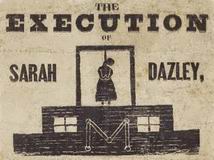 Sarah Dazley
Murderer · United Kingdom · 1842
Sarah Dazley was born in 1819 as Sarah Reynolds. Her date of execution was 5 Au…
3 victims
Sarah Dazley
Murderer · United Kingdom · 1842
Sarah Dazley was born in 1819 as Sarah Reynolds. Her date of execution was 5 Au…
3 victims
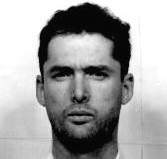 John Michael Lamb
Murderer · USA · 1982
John Michael Lamb was convicted of capital murder in Texas and sentenced to dea…
1 victim
John Michael Lamb
Murderer · USA · 1982
John Michael Lamb was convicted of capital murder in Texas and sentenced to dea…
1 victim
 Robert Gleason
Murderer · USA · 2007
Robert Charles Gleason was serving life imprisonment for the 2007 fatal shootin…
3 victims
Robert Gleason
Murderer · USA · 2007
Robert Charles Gleason was serving life imprisonment for the 2007 fatal shootin…
3 victims
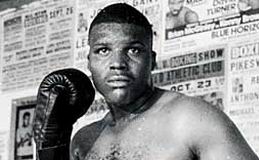 Reggie Gross
Murderer · USA · 1986
Reggie Gross (born January 1962) was a journeyman heavyweight boxer in the 1980…
3 victims
Reggie Gross
Murderer · USA · 1986
Reggie Gross (born January 1962) was a journeyman heavyweight boxer in the 1980…
3 victims
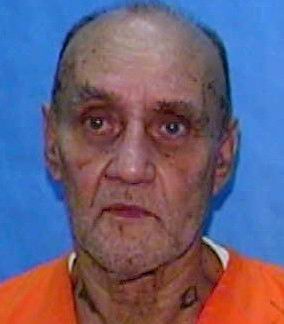 Johnny Williamson
Murderer · USA · 1985
Johnny Williamson (born 10/25/42) was convicted in the Third Judicial Circuit,…
1 victim
Johnny Williamson
Murderer · USA · 1985
Johnny Williamson (born 10/25/42) was convicted in the Third Judicial Circuit,…
1 victim
 Ignacio Cuevas
Murderer · USA · 1974
Ignacio Cuevas was executed in Texas by lethal injection on May 23, 1991, for h…
3 victims
Ignacio Cuevas
Murderer · USA · 1974
Ignacio Cuevas was executed in Texas by lethal injection on May 23, 1991, for h…
3 victims
- Gender
- female
- Country
- United Kingdom
- Location
- Oldland, Gloucestershire, England, United Kingdom
- Date of birth
- 1783
- Age at first offence
- 37
- Characteristics
- parricide, poisoner, domestic violence
- Victim profile
- Her husband, Thomas Worlock
- Method of murder
- Poisoning (arsenic)
- Date(s) of murder
- April 21, 1820
- Years active
- 1820
- Date of arrest
- —
- Status
-
Executed
Executed by hanging at Gloucester on August 16, 1820
Case details
Rebecca Worlock was a 37-year-old mother-of-three. She was executed by hanging at Gloucester on 16 August 1820.
Background
Rebecca Worlock was married to Thomas Worlock. The case described Thomas Worlock as a jealous man, and it said this caused Rebecca “considerable amount of discomfort” because there was “no foundation to his suspicions.” The narrative stated that Rebecca decided that Thomas had to go.
The case also stated that Rebecca was not a faithful wife, and that her infidelity was known to her husband and was a major cause of their many rows.
The offence
The killing was described as the murder of Thomas Worlock by poisoning.
The case described Rebecca approaching Mary Jenkins, who was a complete stranger and who was standing outside Rebecca’s mother’s house, “around the beginning of March 1820.” Rebecca asked whether Mary Jenkins knew where she could buy something to kill rats. Mary told her to carry on a little further to Kingswood Hill where she would find Mr Wine’s pharmacy. The purchase of poison, it said, required two people to be present. Rebecca asked Mary to accompany her, and Mary agreed.
Rebecca bought arsenic and, according to the narrative, was “overjoyed at having the means to rid herself of her husband.” It stated that she told Mary that the poison was “not really for rats, but for her husband.” Rebecca gave Mary threepence for her trouble and went on her way. Mary immediately told her mother.
On the evening of 17 April, Thomas returned home to Barry Road, Oldland, after a hard day. He had walked about 30 miles and was thirsty. The case said he sent his eldest daughter, thirteen-year-old Mary Ann, across the road to the Chequers public-house for a pint of beer. Mary Ann took the jug from its place hanging on a nail in the kitchen, crossed the road, and Mary Hook, the landlord’s daughter filled the jug. Mary Ann returned home, and Rebecca met her, took the jug, and told Mary Ann to go and fetch her brother and sister home. By the time Mary Ann had found her brother and sister, taken them home, and put them to bed, Thomas had almost finished the beer.
The case said Thomas found “a white gritty substance” at the bottom, put some on the table, and accused Rebecca of poisoning him. Rebecca took the jug and washed it out in a bucket of water. The residue of the powder sank to the bottom and this was noticed by several people.
In the account that later elaborated the domestic details, it described Rebecca “surreptitiously” adding rat poison to the brew after taking the jug from her daughter, and it stated that Thomas drank the contents and became “violently sick.” It said Rebecca removed the jug, threw away the remaining contents, and rinsed out the jug. It also stated that Thomas, with the help of friends, was able to get to the local doctor at nearby Keynsham.
Investigation
The case stated that Thomas decided to consult a doctor to determine what the powder was. It said he made his way to Dr Edwards in Keynsham accompanied by Thomas Jenkins, who had been enjoying a quiet pint in the Crown & Horseshoe in the village.
Dr Edwards dismissed the idea that the powder was poison, even though Thomas was complaining of stomach pains and was vomiting. Over the next couple of days Thomas got steadily worse and died just after midday on 21 April.
The account then stated that a post-mortem soon identified that an irritant poison was responsible for his death, and Rebecca was arrested.
Arrest and charges
The case stated that Rebecca was arrested and charged with her husband’s murder.
It also stated that, at the subsequent inquest, the cause of death was established to be poisoning, and shortly afterwards Rebecca was arrested and charged with her husband’s murder.
Trial
Rebecca Worlock was tried at Gloucester Assizes on Monday 14 August. The jury took just seven minutes to find her guilty and she was sentenced to death.
The case also stated that, during the trial at the Assize Courts in Gloucester, it was established that Rebecca had first attempted to purchase rat poison from Mrs Stephens, the apothecary on Kingswood Hill. Because Mrs Stephens had “a rule not to sell poison to one person on their own,” Rebecca was initially turned away. It said Rebecca stopped the first person she met outside the shop and asked for help, and somehow persuaded her to accompany her back into the apothecary. It identified the young woman as Sarah Jenkins. On her second attempt, Rebecca was successful in making the purchase. According to Mrs Stephens’ testimony, this was accomplished by Mrs Worlock having convinced her that the poison was required, for nothing more sinister than “to kill a rat.”
The case stated that after leaving the shop with Sarah Jenkins, Rebecca did not leave quietly but had to “compromise herself and celebrate.” It described that after Mrs Stephens’ refusal on the first attempt, Rebecca was “somewhat taken aback” and probably saw her plans being thwarted by a lack of powder. It said her luck changed when she was fortunate to meet Sarah outside, and decided to tell Sarah the real reason for the purchase.
It stated that Rebecca explained to Sarah that she had “a hell of a man around her who was the plague of her life,” and that she was determined to “put to sleep at the first opportunity.” It said that she then gave Sarah threepence for a pint of ale as a bribe not to say anything to anyone about what had happened. It said Sarah recounted the strange tale in full to her mother at the first opportunity.
It also stated that it was revealed at her trial that Rebecca was not a faithful wife and that her infidelity was known to her husband and was a major cause of their many rows.
The case stated that the jury found Rebecca guilty of “the foul murder” of her husband by poisoning, and she was sentenced to death by hanging. It further stated there was an additional decree that afterwards her body be handed over to the surgeons for dissection.
The case stated that, for the next two days, Rebecca was the sole occupant of the condemned cell, while under constant surveillance. It also stated that the only visitor allowed to see her was her local vicar, Rev. Ellacombe, from Bitton.
Sentencing
Rebecca was sentenced to death at Gloucester Assizes.
The case stated that there was an additional decree that afterward her body be handed over to the surgeons for dissection.
Execution and outcome
On Wednesday, 16 August 1820, a large crowd gathered in front of the main gate of Gloucester Prison. Rebecca was allowed a breakfast on her own before receiving visits from Rev. Ellacombe, the prison chaplain, and then the hangman appointed for that day. The case stated that with hands tied behind her back, Rebecca was led to the gatehouse over the main entrance of the prison, which was surrounded by a large crowd, including people from Oldland and Bitton.
The case said Rebecca was temporarily hidden from the public’s view due to the way the newly built gatehouse had been constructed, and her appearance came when she dropped into view through a trap door. It stated that the outside set of the double gates were opened, which caused the multitude to leave their picnics and surge forward.
The case described Rebecca making her final appearance and then being left dangling from the end of the rope for the next hour to ensure her death and to enable the crowd to witness that justice had been done.
Other details
- Place details included Barry Road, Oldland; Kingswood Hill; Keynsham; and Gloucester Prison.
- People mentioned besides Rebecca and Thomas included Mary Jenkins, Mary Hook (landlord’s daughter), Mary Ann (thirteen-year-old daughter), Thomas Jenkins, Dr Edwards, Mrs Stephens (apothecary), Sarah Jenkins, Rev. Ellacombe (from Bitton), the prison chaplain, and the hangman appointed for that day.
- The case described the Chequers public-house and the Crown & Horseshoe in the village.
- The case included a domestic-crime narrative that described Thomas sending his daughter to the Chequers Inn for a jug of ale, and Rebecca taking the jug, adding rat poison, and later throwing away the remaining contents and rinsing out the jug. It also described Thomas’s sickness, pain, and eventual death after four days of agony and torment.
Spotted an error, or have more information about this case?