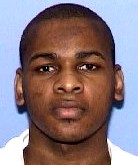
Alfred Dewayne Brown
Murderer Robert Martines Perez
Murderer · USA · 1994
Name: Robert Martines Perez · Other name used in proceedings: Robert Martinez P…
15 victims
Robert Martines Perez
Murderer · USA · 1994
Name: Robert Martines Perez · Other name used in proceedings: Robert Martinez P…
15 victims
 Billy Frank Vickers
Murderer · USA · 1993
Billy Frank Vickers Vickers was executed by lethal injection in Texas on Januar…
14 victims
Billy Frank Vickers
Murderer · USA · 1993
Billy Frank Vickers Vickers was executed by lethal injection in Texas on Januar…
14 victims
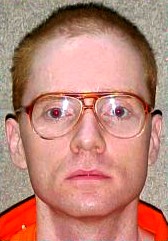 Robert Glen Jones
Murderer · USA · 1996
Defendant: Robert Glenn Jones (ADC#070566) · Co-defendant: Scott Nordstrom (ADC…
7 victims
Robert Glen Jones
Murderer · USA · 1996
Defendant: Robert Glenn Jones (ADC#070566) · Co-defendant: Scott Nordstrom (ADC…
7 victims
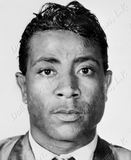 DeVernon LeGrand
Serial killer · USA · 1963
DeVernon LeGrand, who called himself a bishop and headed St. John’s Pentecostal…
12 victims
DeVernon LeGrand
Serial killer · USA · 1963
DeVernon LeGrand, who called himself a bishop and headed St. John’s Pentecostal…
12 victims
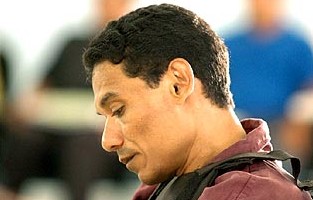 Francisco Das Chagas
Serial killer · Brasil · 1989
Francisco das Chagas was a bicycle mechanic in Brazil. He confessed to killing…
42 victims
Francisco Das Chagas
Serial killer · Brasil · 1989
Francisco das Chagas was a bicycle mechanic in Brazil. He confessed to killing…
42 victims
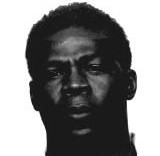 Kenneth Granviel
Mass murderer · USA · 1974
Kenneth Granviel was executed by lethal injection in Texas on February 27, 1996…
7 victims
Kenneth Granviel
Mass murderer · USA · 1974
Kenneth Granviel was executed by lethal injection in Texas on February 27, 1996…
7 victims
- Gender
- male
- Country
- USA
- Location
- Harris County, Texas, USA
- Date of birth
- February 27, 1982
- Age at first offence
- 21
- Characteristics
- robbery, drug addict
- Victim profile
- Alfredia Jones (store clerk) and Charles Clark (police officer)
- Method of murder
- Shooting
- Date(s) of murder
- April 3, 2003
- Years active
- 2003
- Date of arrest
- Same day
- Status
-
Sentenced to death
Sentenced to death on November 10, 2005
Case information
Alfred Dewayne Brown was convicted of capital murder committed on April 3, 2003. He was sentenced to death, and the conviction and sentence were affirmed on direct appeal.
- Name: Alfred Dewayne Brown
- TDCJ Number: 999504
- Date of Birth: 02/27/1982
- Date received: 11/10/2005
- Age (when received): 23
- Education level: 10
- Date of offense: 04/03/2003
- Age (at the offense): 21
- County: Harris
- Race: Brown
- Gender: Male
- Hair color: Black
- Height: 6' 01''
- Weight: 230
- Eye color: Brown
- Native: Native County, Native State
- Prior occupation: Construction - Landscaping
- Prior prison record: TDCJ# 1107195 on a seven month sentence for drug possession from Harris County.
Timeline
- 04/03/2003 — Brown, with codefendants Deshan Glaspie and Elijah Joubert, fatally shot a store clerk and a Houston Police Officer while robbing a check cashing establishment in Harris County.
- October 2005 — A jury convicted Brown of capital murder committed on April 3, 2003.
- 11/10/2005 — Brown was sentenced to death.
- September 24, 2008 — The Court of Criminal Appeals of Texas delivered its opinion affirming the conviction and sentence of death.
The offence
Brown decided, with Dashan Glaspie and Elijah Joubert, to rob the tellers at a check-cashing business. Joubert and Brown were supposed to go inside while Glaspie would act as the lookout and getaway driver. They arrived at the business as it was about to open, but the owner stymied their scheme when he displayed a handgun. The group decided to try again at a second check-cashing store.
Alfredia Jones arrived to open that business. Gun in hand, Joubert approached Jones and went inside with her. Joubert permitted Jones to make a telephone call to an affiliated check-cashing business to say that she was "opening Center 24." This statement was actually a code to alert authorities of the robbery.
Glaspie and Brown, who had been waiting in an adjacent furniture store, entered the check-cashing business. Joubert held his gun to Jones's head and ordered her to open the safe; Glaspie checked for surveillance equipment, and Brown rummaged through Jones's purse.
As the robbery was occurring, police arrived. Officer Charles Clark began to go inside. Brown shot Officer Clark, and Joubert shot Jones, accusing her of tipping off the police. Both victims died.
Investigation and evidence
Telephone records
The State admitted telephone records showing call locations and times that corresponded with Glaspie's testimony concerning various calls he had made to Brown or were made by Brown in the hours immediately before and after the crime.
Witness accounts placing Brown near the crime scene
- Alisha Renee Hubbard testified that, soon before the first robbery attempt, she observed Brown with Glaspie and Joubert at the Villa Americana apartments, where Glaspie and Joubert lived. She overheard Joubert ask Glaspie, "Are you ready to go do this?" and soon thereafter she saw Glaspie loading a pistol's magazine with bullets.
- Sheikah Mohammad Afzal testified that he was an employee at the furniture store adjacent to the check-cashing business where Glaspie testified he and Brown were waiting as Joubert began the robbery. Afzal stated he was 85 percent certain that Brown was one of the two men he saw, interacted with, and watched leave the store in the direction of the check-cashing business immediately before the murders occurred. Afzal testified: "Yes, I identify him in court. I identified him in the lineup, and I identified him in the store also. He's the same guy."
- Sharonda Simon, Brown's ex-girlfriend, testified that she saw Brown at the Villa Americana apartments soon after the crime. She stated he was sitting in a vehicle that matched the description of the one used by the perpetrators of the crime, and that Joubert and Glaspie were standing nearby.
Arrest
No separate arrest narrative appears in the record excerpt.
Trial
In October 2005, a jury convicted Brown of capital murder committed on April 3, 2003, citing Tex. Penal Code Ann. § 19.03(a). The trial judge sentenced Brown to death based on the jury's answers to special issues under Texas Code of Criminal Procedure Article 37.071, sections 2(b) and 2(e).
The Court of Criminal Appeals of Texas noted:
- Direct appeal was automatic under Art. 37.071 § 2(h).
- The trial judge's sentencing followed Art. 37.071 § 2(g).
Accomplice-witness corroboration
Brown challenged the sufficiency of corroboration for accomplice-witness testimony, arguing that the testimony of Glaspie, who implicated Brown and described the killing of Officer Clark during the robbery, was not sufficiently corroborated.
The Court described the accomplice-witness rule:
- Art. 38.14 required non-accomplice evidence tending to connect the accused with the crime.
- The corroborative evidence did not need to be sufficient by itself to establish guilt and did not need to directly link the accused to the commission of the offense.
The Court found it undisputed that Glaspie was an accomplice as a matter of law and that corroboration could come from suspicious conduct or admissions. The Court relied on testimony from Brown's girlfriend and later-implicated girlfriend, Erika Dockery.
Erika Dockery testified that Brown demanded she lie to the grand jury investigating the crime and provide him with an alibi. She obliged but later admitted she had lied. She was charged with aggravated perjury, and the fact was made known to the jury. Dockery admitted to drug use. Dockery also testified that, on the day of the crime, Brown appeared unusually nervous; she testified he telephoned her and told her to watch a news broadcast regarding the crime, and that later he appeared nervous and was moaning and crying.
Most importantly, Dockery testified that she had regularly visited Brown at the jail after his arrest. On the last day she visited, she pleaded with him:
"I need - - I want to know the truth. Did you do this? . . . I want to know. Did you kill the lady? Did you shoot the policeman? I need to know. Did you do it?"
Dockery testified that Brown responded by putting his head down and saying:
"I was there. I was there."
The Court held that appellant's unusual conduct on the day of the offense, asking Dockery to provide an alibi, and his admission that he "was there" in combination was some non-accomplice evidence tending to connect him to the alleged robbery and killings. The Court further stated that the impeachment issues went to the weight of evidence, not admissibility, referencing Tex. R. Evid. 609 and 613.
The Court also stated that corroboration was bolstered by other testimony placing Brown at the crime scene and with Glaspie and Joubert before and after the killings, including testimony from Hubbard, Afzal, and Simon, and the admitted telephone records.
Jury shuffle issue
Brown argued that the trial judge erred in overruling his requests to shuffle the jury panel. The Court described the timing requirements for a jury shuffle request in capital cases and found Brown's requests were not timely.
The Court stated:
- The venire panel consisted of 395 prospective jurors.
- The trial judge split the venire into three smaller sections: 120 in the first, 150 in the second, and 125 in the third.
- After excusing several prospective jurors by agreement based solely on written questionnaires, the trial judge conducted voir dire of each section separately.
- After voir dire of each section, prospective jurors were excused or dismissed for cause or by agreement without questioning by the parties at that time.
- Remaining prospective jurors were scheduled for individual voir dire by the parties.
- After individual voir dire was completed, 51 venire members not excused remained.
- Only at that point Brown requested and then twice re-urged his request for a jury shuffle.
- The requests were denied, and peremptory strikes followed to empanel a petit jury of twelve and two alternates.
- Prospective jurors remained in the same ordinal sequence.
The Court held that the trial judge did not err because Brown's requests were made after voir dire began, after individual voir dire concluded, and after many prospective jurors had already been excused, such that a late-stage shuffle would have been improper.
The Court quoted the rationale from prior case law:
"To allow either party to request a shuffle of the names of the jury panel after voir dire begins would be disruptive and unduly prolong the trial. Further, it would permit such an election to be based upon information already elicited on voir dire. Clearly, this was not the intent of the legislature."
Prosecutor’s comments at closing
Brown argued that the trial court erred in overruling his objections to statements made by the prosecutor at the beginning of the State's rebuttal closing argument at the guilt phase.
The Court reproduced parts of the prosecutor’s argument verbatim:
MR. RIZZO [prosecutor]: You know, ladies and gentlemen, I have to start off by commenting on just one area the Defense counsel commented on. And I don't get into personal attacks. I've been a Prosecutor for 23 years. I just don't do it. I think it's sleazy. I don't do it. But I'm going to tell you, the personal attacks that Defense counsel made on me today, I've seen a couple of times in the last 23 years. I just want to - I'm not going to go on and comment about those other than to say that they are offensive. They're terribly offensive to me as a Prosecutor for this long a period. And I'm not going to tell you what's happened in the past in those couple of rare occasions in 23 years where someone would attack me in such a way where there's no evidence of any kind for the mere fact of trying to somehow help their client, which they should be trying to help their client, but not by personally attacking me.
MR. MORROW [defense co-counsel]: Judge, I'm going to object. That's outside the record, the Prosecutor's testifying.
THE COURT: Overruled.
MR. RIZZO: The reason I'm allowed to talk to you about this is because it's a response to something improper. Ladies and gentlemen, if I had done just a smidgen of what [defense co-counsel] Ms. Muldrow said, I should not only be fired, but I should be indicted. So what she did to you was she lied.
MR. MORROW: Judge, I object to Mr. Rizzo attacking [appellant] over Ms. Muldrow's shoulder.
THE COURT: Overruled.
MR. MORROW: May I have a running objection to this line of argument, Your Honor?
THE COURT: Yes.
MR. RIZZO: She lied. She stood up here and lied to you. And I'm going to let you know that I'm offended and that's the last I'm going to talk about that because there is no evidence from any source, none at all. And I will remember it. Ladies and gentlemen, let's go on to what we're here for.
The Court reviewed arguments about whether the prosecutor's statements were outside the record or improper. The Court held that the trial court erred in overruling appellant's objections to the prosecutor's comments. It concluded, however, that the error was non-constitutional and did not affect substantial rights, so the convictions remained affirmed.
The Court included quoted legal principles:
"It is the duty of trial counsel to confine their arguments to the record; reference to facts that are neither in evidence nor inferable from the evidence is therefore improper."
and:
"A prosecutor may not stray beyond the scope of the invitation."
It also referenced this quoted standard:
"Although there were no curative measures, such as an instruction to disregard, the objectionable statements were clearly directed at opposing counsel and not at appellant."
The Court further recounted parts of Ms. Muldrow’s closing argument, including multiple verbatim quotations.
Portions of Ms. Muldrow’s closing argument included:
- Meeting with Mr. Rizzo about three times with her and her sisters before Mr. Joubert's trial in October 2004 and that she acknowledged giving perjured testimony.
- An account about her identification testimony across the street of Mr. Foisner's business on April 5th of 2003.
- An account of Mr. Rizzo asking: "Do you have an opinion who the third person is?" and she said: "I do now."
- An account of surveillance or time discrepancy involving Mr. Afzal and “a few minutes, not seconds on the tape,” including:
"I said a few minutes, not seconds on the tape."
and the statement in the argument that included:
- The argument that Mr. Glaspie kept switching with reference to meetings with Mr. Rizzo and seeing three photos.
- Statements about “tools” and that the witnesses were rehearsed for the trial.
- A statement: "Remember? He cut his deal in July of 2004. But the problem is you dress these witnesses and rehearse them for this man's trial. When you do that, they're no longer witnesses. They're tools."
- A statement: "Ericka Dockery had 120 days worth of reasons to shade her testimony for Dan Rizzo."
- The argument about reasonable inferences and good faith, including:
"reasonable, fair, legitimate, and offered in good faith."
Sentencing
Based on the jury's answers to the special issues, the trial judge sentenced Brown to death under Art. 37.071 § 2(g). The Court of Criminal Appeals affirmed the sentence of death.
Appeals
Brown raised four points of error on direct appeal.
- Point of error four — challenged accomplice-witness corroboration. The Court overruled it.
- Point of error three — challenged the refusal to shuffle the jury. The Court overruled it.
- Points of error one and two — challenged prosecutor’s rebuttal closing argument comments. The Court held the trial court erred in overruling objections, but it held the error did not affect substantial rights and overruled the points.
The Court concluded that the points of error were without merit and affirmed the trial court's judgment and sentence of death.
Other details
Codefendants
Brown’s codefendants were Deshan Glaspie and Elijah Joubert. The Court noted that Glaspie later testified against Brown and Joubert in separate capital murder trials pursuant to a plea agreement. The record excerpt also states that Glaspie had been convicted of aggravated robbery in accordance with the plea agreement.
Victims
The case involved the death of:
- a store clerk, Alfredia Jones
- Officer Charles Clark, a Houston Police Officer
Additional legal references included in the opinion
The Court’s opinion referenced:
- Tex. Penal Code Ann. § 19.03(a)
- Texas Code of Criminal Procedure Article 37.071, including sections 2(b), 2(e), 2(g), and 2(h)
- Art. 35.11, Art. 35.17
- Art. 38.14
- Tex. R. App. P. 44.2(b)
- Tex. R. Evid. 609 and 613
Delivery and publication
The opinion was “Delivered: September 24, 2008” and “Publish.”
Spotted an error, or have more information about this case?