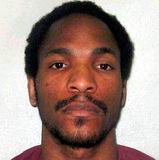
Mario Celaire
Murderer Rahan Arshad
Murderer · United Kingdom · 2006
Rahan Arshad (born 1970) was a taxi driver. He lived at Turves Road, Cheadle Hu…
4 victims
Rahan Arshad
Murderer · United Kingdom · 2006
Rahan Arshad (born 1970) was a taxi driver. He lived at Turves Road, Cheadle Hu…
4 victims
 Anthony Smith
Murderer · United Kingdom · 2001
Anthony Smith was a former sergeant in the Coldstream Guards. He had left the C…
3 victims
Anthony Smith
Murderer · United Kingdom · 2001
Anthony Smith was a former sergeant in the Coldstream Guards. He had left the C…
3 victims
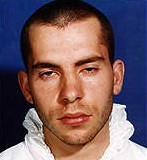 David John Copeland
Murderer · United Kingdom · 1999
David John Copeland was born in Isleworth, in the London Borough of Hounslow, a…
3 victims
David John Copeland
Murderer · United Kingdom · 1999
David John Copeland was born in Isleworth, in the London Borough of Hounslow, a…
3 victims
 Karl Bluestone
Murderer · United Kingdom · 2001
Karl Bluestone was a Gravesend police officer. · 28 August 2001 — Karl Blueston…
3 victims
Karl Bluestone
Murderer · United Kingdom · 2001
Karl Bluestone was a Gravesend police officer. · 28 August 2001 — Karl Blueston…
3 victims
 Levi Bellfield
Murderer · United Kingdom · 2003
Levi Bellfield (born 17 May 1968) was a British murderer. He was described by p…
3 victims
Levi Bellfield
Murderer · United Kingdom · 2003
Levi Bellfield (born 17 May 1968) was a British murderer. He was described by p…
3 victims
 Penny Bjorkland
Murderer · USA · 1959
Rosemarie Diane “Penny” Bjorkland (1941-?) — defendant; US murderer who killed…
1 victim
Penny Bjorkland
Murderer · USA · 1959
Rosemarie Diane “Penny” Bjorkland (1941-?) — defendant; US murderer who killed…
1 victim
 John Ingle
Murderer · USA · 1996
Name: John Ingle Sex/Race: White male Date of birth: 10-29-49 Age: not stated D…
1 victim
John Ingle
Murderer · USA · 1996
Name: John Ingle Sex/Race: White male Date of birth: 10-29-49 Age: not stated D…
1 victim
 Ronnie Lee Gardner
Murderer · USA · 1984
Ronnie Lee Gardner was executed by shooting in Utah on June 18, 2010. Ronnie Le…
2 victims
Ronnie Lee Gardner
Murderer · USA · 1984
Ronnie Lee Gardner was executed by shooting in Utah on June 18, 2010. Ronnie Le…
2 victims
 John Earl Bush
Murderer · USA · 1982
Defendant: John Earl Bush Victim: Frances Julia Slater Status: Executed by elec…
1 victim
John Earl Bush
Murderer · USA · 1982
Defendant: John Earl Bush Victim: Frances Julia Slater Status: Executed by elec…
1 victim
 Ralph Lynch
Murderer · USA · 1998
Ralph Lynch was convicted in Ohio for the kidnapping, rape, and murder of 6-yea…
1 victim
Ralph Lynch
Murderer · USA · 1998
Ralph Lynch was convicted in Ohio for the kidnapping, rape, and murder of 6-yea…
1 victim
- Gender
- male
- Country
- United Kingdom
- Location
- London, England, United Kingdom
- Date of birth
- 1978
- Age at first offence
- 23
- Characteristics
- convicted rapist, domestic violence
- Victim profile
- Cassandra McDermott, 19 (his ex-girlfriend)
- Method of murder
- Beating ( choked on her own vomit)
- Date(s) of murder
- November 26, 2001
- Years active
- 2001
- Date of arrest
- December 2007
- Status
-
Acquitted / overturned
Sentenced to a minimum of 23 years in prison on 3 July 2009; acquitted in November 2002
Case record: Mario Celaire
Background
Mario Celaire was convicted of a sexual offence when he was 15 and served four years in prison for raping an under-age girl with special needs. He was later placed on the sex offenders’ register.
He later played professional football, including for Maidstone United and for League One club Brentford. He also changed his name to McNish after an acquittal in 2002.
Celaire was described as having a history of violence against women. He was also described as a narcissistic control freak with a history of violence against young women.
At the age of 15, he had been jailed for four years for raping a young schoolgirl.
The offence
Death of Cassandra McDermott
In November 2001, Mario Celaire beat Cassandra McDermott unconscious at her mother’s house in Granville Gardens, Norbury, south London, before fleeing. After she was later found dead by her sister, Cassandra had choked on her own vomit.
Kara Hotye later described that Celaire had punched Cassandra, knocking her out and leaving her to choke to death on her own vomit.
The court heard that during the first attack Celaire smashed Cassandra’s head three or four times against a door’s hard edge, covered her with a duvet, and abandoned her. Cassandra choked to death after a mouthful of Chinese takeaway became lodged in her airway.
A separate account described that at least some violence involved an “explosion of violence” and that Cassandra was left under a duvet.
Attempted murder of Kara Hoyte
In February 2007, Mario Celaire attacked Kara Hoyte with a hammer in her home. She was found barely conscious lying in a pool of blood with her skull fractured in three places.
The police subsequently decided to re-open the case on Cassandra McDermott’s death due to the similarities between the attacks.
During the attack, it was reported that Kara was unable to speak for nine months due to severe brain damage.
Investigation
Kara Hoyte identified Celaire as her attacker from her hospital bed days after coming out of a coma. Her mother, Eunice Lander, wrote out a list of suspects with “yes” and “no” answers that Kara could point to, and Kara indicated “yes” for the person who attacked her.
A later account described that Kara started frantically hitting the board after Eunice wrote down Mario Celaire, a man she regarded as a “perfect gentleman” and least suspected.
It was stated that it took almost a year for Kara to be able to speak to detectives. She told detectives that Celaire had previously confessed to her that he killed Cassandra McDermott.
Detectives believed Celaire may have attempted to kill Kara to stop her telling police about Cassandra’s killing, after Celaire confessed when he was confronted by Kara.
Arrest
Celaire was charged with the attempted murder of Kara Hoyte at a flat in Walthamstow.
It was also described that Celaire had previously been confronted by Kara, and court papers relating to his acquittal were found.
Trial
First trial and acquittal
In November 2002, an Old Bailey jury acquitted Celaire of both murder and manslaughter after less than three hours deliberation.
It was stated that he had claimed he left Cassandra “alive and well” minutes before her death. He was cleared of murder and manslaughter following that claim.
Timeline
- November 2001 — Mario Celaire beat Cassandra McDermott unconscious at her mother’s house in Granville Gardens, Norbury, south London.
- November 2002 — Old Bailey jury acquitted Celaire of both murder and manslaughter after less than three hours deliberation.
- February 2007 — Celaire attacked Kara Hoyte with a hammer in her home.
- 2006 — William Dunlop became the first person to be convicted of a crime under the new double jeopardy laws after a prior acquittal.
- 3 July 2009 — Celaire was sentenced to a minimum of 23 years in prison.
Appeals
The case remained unsolved until December 2007 when Celaire was charged with the attempted murder of Kara Hoyte.
In a landmark case lawyers for the Crown applied to the Director of Public Prosecutions to re-open the inquiry into Cassandra McDermott’s killing.
Celaire’s acquittal was quashed in the Court of Appeal after the “double jeopardy” law was scrapped in 2005 by then home secretary David Blunkett.
The 2005 change in the law was described as allowing a suspect acquitted by a jury to be retried if “new and compelling” evidence was produced.
Sentencing
At the trial over Cassandra McDermott’s death, it was stated that Celaire finally admitted the manslaughter of Miss McDermott at the start of his second trial over her death.
At the Old Bailey, Celaire pleaded guilty to manslaughter and attempted murder.
Judge Paul Worsley QC told Celaire:
“Your delay in admitting these charges so long after the offences had been committed was callous and calculating. In the case of Cassandra's family, they no longer have the joy of seeing her progress through life. In the case of Kara, her family have the heartache of a life forever changed. Both girls were vulnerable. They were alone, they trusted you, they let you into their homes where they thought they were safe and you showed them no mercy. In my judgement you present a very real and continuing danger to young women with whom you enter into a relationship.”
It was reported that Celaire was given double life sentences.
He was told he must serve a minimum of eight years for the manslaughter of Cassandra McDermott and was given a concurrent life term with at least 23 years for the attempted murder of Kara Hoyte.
Outcome
Mario Celaire was the first person in the UK to be tried for the same serious crime twice under the double jeopardy law.
He was sentenced to a minimum of 23 years in prison on 3 July 2009.
It was stated that he became the first person previously cleared by a jury to be convicted under new double jeopardy rules.
Aftermath
Kara Hoyte issued a statement in court. It was read out by Simon Denison, QC, prosecuting, in a letter to Celaire on her behalf.
Kara Hoyte said:
“Why did you do this to me, why could you not just leave me alone?
I stand here today for you to see what you did to me.
I don't hate you, I pity you.
I will get better and better with each day and stronger, you have only damaged my shell.
I am still the same determined and strong person I always was.
I leave here today free with the whole world at my feet and a new life and to be whatever I choose to be.
You on the other hand have a long time to reflect and to understand you cannot control another person.”
After the sentencing, the families of the two victims were described as cheering, screaming “liar” and “dead man walking”.
Kara Hoyte later said:
“It's him who tried to kill me! Get him away from me!”
Kara Hoyte later said:
“You know everything's going to be all right, don't you?”
Kara Hoyte said:
“I will always consider Junior to be my hero for saving my life. If he hadn't arrived, I would have bled to death.”
Kara Hotye later said:
“I accept that. Junior is away at college and I am still convalescing.”
Kara Hoyte said:
“Some days are better than others. I get frustrated because I understand people perfectly, but the damage to my brain means I can't always express myself. The doctors told my mother that I would not talk or walk properly again, but in the last two years I have made such progress that I've surprised everyone.”
Eunice Lander said:
“The damage to Kara's head has left her with aphasia, a language disorder which means that what leaves her brain is not always what comes out of her mouth and she often says things back to front.
“She also suffers semi-paralysis to the right side of her body which means she can't use her right arm and her right leg is dead so she walks by throwing her hip and with the aid of a walking stick.”
Kara Hoyte said:
“The hardest part is that I can't go to work and then out clubbing with my friends. I was a normal teenager.”
Kara Hoyte said:
“It seems such a long time ago.”
Eunice Lander said:
“It's a privilege to look after her. I think she is amazing. I am very proud of her.”
Kara Hoyte said:
“I have paid a heavy price.
But life has taught me that I'm a survivor. The hardest lesson is patience. I am learning to take each day as it comes.”
Kara Hoyte was described as the eldest of five children, later as being 21 at the time of an interview and later having aphasia and semi-paralysis to the right side of her body, with the use of a walking stick.
It was stated that Eunice Lander had given up her job to become Kara’s full-time carer.
It was stated that Kara had a relationship with Cassandra’s mother, Jennifer, after the trial, and that Jennifer bought Kara a silver Tiffany necklace.
Jennifer McDermott said:
“Only now can the truth come out of the viscious assaults that he inflicted on Cassandra, of his history of violence to her during their relationship. “All I have are my memories of Cassandra they are good memories but they remain memories. “Nothing will bring her back, nothing will bring back the moments that we had together, I will never see her grow up, get married or start a family.”
Andrea McDermott said:
“We lost all faith in the justice system. We battled for seven long years to bring someone who we knew was guilty to justice.”
Andrea McDermott said:
“My mum was in Jamaica and Cassie was looking after the house. I walked in and saw Cassie covered up by a quilt. As soon as I pulled back the cover I knew she was dead. Finding her body was the worst thing that has ever happened to me. I gave my own sister CPR knowing she was dead.”
Jennifer McDermott said:
“In that first trial, Cassandra was the one who was on trial and she wasn't there to defend herself. The defence wanted to discredit her and the CPS never did enough to bring Mario to justice. “We always knew he killed her. After he was acquitted I did everything in my power to help bring him to justice.”
Sophia Springer said:
“That poor girl had to go through the same thing as my sister. She survived but her life will never be the same. If he had not been acquitted all those years ago, he would not have been able to destroy her life.”
Eunice Lander said:
“I have only got half the girl I had but I still have Kara. She wanted him to be found and she wanted him to go to prison for what he did. Now she hopes he never gets out.”
Other details
Cassandra McDermott was described as 19 and was described as a feisty girl who would stand up for herself.
Kara Hoyte was described as 19 at the time of the hammer attack and was later described as 21.
A neighbour later said they saw Celaire running to his Mercedes and driving off.
Junior Clarke, 20, was described as arriving after the attack and calling 999.
It was described that Kara had been attacked on a Saturday night after returning to her housing-association ground-floor flat after a long day in the salon, and it was described as around 11pm.
It was stated that Kara had one day stumbled across court papers relating to Celaire’s original trial for Cassandra McDermott’s death, and that he had admitted that he killed her.
It was also stated that it emerged in court that Celaire had punched Cassandra, knocking her out and leaving her to choke to death on her own vomit.
It was described that Celaire would maintain his innocence until just before his trial was due to begin, and he changed his plea to guilty when it became clear Kara was not going to back down.
A police detective was quoted saying:
“Her bravery and determination to give evidence against Celaire, despite receiving near-fatal head injuries, was astonishing,” and: “It is her strength that has helped bring justice to Cassandra's family.”
At an earlier report on the High Court, it was stated that Kara started a letter-writing or testimony-related process that involved pointing and using a yes/no board, and that her testimony led to Celaire being jailed for life at the High Court this summer.
It was stated that at least one part of the sentencing remarks included a “very real and continuing danger to young women” statement by Judge Paul Worsley QC.
Spotted an error, or have more information about this case?