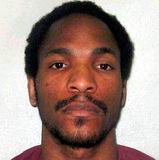
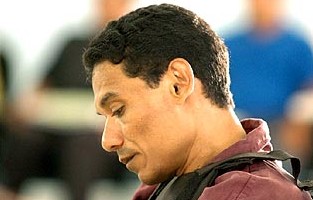
Billy Lee Chadd
Murderer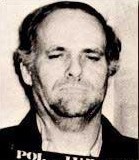 Ervil LeBaron
Murderer · USA · 1972
Ervil Morrell LeBaron (1925 to August 16, 1981) was the leader of a polygamous…
35 victims
Ervil LeBaron
Murderer · USA · 1972
Ervil Morrell LeBaron (1925 to August 16, 1981) was the leader of a polygamous…
35 victims
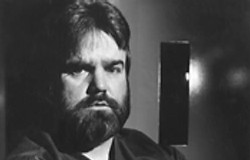 Marvin Gray
Murderer · USA · 1975
Marvin Gray was convicted killer who claimed responsibility for 23 slayings and…
23 victims
Marvin Gray
Murderer · USA · 1975
Marvin Gray was convicted killer who claimed responsibility for 23 slayings and…
23 victims
 Yahweh ben Yahweh
Murderer · USA · 1980
Yahweh ben Yahweh was born and legally named Hulon Mitchell Jr. (October 27, 19…
23 victims
Yahweh ben Yahweh
Murderer · USA · 1980
Yahweh ben Yahweh was born and legally named Hulon Mitchell Jr. (October 27, 19…
23 victims
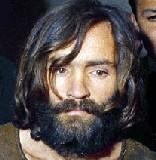 Charles Manson
Murderer · USA · 1969
Charles Milles Manson (born November 12, 1934) was an American criminal and mus…
9 victims
Charles Manson
Murderer · USA · 1969
Charles Milles Manson (born November 12, 1934) was an American criminal and mus…
9 victims
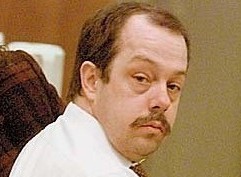 David Mark Hill
Murderer · USA · 1996
Name: David Mark Hill · Pronounced dead: 6:17 p.m. in the state’s death chamber…
3 victims
David Mark Hill
Murderer · USA · 1996
Name: David Mark Hill · Pronounced dead: 6:17 p.m. in the state’s death chamber…
3 victims
 Tracie Andrews
Murderer · United Kingdom · 1996
Tracie Marguerite Andrews (born 1969) was an English woman who murdered her fia…
1 victim
Tracie Andrews
Murderer · United Kingdom · 1996
Tracie Marguerite Andrews (born 1969) was an English woman who murdered her fia…
1 victim
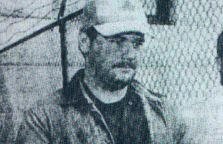 Steven Brian Pennell
Serial killer · USA · 1987
Steven Brian Pennell Also known as “The Corridor Killer” Steven Brian Pennell w…
5 victims
Steven Brian Pennell
Serial killer · USA · 1987
Steven Brian Pennell Also known as “The Corridor Killer” Steven Brian Pennell w…
5 victims
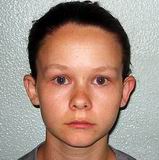 Emma Hall
Murderer · United Kingdom · 2012
Emma Hall was sentenced to life in prison with a minimum term of 15 years on Ap…
1 victim
Emma Hall
Murderer · United Kingdom · 2012
Emma Hall was sentenced to life in prison with a minimum term of 15 years on Ap…
1 victim
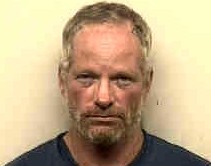 Garland Milam
Murderer · USA · 2005
Garland Milam was a drifter who lived in the woods behind a strip mall. He was…
3 victims
Garland Milam
Murderer · USA · 2005
Garland Milam was a drifter who lived in the woods behind a strip mall. He was…
3 victims
- Gender
- male
- Country
- USA
- Location
- California/Nevada, USA
- Date of birth
- 1954
- Age at first offence
- 20
- Characteristics
- rape, kidnapping, torture, drugs
- Victim profile
- Patricia Franklin, 30 / Delmar Bright, 29 (gay man) / Linda Hewitt, 28
- Method of murder
- St abbing with knife
- Date(s) of murder
- 1974 / 1975 / 1978
- Years active
- 1974–1978
- Date of arrest
- March 24, 1978
- Status
-
Life imprisonment
Sentenced to death in California on May 12, 1979; overturned; resentenced to life in prison without parole
Case record: Billy Lee Chadd
Background
Billy Lee Chadd was a self-styled “death merchant” who enjoyed killing for pleasure. He had confessed to three murders and various rapes in at least two states.
Chadd was a drifter who, in 1974 according to his own statement, invaded the home of a San Diego woman. He choked and raped his victim, then slashed her throat and continued the sexual assault as she lay dying.
A year later, in August 1975, Chadd was working at a Las Vegas restaurant when he met Delmar Bright, a 29-year-old porter employed at a nearby hotel. Chadd said Bright offered him twenty dollars and a six-pack of beer in return for a nude photo-modeling session. Chadd claimed that Bright attempted homosexual assault and that he was compelled to kill in self-defense. When found, Bright lay face-down and naked on his bed, his hands and feet bound with electrical cord. Bright had been stabbed in the back, with his throat slashed.
By 1978, while serving with the Marine Corps, Billy Chadd was back in San Diego. He kidnapped and raped another woman and the teenage daughter of the woman. Chadd tied up the victim’s elderly parents and her younger children. He was arrested on that charge and sentenced to thirteen years in prison.
Chadd confessed to the 1974 slaying and a second local murder in 1978. His sentence of life in the first homicide was later overturned by the California Supreme Court.
Chadd was described as talkative in custody. He leaked his involvement in the murder of Delmar Bright, and officers sent his fingerprints to Las Vegas, where they matched latent prints from the 1975 murder scene.
Chadd created repeated problems in custody. He twice set his cell on fire in December 1981, sitting in the middle of the floor with a towel over his face while smoke curled around him.
By April 1982, Chadd claimed that he was “born again,” a new man. Despite that claim, the earlier conviction proceeded so that he remained convicted and was sentenced for the murder.
Investigation
In Chula Vista, Chadd’s apprehension followed police contact through an interstate fugitive warrant.
Investigators later linked his case to other murders through fingerprint matches. After Chadd leaked his involvement in the murder of Delmar Bright, officers sent his fingerprints to Las Vegas, where they matched latent prints from the 1975 murder scene.
Arrest
On March 24, 1978, Louisiana sheriff’s deputies acting on an interstate fugitive warrant arrested Billy Lee Chadd. He was in custody in Lafayette, described as a small college town about 120 miles from New Orleans.
The interstate teletype issued by Chula Vista police reported that Chadd was the primary suspect in a dual rape case being investigated by Chula Vista detectives.
Chadd was brought back to San Diego after his apprehension.
After interviewing the suspect, detectives booked Chadd on rape, kidnapping and robbery charges. He was taken to the San Diego County jail to await trial.
Timeline
- 1974 — According to Chadd’s own statement, he invaded the home of a San Diego woman; he choked and raped her, then slashed her throat and continued the sexual assault as she lay dying.
- August 1975 — Chadd met Delmar Bright in Las Vegas; Chadd described the events leading to Bright’s death.
- 1971 — Chadd was sentenced to the California Youth Authority on a rape charge, which he maintained he was innocent of.
- June 1974 — Chadd related that he killed a man in Ellsworth, Kansas, and crushed the man’s skull with a rock, then threw the body into a nearby river.
- July 26, 1974 — Police later described the night of the Patricia Franklin murder; the following day police found her body tied to her bed.
- 1974 — Chadd was said to have been fired from his job at a boatyard after he threatened to “rearrange the face of the foreman with a claw-hammer.”
- February 15, 1978 — Two schoolchildren returned home for lunch and found the body of 28-year-old Linda Hewitt, the babysitter and mother of an infant son, sprawled on the floor with repeated stab wounds.
- March 2, 1978 — A Chula Vista woman awakened to find a man standing in her bedroom wielding a machete; the intruder raped her and assaulted her 17-year-old daughter.
- March 24, 1978 — Billy Lee Chadd was arrested in Lafayette, Louisiana, on an interstate fugitive warrant.
- December 1978 — Detective-Sergeant Ybarrondo again interviewed Chadd after earlier difficulty drawing information.
- December 1981 — Chadd twice set his cell on fire.
- January 2, 1979 — Chadd attempted suicide by swallowing pills in his cell; a sheriff’s deputy saved his life.
- February 7, 1979 — Two psychiatrists reported in a court hearing that Chadd was mentally competent and aware of what he was doing.
- February 16, 1979 — Billy Chadd pleaded guilty to first-degree murder.
- May 12, 1979 — Billy Lee Chadd was sentenced to die in the gas chamber at San Quentin.
- April 1982 — Chadd claimed to be “born again,” a new man.
The offence
Chadd was on trial for rape and murder.
Murder of Patricia Franklin (Linda Vista)
Patricia Franklin was a 30-year-old secretary with the Scripps Clinic in La Jolla, California.
On the night of July 26, 1974, Franklin returned home in Linda Vista to get ready for a date. She did not make it.
The following day, San Diego police found Franklin’s naked body tied to her bed. The house had been ransacked, and clothing pulled from bureau drawers was strewn about the floor.
Detective Sergeant Ybarrondo, whose homicide team investigated the case, remembered the Franklin murder as one of the most vicious and savage crimes he had investigated.
Franklin had been raped repeatedly before her death. One of her nipples had been nearly bitten off during the attack. Detectives counted 15 knife wounds in the neck.
Investigators reconstructed the events from interviews with friends of the victim. A boyfriend had phoned Franklin at about 7.30pm and spoke for several minutes, then called back within an hour. During the time between the two phone calls, police believed Franklin was raped and killed.
Investigators found a bath towel on the floor near the bed and water on the bathroom floor. Scratches were found on the exterior of the rear door. The house lights were still on when investigators entered.
Ybarrondo theorized that after returning home from work and speaking to her boyfriend on the phone, Franklin entered the bathroom to take a shower. During that time, the killer forced the back door and entered the house. Confronting Franklin in the bathroom, he forced her into the bedroom, cut down a Venetian-blind cord and tied her to the bed, then assaulted and killed her.
Police learned Franklin was diligent and kind and not the type to make enemies. Interviews with friends of the victim produced no leads. Workers at Scripps Clinic were unable to provide a lead. Neighbours saw nothing suspicious and heard nothing unusual. Police found no footprints outside the house and no physical evidence inside attributable to Franklin’s killer. A partial fingerprint was found in the bedroom but it was not enough for identification purposes.
Murder of Linda Hewitt (Mira Mesa)
Linda Hewitt was found on February 15, 1978, by two schoolchildren who returned to their Mira Mesa home for lunch. She was 28 years old and was described as a babysitter and mother of an infant son.
Her body was sprawled on the floor and punctured by repeated stab wounds. The killer had made Hewitt suffer agonies before she died.
Her murder reminded Detective Bob Quigley of another case he had investigated. Hewitt and Patricia Franklin had not known each other. They had come from different backgrounds, lived in different parts of the city, and were killed four years apart.
Detectives concluded the two women shared one thing in common: they had been killed by the same man.
Hewitt had been savagely raped before her death. Her hands had been stabbed repeatedly with a knife. Her throat had been slashed, her spinal cord severely, and her kidneys and back punctured several times.
Hewitt had lived in East San Diego but moved a few days before the murder to a trailer park in National City, described as a blue-collar suburb a few times from the Mexican border. Further investigation revealed she had broken up with her boyfriend only a few days before she moved.
Quigley interviewed Hewitt’s boyfriend, who was a sailor. Witnesses verified that he was on board ship during the time of the murder. Quigley questioned bus drivers in an attempt to identify any remembered passenger matching Hewitt’s description; none could.
Quigley found a witness who had seen Hewitt briefly on the morning she was killed.
A box of diapers had been found in the house where Hewitt had been babysitting. The sales receipt was traced to a Mira Mesa drugstore. An assistant remembered a customer matching Hewitt’s description purchasing diapers while a man behind her pushed a baby pram. The assistant was unable to remember what the man looked like. Quigley believed there was a connection between Hewitt and the man behind her pushing the baby pram because it was described as unlikely that the mother would leave her baby at home alone while running to buy diapers.
Quigley wanted to talk to the man because he could have been a suspect and might have been one of the last people to see Hewitt alive. The drugstore assistant agreed to be questioned by police under hypnosis.
While in a hypnotic trance, the assistant described the person as a short man of medium build, in his early 20s, wearing a tight T-shirt and blue jeans. He was clean-shaven and wore short hair, as might be found on men in the military. The description was short on details and long on generalizations, but it led police to a suspect.
Police found a fingerprint inside the home where Hewitt was slain. Its location indicated it could have been left by the killer. Though smudged, it appeared clear enough to be usable for positive identification if police located a suspect.
Dual rape incident in Chula Vista (machete)
On March 2, 1978, a Chula Vista woman awakened to find a man standing in her bedroom wielding a machete. The blade edge was placed to her throat, and she was raped repeatedly. When her 17-year-old daughter entered the bedroom, the intruder assaulted her as well.
The disturbance awakened other members of the family, which included the teenager’s four sisters and her grandparents. The rapist held them at bay with the machete and directed the eldest daughter to tie and gag her sisters and grandparents. The mother and daughter were bound and gagged and then forced into a car driven by the assailant.
The assailant drove east through Chula Vista until he reached a remote, sparsely-populated section of the county, where he let them out. They were found walking along the roadway by a US Customs officer.
The mother, described as the wife of a Naval officer, told Chula Vista police that she recognized the man who raped her and her daughter. She said she had visited Balboa Naval Hospital for a doctor’s appointment and, while waiting, talked briefly with a Marine corporal who asked for her name and address to fill out a benefits form. She said the corporal was later seen in her bedroom holding a machete knife.
Chadd was reported to have been aware she recognized him and kept saying: “You know me, don’t you?”
Chula Vista detectives contacted the Navy, which checked duty rosters and came up with the name of Billy Chadd, described as a Marine corporal attached briefly to the hospital.
Police rushed to Chadd’s home in Imperial Beach, where he lived with his wife and 6-month-old child. The car was gone from the driveway. Neighbours said Chadd had been seen packing the car several days earlier, preparing for a long trip. A fugitive warrant was quickly issued.
After Chadd’s apprehension, the tow rape victims identified him in a police lineup.
Chadd’s account of the killings and assaults
Under questioning by Detective-Sergeant Ybarrondo, Chadd detailed events described as leading to the stabbing deaths and rapes.
On the night of July 26, 1974, Chadd said he drove around Linda Vista looking for a place to burgle. He said he was out of work after being fired from his job at a boatyard after he threatened to “rearrange the face of the foreman with a claw-hammer” and that he resorted to robbery to support himself and his family.
Chadd said he saw a light on in a house and considered it “a good place to rob.” He said he went to the front door with a 9-mm pistol in his hand but lost his nerve and returned to his car. He said he returned later with courage bolstered by a few quick beers. He said he went to the side of the house and forced the door.
“I surprised this chick coming out of the bathroom,” Chadd confessed.
He said he held the gun on the frightened woman and forced her to the bedroom, where he cut down a venation-blind cord and tied her to the bed. He said he started to strangle the woman. When she passed out, he said he revived her with mouth-to-mouth resuscitation.
Asked why he revived the girl, Chadd said creating the fear of death was a “high,” a “trip” he enjoyed taking. He said he had raped a girl before and enjoyed the experience. He said murder was new and that he enjoyed torturing Patricia Franklin.
“I brought her back to life so as not to be cheated of seeing her suffer more,” he said.
He then said he finished her off by plunging his knife into her neck 12 times. He said he felt no remorse over killing the woman and that he laughed when leaving her home.
“I laughed on the way home. I wasn't afraid or sorry. I felt good.”
Regarding Linda Hewitt, Chadd said he met her by accident. He said he dropped off his car in National City for repairs and while on a bus struck up a conversation with Hewitt while she sat near him. He said he accompanied Hewitt and her 4-year-old boy to Mira Mesa.
He said he was attracted to Hewitt’s pretty smile and became angry when she turned him away at the front door to the Mira Mesa home where she babysat for the owner’s children. He said he forced his way into the house and dragged her into the bedroom, where he stripped her and sexually assaulted her. He said she did not resist him.
Chadd said he held a pocketknife to Hewitt’s throat and threatened to kill her and her son if she did not comply. After raping her, Chadd said he let her get up and get dressed but then changed his mind. He said that in the living-room he cut down a piece of cord and tied her hands, then began stabbing her.
“I stabbed her in the kidneys, severed her spinal cord, cut her throat,” he said with a grin.
At one point, he said he dropped the knife and began to strangle her. He said Hewitt’s son began to move towards the knife on the floor and that Hewitt cried out for Chadd to move the knife so the boy would not be hurt.
“I had already threatened to break the little bastard's neck,” Chadd recalled.
He said he picked up the knife and finished Hewitt off by slashing her throat while her offspring looked on.
“I was laughing as I watched her eyes bulge and her body start to convulse,” he recalled.
Chadd said the two women were not his only victims.
In August 1975, Chadd said he was on holiday in Las Vegas and met Delmar Bright, a waiter at one of the city’s hotels. Chadd said Bright propositioned him and paid him to pose in the nude. During the picture session, Bright asked whether Chadd cared to engage in.
“Bondage,” was Chadd’s one-word reply.
Chadd said he experienced homosexual lovemaking while an inmate in the California Youth Authority. He said he tied up Bright and stated that he was going to kill him. He said Bright screamed for mercy, then Chadd proceeded to strangle and stab him until he was dead.
Chadd also admitted to killing a man in Ellsworth, Kansas, in June 1974. He said he got into a fight with an older man and crushed the man’s skull with a rock, then threw the body into a nearby river.
“I found myself thinking how easy it was to actually kill a person,” he later wrote of the incident.
“We die quite easily, you know. I wanted to share my new feelings with everyone.”
Kansas authorities had no record of finding the body of the man Chadd said he had killed.
Trial
Chadd pleaded guilty to the murder of Patricia Franklin and Linda Hewitt at first in Municipal Court, which surprised Judge Charles Snell. Judge Snell told Chadd that he could not plead guilty to a capital case in Municipal Court and that he would have to wait until his case reached Superior Court.
Chadd later pleaded guilty again before Superior Court Judge Earl Gilliam, and both Superior Court and Municipal Court proceedings led to psychiatric tests.
Chadd received psychiatric examinations by Dr. Carl E. Lengyel and Dr. Bernard Hansen. On February 7, the psychiatrists reported to Judge Ben Hamrick in a court hearing that Chadd was mentally competent and aware of what he was doing.
When one of the doctors asked why Chadd was trying to plead guilty, Chadd replied:
“To save a lot of my time in prison. It will cut the time in prison and bypass some courts. If I get death, I will not stay very long. I prefer death to life imprisonment. I am wanted in three states. One will give me the gas.”
On February 16, 1979, one year to the day after Linda Hewitt was raped, tortured and murdered, Billy Chadd pleaded guilty to first-degree murder. Judge Gilliam listened while the defendant calmly recounted the legal procedure described details of the murder of Patricia Franklin and Linda Hewitt and the rape and kidnapping of the Chula Vista mother and her daughter.
After detailed legal procedures, Judge Gilliam accepted Chadd’s plea of guilty.
A penalty decision by jury was scheduled after acceptance of the guilty plea. The jury would decide whether he would get the death sentence. The evidence included portions of Dark Secrets and interviews with police investigators.
Chadd refused to take the witness-stand during the penalty phase of the trial. The jury deliberated less than two hours before reaching a verdict.
During proceedings, an envelope covered with drawings and scribbled Latin phrases was found stuck between pages of Chadd’s manuscript. The envelope showed drawings of a bearded goat’s head with horns and a flowing beard, inside a five-pointed star and a circle. Surrounding the drawing was the inscription: “In Nomine Di Nosiri Satanis, Luciferie Excelsie.”
A San Diego priest who studied cults and lectured on the subject of Satanic worship said the inscription was believed to be a rough translation and that the writer perhaps meant to say: “In the name of our God, Satan Lucifer on Highest.”
The cleric said the goat’s head was the Goat of Mendes, a Santanic symbol since medieval times. He added that the star was also a medieval symbol associated with devil worship.
Chadd had expressed a desire for the death sentence. He sat quietly in the courtroom while jurors listened to the evidence. After sentencing, David Pitkin, the defendant’s court-appointed attorney, told reporters:
“Death is an erotic experience for him.” and: “He's looking forward to it.”
Sentencing
On May 12, 1979, Billy Lee Chadd was sentenced to die in the gas chamber at San Quentin.
He expressed his desire to be sentenced to death and received the death sentence by jury verdict. As Chadd left the San Diego courthouse, he had a smile on his lips.
The initial sentence was later overturned by the California Supreme Court. He was later resentenced to life in prison without parole.
Appeals
Chadd’s sentence of life in the first homicide was later overturned by the California Supreme Court.
Outcome
Chadd was resentenced to life in prison without parole after his death sentence in California on May 12, 1979 was overturned.
Aftermath
Chadd remained in custody after sentencing. Officers attributed fingerprint matches to links between murders. Chadd set his cell on fire twice in December 1981. He claimed in April 1982 that he was “born again.”
Chadd’s writings included Dark Secrets, in which he described pleasure derived from torture and death and expressed an expectation of a death penalty.
He wrote: “I fully expect a death penalty for my crimes.” He also wrote: “If I don't receive one, I will take my own life, my final murder. I don't want to spend the rest of my life in a cage, animal though I may be. I could not ever live that way.”
He wrote about creating fear of death as “power high. I am alive for the sole purpose of causing pain and receiving sexual gratification.”
He wrote about a demon ruling his life and urged him to kill and kill again:
“it had to be fed again and again.”
In one murder, he wrote:
“my monster peeked out. He had been awakened and was watching how I was doing. I tried to stop what was happening, but I couldn't. It wasn't me anymore. It was the creature who thrived on fear and death, a creature who had lain dormant for so long that he would not be denied.”
At one point during the proceedings, Judge Earl Maas ruled:
“I will not have a woman read those chapters to the jury,” “I may be a chauvinist in saying that, but I must insist that a man read them.”
Other details
Chadd’s early life involved juvenile detention and mental health treatment. He was sentenced to the California Youth Authority in 1971 on a rape charge that he maintained he was innocent of. He escaped twice from CYA. On his second escape, he claimed that he really did rape a woman mainly to see what it was like. He also said:
“Later that night, I thought about the rape and I decided it wasn't bad at all. I knew I would do it again.”
After his arrest, he was sent to Youth Training School, which he referred to as a “Gladiator School.” He tried to hand himself and failed, then was sent to Atascadero State Hospital, described as an institution for the mentally ill.
Therapists and psychiatrists were supposed to “shrink” him back from the edge of madness, but he was introduced to heroin use and homosexual relationships during his stay.
In the first weeks of December 1978, Chadd complained of mental depressions and was visited by a county psychiatrist who prescribed strong tranquillisers for the inmate. Chadd “tongue’d” the capsules until he had collected 40 pills, described as enough to literally kill a horse.
On January 2, 1979, he attempted suicide by swallowing the pills in his cell. Only the quick actions of a sheriff’s deputy saved his life.
During the penalty phase, chadd was described as protecting the copyright to Dark Secrets and expressing no remorse for his victims, describing them as “research material.” Death was described as a thrill, a sexual kick, something to enjoy.
Chadd wrote that he asked:
“Do you have a monster in you?” and also wrote: “A monster lurking in the dark reaches of your mind? Wanting to spring out and take control of you?”
Spotted an error, or have more information about this case?