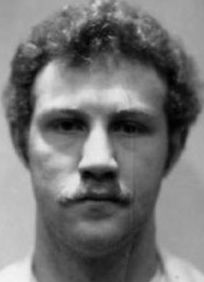
Ronnie Lee Gardner
Murderer Brian Kevin Rosenfeld
Murderer · USA · 1985
Brian Kevin Rosenfeld Brian Kevin Rosenfeld was sentenced to three concurrent l…
23 victims
Brian Kevin Rosenfeld
Murderer · USA · 1985
Brian Kevin Rosenfeld Brian Kevin Rosenfeld was sentenced to three concurrent l…
23 victims
 Marvin Gray
Murderer · USA · 1975
Marvin Gray was convicted killer who claimed responsibility for 23 slayings and…
23 victims
Marvin Gray
Murderer · USA · 1975
Marvin Gray was convicted killer who claimed responsibility for 23 slayings and…
23 victims
 Yahweh ben Yahweh
Murderer · USA · 1980
Yahweh ben Yahweh was born and legally named Hulon Mitchell Jr. (October 27, 19…
23 victims
Yahweh ben Yahweh
Murderer · USA · 1980
Yahweh ben Yahweh was born and legally named Hulon Mitchell Jr. (October 27, 19…
23 victims
 Russell Ellwood
Murderer · USA · 1991
Russell Ellwood was a former taxi driver. Authorities suspected him of killing…
20 victims
Russell Ellwood
Murderer · USA · 1991
Russell Ellwood was a former taxi driver. Authorities suspected him of killing…
20 victims
 Eugene McWatters
Murderer · 2004
Eugene Wayman McWatters Jr. was sentenced to death for killing three women in t…
3 victims
Eugene McWatters
Murderer · 2004
Eugene Wayman McWatters Jr. was sentenced to death for killing three women in t…
3 victims
 Milton E. Taylor
Murderer · USA · 2000
Milton E. Taylor was convicted of Murder 1st and sentenced to death on July 6,…
1 victim
Milton E. Taylor
Murderer · USA · 2000
Milton E. Taylor was convicted of Murder 1st and sentenced to death on July 6,…
1 victim
 Mario Lara
Murderer · USA · 1981
Mario Lara · July 16, 1981 — A Miami police officer was dispatched to meet Fran…
2 victims
Mario Lara
Murderer · USA · 1981
Mario Lara · July 16, 1981 — A Miami police officer was dispatched to meet Fran…
2 victims
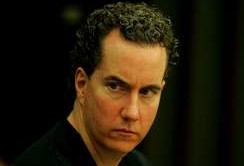 Stephen Grant
Murderer · USA · 2007
February 14, 2007 — Stephen Grant contacted the Macomb County sheriff's departm…
1 victim
Stephen Grant
Murderer · USA · 2007
February 14, 2007 — Stephen Grant contacted the Macomb County sheriff's departm…
1 victim
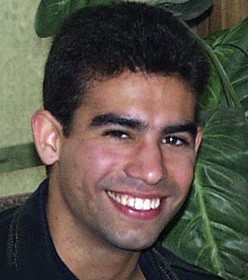 Ricky Rodriguez
Murderer · USA · 2005
Ricky Rodriguez committed suicide by shooting himself the same day. Ricky Rodri…
1 victim
Ricky Rodriguez
Murderer · USA · 2005
Ricky Rodriguez committed suicide by shooting himself the same day. Ricky Rodri…
1 victim
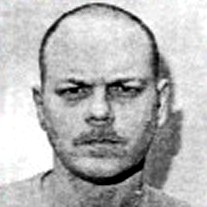 Jimmie Wayne Jeffers
Murderer · USA · 1976
Jimmie Wayne Jeffers was convicted of the first-degree murder of his former gir…
1 victim
Jimmie Wayne Jeffers
Murderer · USA · 1976
Jimmie Wayne Jeffers was convicted of the first-degree murder of his former gir…
1 victim
- Gender
- male
- Country
- USA
- Location
- Salt Lake County, Utah, USA
- Date of birth
- January 16, 1961
- Age at first offence
- 23
- Characteristics
- escape attempt, robbery
- Victim profile
- Melvyn John Otterstrom / Michael Burdell , 36
- Method of murder
- Shooting
- Date(s) of murder
- October 9, 1984 / April 2, 1985
- Years active
- 1984–1985
- Date of arrest
- —
- Status
-
Executed
Executed by shooting in Utah on June 18, 2010
Case record: Ronnie Lee Gardner
STATUS
Ronnie Lee Gardner was executed by shooting in Utah on June 18, 2010.
Background
Ronnie Lee Gardner was sent to prison for robbery and escaped in 1981. Two weeks later, Gardner confronted a man who was sleeping with his girlfriend. Gardner was wounded by gunfire and was eventually arrested and returned to prison.
In 1984, Gardner was taken to the hospital for a check-up where he overpowered a guard, stole his pistol, and escaped again. Three months later, Gardner shot and killed Melvyn John Otterstrom as Otterstrom tended bar at the Cheers Tavern in Salt Lake City.
Gardner was under a $1.5 million bail on April 2, 1985. He was transported from the Utah State Prison to the Metropolitan Hall of Justice in Salt Lake City for a pretrial hearing on a second degree murder charge for killing Melvyn Otterstrom.
During the courthouse incident on April 2, 1985, Gardner was handed a gun by a woman accomplice. After guards exchanged gunfire with Gardner and shot him through the lung, Gardner attempted to escape. He entered the archives room, where he shot and killed attorney Michael Burdell, hiding behind the door. Gardner then forced prison officer Richard Thomas to conduct him out of the archives room to a stairwell leading to the second floor.
Gardner then shot and seriously wounded Nicholas G. Kirk, then 58, a uniformed bailiff who was unarmed and had just stepped off an elevator. Gardner climbed the stairs to the next floor, where he took hostage Wilburn Miller, a vending machine serviceman. Miller broke free and escaped when Gardner exited the building.
Outside, Gardner was surrounded by half a dozen waiting policemen with drawn weapons. Ordered to drop his weapon, he threw down his gun and lay down, surrendering to the officers.
The offence
Charges and convictions
The Utah Supreme Court records described Gardner’s convictions and sentencing as follows: first degree murder, attempted first degree murder, aggravated kidnapping, escape, and possession of a dangerous weapon by incarcerated person. The jury sentenced Gardner to death.
The citations provided in the record included:
- State v. Gardner, 789 P.2d 273 (Utah 1989). (Direct Appeal)
- Gardner v. Holden, 888 P.2d 608 (Utah 1994). (Postconviction Relief)
- State v. Gardner, 947 P.2d 630 (Utah 1997). (Interlocutory Appeal - Prison Assault)
- Gardner v. Galetka, 568 F.3d 862 (10th Cir. 2009). (Habeas)
April 2, 1985 courthouse shooting and escape attempt
As guards entered the courthouse basement and Gardner was being transported for a pretrial hearing, Carma Jolley Hainsworth walked up and handed Gardner a gun. She had also hidden a bag containing men’s clothing, duct tape and a knife in a tote bag under a sink in the women’s bathroom in the basement of the courthouse.
The guards exchanged gunfire with Gardner, shot him through the lung, and then retreated. In attempting to escape, Gardner entered an archives room, where he shot and killed attorney Michael Burdell, hiding behind the door.
As Gardner crossed the lobby, he shot and seriously wounded Nicholas G. On the next floor, Gardner took hostage Wilburn Miller, a vending machine serviceman. As Gardner exited the building, Miller broke free and escaped. Gardner then surrendered to waiting officers after being ordered to drop his weapon.
In the direct appeal account, the Utah Supreme Court described the sequence with additional detail:
- As Gardner entered the basement lobby, he was handed a gun.
- He fumbled with the unfamiliar weapon; his guards retreated to the parking lot; gunfire was exchanged; and Gardner was shot in the shoulder.
- He entered an archives room and encountered a court clerk, a prison officer, and three attorneys.
- Two of the attorneys sought refuge behind the office door.
- Gardner pointed the gun at one and then the other and fired, killing attorney Michael Burdell.
- Prison officer Richard Thomas was forced to lead Gardner out of the archives room to a stairwell.
- Nick Kirk, a uniformed bailiff, came down the stairway to investigate; Gardner shot and seriously wounded Kirk and proceeded up the stairs.
- On the next floor, Gardner encountered Wilburn Miller and forced him to accompany him outside; Miller broke free and dived through a teller’s window inside.
- In the parking lot and surrounded by police, Gardner threw down his gun and surrendered.
A further account in the material described that Burdell exclaimed “Oh, my God!” and that Gardner shot Burdell, who died in surgery 45 minutes after the shooting. It also described that Gardner shot Burdell a second time.
The record also included that Gardner’s attorneys and guards entered the courthouse basement and that Gardner’s bail status was noted in the pretrial hearing context.
Investigation
The record described police response during the April 2, 1985 escape attempt, including the exchange of gunfire with guards, the shooting of Gardner through the lung, and subsequent police efforts to surround Gardner as he exited the building.
Arrest
Gardner surrendered to officers outside after being ordered to drop his weapon, throwing down his gun and lying down.
Trial
Procedural posture and appeals within the trial process
On direct appeal, the Utah Supreme Court considered multiple trial issues and described the evidence and procedural rulings as follows:
- The court addressed denial of a change of venue.
- The court addressed admission of prior convictions as an element of first degree murder.
- The court addressed limitations on recross-examination of witness Richard Thomas.
- The court found evidence sufficient to convict Gardner of first degree murder.
- The court addressed prosecutorial misconduct and found no reversible misconduct.
- The court addressed challenges including recusal, constitutionality of Utah’s capital sentencing scheme, use of prior violent felony as an aggravating circumstance, challenges for cause, courtroom security, jury instructions, evidentiary rulings about other crimes, and other trial-related issues.
Changes of venue and jury impartiality
The Utah Supreme Court considered extensive pretrial publicity, noting that news exposure alone did not deprive due process and focusing on whether jurors were prejudiced.
Gardner had submitted a telephone poll of 400 registered voters; he asserted that the poll showed that 78 percent thought he was guilty and 12 percent thought he was probably guilty. The Utah Supreme Court explained that:
- Only 23 percent of those surveyed could identify Gardner as the person involved.
- When asked if he was “guilty,” no explanation was given of the charges, and any lay opinion as to guilt reflected affirmation he was the person involved in the incident.
Jury security and courtroom measures
The Utah Supreme Court addressed security measures, including plainclothes guards and steps taken during recess, and found no undue prejudice.
Witness testimony and limitations on questioning
The direct appeal record included that a trial court cut off repetitive questioning during recross-examination of Richard Thomas after both sides had explored an aspect of testimony concerning a pretrial statement that Richard Thomas made describing Gardner as “glassy-eyed.”
The Utah Supreme Court described that:
- The recorded statement had been given earlier.
- At trial, Thomas testified on cross-examination.
- The defense then brought out the previous statement on cross.
- The trial court stopped counsel from going back over the aspect on recross after it was “developed by both of you as to what was said.”
Jury instructions
The Utah Supreme Court addressed instructions on manslaughter and on the order of considering offenses. For manslaughter, it discussed an “extreme mental or emotional disturbance” instruction and found any error harmless based on the theory of the case involving the escape attempt in which Gardner was wounded.
For oral instructions clarifying the order of deliberation between counts, the Utah Supreme Court discussed instruction language and noted it would be better avoided in future to prevent misunderstandings, while still concluding that the oral instruction, in connection with written instructions, did not reasonably create confusion.
Conviction and death sentence
The Utah Supreme Court record stated that:
- The jury returned verdicts of guilty on all counts.
Sentencing
Gardner was sentenced to death by jury verdict. The record described that he was executed by firing squad on June 18, 2010.
In describing the capital sentencing scheme challenges, the Utah Supreme Court held that:
- The death penalty as applied under the statutory scheme was in accordance with the Constitution of the United States and the Constitution of the State of Utah.
Appeals
Direct appeal
State v. Gardner, 789 P.2d 273 (Utah 1989) (Direct Appeal)
- The Utah Supreme Court affirmed Gardner’s convictions and sentence.
The direct appeal record stated that:
- Failure to grant change of venue did not deprive Gardner of a fair trial.
- Admission of prior convictions as an element of first degree murder did not deprive Gardner of a fair trial.
- The trial court cutting off recross-examination of witness did not violate the right to confrontation.
- Evidence was sufficient to convict of first degree murder.
- Prosecutor did not engage in misconduct.
- Convictions and sentence were affirmed.
Postconviction relief
Gardner v. Holden, 888 P.2d 608 (Utah 1994) (Postconviction Relief)
- The district court had granted relief including a new penalty hearing and new appeal, but on appeal the Utah Supreme Court vacated the trial court’s judgment and remanded for entry of judgment consistent with its opinion. The Utah Supreme Court’s holdings included:
- Petitioner was not prejudiced by defense counsel’s failure to give the psychiatrist more than 24 hours to prepare evaluation.
- The attorney appointed to represent on appeal did not have conflict arising from earlier representation of the woman who handed petitioner the gun.
- No prejudice resulted from appointed appellate counsel’s confining arguments to ineffective assistance claims and otherwise relying on briefs prepared by discharged trial counsel.
- The record included that the Utah Supreme Court vacated and remanded.
Interlocutory appeal: prison assault statute constitutionality
State v. Gardner, 947 P.2d 630 (Utah 1997) (Interlocutory Appeal - Prison Assault)
- The Utah Supreme Court held that the imposition of the death penalty upon a prisoner who commits aggravated assault violates the Eighth Amendment, reversing the district courts on that basis.
- The record described that Gardner and Gary Simmons were charged under a statute permitting death penalty for aggravated assault by a prisoner, and the Utah Supreme Court reversed.
Habeas and federal review
Gardner v. Galetka, 568 F.3d 862 (10th Cir. 2009) (Habeas)
- The record described that the U.S. Court of Appeals addressed multiple habeas claims.
- It stated that the court affirmed the district court’s decision.
The habeas materials included discussions of:
- Ineffective assistance claims at the guilt phase.
- Ineffective assistance claims at the penalty phase.
- Standards under AEDPA.
- Change of venue arguments.
- Court security measures.
- Hypnotically refreshed testimony.
- Witness tampering issues.
- Bifurcation and jury instructions.
- Presumption of death instructions.
- Conflicts of interest.
Outcome
Ronnie Lee Gardner’s quarter-century on death row ended with his execution by firing squad on June 18, 2010.
The material described that:
- Gardner fasted from food in the 36 hours leading up to his death, drinking only liquids.
- His last meal Tuesday evening consisted of steak, lobster tail, apple pie, vanilla ice cream and 7UP.
- He had no recorded last words.
The material also stated that:
- Gardner was executed at 12:20 and 25 seconds, with earlier references stating death at 12:17 a.m., and that corrected time of death was announced as 12:17 a.m.
- Uinta 1 was described as a maximum-security facility in the prison.
- Gardner’s mood was described as “reflective” and “calm” in the hours leading up to the execution, and that he slept, read mail, and watched “The Lord of the Rings” trilogy.
- The record stated that he met with a bishop from the Church of Jesus Christ of Latter-day Saints.
- Utah Attorney General Mark Shurtleff spoke with prison officials by telephone and told them there was no legal reason not to go through with the execution, and Shurtleff said: “Ronnie Lee Gardner will never kill again. He will never assault anyone again.”
- Shurtleff also said: “Now Ronnie Lee Gardner will be held accountable to a higher power, and I pray he will find more mercy than he showed his victims,” as the execution approached.
The record included statements attributed to family members and others, including:
- Barb Webb, daughter of Gardner victim Nick Kirk, said: “I'm so relieved it's all over,” and “I just hope my sister, who just passed away, and my father, and all of the other victims are waiting for his sorry ass. I hope they get to go down after him.”
- Randy Gardner said: “I'm just glad it's over. I'm glad he's free.”
- Others released 24 balloons decorated with messages, including “I love you, Ron!”
- Gardner told a judge how he preferred to die: “I would like the firing squad, please.”
The record also included a statement by Gardner’s attorney, Andrew Parnes, that “No court has given us a full and fair adjudication,” and “It's a shame, because if they had, Ronnie Gardner would have a life sentence.” It also included additional remarks attributed to Parnes: “We as a society didn't give him the benefit we give a lot of people,” “He really is a changed person. … He understands now what created him.” Gardner’s attorney said Gardner wanted to spend his life counseling young inmates and helping abused children with an organic farm program.
Other details
Prior criminal history and escapes
The material described Gardner’s violent criminal history and prison escapes in addition to the robbery sent to prison in 1980. It described:
- Being convicted of robbery and arriving at the Utah State Prison for the first time after being convicted.
- Escaping from a minimum security unit with another inmate.
- Confronting a man sleeping with his girlfriend; Gardner shot in the neck; police arrest Gardner; returning to prison.
- Overpowering a guard at University Hospital, stealing a pistol, kidnapping an employee, and escaping.
- Murdering Melvyn Otterstrom during a robbery.
- Attempted escape from a Salt Lake City courthouse on April 2, 1985, with associated deaths and injuries.
Victims and individuals involved in the April 2, 1985 incident
The record included the following individuals with roles described:
- Michael Burdell (attorney) was killed.
- Nicholas G. Kirk, then 58 (uniformed bailiff) was shot and seriously wounded; the materials also stated he died in 1995 at age 69.
- Wilburn Miller (vending machine serviceman) was held hostage and escaped.
- Richard Thomas (prison officer) was forced to lead Gardner to a stairwell.
- Carma Jolley Hainsworth (accomplice) handed Gardner a gun at the courthouse basement.
- Darcy Perry McCoy (accomplice) was described in the materials as involved in the Cheers Tavern incident and as testifying in court.
- Robert Macri and Michael Burdell were referenced as hiding behind the office door in the archives room.
- Wayne Jorgensen was described as a prison officer assigned to guard Gardner at the hospital; the materials stated that Gardner told him he shot Burdell because he thought Burdell would jump on him, and that Gardner declared he would have killed anyone who tried to stop him from escaping.
- Michael Burdell’s family members were described in relation to clemency and opposition to death penalty, including Donna Nu, Joseph Burdell Jr., and Donna Taylor and Lynn, and Joseph Burdell Jr.’s recollection: “He was always laughing and joking,” and “Just a great person to be around.”
Medical and custodial notes described in the record
The record described:
- Gardner was executed with wounds from four .30-caliber rifle rounds in his chest.
- He was strapped in a chair, hooded, and had a white target on his heart.
- One rifle was loaded with a blank.
- Gardner fasted from food in the 36 hours leading up to his death and drank only liquids.
- He drank vitamin water, Sprite, Coke, 7UP and Mountain Dew in the hours leading up to the execution.
- He ate his last meal Tuesday evening: steak, lobster tail, apple pie, vanilla ice cream and 7UP.
Execution logistics and communications
The record described:
- A corrected time of death announcement and that an execution warrant was served, with a formal press conference planned at the Fred House Academy.
- Pool video arrangements involving Salt Lake City television station KUTV and details about satellite parameters and looped footage.
- That families of Gardner’s victims and others waited at the Utah State Capitol.
Additional quoted remarks about firing squad and the death penalty
The record included a quoted remark by Rev. Tom Goldsmith: “Murdering the murderer doesn't create justice or settle any score.” It also included a quoted remark by Bishop John C. Wester: “I find it barbaric,” and “If you're going to do the death penalty, lethal injection would be the more humane way,” and “It emblazons in our consciousness the violence that guns wreck on our lives.”
The record included a quote from Craig Haney, a University of California psychologist: “We know that abused and neglected children grow up to be impulsive and violent,” and “Ronnie Lee Gardner is a perfect model for someone who grows up to commit horrendous crimes.”
It also included an attorney quote: “It's not about the publicity. He just prefers it,” attorney Andrew Parnes said.
Prison assaults and interlocutory legal ruling
State v. Gardner, 947 P.2d 630 (Utah 1997) described that:
- Gardner and Gary Simmons were charged with capital felonies under the statute permitting death penalty for aggravated assault by a prisoner.
- Simmons died in prison while the appeal was pending.
- The Utah Supreme Court reversed the district courts on constitutional grounds, holding the death penalty for aggravated assault by a prisoner violated the Eighth Amendment.
Spotted an error, or have more information about this case?