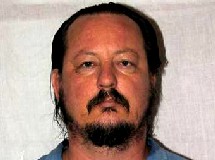
Troy Adam Ashmus
Murderer Brian Kevin Rosenfeld
Murderer · USA · 1985
Brian Kevin Rosenfeld Brian Kevin Rosenfeld was sentenced to three concurrent l…
23 victims
Brian Kevin Rosenfeld
Murderer · USA · 1985
Brian Kevin Rosenfeld Brian Kevin Rosenfeld was sentenced to three concurrent l…
23 victims
 Marvin Gray
Murderer · USA · 1975
Marvin Gray was convicted killer who claimed responsibility for 23 slayings and…
23 victims
Marvin Gray
Murderer · USA · 1975
Marvin Gray was convicted killer who claimed responsibility for 23 slayings and…
23 victims
 Yahweh ben Yahweh
Murderer · USA · 1980
Yahweh ben Yahweh was born and legally named Hulon Mitchell Jr. (October 27, 19…
23 victims
Yahweh ben Yahweh
Murderer · USA · 1980
Yahweh ben Yahweh was born and legally named Hulon Mitchell Jr. (October 27, 19…
23 victims
 Russell Ellwood
Murderer · USA · 1991
Russell Ellwood was a former taxi driver. Authorities suspected him of killing…
20 victims
Russell Ellwood
Murderer · USA · 1991
Russell Ellwood was a former taxi driver. Authorities suspected him of killing…
20 victims
 Robert Louis Cromwell
Murderer · USA · 2001
Robert Louis Cromwell (inmate) was convicted in Maricopa County CR-2001-095438.…
1 victim
Robert Louis Cromwell
Murderer · USA · 2001
Robert Louis Cromwell (inmate) was convicted in Maricopa County CR-2001-095438.…
1 victim
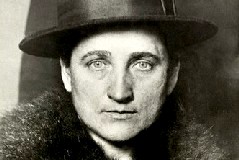 Tillie Klimek
Serial killer · USA · 1914
Ottilie “Tillie” Klimek, also known as Ottilie “Tillie” Klimek (or Tillie Gbure…
6 victims
Tillie Klimek
Serial killer · USA · 1914
Ottilie “Tillie” Klimek, also known as Ottilie “Tillie” Klimek (or Tillie Gbure…
6 victims
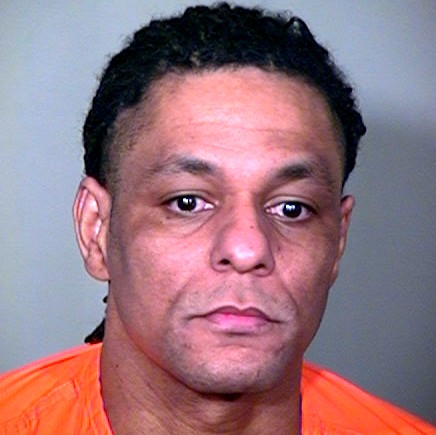 Alvie Kiles
Murderer · USA · 1989
Alvie Kiles lived in Yuma with his girlfriend, Valerie Gunnell, and her two dau…
3 victims
Alvie Kiles
Murderer · USA · 1989
Alvie Kiles lived in Yuma with his girlfriend, Valerie Gunnell, and her two dau…
3 victims
 Vlado Taneski
Serial killer · Macedonia · 2005
Vlado Taneski (1952 - June 23, 2008) was a Macedonian crime reporter turned ser…
3 victims
Vlado Taneski
Serial killer · Macedonia · 2005
Vlado Taneski (1952 - June 23, 2008) was a Macedonian crime reporter turned ser…
3 victims
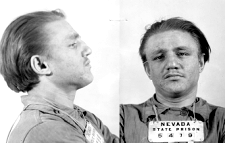 Lazslo Varga
Murderer · USA · 1948
Lazslo Varga was executed by asphyxiation-gas in Nevada on June 7, 1949. Varga…
1 victim
Lazslo Varga
Murderer · USA · 1948
Lazslo Varga was executed by asphyxiation-gas in Nevada on June 7, 1949. Varga…
1 victim
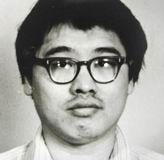 Ming Sen Shiue
Murderer · USA · 1980
May 16, 1980 — Ming Sen Shiue abducted Mary Stauffer and her eight-year-old dau…
1 victim
Ming Sen Shiue
Murderer · USA · 1980
May 16, 1980 — Ming Sen Shiue abducted Mary Stauffer and her eight-year-old dau…
1 victim
- Gender
- male
- Country
- USA
- Location
- Sacramento, Sacramento County, California, USA
- Date of birth
- March 26, 1 962
- Characteristics
- child killer, rape
- Victim profile
- Marcella Davis, 7
- Method of murder
- S tuffing two wadded up plastic bags down her throat
- Date(s) of murder
- May 19, 1984
- Years active
- 1984
- Date of arrest
- Same day
- Status
-
Sentenced to death
Sentenced to death on July 25, 1986
Background
Troy Adam Ashmus was a 22-year-old carnival worker at the time of the crime. Marcella (Marcie) D. was seven years of age. Her brother Arby was 10 years old, and Arby’s friend Ernesto (P.J.) G. was 9 years old.
The offence
On Saturday, May 19, 1984, about 4 o’clock in the afternoon, Marcella (Marcie) D. rode to Howe Park in Sacramento on her bicycle. There she met her brother Arby, who was responsible for her, and Arby’s friend Ernesto (P.J.) G. Arby and P.J. walked to a pond to fish from a dock, and Marcie went to play with some children within a few feet of the boys.
Ashmus approached Arby and P.J. as they were fishing. For the past few days he had been camping in an area in adjacent Santa Anita Park called Stoner's Pit, which was filled with litter but also secluded and covered with vegetation. He gave the boys advice and help in their fishing and stayed nearby.
About 5 or 5:30 p.m., Arby and P.J. walked to the park clubhouse. Marcie soon rode up and said that she was going off to Santa Anita Park with Ashmus. Ashmus told her he knew of a duck’s nest there and that he would give her a duckling if any had hatched. The boys said she should return in about an hour.
Ashmus and Marcie proceeded to Stoner’s Pit. Once there, he subjected her to a fatal attack. He raped her and perhaps also penetrated her with some foreign object, making a very large tear through the length of her vagina to within a quarter of an inch of her rectum. He sodomized her, inflicting two small wounds in the anal or rectal tissue. He possibly committed oral copulation by inserting his penis into her mouth. He ejaculated over her body.
He stuffed into her mouth and throat material including two plastic bags, a piece of cellophane about six inches long and two to three inches wide, and a pair of red shorts she had been wearing; the bags were wedged side-by-side in separate tight wads deep in her throat with the cellophane in between; the shorts were tightly compressed within her mouth. The bags obstructed her throat and caused her to die by asphyxiation.
He covered her naked body with a carpet remnant he had used for a sleeping mat during his stay at Stoner’s Pit, and he fled the scene.
When Marcie did not return as she had been told, Arby and P.J. became concerned. They searched without success. Arby telephoned his father; he too searched without success. The police were called in.
A neighborhood man who was assisting the officers found Marcie’s body about 8:30 p.m. Within a few hours, Ashmus was arrested. He had fresh abrasions on at least one of his hands.
It did not appear that the duck’s nest of which Ashmus spoke had ever existed.
Earlier that day, Ashmus attacked a jogger and dragged her into some bushes before fleeing when two men happened upon the scene.
Investigation
About 8:30 p.m., a neighborhood man who was assisting the officers found Marcie’s body.
Arrest
Within a few hours after the discovery of Marcie’s body, Ashmus was arrested.
Trial
Venue and charges
Ashmus pleaded not guilty to the charges and denied the special circumstance allegations. On his motion, the court changed venue from Sacramento to San Mateo County.
Trial was by jury.
The District Attorney of Sacramento County filed an information in Sacramento County Superior Court on August 17, 1984. Count I charged that on May 19, 1984, Ashmus murdered Marcella D. in violation of Penal Code section 187. It was alleged that he committed the offense under special circumstances:
- felony murder in the course of rape under Penal Code section 261, within the meaning of Penal Code section 190.2, subdivision (a)(17)(iii);
- felony murder in the course of sodomy under Penal Code section 286, within the meaning of Penal Code section 190.2, subdivision (a)(17)(iv); and
- felony murder in the course of a lewd or lascivious act on the person of a child under 14 years of age under Penal Code section 288, within the meaning of Penal Code section 190.2, subdivision (a)(17)(v).
Counts II, III, and IV charged respectively that on that same date Ashmus engaged in rape, sodomy, and lewd or lascivious conduct against the same victim, in violation of the statutory provisions cited above: as to rape, former subdivision (2) (current subd. (a)(2)) of Penal Code section 261 (Stats. 1983, ch. 949, § 1, p. 3416); as to sodomy, subdivision (c) of Penal Code section 286; and as to lewd or lascivious conduct, subdivision (b) of Penal Code section 288.
Guilt-phase evidence and findings
The jury returned verdicts finding Ashmus guilty as charged, determined the murder to be of the first degree, and found all the special circumstance allegations true. The jury returned a verdict of death. The court entered judgment accordingly.
The judgment also sentenced Ashmus to death for the murder and to full, separate, and consecutive middle terms of six years in prison for each of the three noncapital offenses.
Witness and evidence described at trial
Most of the basic facts were essentially undisputed at trial.
Ashmus took the stand himself and denied intent. In his testimony, he generally confessed his culpability, admitting that he had lied in extrajudicial statements to the police and others in which he attempted to avoid responsibility and even tried to shift blame to his brother Tracy, who was three years younger. All the same, he asserted that Marcie’s death was accidental.
The People sought to prove intent by evidence including the manner and means Ashmus used to kill Marcie. By contrast, Ashmus expressly denied intent.
During guilt-phase testimony, the People attempted to prove that Ashmus was especially cruel and his attack singularly brutal. Ashmus tried to show the opposite. He testified to the following effect: he had consumed marijuana on the day in question; not long after reaching Stoner’s Pit with Marcie, “something right then and there hit me”; he asked her to take her clothes off, and she complied; he then took off his own; his intention was “[j]ust to make her happy”; at first, she did not resist “because all I was doing was I was like a man would regularly treat a woman”; during what he called “the process of making love to her,” he did “nothing that would be harmful”; “Let’s put it this way,” he continued, “when I make love to a woman -- one of my girlfriends -- she don’t have no complaints at all”; soon, however, Marcie’s eyes began to flow with tears and she cried for help; “[a]bout two seconds later someone walked by and yelled out, 'Did someone holler for help?'”; he then pushed the plastic bags into her mouth, but only “to keep her quiet”; after the act, he cleaned himself off and dressed; “I believe she was still moving when I finally left”; he did not remove the bags from her mouth because “I forgot they were there”; he covered her with the carpet remnant “out of courtesy”; he felt remorse and shame, apparently from the very moment he did the deed; and he stated that he preferred to refer to Marcie as a “person” because “I’m tired of people using the word 'child.'”
Penalty-phase evidence
In aggravation, the People introduced evidence to prove that Ashmus suffered two felony convictions:
- 1981 burglary in the second degree in violation of Penal Code sections 459 and 460 in Kern County; and
- 1985 assault with intent to commit rape in violation of Penal Code section 220 in Sacramento County.
The People also presented evidence to establish the facts underlying the latter conviction. Lisa Cronin testified that in the early hours of May 19, 1984, the date of the crimes against Marcie, Ashmus attacked her, and in fact bruised and sprained one of her arms; he announced his intent to commit rape; but he fled without accomplishing his purpose when bystanders came to her aid.
In mitigation, Ashmus introduced evidence to describe his background and character from before birth up until the time of trial. Testimony by lay witnesses and psychiatric and psychological experts described him as suffering abuse and neglect from his earliest years at the hands of his father and mother; his parents had a troubled and unhappy marriage dissolved when he was about 17 or 18 years old; he was an emotionally and behaviorally disturbed child, youth, and adult; over the years, he had been cruel to animals and hurtful to his peers; he had experimented with drugs; he was friendless, angry, and refractory; and he may have experienced organic brain damage or impairment. The evidence supported an inference that he may have been under the influence of some mental or emotional disturbance at the time of the crimes. It also showed that his burglary conviction arose from petty, nonviolent criminal conduct and suggested that he would not be dangerous in prison if his life were spared.
In rebuttal, the People introduced evidence through the testimony of a psychologist who opined that Ashmus had not, in fact, experienced organic brain damage or impairment.
Jury-selection issues and voir dire (claims addressed on appeal)
The jury selection used a modified version of the “struck jury” system at Ashmus’s request. Prospective jurors were examined for hardship and some were excused. Remaining prospective jurors were questioned individually and in sequestration. Those excluded for cause were removed. Names of those remaining were drawn randomly and listed in the order drawn. Each side was allotted 26 peremptory challenges against prospective jurors and 5 against prospective alternates. Prospective jurors “1” through “12” were drawn into the jury box. The People and Ashmus alternately struck (or passed) prospective jurors in the box, with prospective juror “13” taking the place of the first person struck, prospective juror “14” taking the place of the second, and so on. In all, the People struck 22 prospective jurors and 4 prospective alternates, and Ashmus struck 19 of the former and 3 of the latter. Neither side expressed any dissatisfaction with any of the persons selected as jurors or alternates; finally, 12 jurors and 5 alternates were sworn.
Ashmus raised claims about the denial of a motion concerning “guilt phase includables,” limitation of examination on voir dire, and excusal of prospective jurors based on views opposing capital punishment. The trial court denied a motion that sought to govern “California death qualification” to allow “guilt phase includables” at the guilt phase and to prohibit the People from attempting to exclude such persons on that basis. The trial court also limited individual sequestered voir dire as described in the appellate discussion.
At individual sequestered voir dire, the People challenged prospective jurors Sullivan, Giffin, and Van Giesen because of their views opposing capital punishment. The trial court sustained the challenges and excused Sullivan, Giffin, and Van Giesen. The appellate analysis addressed statements made during voir dire, including: “My decision is not going to be the death penalty.” “The way I feel now and the way I was raised and what I have always believed that nobody has the right to take a life. The judge says the state does, but if I’m on this jury, you make me the state. You make me responsible for taking someone else’s life. I can’t be responsible for taking another life.”
Ashmus also raised a claim that the trial court erred by refusing to excuse prospective jurors Trapani, Chadwick, Wong, and Wisecarver for actual bias because of their views favoring capital punishment. The trial court overruled the challenges. Trapani and Wong were drawn as potential jurors but were removed by Ashmus’s peremptory challenge; Chadwick and Wisecarver were not drawn into the jury box as potential jurors or alternates. The appellate discussion also addressed harmless-error analysis and the effect of peremptory challenges.
Sentencing
The court sentenced Ashmus to death for the murder and to full, separate, and consecutive middle terms of six years in prison for each of the three noncapital offenses (to be consecutive to a previously imposed sentence for his conviction of the felony of assault with intent to commit rape against Lisa Cronin).
Appeals
The case included an automatic appeal (Pen. Code, § 1239, subd. (b)) from a judgment of death under the 1978 death penalty law (Penal Code § 190 et seq.). The appellate decision stated an opinion by Mosk, J. The court expressed the unanimous view, and the other justices concurred. The judgment was affirmed.
Extrajudicial statement suppression claim
Ashmus moved to suppress evidence of a statement made to the police during custodial interrogation after arrest. He was advised of and waived Miranda rights, including his right to remain silent. The People proposed to introduce the opening part of the statement, including admissions linking him to the scene. Ashmus moved to suppress the final portion of that opening part from and including his interruption to the end, claiming he effectively invoked his right to silence.
The trial court denied the motion after an evidentiary hearing, and the People later introduced the final portion through both audiotape and transcript. The appellate discussion reproduced the final portion of the statement.
The statement included the following quoted exchange:
"[Police Officer]: Um, well see when [one of defendant's acquaintances] said he saw you and he was talkin' to you at the, there was a little girl standin' next to you. And he's walkin['] . . . " "Ashmus: (Interrupting) you're gonna try to con-, now I ain't saying no more. " "[Police Officer]: Pardon? " " Ashmus: You ain't gonna, no. I'm not gonna get accused of somethin'. I love people too much. " "[Police Officer]: Um hum. " "Ashmus: I wouldn't even kill a fly, I'm sorry. " "[Police Officer]: Who said anything about killing anybody? " "Ashmus: I wouldn't even hurt a fly or kill a fly, I'm sorry, don't say no more (inaudible) [--] " "[Police Officer]: (Interrupting) Troy, who said any-, who said anything about killing anybody? " "Ashmus: The way you guys are talkin' to me, I'm sorry, it's what it sounds like. " "[Police Officer]: Nobody said anything about that. How come you're bringing that up[?] " "Ashmus: He told me there's a serious offense. " "[Police Officer]: Who told you what's a serious offense? " "Ashmus: The cop that told, brought me in. " "[Police Officer]: The uniformed officer? " "Ashmus: Yeah. " "[Police Officer]: What did he tell you? " "[Police Officer]: Um hum."
Other evidentiary and instructional claims
The appellate decision addressed Ashmus’s claims regarding:
- denial of motions to exclude electrophoretic evidence relating to dried semen stains discovered on Marcie’s body under Kelly-Frye;
- denial of motions to exclude photographs outside the presence of the jury, including photographs showing Marcie in life and photographs or slides of Marcie in death and defendant shortly thereafter, with some unduly prejudicial items excluded;
- prosecutorial misconduct claims, including remarks in summation about Ashmus’s “past history,” comments relating to Marcie’s personal characteristics and emotional impact, and comments regarding remorse and shame;
- jury instructions including instruction on consciousness of guilt based on willfully false or deliberately misleading statements;
- death-eligibility issues including denial of discovery of Sacramento County District Attorney capital prosecution policies and practices and instruction issues related to intent to kill for felony-murder special circumstances; and
- penalty-phase issues including admission of evidence of Ashmus’s conviction of assault with intent to commit rape and underlying facts, discharge of juror Fred C. Godfrey mid-penalty phase at his request due to the unexpected death of his mother, and various instruction challenges.
Verdict modification application
Ashmus made an application for modification of the verdict of death under Penal Code section 190.4, subdivision (e). The trial court denied the request. The appellate discussion described that before the trial court ruled, the court allowed Donna D., Marcie D.’s mother, to make a statement seeking imposition of the ultimate sanction. Ashmus made no objection to the foregoing statement. The court indicated it reviewed a presentence report; Ashmus moved to strike it, and the court denied the request but invited challenges to portions; Ashmus declined.
After argument, the trial court denied the request and stated reasons, including that the totality of aggravating evidence outweighed mitigating evidence and that “All I can tell you, Mr. Ashmus, is if there was ever a case where factually [the death penalty] was deserved, this is it.”
Outcome
The appellate court concluded that the judgment must be affirmed.
Timeline
- August 17, 1984 — The District Attorney of Sacramento County filed an information against Troy Adam Ashmus in Superior Court of Sacramento County.
- May 19, 1984 — The date of the offenses charged; the murder of Marcella (Marcie) D. and related rape, sodomy, and lewd or lascivious conduct charges occurred on this date.
- July 25, 1986 — Ashmus was sentenced to death.
- December 5, 1991 — The California Supreme Court issued its opinion in the automatic appeal.
Other details
The case name included: “THE PEOPLE, PLAINTIFF AND RESPONDENT, v. TROY ADAM ASHMUS, DEFENDANT AND APPELLANT.” Superior Court of San Mateo County, No. C-15661, Alan W. Haverty, Judge. The appellate opinion discussed that the prosecution sought to prove intent by evidence including the manner and means Ashmus used to kill Marcie, while Ashmus denied intent and testified that Marcie’s death was accidental. The appellate opinion stated that Ashmus was convicted of murder of the first degree and that all special circumstance allegations were found true, and that the jury returned a verdict of death. The appellate opinion stated that the trial court sentenced Ashmus to full, separate, and consecutive middle terms of six years for each of three noncapital offenses. The appellate opinion addressed penalty-phase jury instructions, including an instruction requested by Ashmus that the jury could consider sympathy, pity, or mercy in determining punishment.
Spotted an error, or have more information about this case?