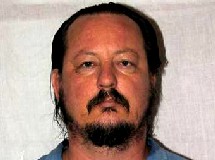
Lazale Ashby
Murderer Robert Martines Perez
Murderer · USA · 1994
Name: Robert Martines Perez · Other name used in proceedings: Robert Martinez P…
15 victims
Robert Martines Perez
Murderer · USA · 1994
Name: Robert Martines Perez · Other name used in proceedings: Robert Martinez P…
15 victims
 Billy Frank Vickers
Murderer · USA · 1993
Billy Frank Vickers Vickers was executed by lethal injection in Texas on Januar…
14 victims
Billy Frank Vickers
Murderer · USA · 1993
Billy Frank Vickers Vickers was executed by lethal injection in Texas on Januar…
14 victims
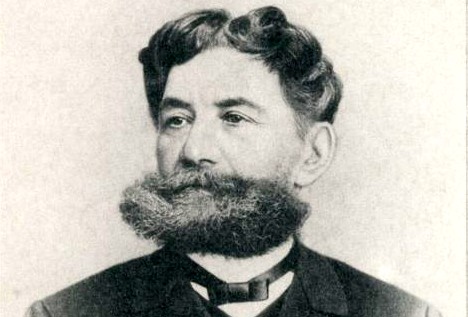 Alexander Sukhovo-Kobylin
Murderer? · Russia · 1850
Alexander Vasilyevich Sukhovo-Kobylin (Russian: Александр Васильевич Сухово-Коб…
1 victim
Alexander Sukhovo-Kobylin
Murderer? · Russia · 1850
Alexander Vasilyevich Sukhovo-Kobylin (Russian: Александр Васильевич Сухово-Коб…
1 victim
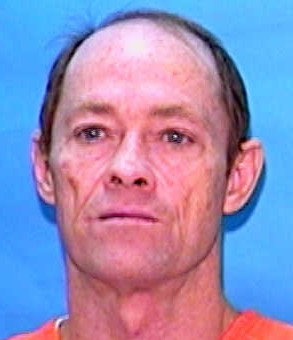 James Ernest Hitchcock
Murderer · USA · 1976
Name: James Ernest Hitchcock Date of birth: 04/05/56 Court: Ninth Judicial Circ…
1 victim
James Ernest Hitchcock
Murderer · USA · 1976
Name: James Ernest Hitchcock Date of birth: 04/05/56 Court: Ninth Judicial Circ…
1 victim
 Courtney Schulhoff
Homicide · USA · 2004
Courtney Christine Schulhoff was born on December 27, 1987 in Washington, D.C.…
1 victim
Courtney Schulhoff
Homicide · USA · 2004
Courtney Christine Schulhoff was born on December 27, 1987 in Washington, D.C.…
1 victim
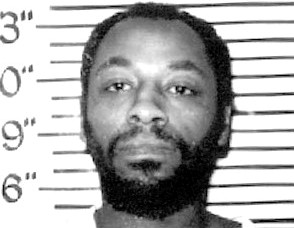 Charles Evans
Murderer · USA · 1985
September 19, 1986 — Charles Evans was sentenced to death. · On 12-08-92 — Evan…
1 victim
Charles Evans
Murderer · USA · 1985
September 19, 1986 — Charles Evans was sentenced to death. · On 12-08-92 — Evan…
1 victim
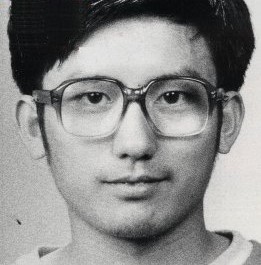 Gang Lu
Mass murderer · USA · 1991
Gang Lu was a Chinese graduate student in physics at the University of Iowa. He…
5 victims
Gang Lu
Mass murderer · USA · 1991
Gang Lu was a Chinese graduate student in physics at the University of Iowa. He…
5 victims
- Gender
- male
- Country
- USA
- Location
- Hartford, Connecticut, USA
- Date of birth
- November 28, 1984
- Age at first offence
- 18
- Characteristics
- rape, kidnapping, burglary
- Victim profile
- Elizabeth García, 21 (his neighbor) / Nahshon Cohen, 21
- Method of murder
- Strangulation / Shooting
- Date(s) of murder
- December 2, 2002 / September 1, 2003
- Years active
- 2002–2003
- Date of arrest
- September 4, 2003
- Status
-
Sentenced to death
Sentenced to death on March 28, 2008
Background
Lazale Delane Ashby was convicted of raping and murdering his neighbor, 21-year-old Elizabeth Garcia, in her Hartford apartment.
During the penalty phase of the trial, the defense presented evidence about Ashby’s life as he grew up in Hartford, including abandonment by his mother at age 6 and subsequent neglect by an aunt who gained custody of him.
Ashby wrote a note to a fellow inmate while in prison, and that note was presented as evidence at trial.
The offence
On December 2, 2002, Ashby raped and murdered Elizabeth Garcia in her Hartford apartment.
Garcia was found after she failed to pick up her 2-year-old daughter from a neighbor.
The jury foreman described details from Ashby’s note that identified a tank top as the weapon used to strangle Garcia and said Ashby had burned the knife used to stab her repeatedly. The jurors removed a bloody tank top from an evidence bag and examined it.
Prosecutors said Garcia had been badly beaten and stabbed before she was strangled and left on her apartment floor.
During the penalty phase, prosecutors presented evidence that Ashby also had committed two other violent crimes: the rape of a young woman identified only as C.M. on a Hartford street and the fatal shooting of Nahshon B. Cohen.
Investigation
DNA evidence linked Ashby to the crime, and DNA matched DNA found in Garcia’s body.
A knife with a burned handle was found in Garcia’s apartment on Zion Street in Hartford, where she was killed, although no blood was found on it.
A note Ashby wrote to a fellow inmate contained statements that were treated as details of the crime, including identification of a tank top as the weapon used to strangle Garcia and that Ashby had burned the knife used to stab her repeatedly.
A quote from Ashby in the note was presented as evidence:
"I did a good job on her."
Arrest
Ashby was arrested by Hartford police in September 2003.
After Ashby was arrested, he made several statements implicating himself in Garcia’s murder, as well as in the killing of 22-year-old Manchester resident Nahshon Cohen a few days before his arrest.
Hartford police found Cohen lying on a street in the city’s North End on Sept. 1, 2003, with several gunshot wounds, and Cohen died several hours later.
Ashby was charged with murder, attempted murder and carrying a pistol without a permit.
Trial
Ashby was convicted in 2007.
A 12-member Hartford Superior Court jury decided that Ashby should be executed for killing Elizabeth Garcia, 21, in December 2002.
Jury foreman Thomas Gallagher of Windsor Locks said:
"A big deal was the note,"
Gallagher said the note gave details of the crime, identifying a tank top as the weapon used to strangle Garcia and saying Ashby had burned the knife used to stab her repeatedly.
Gallagher said a knife with a burned handle was found in Garcia’s apartment on Zion Street in Hartford, although no blood was found on it.
Gallagher said the note undermined arguments by Ashby’s public defenders that his mental capacity was impaired:
"To me it showed that he was of sound mind,"
"It was almost like he was trying to trick the cops and trick us."
Kenneth N. Pladsen Jr., an inmate, testified about the note.
Gallagher discussed Pladsen’s role and stated:
"Pladsen was pretty messed up,"
"I don't know how much Pladsen had to do with it, but it was in Ashby's handwriting."
Public defender M. Fred DeCaprio stressed Pladsen’s role in the note’s creation in his final argument to the jury in the trial’s penalty phase and called Pladsen crazy, while suggesting Pladsen was a schemer as well:
During the penalty phase, prosecutors presented evidence about two other violent crimes.
The jury deliberated for more than a week before deciding on the death penalty.
Gallagher said some jurors already had changed their minds overnight, and described emotional deliberations:
"Our minds were open,"
"It was very, very difficult for people,"
"People were crying."
The guilt and penalty phases lasted a total of some four months.
The courtroom was crowded mostly with court personnel during the penalty verdict.
Six friends and relatives of Garcia’s, including her mother and aunt, sat in the front of the spectators galley on the prosecution side of the courtroom.
Ashby’s mother, Carmen, was the sole person other than professionals on his side of the courtroom aisle, and she struggled with drug addiction for much of her adult life.
A court clerk read the verdict form announcing the jury’s decision to have Ashby put to death.
In addition to capital felony murder, Ashby was convicted of rape, kidnapping, burglary, and murder of a victim of sexual assault and kidnapping.
Sentencing
Hartford Superior Court Judge Carmen Espinosa sentenced Ashby to death on March 28, 2008.
Gallagher said that during the penalty phase the jury delivered its penalty verdict after 3:30 p.m. Thursday, and the sentencing occurred Friday.
About 50 people attended the sentencing, and many reacted with an emotional chorus of "yes" when Espinosa sentenced Ashby to death.
Espinosa had no choice as to what to do unless she found legal grounds to set aside the jury’s verdict, because state law required her to impose the sentence directed by the jury.
Appeals
The case is pending.
Outcome
Ashby was condemned to death on March 28, 2008.
Aftermath
As Ashby was led out of the courtroom, his mother called to him:
"I love you, Lazale."
Outside the courtroom, when it became clear the jury had reached a verdict, Carmen Ashby looked over at Garcia’s family and said:
"I want to tell them I'm sorry."
She borrowed a pencil and paper from a reporter, wrote several lines, tore the paper in small pieces, and threw it in a trashcan. After the announcement of the verdict, she said:
"I still would want somebody to tell that family that I'm still sorry, that I apologize that this had to happen to their child. I'm not a villain. I'm not cruel."
A reporter read that message to Garcia’s mother, Betsy Rodriguez, and Rodriguez said:
"I wish I could thank all the jurors, every single one individually. I know this was very, very hard for them."
The mitigation specialist Cynthia Ayres accompanied Carmen Ashby to the door of the courthouse to shepherd her through any media crowd that might have formed.
Carmen Ashby walked down Hartford’s Lafayette Street alone after saying her goodbyes.

Spotted an error, or have more information about this case?