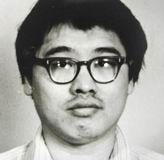
Ming Sen Shiue
Murderer Ervil LeBaron
Murderer · USA · 1972
Ervil Morrell LeBaron (1925 to August 16, 1981) was the leader of a polygamous…
35 victims
Ervil LeBaron
Murderer · USA · 1972
Ervil Morrell LeBaron (1925 to August 16, 1981) was the leader of a polygamous…
35 victims
 Brian Kevin Rosenfeld
Murderer · USA · 1985
Brian Kevin Rosenfeld Brian Kevin Rosenfeld was sentenced to three concurrent l…
23 victims
Brian Kevin Rosenfeld
Murderer · USA · 1985
Brian Kevin Rosenfeld Brian Kevin Rosenfeld was sentenced to three concurrent l…
23 victims
 Marvin Gray
Murderer · USA · 1975
Marvin Gray was convicted killer who claimed responsibility for 23 slayings and…
23 victims
Marvin Gray
Murderer · USA · 1975
Marvin Gray was convicted killer who claimed responsibility for 23 slayings and…
23 victims
 Yahweh ben Yahweh
Murderer · USA · 1980
Yahweh ben Yahweh was born and legally named Hulon Mitchell Jr. (October 27, 19…
23 victims
Yahweh ben Yahweh
Murderer · USA · 1980
Yahweh ben Yahweh was born and legally named Hulon Mitchell Jr. (October 27, 19…
23 victims
 Marianne Nölle
Serial killer · Germany · 1984
Marianne Nölle was born in 1938. She was a German serial killer from Cologne. M…
7 victims
Marianne Nölle
Serial killer · Germany · 1984
Marianne Nölle was born in 1938. She was a German serial killer from Cologne. M…
7 victims
 Ashley Benton
Homicide · USA · 2006
Ashley Benton — juvenile defendant (16 at the time of the fatal stabbing); late…
1 victim
Ashley Benton
Homicide · USA · 2006
Ashley Benton — juvenile defendant (16 at the time of the fatal stabbing); late…
1 victim
 William Scott Smith
Serial killer · USA · 1982
William Scott Smith was a high school dropout and an unemployed fry cook. In 19…
3 victims
William Scott Smith
Serial killer · USA · 1982
William Scott Smith was a high school dropout and an unemployed fry cook. In 19…
3 victims
 Pauline Zile
Murderer · USA · 1994
Pauline Zile was the mother of the victim, Christina Holt. She was married to J…
1 victim
Pauline Zile
Murderer · USA · 1994
Pauline Zile was the mother of the victim, Christina Holt. She was married to J…
1 victim
 Timothy Cockrell
Murderer · 1992
Timothy Cockrell was convicted of the murder of Sandra Deptawa and sentenced to…
1 victim
Timothy Cockrell
Murderer · 1992
Timothy Cockrell was convicted of the murder of Sandra Deptawa and sentenced to…
1 victim
- Gender
- male
- Country
- USA
- Location
- Anoka County, Minnesota , USA
- Date of birth
- October 15, 1950
- Age at first offence
- 30
- Characteristics
- rapist, kidnapping, torture
- Victim profile
- Jason Wilkman, 6
- Method of murder
- Hitting with a metal rod
- Date(s) of murder
- May 16, 1980
- Years active
- 1980
- Date of arrest
- July 7, 1980
- Status
-
Life imprisonment
Sentenced to thirty years to life on the federal kidnapping charge and 40 years on a separate state murder charge in 1981
Timeline
- May 16, 1980 — Ming Sen Shiue abducted Mary Stauffer and her eight-year-old daughter Elizabeth from the parking lot of a beauty salon in Roseville, Minnesota; he told Mrs. Stauffer to stop the car in a deserted area of Anoka County, tied and gagged the Stauffers using rope and tape, placed them in the trunk, and drove off.
- May 17, 1980 — On Saturday evening, Shiue said the only thing that had gone wrong with his plan was "that kid showing up."
- May 22, 1980 — While washing their clothes, Mrs. Stauffer noticed a blood stain on her pants; when she asked Shiue, he said that Jason had gotten a bloody nose when he was thrown into the trunk.
- May 24, 1980 — On the following Saturday, a news broadcast indicated authorities were searching for Jason and the Stauffers east into Wisconsin and northeast of the Twin Cities; Mrs. Stauffer asked why Jason had not been found and Shiue said, "They're looking in the wrong direction."
- July 7, 1980 — Mary Stauffer removed the hinge pins of the closet door, freed herself and Elizabeth, called authorities, and escaped; Shiue was arrested the same day at his electronics business; Richard Green testified that he met Shiue in the Ramsey County jail on this date.
- September 1980 — After a ten-day federal trial, the jury found Shiue guilty of kidnapping.
- January 14, 1981 — The trial for the kidnapping and murder of Jason Wilkman began in Anoka County District Court.
- February 13, 1981 — At the conclusion of the first stage of trial, the jury found the elements of each crime had been proved beyond a reasonable doubt.
- February 14, 1981 — The second phase of the trial began.
- February 20, 1981 — At approximately 2:40 p.m., the jury sent a note stating: "We are a hung jury. What do we do now?"
- February 21, 1981 — At the conclusion of the second stage of trial, the jury found the defendant guilty of kidnapping and murder in the second degree.
- February 27, 1981 — A motion for judgment of acquittal or new trial was filed.
- March 2, 1981 — A hearing was conducted prior to imposition of sentence; Richard Green testified.
- 1981 — Shiue was sentenced to thirty years to life on the federal kidnapping charge and 40 years on a separate state murder charge; under the sentencing guidelines described, the sentence for second degree murder was 40 years concurrently with his federal sentence.
- December 3, 1982 — The Supreme Court of Minnesota affirmed the convictions.
Background
Ming Sen Shiue was born on October 15, 1950 in Taiwan. When he was eight years old, he moved to Minnesota with his mother and two siblings. His father died three years later and was a professor at the University of Minnesota at the time.
Shiue was described as violent towards his younger siblings, often beating them both during adolescence and adulthood. In his teen years, he was engaged in criminal activity as a juvenile, including starting fires in apartments of three strangers and throwing rocks at vehicles. For his role in the arsons, he was ordered to participate in psychotherapy at the age of fourteen.
His mother testified that Shiue often lied but was persistent about being right, was uncontrollable as a child, and took no responsibility for his physical behavior, causing her to be fearful. She described him as having no "feelings, like a dog". Shiue attended Alexander Ramsey High School in Roseville, Minnesota, where he had a "crush" on his ninth-grade algebra teacher Mary Stauffer.
Shiue later admitted during proceedings that due to his "infatuation," he began sexually fantasizing about the teacher. He wrote stories about his sexual fantasies with fictional characters from the movies and eventually about Stauffer, which included consensual sex, rape and gang rape.
In later years, after he realized he did not find complete satisfaction from his fantasies, Shiue decided to kidnap Stauffer.
The offence
In 1975, Shiue located what he erroneously believed to be Mary Stauffer's residence in Duluth, Minnesota. He broke into the house with a firearm intending to kidnap the victim, but she did not live in the residence. Her in-laws who owned the house were forced to the ground, tied up, and threatened to be killed if they reported the crime. Therefore, the break-in was not reported until the actual kidnapping of Stauffer took place five years later.
Shiue continued searching for Stauffer for the next five years. Stauffer lived with family in Philippines, where she and her husband was a Christian missionary. They returned to Minnesota in 1979. A year later, Shiue learned that Mary Stauffer lived at the Bethel University campus and began to stalk her. His stalking continued until May 16, 1980.
On May 16, 1980, Shiue tracked Stauffer down at a beauty salon in Roseville. After Stauffer left the salon, Shiue kidnapped her and her eight-year-old daughter Elizabeth at gunpoint. He tied them up and threw them into the trunk of Stauffer's vehicle. During the trip to his house where he intended to keep his victims hostage, Shiue stopped the vehicle two times because Mary and Elizabeth were making noises. When he stopped for the second time, a six-year-old boy, Jason Wilkman, approached the vehicle to see what was happening; Shiue grabbed him and forced him into the trunk.
Shiue then drove to the isolated Carlos Avery Wildlife Refuge in Anoka County, removed the boy from the trunk, and murdered him with a metal rod.
After kidnapping Jason Wilkman and taking him to the Carlos Avery Wildlife Farm, police later discovered Wilkman's body and Shiue was charged with murder in the second degree.
Shiue drove Mary Stauffer and Elizabeth to his house and locked them in a narrow closet. He took Mary Stauffer out of the closet, tied her to the furniture, and talked to her for hours on the night of kidnapping, disclosing who he was before he repeatedly raped her, filming the conversations and rapes on the video camera. Shiue told Stauffer he was her student 15 years ago and said she had given him a grade B in Algebra, which caused his not being able to get enrolled at a college and being sent to the Vietnam War where he became a POW.
While kept at his house, the victims were often separated by Shiue. He placed Elizabeth in a box in his van for 8 hours when he was at work, while her mother was left locked in a closet at Shiue's residence. Shiue told Stauffer he would kill her husband and son if they ever tried to escape.
During the ride described in the Supreme Court opinion, Shiue stopped to check on the Stauffers several times; during the first stop, Mrs. Stauffer had untied Elizabeth, and Shiue tied them more tightly when he was angry. During the ride, Shiue unscrewed a metal plate which secured the spare tire, discarded it, and dropped the spare tire on the Stauffers. When he heard someone say "Hi" at the point Jason Wilkman was playing with his friend Mark Branes, Mark stayed at the front of the car while Jason walked up to the trunk. When Shiue heard Jason's voice, he turned, grabbed him, placed his hand over his mouth, and threw him into the trunk.
During the time the Stauffers were in the trunk with Jason, Mrs. Stauffer and Elizabeth tried to comfort Jason, who was crying. They asked him his name and he replied, "Jason." He said he was six years old and that now he wouldn't be able to go to his grandma's the next day. Shiue drove to a deserted area where the Stauffers could hear gravel and brush striking the wheel wells and sides of the car. The car stopped, Shiue opened the trunk and took Jason out. Elizabeth saw Shiue take a "long bent bar" made of metal out of the trunk. Shiue closed the trunk and was gone from ten to fifteen minutes. When he returned, the drive resumed. After another hour, the car stopped and the Stauffers were left for a time. Finally Shiue returned, transferred them to another vehicle, drove them to his home, and placed them in a closet.
The Supreme Court opinion stated that the Stauffers were confined in Shiue's house at 1960 N. Hamline Avenue for the next seven weeks, primarily confined to the closet, tied at the elbows, with the closet door shut and the door knob removed. Mrs. Stauffer was frequently sexually assaulted by Shiue, and several of the conversation-assault sessions were recorded by Shiue on video tape.
During the first week of captivity, Shiue talked about Jason on four separate occasions. On the night of the kidnapping, May 16, Shiue told Mrs. Stauffer that he had taken Jason into the woods and threatened him: "if he ever told anyone what had happened he would return and hurt him." Shiue said, "I just scared him and, then, I fired a shot over his head and, then, let him go." Mrs. Stauffer never heard any shots.
On Saturday evening, May 17, Shiue said that the only thing that had gone wrong with his plan was "that kid showing up." Shiue continued:
ven if they find him, he didn't get a very good look at me. I had the dark glasses on, and I scared him good enough so that I know he's not going to do anything * * *, and even if he does, there's no way * * * a six-year-old is going to pick me out of a lineup. I never seen him in my life, and he never seen me in my life. And all he saw was your car. So there's no way he will ever get back to me. So I'm not worried about him, see, he's, he represents no threat to me * * *.
On May 22, when Mrs. Stauffer asked about a blood stain, Shiue said that Jason had gotten a bloody nose when he was thrown into the trunk. On May 24, Mrs.
During the captivity, Shiue told Mrs. Stauffer that he would return and hurt the child if he ever told anyone what had happened. On the night of kidnapping, Shiue also said he had fired a shot over Jason's head and then let him go, which Mrs. Stauffer never heard.
Investigation
Prior to sentencing, in late October of the period described, Shiue entered into an agreement with the Ramsey County Attorney's office: if Shiue would locate Wilkman's body, the charge would not be first degree murder. At Shiue's direction, police conducted a large-scale search in the Carlos Avery Wildlife Reserve.
Shiue walked to the treeline at the edge of a cornfield and said, "This is the area where the body should be." After a search party looked without success for a day, Shiue insisted, "It's got to be there. I know it's there. You just got to find it." Finally, a searcher found the skeleton of a child in a dense brushy area on the edge of the cornfield under a stand of birch trees; the remains were identified as those of Jason Wilkman.
An autopsy revealed fractures on the back and right side of the skull. The examining pathologists testified that the cause of death was severe cerebral trauma caused by at least two blows to the head with a blunt instrument administered with a great deal of force. The pathologists stated that the fractures were consistent with having been produced by a rounded metal instrument with a curve in it, such as a jack handle. In the opinion of the medical examiner, either blow could have caused death.
Arrest and imprisonment
On July 7, 1980, after Shiue left for work, Mary Stauffer managed to remove the hinge pin from the locked closet door. Despite being chained to each other, Mary and Elizabeth were able to reach the phone in the kitchen and call law enforcement. After making the call, they hid behind the car at Shiue's residence until police arrived. Both were immediately freed after seven weeks of imprisonment. Shiue was arrested at his business on the same day and was taken to the Ramsey County Adult Detention Center.
While in jail, Shiue offered $50,000 to another inmate, Richard Green, to kill Stauffer and her daughter to prevent them from testifying against him, and to help him escape from jail. Green communicated the information to the FBI.
Trial
Shiue's trial began in 1981. Jury selection lasted for more than three weeks, with 338 jurors questioned before a panel of fourteen was selected. Defendant chose to bifurcate his trial. During Phase I, the jury determined guilt for kidnapping and murder in the second degree. If defendant was found guilty of either offense, Phase II began in which the jury decided whether defendant was innocent by reason of mental defect.
Shiue pled not guilty, and not guilty by reason of mental defect.
Mary Stauffer testified during Phase I. Just after defense counsel began his cross-examination of her, and in the presence of the jury, Shiue attacked Mrs. Stauffer, cutting her face with a knife. The cut required 62 stitches to close. After the attack, psychiatrists for the state and defense examined Shiue and found him competent to stand trial. The court instructed the jury that they could consider the attack in later deliberations.
During deliberations in Phase II, the jury requested the video tapes of Shiue's sessions with Mrs. Stauffer shown at trial. The jury asked to look at the first one, and then "possibly come out and see other ones. We'd like to go one at a time."
At approximately 2:40 p.m. on Friday, February 20, 1981, the jury sent a note stating: "We are a hung jury. What do we do now?" The trial court advised the jury through the bailiff to look at the remaining tapes without notifying counsel and without making a record. Later that afternoon, at 6:08 p.m., a discussion of the incident was placed in the record. The court indicated it told the bailiff to advise the jury "to continue viewing the other two tapes as they had originally requested." The court continued:
It was my opinion at the time that we have spent almost five weeks on this case and they had deliberated yesterday and today less than ten hours and that that wasn't sufficient to constitute a so-called hung jury. It is now 10 after 6:00 and we have received another note. It reads, as follows: "We are still a hung jury. One Juror is closed-minded to others' views and is becoming upset and distraught." So, inadvertently it appears that they have advised us that the vote is eleven to one.
Defense counsel moved for a mistrial, stating:
Because of the two notes submitted to the Court, the Defendant moves for a mistrial, since the Jury has now indicated on two separate occasions almost four hours apart that they are a hung Jury. I wasn't informed of the first note until after -- Some time after the Court made the communication to the Jury through Loretta. I think that communication, although well-intentioned by the Court, may have misconstrued because the Court instructed them to view additional evidence, even though they didn't request it, and I think that in itself may be grounds for a mistrial, but regardless of that, the second note now indicates that the Jury is still hung and that one Juror is becoming upset and distraught and I think to force Jurors to continue deliberations under those conditions could result in a Verdict that might be considered coercive because the Juror who is distraught and upset may not have the will to overcome the persuasive powers of the other Jurors, even though it's contrary to their beliefs. I think we have a real serious situation when one of the Jurors is described in that condition. For all these reasons, I would move for a mistrial.
The trial court denied the motion, stating for the record:
Well, your recitation that I required them to see additional evidence that they had not requested is in error. They requested formally on the record that they be permitted to see all three additional tapes, and as I instructed them, that Loretta would be with them during the viewing to operate the machinery. They were not a discuss it in the Courtroom and they requested before I even suggested it that they see each tape individually, then, adjourn to the Jury Room, discuss it, come back and see the next tape, return to the Jury Room and discuss it, and see the third tape and return to the Jury Room and discuss it, and when I sent a message to them to complete the tapes, I was simply granting their request to review the visual tapes. Apparently they were seeking to resolve some issue through the use of the tapes and they requested them in their entirety and the Court felt that they should view them in their entirety. This is the first indication that we have got of what the vote is, that they apparently are eleven to one. The Court intends to reread, pursuant to the A.B.A. Standards, the Instruction regarding their obligations as Jurors to discuss the case with one another. Having reviewed the so-called Allen Instruction that has been ruled out in Minnesota, the Court intends to follow the A.B.A. Standards and follow the ruling of our Supreme Court in State v. Martin. The Court is of the opinion that in view of the length of time it took to select a Jury in this case, I believe it was approximately three weeks, and having gone through, I believe, 338 jurors and obtained a Jury panel which was satisfactory to both parties, that the deliberations of the Jurors in this case has not been lengthy enough at this time to permit them to exhaust their deliberations. So, the Court will reread to them the Instructions as indicated and deny the motion for mistrial.
On February 21, 1981, at the conclusion of the second stage of trial, the jury found the defendant guilty of kidnapping and murder in the second degree.
On February 27, 1981, a motion for judgment of acquittal or new trial was filed. Counsel sought summary hearings to impeach the jury verdict under Minn. R. Crim. P. 26.03, subd. 19(6). Defense counsel alleged jury misconduct based on articles in local papers after interviews with jurors, including an allegation that one juror had more knowledge of Shiue's federal conviction than she revealed during voir dire. The court denied the motion, stating counsel had an opportunity to inquire of this juror but failed to do so.
Sentencing
Under the Sentencing Guidelines described, second degree murder severity level was ten and defendant had a criminal history score of one. The presumptive sentence was 140 months. A presentence investigation report cited seven aggravating factors and recommended a forty-year sentence, which was the maximum deviation under the guidelines. It recommended the sentence to run consecutively with Shiue's federal sentence.
The Honorable Robert Bakke sentenced Shiue to serve forty years concurrently with his federal sentence. The court deviated in duration. It justified the deviation based on the victim's youth and vulnerability, the lack of provocation by the victim, the victim's terror, the breaking and entry of the Stauffer's home on three previous occasions, and the fact a victim was injured in defendant's previous felony. The court did not consider mental illness to be a mitigating factor.
The court refused to consider Richard Green's testimony in deciding whether to deviate, stating it followed the purposes of the sentencing guidelines and A.B.A. standards on sentencing, which oppose pyramiding of sentences. It concluded:
"should the defendant be released before 40 years, he will then be committed to the Commissioner of Corrections to serve the remainder of the forty years' sentence."
In the Supreme Court opinion, the trial court deviated from sentencing guidelines by imposing the statutory maximum of forty years’ imprisonment. It noted the presumptive sentence for second degree murder with such a score was 140 months and that the sentence of 480 months was 3.4 times greater than the presumptive sentence. The trial court cited grounds for departure including:
- vulnerability of the victim;
- victim did nothing to provoke his kidnapping and murder;
- victim was treated with particular cruelty by being thrown into the trunk of a car and was in terror for one hour;
- a prior felony offense involving injury to the victim, as was the case here;
- defendant's conduct involved extensive planning, guile, cunning and concealment;
- although defendant had no prior felony record, his admitted break ins would be considered to negate his lack of a felony record.
The Supreme Court opinion stated the court specifically did not consider the plea bargain of the defendant, the courtroom attack on Mrs. Stauffer, or evidence regarding the attempt to kill the witness Stauffer and assist Shiue in escaping from jail. It considered a mental impairment factor but concluded it would not give much credence to it because Shiue's illusions and obsessions involved Mrs. Stauffer rather than Jason Wilkman.
The trial court emphasized concealment as an aggravating factor. The opinion described that for five months, Jason Wilkman's family suffered trauma not knowing whether their son was dead or alive. It stated the victim's body was affirmatively concealed by the defendant, covered with "branches, twigs, leafy matter, and brush," difficult to observe, and that even after defendant brought authorities to its approximate location, they searched for an entire day.
Appeals
The Supreme Court of Minnesota decided the appeal on December 3, 1982.
The Supreme Court case caption was: "STATE OF MINNESOTA, APPELLANT (81-491), RESPONDENT (81-530), v. MING SEN SHIUE, RESPONDENT (81-491), APPELLANT (81-530)." The appeal was from District Court, Anoka County, with Hon. Robert Bakke, Anoka, Judge. The Supreme Court affirmed.
The Supreme Court opinion stated:
- "Under the facts of this case the contact between the jury and the trial judge was not prejudicial to the defendant."
- "The attack in open court by the defendant in the presence of the jury upon a Prosecution witness did not mandate the granting of a mistrial."
- "The trial court's departure from sentencing guidelines by imposing a sentence of 3.4 times the presumptive sentence was justified. The concealment of a victim's body by the defendant is an appropriate aggravating circumstance to be considered by the trial judge in justifying a departure from the presumptive sentence."
In addressing the open-court attack, the opinion cited Justice Brennan in Illinois v. Allen, stating:
Neither in criminal nor in civil cases will the law allow a person to take advantage of his own wrong. To allow the disruptive activities of a defendant like respondent to prevent his trial is to allow him to profit from his own wrong. The Constitution would protect none of us if it prevented the courts from acting to preserve the very processes that the Constitution itself prescribes.
The Supreme Court concluded the defendant was not denied a fair trial by the failure to declare a mistrial or allow additional voir dire of the jury. It also concluded the trial court was justified in departing beyond doubling to the 3.4 times sentence imposed. It affirmed the decision to run defendant's sentence concurrently with his federal kidnapping sentence and found no abuse of discretion.
Outcome
Shiue was convicted of kidnapping and murdering a 6-year-old boy, Jason Wilkman, and a jury rejected his defense of mental illness. The trial court sentenced him to a term of 40 years to be served concurrent with his federal sentence.
Shiue had been sentenced to thirty years to life on the federal kidnapping charge and 40 years on a separate state murder charge. He was declared eligible for parole on July 6, 2010. On September 28, 2010, the Anoka Country District Judge Jenny Walker Jasper ruled Shiue would not be released and would spend the rest of his life in prison, as he still appeared a threat to society.
Other details
Mary Stauffer was 36 at the time she faced Shiue in court again in Anoka. Beth Stauffer testified in court that the incident still haunted her. She said Shiue threatened to hunt down her and her own children if he was caught, imprisoned and ever released. She was now married and had a different last name, which she asked not be released. She said, "I'm a mother today," and also expressed that she did not know she'd let her children go out to a park, to a mall, if he were released. She shared experiences with church groups focusing on how her faith helped them endure.
Shiue testified that he felt rehabilitated by decades in high security prison. He said he'd also willingly undergo sexual offender treatment and would have before, but couldn't because it wasn't available in the prisons where he'd been held. He apologized for his crimes, recounted them in some detail, and submitted a written apology. He said, "The remorse and sorrow remains heavy on me," and stated: "I regret acting in that matter. I chose to do wrong. I had no concern for anybody." He attacked Mary Stauffer during his murder trial in 1981 and slashed her face and neck with a knife he had smuggled into the courtroom, requiring 62 stitches.
Assistant Anoka County Attorney Janice Allen said there was no overt sign that Shiue had changed while in prison, although he was 29 years older and walked through the courthouse with a walker and shackles around his ankles, as testament to his violent past. Shiue's court appointed attorney, Rick Mattox, did not discuss the case outside the courtroom. Mattox argued that Shiue, 59, was old and infirm, and that he suffered from arthritis and kidney failure and was unlikely to re-offend.
A court appointed psychologist testified with doubts about Shiue's truthfulness and his "grandiose" sense of self-importance. The case was being heard by Anoka County District Court Judge Jenny Walker Jasper rather than a jury, and the trial was expected to last at least through Wednesday, with uncertainty about when the judge would rule. Shiue had served 30 years of a federal life term and was up for parole consideration by the U.S. Bureau of Prisons in July. A parole hearing last year resulted in him being turned down.
Victims identified included Mary Stauffer, Elizabeth (Mary's eight-year-old daughter), and Jason Wilkman.


Spotted an error, or have more information about this case?