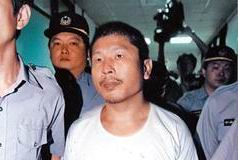
Chen Chin-hsing
Murderer Dr. Wouter Basson
Murderer · 1992
Wouter Basson (born July 6, 1950) was a South African cardiologist and the form…
230 victims
Dr. Wouter Basson
Murderer · 1992
Wouter Basson (born July 6, 1950) was a South African cardiologist and the form…
230 victims
 Ershad Sikder
Murderer · Bangladesh · 1990
Ershad Sikder was an influential political figure in the south-western city of…
30 victims
Ershad Sikder
Murderer · Bangladesh · 1990
Ershad Sikder was an influential political figure in the south-western city of…
30 victims
 Russell Ellwood
Murderer · USA · 1991
Russell Ellwood was a former taxi driver. Authorities suspected him of killing…
20 victims
Russell Ellwood
Murderer · USA · 1991
Russell Ellwood was a former taxi driver. Authorities suspected him of killing…
20 victims
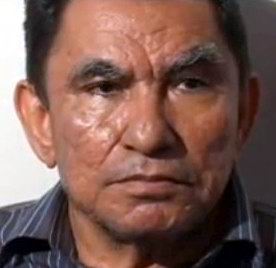 Anisio Ferreira de Sousa
Murderer · Brazil · 1989
September 4, 2003 — Anísio Ferreira de Sousa was sentenced to 77 years in priso…
19 victims
Anisio Ferreira de Sousa
Murderer · Brazil · 1989
September 4, 2003 — Anísio Ferreira de Sousa was sentenced to 77 years in priso…
19 victims
 Umesh Reddy
Murderer · India · 1998
Umesh Reddy was sentenced to death on October 27, 2006. The Karnataka High Cour…
18 victims
Umesh Reddy
Murderer · India · 1998
Umesh Reddy was sentenced to death on October 27, 2006. The Karnataka High Cour…
18 victims
 Theunis Christian Olivier
Murderer · South Africa · 2005
Theunis Christian Olivier was sentenced to life in prison on August 8, 2007, fo…
1 victim
Theunis Christian Olivier
Murderer · South Africa · 2005
Theunis Christian Olivier was sentenced to life in prison on August 8, 2007, fo…
1 victim
 Brett Hartman
Murderer · USA · 1997
Brett Hartman Brett Hartman’s trial counsel consulted Dr. Siddall for the mitig…
1 victim
Brett Hartman
Murderer · USA · 1997
Brett Hartman Brett Hartman’s trial counsel consulted Dr. Siddall for the mitig…
1 victim
 Ronald Watkins
Murderer · USA · 1988
Ronald Watkins was convicted of capital murder and robbery for the killing of W…
1 victim
Ronald Watkins
Murderer · USA · 1988
Ronald Watkins was convicted of capital murder and robbery for the killing of W…
1 victim
 Ralph Cecil Feltrop
Murderer · USA · 1997
Ralph Cecil Feltrop was convicted of first-degree murder in the Circuit Court o…
1 victim
Ralph Cecil Feltrop
Murderer · USA · 1997
Ralph Cecil Feltrop was convicted of first-degree murder in the Circuit Court o…
1 victim
- Gender
- male
- Country
- Taiwan
- Location
- Taipei County, Taiwan
- Date of birth
- ????
- Characteristics
- kidnapping, rape, sexual assault, torture
- Victim profile
- Pai Hsiao-yen, 16 (TV celebrity's daughter) / A plastic surgeon, his wife, and a nurse
- Method of murder
- Strangulation / Shooting
- Date(s) of murder
- April 20/October 23, 1997
- Years active
- 1997
- Date of arrest
- November 18, 1997
- Status
-
Executed
Executed by firing squad on October 6, 1999
Case summary
Chen Chin-hsing was executed by firing squad on October 6, 1999.
Pai Hsiao-yen (simplified Chinese: 白晓燕; traditional Chinese: 白曉燕; pinyin: Bái Xiăoyàn; June 23, 1980 - April 20, 1997) was kidnapped and killed. She was the only daughter of popular Taiwanese TV host and actress Pai Ping-ping and Japanese author Ikki Kajiwara.
The offence
Kidnapping, ransom demand, and treatment
Pai Hsiao-yen was missing after leaving for her school, Hsing Wu High School, on the morning of April 14, 1997. Her family received a ransom request of $5,000,000 United States dollars ($7150704.81 when adjusted for inflation) along with a severed piece of her little finger and a photograph of a bound girl.
Ransom negotiations involved requests and changes to payment locations more than 20 times. Ransom negotiations also continued after the likely time of Pai Hsiao-yen’s death, including an impersonator placing a telephone call to give Pai Ping-ping the impression that her daughter was alive.
Discovery of the body and evidence
Pai Hsiao-yen’s mutilated body was found in a drainage ditch on April 25, 1997. Investigators said that she had been dead for ten days before her body’s discovery.
Torture and media
Asiaweek’s Tim Healy and Laurie Underwood said that Pai was "apparently tortured" before her death. The photograph of her naked dead body was leaked to mass media, including the China Times which printed it. In consequence, people in Taiwan protested against the mass media.
Investigation
The police decoded communication methods used by the abductors after negotiations had continued for 11 days. A police raid resulted in one suspect being arrested while two other suspects escaped after a serious gun fight with the police.
An island-wide manhunt followed. Police were ordered to shoot the suspects without warning if they showed any sign of resistance.
Arrest and fugitives
Twelve accessories were arrested, but three main criminals escaped at the time: Chen Chin-hsing (T: 陳進興, S: 陈进兴, P: Chén Jìnxīng), Lin Chun-sheng (林春生 Lín Chūnshēng), and Kao Tien-min (高天民 Gāo Tiānmín).
On August 19, the trio were spotted by two foot patrol police officers in a residential neighborhood. A brief exchange of fire occurred, and Lin turned the gun on himself after he was shot six times. One of the officers was killed and the other one was wounded. Lin died around 11:55 AM. Reinforcement was immediately rushed to the neighborhood, and more than 800 officers conducted a thorough search, which turned up nothing.
On October 23, Kao and Chen shot and killed a plastic surgeon, his wife, and a nurse after forcing them to perform plastic surgery on them.
A few days later, Kao was spotted by the police and shot himself when police attempted to arrest him on November 17.
Alexander family hostage crisis
After the abductors’ earlier kidnapping and killing of Pai Hsiao-yen, Chen Chin-hsing broke into the residence of a South African military attaché and took the family hostage.
Hostages and location
On the evening of 18 November 1997, South African military attache Colonel McGill Alexander and his family were taken hostage by wanted fugitive Chen Chin-hsing in their Taipei home for approximately twenty-one hours.
Chen Chin-hsing had previously been involved in the murder of Pai Hsiao-yen, the daughter of famed Taiwanese actress Pai Ping-ping. His wife and two other relatives were imprisoned for their alleged involvement in the murder while he was on the run.
Entry and initial hostage taking
Around 7:00 PM Taiwan time, Chen Chin-hsing forcibly entered the Alexander house via the garage. Christine, McGill Alexander’s twelve year old daughter, was the first person to see him while she was playing piano. Chen put his arm around her neck and forced her to walk upstairs, where the rest of the family was. Chen instructed Mrs. Alexander at gunpoint to call CNN. She phoned her friend Michael, who worked at CNN. Within an hour, media were alerted and police officers surrounded the house.
Shooting, hostages used as human shield, and injuries
As police advanced towards the house, after Chen had warned them to stay away, Chen opened fire with one of his guns. The other one was kept pointed at Melanie, whom he was using as a human shield. After repeated begging by Mr. Alexander, Chen released Melanie and instead took Mr. Alexander as a human shield.
By this point, police had entered the house via the garage door. Chen fired shots at policemen surging up the stairs to his position, and they retreated to the garage. One of Chen’s shots went through Melanie's wrist and into her back, lodging between two arteries in her pelvis. Mr. Alexander was also shot in the leg.
Negotiations and releases
Chen promised to release the hostages if Frank Hsieh, a renowned politician, personally came to negotiate the release of his wife and brother. At 9:00 PM Taiwan time, Frank Hsieh arrived. Negotiations started at 10:00 and ensured the release of Mr. Alexander and his daughter Christine for treatment of wounds sustained. Further negotiations ended in the release of the family’s foster son and Christine. Mrs. Alexander was the last hostage released by Chen.
The release of Mrs. Alexander on 19 November 1997 brought an end to the crisis. Police announced an end to the crisis at 4:00 PM.
Confession and statements during the siege
Chen confessed his involvement in a kidnap and murder carried out earlier that year in a series of telephone conversations with reporters broadcast live on Taiwanese television. He said he expected to die.
"I am holding hostages. They (the police) must talk to me. "If I let the hostages go, I will die.... I will die eventually anyway. I don't want to live."
Chen said: "I have no intention to turn myself in," and also said: "I won't hurt them (the hostages) but it is difficult to say if they (police) burst in."
He also told the host of the live programme: "Don't broadcast this right now."
Chen demanded that the authorities set free his wife and friends, detained for their alleged role in the high-profile kidnapping and murder earlier that year of Pai Hsiao-yen, the only daughter of actress Pai Ping-ping, and other killings. The group allegedly snatched the teenager on April 14 and demanded a record ransom of $5 million. She was later raped and stabbed to death. The victim’s mutilated body was later discovered in a ditch near Taipei.
Trial, sentencing, and execution
Chen Chin-hsing was convicted on charges including sexual assault, kidnapping, and murder. He was executed on 16 October 1999 in one account, while another account stated his execution date as October 6, 1999 by firing squad.
The Ministry of Justice finalized three death sentences for Chen for a string of crimes. Taiwan’s Supreme Court handed Chen three death sentences for a crime spree that began with the April 1997 kidnap and killing of Pai Hsiao-yen.
There were disputes over whether or not Chen’s brother-in-law Chang Chih-hui (張志輝) was an accomplice to the crime. After review of the kidnapping and murder, the Taiwan High Court reaffirmed Chen’s death sentence on Sept. 23 and determined that Chen’s execution would not affect judgement on Chang’s case.
A prosecutor concluded Chen had no grounds for an extraordinary appeal that could provide a stay of execution, and prosecutors submitted the execution order to superiors for signing by Minister of Justice Yeh Chin-feng (葉金鳳).
Organ donation and post-execution events
Before his execution, Chen had agreed to donate his heart, lungs, kidneys and corneas to patients in need. His body was removed to Chang Gung Memorial Hospital at Linkuo (林口長庚醫院), Taipei County, for organ recovery immediately after the execution.
Paramedics were shown unloading Chen’s body at Taipei County’s Chang Gung Hospital, where organs from the murderer would be donated. Guards at Taipei prison burned incense and paper money soon after 9:30 p.m. after his execution.
"This comes as no comfort to all the people violated by him," Pai told cable television station TVBS. "I only wish that I could see him walk toward that moment in his life."
Timeline
- April 14, 1997 — Pai Hsiao-yen left for Hsing Wu High School and was reported missing.
- April 23, 1997 — Press in Taiwan first reported the incident.
- April 25, 1997 — Pai Hsiao-yen’s mutilated body was found in a drainage ditch.
- August 19, 1997 — Lin Chun-sheng was shot six times and died around 11:55 AM during an exchange of fire with police; one officer was killed and another wounded.
- October 23, 1997 — Kao Tien-min and Chen shot and killed a plastic surgeon, his wife, and a nurse after forcing them to perform plastic surgery.
- November 17, 1997 — Kao Tien-min was shot himself when police attempted to arrest him.
- 18 November 1997 — Chen held Colonel McGill Alexander and his family hostage in their Taipei home.
- 19 November 1997 — Mrs. Alexander was released and police announced the end of the crisis at 4:00 PM.
- June 23, 1980 — Pai Hsiao-yen was born.
- April 20, 1997 — Pai Hsiao-yen’s death date was listed.
- October 6, 1999 — Chen Chin-hsing was executed by firing squad.
- Oct. 23 (year as stated in context) — Chen was described as having multiple death sentences finalized by the Supreme Court for a string of crimes (context within execution coverage).
- Sept. 23 (year as stated in context) — The Taiwan High Court reaffirmed Chen’s death sentence and addressed Chang Chih-hui’s case (context within appeals coverage).
Other details
Payments, negotiations, and failure points
The family received multiple ransom communications, and payment locations changed more than 20 times during negotiations. The case involved negotiation with police for 11 days.
Media protests and public response
Street demonstrations occurred after Pai Hsiao-yen’s body was found, including a march of 50,000 to the presidential office calling for President Lee Teng-hui to dismiss his cabinet. Two other ministers resigned, and President Lee made an apology.
People connected to the case
- Pai Ping-ping was Pai Hsiao-yen’s mother and a Taiwanese TV entertainer.
- Ikki Kajiwara was a Japanese author and was identified as part of Pai Hsiao-yen’s family.
- Tim Healy and Laurie Underwood of Asiaweek commented that Pai was "apparently tortured" before her death.
- Frank Hsieh negotiated during the hostage crisis.
- Chang Su-chen (張素真) appeared in court and was sentenced on a charge of hiding her husband when he was on the run.
- Colonel McGill Alexander was held hostage with his family during the November 1997 siege.
- Christine was McGill Alexander’s twelve year old daughter.
- Melanie was used as a human shield and was shot.
- Michael, who worked at CNN, was contacted by Mrs. Alexander to alert CNN.
Additional execution coverage context (bandit law)
Chen was among executions described as under a disputed law referred to as the "bandit law" (Act for the Control and Punishment of Banditry / 懲治盜匪條例) in one account. The narrative described other individuals executed on the same date as well as debate among human rights groups and legal experts about validity and renewal of the law, including a sunset clause promulgated in 1944 and legislative extensions.
Confession and technology
Chen gave lengthy telephone interviews during the siege and handed a 50,000-character confession to a Christian group while on death row. The Ministry of Justice reacted strongly to the group’s plan to have his confessions published, and the group postponed publication.
Book
McGill Alexander wrote a book about the event, Hostage in Taipei, published by Cladach Publishing in 2000. It was translated into Chinese the following year as True Love, and published by Cosmax.

Spotted an error, or have more information about this case?