
Brett Hartman
Murderer Russell Ellwood
Murderer · USA · 1991
Russell Ellwood was a former taxi driver. Authorities suspected him of killing…
20 victims
Russell Ellwood
Murderer · USA · 1991
Russell Ellwood was a former taxi driver. Authorities suspected him of killing…
20 victims
 Robert Martines Perez
Murderer · USA · 1994
Name: Robert Martines Perez · Other name used in proceedings: Robert Martinez P…
15 victims
Robert Martines Perez
Murderer · USA · 1994
Name: Robert Martines Perez · Other name used in proceedings: Robert Martinez P…
15 victims
 Billy Frank Vickers
Murderer · USA · 1993
Billy Frank Vickers Vickers was executed by lethal injection in Texas on Januar…
14 victims
Billy Frank Vickers
Murderer · USA · 1993
Billy Frank Vickers Vickers was executed by lethal injection in Texas on Januar…
14 victims
 Laurie Bembenek
Murderer · USA · 1981
Lawrencia “Bambi” Bembenek (August 15, 1958 – November 20, 2010) was known as L…
1 victim
Laurie Bembenek
Murderer · USA · 1981
Lawrencia “Bambi” Bembenek (August 15, 1958 – November 20, 2010) was known as L…
1 victim
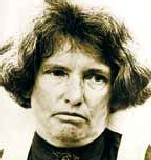 Daisy De Melker
Serial killer · South Africa · 1923
Daisy Louisa De Melker (née Hancorn-Smith) was born on 1 June 1886 and was exec…
3 victims
Daisy De Melker
Serial killer · South Africa · 1923
Daisy Louisa De Melker (née Hancorn-Smith) was born on 1 June 1886 and was exec…
3 victims
 Francisco Arce Montes
Murderer · France · 1996
Francisco Arce Montes was a psychologically troubled loner who drifted around E…
1 victim
Francisco Arce Montes
Murderer · France · 1996
Francisco Arce Montes was a psychologically troubled loner who drifted around E…
1 victim
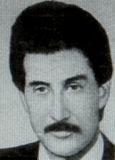 Scott Robin Roston
Murderer · USA · 1988
Scott Robin Roston was convicted of second-degree murder on the high seas after…
1 victim
Scott Robin Roston
Murderer · USA · 1988
Scott Robin Roston was convicted of second-degree murder on the high seas after…
1 victim
 William Glenn Rogers
Murderer · USA · 1996
William Glenn Rogers was sentenced to death for the kidnapping, rape, and murde…
1 victim
William Glenn Rogers
Murderer · USA · 1996
William Glenn Rogers was sentenced to death for the kidnapping, rape, and murde…
1 victim
- Gender
- male
- Country
- USA
- Location
- Akron, Summit County, Ohio, USA
- Date of birth
- June 29, 1974
- Age at first offence
- 23
- Characteristics
- kidnapping, abuse, alcohol
- Victim profile
- Winda D. Snipes, 46
- Method of murder
- Stabbing with knife (148 times)
- Date(s) of murder
- September 9, 1997
- Years active
- 1997
- Date of arrest
- Next day
- Status
-
Sentenced to death
Sentenced to death on May 22, 1998.
Case name
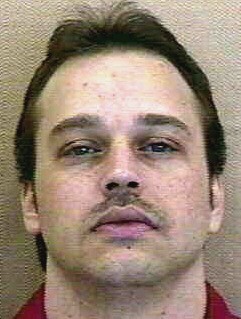
Brett Hartman
Background
Brett Hartman’s trial counsel consulted Dr. Siddall for the mitigation phase. Dr. Siddall evaluated Hartman and prepared a report to assist counsel in identifying potential mitigating factors for presentation at the sentencing phase. Dr. Siddall interviewed Hartman personally and administered several psychological and personality assessment tests.
The mitigation investigation included discussions with Ms. Wolpert and Ms. Hartman.
The offence
The record refers to “the instant offense,” alongside Hartman’s criminal justice involvement and mental health treatment.
Investigation
Dr. Siddall’s report identified genetic alcoholism as a potential mitigating factor. It also concluded that Hartman suffered physical abuse at the hands of his step-father and sexual abuse at the hands of his step-mother.
Dr. Siddall further concluded that Hartman suffered from mixed personality disorder, describing that, when combined with “disinhibiting substances,” it could lead to “episodes of irritability, hostility, aggression, and loss of control.”
The Siddall Report also suggested that mental health records apparently in counsel’s possession described Hartman as presenting “symptoms characteristic of children who had been abused including poor self-esteem, difficulty with authority, and rebellious behavior.”
The report indicated reliance on background information summarizing Hartman’s “criminal justice involvement, mental health treatment, and the circumstances of the instant offense,” two meetings with Hartman himself, and telephone interviews with Hartman’s mother and Ms. Hartman.
Trial
During the mitigation phase, trial counsel put forth testimony of Ms. Wolpert and Ms. Hartman. Counsel admitted one summary exhibit into evidence.
Witness testimony
Ms. Wolpert was asked about Hartman’s drinking, and responded: “He was involved a little bit.” (J.A. at 709)
Counsel’s exploration of genetic alcoholism with Ms. Wolpert involved: “there’s alcoholism in your family; is that correct;” and “[Petitioner] has been around alcoholics and alcohol all of his life, if you're aware of that?” (J.A. at 712) Ms. Wolpert gave brief, lukewarm affirmative answers.
Ms. Hartman testified about an episode where Hartman was hospitalized as an adolescent following a “chuck-a-lucking” contest. (Id. at 738)
Trial counsel’s closing argument covered ten pages of transcript, culminating in “a two and a half page story about the ancient Greek philosopher and orator Aeschylus, the conclusion of which was counsel telling the jury ‘the answer is in your hand.’ ” (Pet.'s Br. at 21 n. 9; see also J.A. at 774)
Jury instructions and verdict process
The trial court employed acquittal-first jury instructions and instructed the jury that it must act “unanimously.” In pertinent part, the penalty phase jury instructions read:
If all 12 members of the jury find by proof beyond a reasonable doubt that the aggravating circumstances, as I have defined them, are sufficient to outweigh the mitigating factors, then you must return such finding to the Court. I instruct you, as a matter of law, that if you make such finding, then you have no choice and must make a recommendation to the Court that the sentence of death be imposed on the Defendant [ ].
On the other hand, if after considering all of the evidence raised at trial which is relevant to the issues before you, the testimony, other evidence, and the arguments of counsel, you cannot unanimously agree that the State of Ohio proved beyond a reasonable doubt that the aggravating circumstances, as I have defined them, outweigh the mitigating factors, then you'll return your recommendation reflecting your decision. In this event, you will then proceed to determine which of the three possible life imprisonment sentences to impose....
(J.A. at 786-88) (emphasis added)
The trial judge dismissed the jury to deliberate with the direction to return a verdict “[w]henever all 12 of you, and I repeat, all 12 jurors agree.” (J.A. at 793)
Sentencing
Hartman was sentenced to death.
Trial counsel did not introduce evidence within his control described as evidence of Dr. Siddall’s conclusions about mixed personality disorder and its connection to episodes of irritability, hostility, aggression, and loss of control, and did not introduce the Siddall Report’s discussion of how mixed personality disorder and propensity to substance abuse were “compounded by instability and abuse in his home environment.”
The record described that the trial judge found testimony about genetic alcoholism insufficient to establish genetic alcoholism, and accordingly redacted that mitigating factor from an exhibit prepared by Hartman’s counsel to guide the jury’s deliberations.
Appeals
On appeal, Hartman relied on counsel’s failure to introduce the Siddall Report—or to have Dr. Siddall testify—to show prejudice.
The record includes discussion of acquittal-first jury instruction claims and individualized consideration of mitigating factors. The discussion cited:
- Lockett v. Ohio, 438 U.S. 586, 606, 98 S.Ct. 2954, 57 L.Ed.2d 973 (1978)
- Eddings v. Oklahoma, 455 U.S. 104, 110, 102 S.Ct. 869, 71 L.Ed.2d 1 (1982)
- Mills v. Maryland, 486 U.S. 367, 108 S.Ct. 1860, 100 L.Ed.2d 384 (1988)
- McKoy v. North Carolina, 494 U.S. 433, 435, 110 S.Ct. 1227, 108 L.Ed.2d 369 (1990)
- Davis v. Mitchell, 318 F.3d 682 (6th Cir.2003)
- Spisak v. Mitchell, 465 F.3d 684 (6th Cir.2006)
It also stated that the Ohio Supreme Court considered the acquittal-first jury instruction claim on the merits.
Outcome
Hartman remained under a sentence of death.
A dissent argued that:
- Trial counsel performed ineffectively by unreasonably limiting the mitigation investigation and failing to introduce evidence within his control.
- The probability of prejudice was sufficient because of failure to introduce or develop mitigation evidence relating to genetic alcoholism, childhood abuse, and mixed personality disorder.
- The trial court gave unconstitutional acquittal-first jury instructions.
- The dissent would have vacated Hartman’s sentence and remanded for a new sentencing phase trial.
Other details
Dr. Siddall’s report identified ten potential mitigating factors. The report was received five days before Hartman’s mitigation hearing began. The mitigation case spanned approximately 40 pages of transcript.
The dissent referenced Ohio Rev.Code § 2929.04(B)(3) as a mitigating factor related to “mental disease or defect,” including the quoted statutory direction:
“[w]hether, at the time of committing the offense, the offender, because of a mental disease or defect, lacked substantial capacity to appreciate the criminality of the offender's conduct or to conform the offender's conduct to the requirements of the law.”
The record contained quotation about genetic alcoholism mitigation:
- Ms. Wolpert described Hartman as “He was involved a little bit.” (J.A. at 709)
The record contained quotation about alleged abuse-related symptoms:
“ ‘presented symptoms characteristic of children who had been abused including poor self-esteem, difficulty with authority, and rebellious behavior.’ ”
(J.A. at 1339)
The record also included a line about the dissent’s view that counsel’s strategic choices were “more a post hoc rationalization of counsel's conduct than an accurate description of their deliberations prior to sentencing.” It further stated the cited proposition from Wiggins: “Virtually unchallengeable” strategic choices follow “ thorough investigation of law and facts relevant to plausible options.” (Strickland, 466 U.S. at 690, 104 S.Ct. 2052 (emphasis added)).
Current characteristics included “Kidnapping - C ut off her hands (they were never found)” as well as alcohol and abuse-related mitigation issues discussed in the proceedings.
Spotted an error, or have more information about this case?