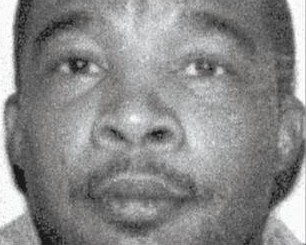
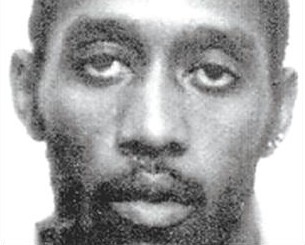
Ronald Watkins
Murderer Brian Kevin Rosenfeld
Murderer · USA · 1985
Brian Kevin Rosenfeld Brian Kevin Rosenfeld was sentenced to three concurrent l…
23 victims
Brian Kevin Rosenfeld
Murderer · USA · 1985
Brian Kevin Rosenfeld Brian Kevin Rosenfeld was sentenced to three concurrent l…
23 victims
 Yahweh ben Yahweh
Murderer · USA · 1980
Yahweh ben Yahweh was born and legally named Hulon Mitchell Jr. (October 27, 19…
23 victims
Yahweh ben Yahweh
Murderer · USA · 1980
Yahweh ben Yahweh was born and legally named Hulon Mitchell Jr. (October 27, 19…
23 victims
 Russell Ellwood
Murderer · USA · 1991
Russell Ellwood was a former taxi driver. Authorities suspected him of killing…
20 victims
Russell Ellwood
Murderer · USA · 1991
Russell Ellwood was a former taxi driver. Authorities suspected him of killing…
20 victims
 Robert Martines Perez
Murderer · USA · 1994
Name: Robert Martines Perez · Other name used in proceedings: Robert Martinez P…
15 victims
Robert Martines Perez
Murderer · USA · 1994
Name: Robert Martines Perez · Other name used in proceedings: Robert Martinez P…
15 victims
 Philip John Smith
Spree killer · United Kingdom · 2000
Philip John Smith was a former fairground worker and taxi driver who was servin…
3 victims
Philip John Smith
Spree killer · United Kingdom · 2000
Philip John Smith was a former fairground worker and taxi driver who was servin…
3 victims
 James Kraig Kahler
Mass murderer · USA · 2009
James Kraig Kahler resided in Columbia, Mo., after moving back to Kansas shortl…
4 victims
James Kraig Kahler
Mass murderer · USA · 2009
James Kraig Kahler resided in Columbia, Mo., after moving back to Kansas shortl…
4 victims
 Wayne Adam Ford
Serial killer · USA · 1997
Wayne Adam Ford (born December 3, 1961) was an American serial killer. Ford sur…
4 victims
Wayne Adam Ford
Serial killer · USA · 1997
Wayne Adam Ford (born December 3, 1961) was an American serial killer. Ford sur…
4 victims
 Ray Cromartie
Murderer · USA · 1994
Ray Jefferson Cromartie was convicted in Thomas County Superior Court of malice…
1 victim
Ray Cromartie
Murderer · USA · 1994
Ray Jefferson Cromartie was convicted in Thomas County Superior Court of malice…
1 victim
 Lakhvir Singh
Murderer · United Kingdom · 2009
Defendant: Lakhvir Singh Known alias/nickname: "The Curry Killer" Method used:…
1 victim
Lakhvir Singh
Murderer · United Kingdom · 2009
Defendant: Lakhvir Singh Known alias/nickname: "The Curry Killer" Method used:…
1 victim
 Arthur Hutchinson
Murderer · United Kingdom · 1983
Arthur Hutchinson was an English murderer and rapist who committed three murder…
3 victims
Arthur Hutchinson
Murderer · United Kingdom · 1983
Arthur Hutchinson was an English murderer and rapist who committed three murder…
3 victims
- Gender
- male
- Country
- USA
- Location
- Danville City, Virginia, USA
- Date of birth
- 1963
- Age at first offence
- 25
- Characteristics
- robbery
- Victim profile
- William McCauley, 29 (store owner)
- Method of murder
- Stabbing 7 times in the back and slashing his throat
- Date(s) of murder
- May 26, 1988
- Years active
- 1988
- Date of arrest
- —
- Status
-
Executed
Executed by lethal injection in Virginia on March 25, 1998
Case overview
Ronald Watkins was convicted of capital murder and robbery for the killing of William McCauley in Danville, Virginia. Watkins confessed to stabbing McCauley seven times in the upper back and slashing his throat three times while robbing McCauley’s business. After the jury recommended the death penalty, the trial court sentenced Watkins to death. Watkins was later executed by lethal injection in Virginia on March 25, 1998.
Timeline
- May 26, 1988 (shortly before 8:00 p.m.) — Dr. Ralph McCauley went to the Allied Services store in a Danville, Virginia, shopping center after his son had not returned from work; he found William McCauley lying face down in a pool of blood.
- September 28, 1988 — Ronald Watkins was convicted of capital murder and robbery.
- March 13 — Rosalynn Carter wrote a clemency letter to the governor.
- March 25, 1998 — Ronald Watkins was executed by lethal injection in Virginia.
The offence
Shortly before 8:00 p.m. on May 26, 1988, Dr. Ralph McCauley went to the Allied Services store in a Danville, Virginia, shopping center because he was concerned that his son, who owned the store, had not returned from work that evening. When he arrived, Dr. McCauley saw his twenty-nine-year-old son, William McCauley, lying on the floor, face down in a pool of blood.
William McCauley had been stabbed seven times in the upper back, and his throat had been slashed three times. According to the medical examiner, four of these wounds were independently lethal.
A trail of blood led from McCauley’s body to the filing cabinet that served as a cash repository for the store. The cabinet was found empty, and the victim’s wallet was also missing.
An employee of the store saw Ronald Watkins hanging around the store’s entrance that same evening before the murder. The employee recognized Watkins because he had once worked at the store with her and William McCauley.
Investigation
Police questioned Watkins’s girlfriend and siblings. They were persuaded to tape their phone conversations with Watkins. In one taped conversation with his brother, Watkins admitted to robbing William McCauley and then killing him because he knew Watkins.
After being arrested and given Miranda warnings, Watkins voluntarily confessed that he had stabbed McCauley and “cut his throat.”
Arrest
Watkins was arrested and given Miranda warnings before he voluntarily confessed to stabbing McCauley and “cut his throat.”
Trial
Prior to trial, Watkins, who is black, challenged the venire because only five of its thirty-five members were black, while nearly thirty percent of the population of Danville is black. In the evidentiary hearing that followed, the judge noted that the venire was selected at random from voter registration lists by the clerk’s office and that there is no Constitutional guarantee that a jury will have a racial make-up precisely proportional to that of the community at large. The trial court denied the challenge.
At the pre-trial stage, Watkins did not raise any issue concerning historical or systematic racial discrimination in the seating of capital juries in Danville.
One of the members of the jury pool was Lennie Clark. On voir dire, the prosecutor inquired whether Clark was related to Watkins. Clark replied that he was not related to Watkins but that he was related to a murder victim in an unrelated recent case. Defense counsel declined to challenge Clark for cause, despite Watkins’s protests, and Clark was seated on the panel.
Watkins was convicted of capital murder and robbery on September 28, 1988. The penalty phase was conducted that same evening.
Penalty phase evidence
Watkins offered Dr. Miller Ryans, a forensic psychiatrist, who testified that Watkins would not pose a threat of future dangerousness once incarcerated. In rebuttal, the prosecution presented Dr. Arthur Centor, a government forensic psychologist who had interviewed Watkins prior to trial. Centor’s testimony tended to show that Watkins was a future danger to society even in prison. Defense counsel cross-examined Dr. Centor but did not object to his testimony.
Closing arguments and jury recommendation
Defense counsel argued at the close of the sentencing phase that while Watkins was violent and uncontrollable on the street, his ability to behave in an orderly manner while incarcerated merited a sentence less than death. The argument included the following statements:
[T]here are two Ronalds, and I'm not saying that Ronald isschizophrenic or he has these emotional problems, but Ronald acts differently in different situations. The Ronald on the street is a monster. I can't deny that but the Ronald in the home where Dad is watching him and has rules and the Ronald in the penitentiary where the guards watch him and the guards have rules is a Ronald that can make it in this world, a Ronald that can live and a Ronald that does notdeserve to die. Even the vilest person among us is still a human being and he's still blessed with the dignity and the Godgiven right to live that the Lord gave each and everyone of us.
The prosecutor, in closing argument to the jury, accused Watkins of failing to show remorse for the killing:
Remorse? What remorse has he shown? His own father saidon May 31st he showed no remorse. Now he's scared and he should be, but has he shown any remorse in the courtroom? Did he show any remorse when his tape was being played about how he methodically killed Bill McCauley. He was over there jotting around. You heard his voice[on thetape] . . . Any remorse?
After considering the evidence and listening to these arguments, the jury recommended that Watkins receive the death penalty. The trial court thereafter sentenced Watkins to death.
Sentencing
The trial court sentenced Ronald Watkins to death after the jury recommended the death penalty in the penalty phase on September 28, 1988.
Appeals
A United States Court of Appeals Fourth Circuit opinion referenced clemency petition matters and past appeals. Watkins had an appeal pending before the U.S. Supreme Court, but his past appeals, which alleged he was the victim of racial discrimination in jury selection, failed.
Outcome
Ronald Watkins was executed at the Greensville Correctional Center in Jarratt, Virginia, about 55 miles (88 kms) south of Richmond. At the execution, Watkins, 35, was strapped to a gurney in the death chamber. Watkins said: “I just want to say I'm sorry to the McCauleys and my family for the pain that I have caused them.” He was pronounced dead at 9:17 p.m. (eastern standard time).
Aftermath
Clemency efforts
Rosalynn Carter, wife of former U.S. President Jimmy Carter, appealed to the governor for clemency based on Watkins’s death row conversion to Christianity. She wrote in a March 13 letter:
(Watkins) has demonstrated his transformation by working diligently to guide his son to lead a good and righteous life and by reconciling himself with his own father who abused him horribly
In a separate clemency petition, Washington and Lee University law professor William Geimer said Watkins underwent a religious conversion 4 years ago and was not the same man who murdered his boss nearly a decade ago. Geimer said:
"Ron's life, since 1994, has in many ways mirrored that of Karla Faye Tucker. Unlike her, however, he is not telegenic and verbally articulate,"
Geimer also said:
during his first three years on death row, the abused angry man had time to reflect and accept responsibility for his actions. He also found Christ.
Geimer stated:
He will never have the notoriety accorded to Karla Faye Tucker, but he has touched many lives for the good.
Geimer said Watkins wanted to continue helping to raise his 16-year-old son, David, and had made peace with his abusive father, Leon Watkins. Geimer said Watkins did not want his mother, Donna, to suffer from his execution. Geimer’s plea included the following words:
We are unashamed to make this plea for mercy to you in the name of Christ, wrote Geimer. "Please ignore your lawyers, your political advisers, get on your knees and seek God's will in this case."
Additional statements and context provided in the record
McCauley planned to attend the execution and believed the sentence was appropriate. As for Watkins being born again, McCauley said:
Well, I wouldn't know about that, but I suspect it's a sort of foxhole
McCauley noted he did not have a son because of what Watkins did.
In an interview last December, McCauley agreed it was unlikely the execution would bring him peace. He said:
Everybody in the family has got scars that they'll take with them to the grave. I hope it will get better once he's executed, but I doubt it," he said. "I think we're branded forever.
McCauley discovered his only son's body in a pool of blood at his business the night of the slaying. McCauley said his son was late coming home, so he drove to his business to find him. He said:
"I thought maybe that he had just gotten busy or something right at closing time....I got in the car and I looked for him on the way over to his place of business and didn't see him coming in the opposite direction,"
McCauley said his son had:
"never been in any trouble whatsoever -- a happy, hard-working boy. It was a brutal, premeditated murder. This fellow knew that he kept a fair amount of cash in the business. He'd worked for him, his sister worked for him, they knew that there was cash there. "He got $1,600 in cash, you know, and this fellow Watkins had been in and out of trouble all of his life."
McCauley said that in the last 3 or 4 months, his wife and he had letters from defense lawyers wanting to meet with them on Watkins’s case. He said a clergyman from Alexandria wrote and called the McCauleys on Watkins’s behalf. McCauley said:
"We've had a lot of things that have upset us and we've been depressed for years, my wife worse than I," said McCauley.
Other details
Watkins was on parole in May 1988 for abducting an elderly woman at gunpoint when he killed William McCauley. Investigators said Watkins had once worked for McCauley and knew where he kept the money in his store.
The record stated that Danville had condemned seven black men to death, but no whites, since the reimposition of the death penalty in Virginia in 1977. It also stated that that was the highest per capita rate of any Virginia city and the only jurisdiction that had sent more than 3 men to death row that had sent only African-Americans.
Spotted an error, or have more information about this case?