Pierre Dale Selby
Murderer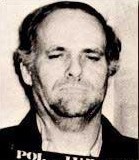 Ervil LeBaron
Murderer · USA · 1972
Ervil Morrell LeBaron (1925 to August 16, 1981) was the leader of a polygamous…
35 victims
Ervil LeBaron
Murderer · USA · 1972
Ervil Morrell LeBaron (1925 to August 16, 1981) was the leader of a polygamous…
35 victims
 Marvin Gray
Murderer · USA · 1975
Marvin Gray was convicted killer who claimed responsibility for 23 slayings and…
23 victims
Marvin Gray
Murderer · USA · 1975
Marvin Gray was convicted killer who claimed responsibility for 23 slayings and…
23 victims
 Yahweh ben Yahweh
Murderer · USA · 1980
Yahweh ben Yahweh was born and legally named Hulon Mitchell Jr. (October 27, 19…
23 victims
Yahweh ben Yahweh
Murderer · USA · 1980
Yahweh ben Yahweh was born and legally named Hulon Mitchell Jr. (October 27, 19…
23 victims
 Charles Manson
Murderer · USA · 1969
Charles Milles Manson (born November 12, 1934) was an American criminal and mus…
9 victims
Charles Manson
Murderer · USA · 1969
Charles Milles Manson (born November 12, 1934) was an American criminal and mus…
9 victims
 Mark Wesley Bailey
Murderer · USA · 1998
Mark Wesley Bailey was convicted in Virginia for the capital murder of his two-…
2 victims
Mark Wesley Bailey
Murderer · USA · 1998
Mark Wesley Bailey was convicted in Virginia for the capital murder of his two-…
2 victims
 Sirhan Bishara Sirhan
Murderer · USA · 1968
Sirhan Bishara Sirhan was convicted of the murder of United States Senator Robe…
1 victim
Sirhan Bishara Sirhan
Murderer · USA · 1968
Sirhan Bishara Sirhan was convicted of the murder of United States Senator Robe…
1 victim
 Marcus Shrader
Serial killer · USA · 1974
Marcus Shrader was a Navy corpsman who was stationed at Camp Lejeune at the tim…
4 victims
Marcus Shrader
Serial killer · USA · 1974
Marcus Shrader was a Navy corpsman who was stationed at Camp Lejeune at the tim…
4 victims
 Amanda Wallace
Murderer · USA · 1993
Amanda Wallace — mother of Joseph R. Wallace; defendant in Joseph’s murder; old…
1 victim
Amanda Wallace
Murderer · USA · 1993
Amanda Wallace — mother of Joseph R. Wallace; defendant in Joseph’s murder; old…
1 victim
 Cynthia Sommer
Justice miscarriage · USA · 2002
Cynthia Sommer was convicted of first-degree murder with the “special circumsta…
0 victims
Cynthia Sommer
Justice miscarriage · USA · 2002
Cynthia Sommer was convicted of first-degree murder with the “special circumsta…
0 victims
 Leon Frank Czolgosz
Assassin · USA · 1901
Leon Frank Czołgosz (1873 – October 29, 1901) was the assassin of U.S. Presiden…
1 victim
Leon Frank Czolgosz
Assassin · USA · 1901
Leon Frank Czołgosz (1873 – October 29, 1901) was the assassin of U.S. Presiden…
1 victim
- Gender
- male
- Country
- USA
- Location
- Weber County, Utah, USA
- Date of birth
- 1952
- Age at first offence
- 22
- Characteristics
- rape, robbery, torture, drug dealer, mentally ill, fugitive
- Victim profile
- Carol Naisbitt, 52; Michelle Ansley, 19, and Stanley Walker, 20
- Method of murder
- Shooting
- Date(s) of murder
- April 22, 1974
- Years active
- 1974
- Date of arrest
- Next day
- Status
-
Executed
Executed by lethal injection in Utah on August 28, 1987
Case record: Pierre Dale Selby (aka Dale Pierre; aka Pierre Dale Shelby)
Status
Pierre Dale Selby was executed by lethal injection in Utah on August 28, 1987.
Background
Late on the night of April 22, 1974, two airmen named Dale Pierre (also known as Pierre Dale Selby and also known as Pierre Dale Shelby) and William Andrews entered the local Hi-Fi Shop in Ogden, Utah. Stanley Walker and Michelle Ansley worked in the shop, and Naisbitt was walking through.
Pierre and Andrews decided to rob the store. They overpowered the workers and Naisbitt and took them to the basement.
Carol Naisbitt (Cortney's mother) and Orren Walker (Stan’s father) arrived at the store looking for their children after Cortney, Michelle, and Stan had already been taken to the basement and tied up.
The offence
Pierre and Andrews forced the victims to drink liquid Drano. Pierre shot the victims in the head.
Michelle Ansley was also raped.
The following people died: Michelle Ansley, Carol Naisbitt, and Stanley Walker. Orren Walker and Cortney Naisbitt survived.
Cortney Naisbitt’s story became the basis of the book Victim: The Other Side Of Murder (1980) by Brian Kinder, and the 1991 film Aftermath: A Test Of Love.
The case was described as the “Hi-Fi murders,” an infamous criminal case involving murder, rape and robbery that occurred in the Hi-Fi Shop in Ogden, Utah on April 22, 1974.
The crimes were committed by two 19-year-old United States Air Force airmen, Pierre Dale Selby and William Andrews. Selby and Andrews took five people hostage, killed three, and left the two who survived with injuries.
During a trial, it was revealed that Selby and Andrews robbed the store with the intention of killing anyone they came across. In the months prior to the robbery, they had been looking for a way to commit the murders quietly and cleanly.
The two men saw the film Magnum Force, in which a prostitute is forced to drink Drano and is then shown immediately dropping dead. Selby and Andrews decided this would be an efficient method of murder and used it in their crime.
Investigation
The victims were discovered four hours later when Orren’s wife and other son came to the store looking for them. Orren’s son heard noises coming from the basement and broke down the back door while Mrs. Walker called 9-1-1.
Stan Walker and Ansley were already dead; Carol Naisbitt lived long enough to be loaded into an ambulance, but was pronounced dead on arrival at hospital.
Cortney was not expected to live. He survived but required hospitalization for 266 days before being released, with severe and irreparable brain damage.
Orren Walker survived with extensive burns to his stomach and esophagus.
Hours after news of the crime broke, an Air Force officer called the Ogden police and told them that Andrews had confided in him months earlier: “One of these days I'm going to rob that hi-fi shop, and if anybody gets in the way, I'm going to kill them.”
Hours after that call was received, two teenage boys dumpster diving near Hill Air Force Base where Selby and Andrews were stationed discovered the victims’ wallets and purses. Recognizing the pictures on the drivers’ licenses, they called the police.
A crowd of airmen quickly formed, including Selby and Andrews. The detective who responded believed that the killers might be in the crowd and put on a show, speaking dramatically and waving each piece of evidence in the air with tongs as he removed them from the dumpster.
The detective later noted in his report that, among the airmen gathered around the dumpster, most stood still and watched in relative silence, but two airmen paced around the crowd, spoke loudly, and made frantic gestures with their hands. The detective later identified these two airmen as Selby and Andrews.
The detective later received an award from the Utah branch of the Justice Department for his use of proactive techniques.
Based on Selby’s and Andrews’s reactions to the evidence being removed from the trash, and the officer’s implication of Andrews, Andrews and Selby were taken into custody and a search warrant was issued for their barracks.
Police found fliers for the hi-fi shop and a rental contract for a unit at a public storage facility.
Police obtained a warrant for the storage unit, where they discovered several pieces of stereo equipment which were later identified from serial numbers as having been taken from the hi-fi store.
During the course of removing the equipment from the storage unit, detectives discovered the half-empty bottle of industrial drain cleaner that had been used on the hostages.
Based on this evidence, Selby and Andrews were formally charged with the crimes.
A third person, Keith Roberts, was also charged. The third participant had acted as a lookout and did not actually enter the store. He was found by the court to have had no role in or knowledge of the murders.
Arrest / custody
Based on Selby’s and Andrews’s reactions and the officer’s implication of Andrews, Andrews and Selby were taken into custody and a search warrant was issued for their barracks.
Trial
Selby, Andrews and Roberts were tried and jointly for first-degree murder and robbbery.
Selby and Andrews were convicted of all charges and sentenced to death.
Roberts was convicted only of robbery and was sentenced to imprisonment.
Sentencing
Selby and Andrews were sentenced to death.
NAACP movements occurred after the issuing of death sentences. The NAACP demanded that Selby and Andrews’ sentences be reduced to life with the possibility of parole, claiming Pierre and Andrews had been unfairly convicted since they were both black, and the victims and jury were all white.
Andrews accused the judicial system of racism following the NAACP’s request for reduced sentences. He claimed in an interview with USA Today that he had never intended to kill anyone. Detectives later rebutted this by citing a statement by Andrews in which he admitted being the one to purchase the drain cleaner and bring it to the store on the night of the killings.
Appeals
After Pierre filed a federal habeas petition challenging the constitutionality of his death sentence, the United States Court of Appeals, Tenth Circuit decided:
- Pierre appealed from an order dismissing a habeas corpus petition challenging the constitutionality of his death sentence.
- The Court affirmed the judgment of the district court denying Pierre’s petition for a writ of habeas corpus.
- The Court stayed its mandate and the execution of Pierre’s death warrant for 30 days pending the filing of a petition for certiorari in the Supreme Court of the United States, and if filed, the stay would continue until disposition.
Court references included:
- Selby v. Shulsen, 600 F.Supp. 432 (D. Utah 1984).
- The decision referenced companion case materials from Andrews v. Shulsen, 802 F.2d 1256, 1258-60 (10th Cir.1986).
The Tenth Circuit decision used the name “Dale Selby, a/k/a Dale S. Pierre,” and stated that Selby filed his federal habeas petition as “Dale S. Pierre.” It noted that he had been known throughout state trial and state appeals as Mr. Pierre, and that later his attorney began referring to him as Mr. Selby.
The Tenth Circuit decision stated that Pierre and William Andrews were convicted in Utah state court on three counts of first degree murder and two counts of aggravated robbery, and that the two men were sentenced to death for each of the murder convictions.
Two additional issues were discussed by the Court:
- Pierre argued the statutory scheme impermissibly shifted the burden of proof to defendants in the penalty phase, resulting in mandatory death sentences. The Court agreed with the district court’s express treatment and stated that the Utah statute imposed no unconstitutional burden on defendants in capital cases.
- Pierre argued that the use of certain expert testimony at the penalty phase violated his Fifth Amendment right against self-incrimination, citing Estelle v. Smith, 451 U.S. 454, 101 S.Ct. 1866, 68 L.Ed.2d 359 (1981).
- Dr. Louis G. Moench was the psychiatrist.
- The Court described Dr. Moench as a psychiatrist originally appointed by the trial judge at the request of Pierre’s trial counsel to perform a pretrial competency examination.
- At the sentencing hearing, Dr. Moench testified for the State that Pierre could distinguish right from wrong, his ability was unimpaired by any apparent mental disease or defect, his mental condition had not changed significantly between the time of the crime and the examination, and he was of average intelligence and able to assist in preparing his defense.
- The Court said Pierre had not been advised that he had a right to remain silent during Dr. Moench’s competency examination.
- The Court stated it was not persuaded that Pierre suffered actual prejudice because the testimony was carefully limited by the trial judge to general conclusions and constituted only two pages of the sentencing transcript, and it concluded that the testimony was not prejudicial.
The Court’s opinion included the numbered citations and footnotes referring to other claims raised by Andrews and other procedural matters, including procedural default and cause and prejudice testing.
The Court scheduled a rehearing denial in a referenced number and discussed dates:
- Oct. 6, 1986 (decision date)
- Rehearing denied in No. 85-1021 on Nov. 3, 1986
Outcome
Despite movements by the NAACP and Amnesty International, Selby and Andrews were executed by lethal injection:
- Selby was executed on August 28, 1987.
- Andrews was executed five years later in 1992.
A third man, Keith Roberts, was convicted of robbery and paroled in 1987.
The Hi-Fi Murders were described as among the worst crimes ever committed in the state of Utah.
The case was taught to FBI trainees at the FBI Academy at Quantico, Virginia, and it was included as a sample case in the FBI’s Crime Classification Manual.
Aftermath
Cortney Naisbitt suffered chronic pain for the rest of his life, until his death on June 4, 2002 at the age of 44.
Due to his brain damage, he was forced to drop out of college. Because he could not hold down a job, he had to apply for social security assistance.
Orren Walker, the other victim who survived the brutal attack, died on February 13, 2000.
Byron Naisbitt declined comment except to say: “This is the end of the Hi-Fi story. I want this to be the end of it.”
The narrative around Cortney Naisbitt’s struggle was credited by many with starting the victims’ rights movement.
A detail about Gary Gilmore was included. Gilmore, imprisoned at the same facility, faced capital punishment and had final words to his fellow inmates before being taken to face the firing squad: “I'll see you in Hell, Pierre and Andrews!” Gilmore was reported to have laughed at Selby and Andrews as he passed by their cells.
Other details (additional people and earlier case)
Victims and survivors
Stanley Walker, age 20, died. Michelle Ansley, age 19, died. Carol Naisbitt, age 52, died. Orren Walker survived and later died on February 13, 2000. Cortney Naisbitt survived with severe and irreparable brain damage; he died on June 4, 2002 at the age of 44. A 16-year-old high school science whiz named Cortney Naisbitt completed his first solo flight as a pilot on April 22, 1974.
US Air Force prior incident involving Pierre
Pierre (Dale Pierre / Dale S. Pierre / Pierre Dale Selby) was described as having been new to the Air Force when he became a suspect in the murder of Sergeant Edward Jefferson.
Sergeant Edward Jefferson was found murdered by a bayonet in his apartment.
Detective Don Moore investigated Sergeant Jefferson’s murder.
The narrative described that on Sunday, October 1, 1973, Pierre Dale Pierre had been at Jefferson’s apartment taping music. Jefferson discovered that his car keys were missing. Pierre and Jefferson searched the house, but the keys remained missing. The next day the keys were found.
The narrative stated that Pierre swiped the keys and brought them to the base for duplication; when Jefferson’s car keys and apartment key were duplicated, Pierre signed the name “Curtis Alexander,” in an attempt to conceal the fact that he had stolen them.
When Pierre returned to Jefferson’s apartment the next day to help him find the keys and they reappeared, Jefferson became suspicious, changed the locks, and changed his ignition. Pierre denied everything when confronted.
The narrative stated that during the hours of 10:00 PM on Thursday, October 4, and 4:00 AM on Friday, October 5, Jefferson was murdered with a bayonet, with a long knife jammed into Jefferson’s face and head such that only the handle could be seen.
Detective Don Moore came to the conclusion that Pierre had murdered Jefferson after interviewing dozens of witnesses and researching the name “Curtis Alexander.” The narrative stated that there was not enough evidence to arrest or convict Pierre and that the case remained unsolved until Pierre and William Andrews were brought to trial for the Hi-Fi Shop murders.
William Andrews background
William Andrews was described as born in Virginia in 1953.
The narrative stated that his childhood was basically normal and he was a well behaved child. He joined the Air Force in 1973 and was assigned to Hill Air Force Base as a helicopter mechanic.
The narrative described Andrews and Pierre becoming friends at Hill, and other airmen drifting away from Andrews when Andrews became close with Pierre.
In March 1974, both men filed for separation from the Air Force. Their commanding officer saw Andrews as basically a follower and Pierre as the leader due to Pierre’s uncontrollable rage.
Spotted an error, or have more information about this case?