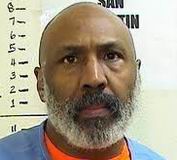
William Choyce
Serial killer Glen Edward Rogers
Serial killer · USA · 1993
Glen Edward Rogers was a spree killer whose cross-country rampage in 1994-95 le…
70 victims
Glen Edward Rogers
Serial killer · USA · 1993
Glen Edward Rogers was a spree killer whose cross-country rampage in 1994-95 le…
70 victims
 Michael Swango
Serial killer · USA · 1981
Michael Swango (Joseph Michael Swango) was a physician and American serial kill…
60 victims
Michael Swango
Serial killer · USA · 1981
Michael Swango (Joseph Michael Swango) was a physician and American serial kill…
60 victims
 Efren Saldivar
Serial killer · USA · 1989
Efren Saldivar (born 30 September 1969) was an American serial killer who murde…
50 victims
Efren Saldivar
Serial killer · USA · 1989
Efren Saldivar (born 30 September 1969) was an American serial killer who murde…
50 victims
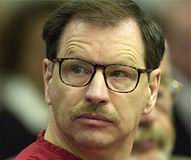 Gary Ridgway
Serial killer · USA · 1982
Gary Leon Ridgway Ridgway was born 18-February-1949 in Salt Lake City, UT. He w…
49 victims
Gary Ridgway
Serial killer · USA · 1982
Gary Leon Ridgway Ridgway was born 18-February-1949 in Salt Lake City, UT. He w…
49 victims
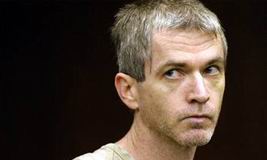 Charles Cullen
Serial killer · USA · 1984
Charles Cullen (born February 22, 1960) was a former nurse and the most prolifi…
45 victims
Charles Cullen
Serial killer · USA · 1984
Charles Cullen (born February 22, 1960) was a former nurse and the most prolifi…
45 victims
 Francis Nemechek
Serial killer · USA · 1974
Francis “Don” Nemechek killed women and a small boy in multiple incidents in we…
5 victims
Francis Nemechek
Serial killer · USA · 1974
Francis “Don” Nemechek killed women and a small boy in multiple incidents in we…
5 victims
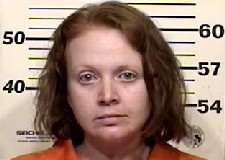 Kara Lounsbury
Murderer · USA · 2009
Kara Lounsbury was convicted of two counts of first-degree murder for the Janua…
2 victims
Kara Lounsbury
Murderer · USA · 2009
Kara Lounsbury was convicted of two counts of first-degree murder for the Janua…
2 victims
 Pierre Jaccoud
Homicide ? · Switzerland · 1958
Pierre Jaccoud (born in 1905) was a Swiss lawyer and politician. He served as “…
1 victim
Pierre Jaccoud
Homicide ? · Switzerland · 1958
Pierre Jaccoud (born in 1905) was a Swiss lawyer and politician. He served as “…
1 victim
 Masahiro Kanagawa
Murderer · Japan · 2008
Masahiro Kanagawa (金川 真大; Kanagawa Masahiro; born 1983) was a Japanese man. · M…
2 victims
Masahiro Kanagawa
Murderer · Japan · 2008
Masahiro Kanagawa (金川 真大; Kanagawa Masahiro; born 1983) was a Japanese man. · M…
2 victims
 Daniel Lee Bedford
Murderer · USA · 1984
Daniel Lee Bedford met Gwen Toepfert in 1978. Toepfert’s father owned the bar w…
2 victims
Daniel Lee Bedford
Murderer · USA · 1984
Daniel Lee Bedford met Gwen Toepfert in 1978. Toepfert’s father owned the bar w…
2 victims
 Marvin Jones
Murderer · USA · 1993
Marvin Jones (date of birth: 07/21/65) was tried in Duval County, Florida, in t…
1 victim
Marvin Jones
Murderer · USA · 1993
Marvin Jones (date of birth: 07/21/65) was tried in Duval County, Florida, in t…
1 victim
- Gender
- male
- Country
- USA
- Location
- San Joaquin County, California, USA
- Date of birth
- 1954
- Age at first offence
- 34
- Characteristics
- serial rapist
- Victim profile
- Victoria Bell / Lawanda Beck / Gwendolyn Lee
- Method of murder
- Shooting
- Date(s) of murder
- April 3, 1988 / July 2/August 11, 1997
- Years active
- 1988–1997
- Date of arrest
- —
- Status
-
Sentenced to death
Sentenced to death on December 5, 2008
Background
William Jennings Choyce was raised in Oakland and worked as a trash hauler from Stockton. He was convicted in the 1997 rapes and murders of Stockton women Lawanda Beck and Gwendolyn Lee, and the 1988 murder of Victoria Bell of Oakland. A DNA hit linked Choyce to the crimes while he was in prison for a previous rape conviction.
The offence
Trial testimony stated that three victims were working as prostitutes when Choyce picked them up. He bound their hands and feet and raped them at gunpoint before shooting them execution style in the head and dumping their bodies. Choyce raped and murdered three prostitutes: 2 from Stockton and a 3rd woman from Oakland. During the sentencing hearing, it was stated that Choyce had also kidnapped and raped another Stockton woman at gunpoint before setting her free. She testified against him, stating that he was going to kill her.
Investigation
DNA evidence linked Choyce to the crimes.
Trial
A jury found Choyce guilty in the 1997 rapes and murders of Stockton women Lawanda Beck and Gwendolyn Lee, and the 1988 murder of Victoria Bell of Oakland. Choyce was 54 years old. The jury deliberated for about one full day before handing down the death sentence. In the death-penalty trial, the jury separately confirmed their decisions with a single word: "Yes." The guilt phase involved weighing the facts to determine whether the defendant committed the crime. Superior Court Judge Linda L. Lofthus thanked the jurors for their months of service before they were dismissed. When the death verdict was read, she said:
"It's very stressful, what you've just done,"
"I'm sure you all realize that. ... Be kind to yourselves when you go home." Defense attorneys argued during the penalty phase that Choyce was beaten every day by his mother and that his home was "permeated with lies, beatings and sexual infidelities." Lorna Patton-Brown told the jury earlier this month: "It's just got to stop somewhere," San Joaquin County Deputy Public Defender William Fattarsi told Lofthus: Lorna Patton-Brown told the jury earlier this month: "another side" to Choyce than the bad things he did. The prosecutor referred to Choyce’s crimes as "Ted Bundy-type behavior." San Joaquin County Deputy District Attorney Thomas Testa said: "No one is celebrating this verdict whatsoever,"
"No one is uncorking champagne. This was tragic all around." After court adjourned, Testa also said: "The irony is that he's never going to get (the death penalty)," During the proceedings, Choyce sat quietly between his two attorneys and made no statements. He wore red jailhouse garb and a gray beard he had grown since his trial.
Jury selection
Before trial, Judge Linda Lofthus began a rarely used method of selecting jurors, involving individual questioning without other jurors listening. Opening statements for the trial were not expected until mid-July. By then, the judge and attorneys would have culled through 800 potential jurors. Half of them would be called into the courtroom one at a time to answer 15 minutes worth of heart-to-heart questions under the so-called Hovey voir dire. Potential jurors were asked about their position on capital punishment, religious convictions, and whether they thought a person could blame child abuse for adult behavior. Questions could also delve into personal experiences as victims of child abuse or rape, or if they had struggled with alcoholism, drug abuse, and mental illness. Angela Backers, a senior prosecutor in Alameda County who was not part of the case, explained:
"Those are things the attorneys have to know," Backers said: "But it's not fair to ask those things in front of 90 other jurors." A potential juror said his first reaction to hearing the charges against Choyce was "shock" and stated that his support of the death penalty is "pretty strong." The potential juror was excused and declined to give his name for this story. Another potential juror described being raised Catholic and, at one time, being a Jehovah's Witness. When asked point-blank if she could vote for the death penalty if she heard all the evidence and found Choyce guilty, Thomas Testa asked: "Can you come back to court and look him in the eye and say, 'Yep, I'm voting for the death penalty?' " The potential juror answered: "If I find it is appropriate,"
"Yes." Lofthus asked her to come back at a later date. Thomas Testa said outside of court that he thought a fair jury could be seated even if potential jurors were questioned in a group and that he had filed a motion opposing the use of the extended jury selection method earlier in the case. He said: "Hovey voir dire can take longer than it takes to try the case," He said voters decided to make it optional, and he credited Lofthus: "She agonized over it," "I really have to applaud her for the effort she put into it." He also said: The Hovey voir dire method was established in 1980 and was the standard until 1991, when California voters decided it was up to trial court judges whether to individually question jurors or question them in large groups. Backers said it was used in all but one of the seven death penalty cases she prosecuted.
Sentencing
On December 5, 2008, a San Joaquin County Superior Court judge affirmed a jury’s decision to send convicted serial killer William Jennings Choyce to California’s death row. Judge Linda L. Lofthus paused on each critical word as if struggling to maintain her composure. She said:
"Mr. Choyce shall be put to death," "within the walls of California State Prison San Quentin in the manner prescribed by law upon a date to be fixed by this court in a warrant of execution." Lofthus repeated the sentence for each of the three women Choyce raped and murdered more than a decade ago. At sentencing, Lofthus also sentenced Choyce to 81 years and four months to life for kidnapping and raping another Stockton woman at gunpoint before setting her free. During the sentencing hearing, Choyce sat quietly between his two attorneys and made no statements. Jurors had already found Choyce guilty in the 1997 rapes and murders of Lawanda Beck and Gwendolyn Lee, and the 1988 murder of Victoria Bell of Oakland.
Prosecutor statements
Thomas Testa said the death penalty was too good for Choyce. He said:
"I wish there were something beyond it," Testa also said: "The death penalty was too good for Choyce," and later: "These crimes were off the charts," "This was Ted Bundy-type behavior, in my opinion." Testa said: "No family members of the victims were present" and stated that the family members were hoping Choyce would receive the ultimate punishment. He also said that the sentence was at least somewhat symbolic because of the backlog of inmates awaiting execution: "Of course, the sentence is at least somewhat symbolic considering the backlog of inmates awaiting execution, he said." Testa said: He said: "But the penalty was deserved, the prosecutor said." At another point, he said: "Certainly not in number." and added: "But Choyce's killings appeared to similarly be carefully premeditated," Testa said: "The killer drove a van with a bed that folded out in back - Testa called it a "rape-mobile" - and said Choyce carried a fanny pack that contained rope and plastic tie strips." Testa said: "No one is uncorking champagne." and: "This was tragic all around."
Defense statements
San Joaquin County Deputy Public Defender William Fattarsi declined further comment after the sentence and, during sentencing, made an argument about childhood abuse. He told Lofthus: During the sentencing hearing, Choyce’s attorneys made one last pitch to save his life, telling the judge there was also a good side to his personality as a father and that executing him would be yet another killing, amounting to a sin.
Victim family statements
Valerie Lee, the sister of victim Gwendolyn Lee, said in court that she felt no happiness or sadness but she continued to wonder why Choyce chose to kill her sister. She said:
"I think you are getting what you deserve - death," After the judge left the stand, a bailiff took Choyce’s fingerprints. Attorney Lorna Patton Brown exchanged a few hushed words with him, placed her business card in the breast pocket of his shirt, and hugged him before bailiffs escorted him out.
Appeals
The appellate process was described as taking years. All California executions were on hold for nearly two years since condemned Stockton man Michael Angelo Morales argued that the state’s use of lethal injection may violate his protection from cruel and unusual punishment. A U.S. Supreme Court decision in April upheld lethal injection as it was used in Kentucky and other states, while in California successful court challenges raised by Morales on other issues had indefinitely blocked further executions.
Outcome
Judge Linda L. Lofthus affirmed the jury’s decision and sentenced William Jennings Choyce to death, while also imposing 81 years and four months to life for kidnapping and raping another Stockton woman at gunpoint before setting her free. Judge Lofthus stated that Choyce would be put to death within the walls of California State Prison San Quentin, in the manner prescribed by law upon a date to be fixed by this court in a warrant of execution.
Aftermath
Choyce was headed to San Quentin, where he would live alone in a 4-by-9-foot cell alongside about a dozen other condemned inmates from San Joaquin County. A total of 677 inmates awaited execution in California. The average length of stay for inmates was described as about 17 years, and more inmates were stated to die from suicide and natural causes than executions. It was possible Choyce would live out his life on death row, and jurors were described as deciding between life in prison and a cell on California’s death row. Steven Shatz, a University of San Francisco law professor who taught a death penalty course and was not involved in the case, said the defense’s job in the penalty phase was to show jurors that "this person is redeemable; there is a spark of humanity in him." Vikram Amar, a law professor at University of California, Davis, School of Law, explained:
"We want to separate the deliberations on the question of death," and said: "It underscores how momentous that decision is and how seriously society is taking that decision." Shatz also said the prosecution would argue there was nothing redeemable about Choyce and he should pay for his crimes with this life.
Spotted an error, or have more information about this case?