
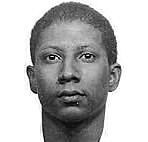
David Ray Duren
Murderer Brian Kevin Rosenfeld
Murderer · USA · 1985
Brian Kevin Rosenfeld Brian Kevin Rosenfeld was sentenced to three concurrent l…
23 victims
Brian Kevin Rosenfeld
Murderer · USA · 1985
Brian Kevin Rosenfeld Brian Kevin Rosenfeld was sentenced to three concurrent l…
23 victims
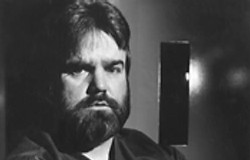 Marvin Gray
Murderer · USA · 1975
Marvin Gray was convicted killer who claimed responsibility for 23 slayings and…
23 victims
Marvin Gray
Murderer · USA · 1975
Marvin Gray was convicted killer who claimed responsibility for 23 slayings and…
23 victims
 Yahweh ben Yahweh
Murderer · USA · 1980
Yahweh ben Yahweh was born and legally named Hulon Mitchell Jr. (October 27, 19…
23 victims
Yahweh ben Yahweh
Murderer · USA · 1980
Yahweh ben Yahweh was born and legally named Hulon Mitchell Jr. (October 27, 19…
23 victims
 Russell Ellwood
Murderer · USA · 1991
Russell Ellwood was a former taxi driver. Authorities suspected him of killing…
20 victims
Russell Ellwood
Murderer · USA · 1991
Russell Ellwood was a former taxi driver. Authorities suspected him of killing…
20 victims
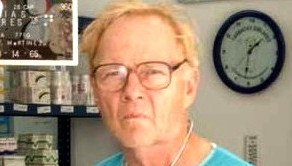 John Ronald Brown
Homicide · USA · 1998
John Ronald Brown (July 14, 1922 – May 16, 2010) was a former United States sur…
1 victim
John Ronald Brown
Homicide · USA · 1998
John Ronald Brown (July 14, 1922 – May 16, 2010) was a former United States sur…
1 victim
 Juan J. Ortiz
Murderer · USA · 2001
Full name: Juan J. Ortiz · Date of birth: 02/26/1972 · Race: White · Gender: Ma…
1 victim
Juan J. Ortiz
Murderer · USA · 2001
Full name: Juan J. Ortiz · Date of birth: 02/26/1972 · Race: White · Gender: Ma…
1 victim
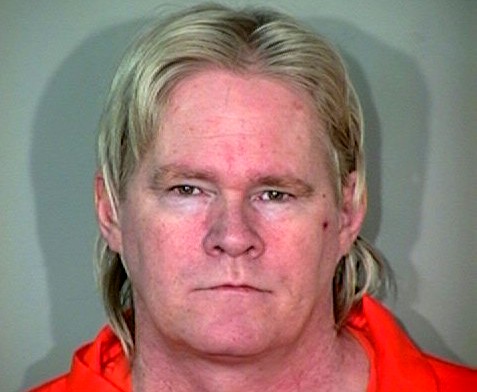 George Kayer
Murderer · USA · 1994
Defendant: George Kayer · Defendant race: Caucasian · Victim: Delbert L. Haas ·…
1 victim
George Kayer
Murderer · USA · 1994
Defendant: George Kayer · Defendant race: Caucasian · Victim: Delbert L. Haas ·…
1 victim
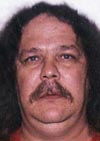 Harold McQueen
Murderer · USA · 1981
Harold McQueen, Jr. was executed by electrocution in Kentucky on July 1, 1997.…
1 victim
Harold McQueen
Murderer · USA · 1981
Harold McQueen, Jr. was executed by electrocution in Kentucky on July 1, 1997.…
1 victim
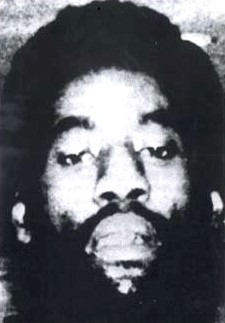 William Horton
Murderer · USA · 1974
William R. Horton was born August 12, 1951 in Chesterfield, South Carolina. On…
1 victim
William Horton
Murderer · USA · 1974
William R. Horton was born August 12, 1951 in Chesterfield, South Carolina. On…
1 victim
- Gender
- male
- Country
- USA
- Location
- Jefferson County, Alabama, USA
- Date of birth
- August 28, 1962
- Age at first offence
- 21
- Characteristics
- abduction, kidnapping, robbery
- Victim profile
- Kathleen Bledsoe (female, 16)
- Method of murder
- Shooting
- Date(s) of murder
- October 20, 1983
- Years active
- 1983
- Date of arrest
- Same day
- Status
-
Executed
Executed by electrocution in Alabama on January 7, 2000
Name
David Ray Duren
Status / Outcome
David Ray Duren was executed by electrocution in Alabama on January 7, 2000.
Timeline
- October 20, 1983 — Sixteen year-old Charles Leonard picked up his girlfriend, sixteen year-old Kathleen Bedsole, in his father's Oldsmobile; they planned to visit haunted houses sponsored by a local radio station.
- March 7, 1984 — A jury convicted Duren of capital murder-intentionally killing his victim while engaged in the commission of an armed robbery and/or kidnapping; the jury returned a verdict fixing the punishment at death.
- September 14, 1984 — Judge James Garrett imposed a sentence of death.
- February 25, 1986 — The Alabama Court of Criminal Appeals upheld the conviction; remanded for proportionality review of the death sentence due to insufficiency of the record.
- April 10, 1987 — The Alabama Supreme Court affirmed without comment.
- October 13, 1987 — The United States Supreme Court denied Duren's petition for writ of certiorari.
- February 10, 1988 — Duren filed a petition pursuant to Temporary RULE 20 of the Alabama Rules of Criminal Procedure.
- July 27, 1989 — The Rule 20 court denied the ineffective assistance of counsel claim on the merits and found most claims procedurally barred.
- 1990 — The Alabama Court of Criminal Appeals affirmed the denial of ineffective assistance on the merits and found others procedurally barred.
- 1991 — The Alabama Supreme Court affirmed and denied rehearing.
- 1992 — The United States Supreme Court denied Duren's petition for writ of certiorari.
- July 10, 1997 — The district court denied Duren's request for an evidentiary hearing.
- November 20, 1998 — The U.S. Court of Appeals for the Eleventh Circuit decided appeal No. 97-6650, affirming the district court’s denial of habeas relief.
- December 28 (year not stated) — Duren was moved to Atmore to await execution after being held at Donaldson Prison.
- January 7, 2000 — Duren was scheduled for execution in Alabama by electrocution and was pronounced dead at 12:09 a.m. Friday at Holman Prison in Atmore.
The offence
On the evening of October 20, 1983, Charles Leonard and Kathleen Bedsole were on a date and had left Bedsole's home with the intention of visiting haunted houses in the Birmingham area sponsored by a local radio station during the Halloween season.
Duren and Richard Kinder approached the teenagers while they were parked at a location in the Huffman area. Leonard testified that the couple had been there some five to ten minutes prior to two individuals coming up to the car, one armed with a pistol identified as David Ray Duren. Duren and Kinder instructed the victim and her companion to get out of the car, stating that if they did as they were instructed they would be okay. Duren and Kinder placed Kathleen Bedsole and Charles Leonard in the trunk of the automobile, and drove from that location.
They drove to a nearby lot and abandoned their own car. Duren and Kinder then reunited in Mr. Leonard's Oldsmobile, proceeded to a drive-in restaurant intending to rob it, and fled after Kinder prematurely exposed a pistol.
After driving some distance, Duren stopped the car in a secluded area in Trussville, Alabama. Duren and Kinder removed the couple from the trunk and tied them together with a length of rope. Kinder seized Kathleen Bedsole's purse and removed two twenty-dollar bills previously given to the victim by her father before leaving her home.
The two defendants briefly discussed the fate of the couple. They resolved that Duren would shoot the teenagers to eliminate possible witnesses. After Kinder turned the victim and her companion in a position where the victim was facing away from Duren, Duren raised his pistol, aimed it, and fired one shot which appeared to strike Kathleen Bedsole in the head. Bedsole fell with Leonard, landing on top of her while they were still tied together. Duren lowered the gun and continued firing, striking Leonard in the legs, hips, and chest, after aiming at Leonard. Duren and codefendant Richard Kinder left in Charles Leonard's car.
Leonard managed to free himself from the rope and call the sheriff's office. Police were informed; Duren and Kinder were apprehended shortly thereafter in nearby Huffman, Alabama.
At trial, Dr. Robert Brissie testified that Bedsole's cause of death was a small caliber distant gunshot wound to the back of the head with penetration of the brain, and that Bedsole was rendered paralyzed from the neck down resulting in asphyxiation.
In the appellate summary, evidence included that Duren confessed twice to his participation in the crime, led officers to the crime scene, and pointed out where he had hidden the murder weapon. Charles Leonard, the victim-eyewitness, identified Duren as the man who had shot him and Bedsole.
Investigation / capture
After Leonard extricated himself and sought assistance, law enforcement sent a radio transmission that was received by another deputy sheriff who later observed defendants Duren and Kinder walking along a public roadway in the Roebuck/Huffman area. Upon questioning, they were taken into custody. Detective Sgt. M.E. White questioned Duren and Kinder, and Duren made a statement admitting their participation in the crime.
Later questioning included that Duren confessed twice to participation, led officers to the crime scene, and pointed out where he had hidden the murder weapon.
Duren and an accomplice were apprehended shortly thereafter in Huffman, Alabama.
People involved
Victims
- Kathleen Bedsole — age 16; killed by a gunshot wound.
- Charles Leonard — age 16; Bedsole's companion; wounded but survived.
Defendants / accomplice
- David Ray Duren — defendant; convicted of capital murder and sentenced to death.
- Richard Kinder — accomplice; sentenced to life in prison without parole.
Trial
Charges / conviction
David Ray Duren was convicted for a capital offense involving the robbery and intentional murder of Kathleen Bedsole. The conviction was made in violation of Alabama Code 1975, § 13A-5-40(a)(2), and carried a death sentence.
The aggravating circumstance instructed to the jury was found in § 13A-5-49(4): "The capital offense was committed while the defendant was engaged or was an accomplice in the commission of, or an attempt to commit, or flight after committing, or attempting to commit, rape, robbery, burglary or kidnapping."
In closing argument, defense counsel argued for murder but not capital murder, stating:
"The evidence is exactly undisputed. It comes out exactly the way Mr. McDonald said, but there is one point of dispute."
The point of dispute described was whether Kathleen Bedsole was facing the defendant at the time he shot her.
Sentencing proceedings
At trial in Jefferson County, Alabama, on March 7, 1984, the jury convicted Duren of capital murder-intentionally killing his victim while engaged in the commission of an armed robbery and/or kidnapping. Later that day, the jury returned a verdict fixing the punishment at death.
Before the sentence was actually imposed, Judge Joseph Jasper learned that his deceased wife was a fifth cousin of the defendant Duren. Judge Jasper recused himself, and the case was transferred to Judge James Garrett.
At sentencing on September 14, 1984, Judge Garrett adopted the trial transcript, allowed Duren to present witnesses, and concluded that aggravating circumstances outweighed mitigating circumstances and therefore imposed a sentence of death.
Appeals
Alabama Court of Criminal Appeals
The Alabama Court of Criminal Appeals upheld the conviction on February 25, 1986. The case was remanded on the ground that the record was insufficient to conduct an adequate proportionality review of the sentence. On remand, the trial court made further findings and conducted a proportionality review; on return, the Court of Criminal Appeals affirmed the death sentence.
Alabama Supreme Court
On April 10, 1987, the Alabama Supreme Court affirmed without comment.
U.S. Supreme Court
Duren's petition for writ of certiorari was denied by the United States Supreme Court on October 13, 1987.
Duren v. Alabama, 484 U.S. 905 , 108 S.Ct. 249, 98 L.Ed.2d 206 (1987) — certiorari denied. Duren v. Alabama, 503 U.S. 974 , 112 S.Ct. 1594, 1594-95, 118 L.Ed.2d 310 (1992) — certiorari denied.
Federal habeas and Eleventh Circuit decision
Duren filed a petition in federal court pursuant to 28 U.S.C. § 2254 on October 11, 1994. The district court denied the petition for writ of habeas corpus and denied a request for an evidentiary hearing on July 10, 1997.
On November 20, 1998, the U.S. Court of Appeals for the Eleventh Circuit affirmed the district court’s denial of relief and affirmed that the judgment denying habeas relief was correct.
Claims raised on appeal (capital murder conviction and death sentence)
Duren asserted several claims with respect to the guilt and penalty phases:
- Guilt phase: ineffective assistance of counsel because an invalid defense was presented.
- Penalty phase: ineffective assistance of counsel for failing to present mitigating evidence of alcohol and drug abuse.
- Penalty phase: ineffective assistance of counsel for failing to object to certain prosecutorial remarks.
- Penalty phase: ineffective assistance of counsel for failing to object to certain jury instructions.
- Penalty phase: denial of necessary funds to obtain a mental health expert in violation of Ake v. Oklahoma.
- Penalty phase: constitutional error because the judge who imposed sentence did not personally hear all of the evidence.
The Eleventh Circuit addressed each claim in order and held that Duren failed to satisfy required standards, including the prejudice prong under Strickland for the ineffective assistance claims.
Other details
Confessions and evidence
Duren confessed twice to his participation in the crime. Duren led officers to the crime scene and pointed out where he had hidden the murder weapon.
Charles Leonard identified Duren as the man who had shot him and Kathleen Bedsole and testified at trial.
Capture location
Duren and Kinder were apprehended shortly thereafter in Huffman, Alabama.
Religious conversion and statements
Duren opposed all last-minute appeals to avoid the electric chair. During execution proceedings, Duren declined to make a last statement.
In an account written after his execution, Duren had previously become a born-again Christian. Duren wrote an autobiography titled "An Attitude Adjustment" at the request of high school students, said Birmingham minister Richard Copeland, a family friend. In the autobiography, Duren wrote:
"I'm writing to you from death row, where I am awaiting execution,"
and:
"This is a shameful thing to admit ... but it is my hope that through sharing these things ... that I may help you, or those you know, avoid making the same poor choices I made."
Duren also wrote:
"The hatred that I felt for myself -- that I was ever capable of such inhumanity, such destruction of innocent lives,"
and:
"It never goes away, it never fades."
In correspondence associated with his execution, Duren also wrote:
"I’m a young, white male with an above average IQ of 132. I came from a middle-class family. As of 1988, I am currently on Alabama's death row awaiting execution."
Duren mouthing during execution proceedings included:
"I love you,"
Attorney and judicial figures
- Roger Appell — trial counsel (raised on federal appeal as ineffective assistance claim).
- Judge Joseph Jasper — presided initially; recused after learning his deceased wife was a fifth cousin of Duren.
- Judge James Garrett — imposed sentence after the transfer.
- Rory Fitzpatrick — Duren's attorney.
- Richard Copeland — Birmingham minister who discussed Duren’s writing and spoke about his deep sorrow.
Other sentencing outcome for accomplice
Richard Kinder was sentenced to life in prison without parole.
Prison and execution location details
Duren was held at Donaldson Prison until Dec. 28, when he was moved to Atmore to await execution. He was pronounced dead at 12:09 a.m.

Spotted an error, or have more information about this case?