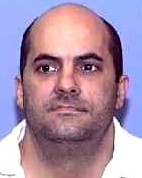
Daniel Clate Acker
Murderer Russell Ellwood
Murderer · USA · 1991
Russell Ellwood was a former taxi driver. Authorities suspected him of killing…
20 victims
Russell Ellwood
Murderer · USA · 1991
Russell Ellwood was a former taxi driver. Authorities suspected him of killing…
20 victims
 Robert Martines Perez
Murderer · USA · 1994
Name: Robert Martines Perez · Other name used in proceedings: Robert Martinez P…
15 victims
Robert Martines Perez
Murderer · USA · 1994
Name: Robert Martines Perez · Other name used in proceedings: Robert Martinez P…
15 victims
 Billy Frank Vickers
Murderer · USA · 1993
Billy Frank Vickers Vickers was executed by lethal injection in Texas on Januar…
14 victims
Billy Frank Vickers
Murderer · USA · 1993
Billy Frank Vickers Vickers was executed by lethal injection in Texas on Januar…
14 victims
 Steven James Rollins
Murderer · USA · 2001
Steven James Rollins was thirty-seven years old when he killed John Bussell, an…
1 victim
Steven James Rollins
Murderer · USA · 2001
Steven James Rollins was thirty-seven years old when he killed John Bussell, an…
1 victim
 Matthew Slocum
Murderer · USA · 2011
Matthew Slocum was sentenced to 88 years to life in state prison for the shotgu…
3 victims
Matthew Slocum
Murderer · USA · 2011
Matthew Slocum was sentenced to 88 years to life in state prison for the shotgu…
3 victims
 Pierre Bodein
Murderer · 2004
Pierre Bodein was nicknamed “Pierrot le fou,” or “Crazy Pierre.” He was 59 at t…
3 victims
Pierre Bodein
Murderer · 2004
Pierre Bodein was nicknamed “Pierrot le fou,” or “Crazy Pierre.” He was 59 at t…
3 victims
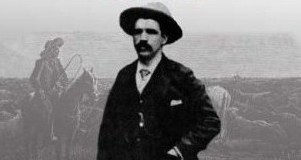 Jackson Lee Davis
Murderer · USA · 1896
Jackson Lee Davis, also known as Diamondfield Jack, was an inmate. · June 4, 18…
2 victims
Jackson Lee Davis
Murderer · USA · 1896
Jackson Lee Davis, also known as Diamondfield Jack, was an inmate. · June 4, 18…
2 victims
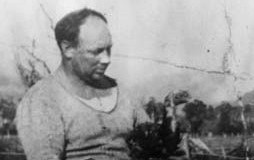 Eric Stanley Graham
Mass murderer · New Zealand · 1941
Eric Stanley Graham (also known as Stan) was a New Zealand mass murderer who ki…
7 victims
Eric Stanley Graham
Mass murderer · New Zealand · 1941
Eric Stanley Graham (also known as Stan) was a New Zealand mass murderer who ki…
7 victims
- Gender
- male
- Country
- USA
- Location
- Hopkins County, Texas, USA
- Date of birth
- October 9, 1971
- Age at first offence
- 29
- Characteristics
- kidnapping
- Victim profile
- Marquette George, 32 (his girlfriend)
- Method of murder
- Strangulation
- Date(s) of murder
- March 12, 2000
- Years active
- 2000
- Date of arrest
- —
- Status
-
Sentenced to death
Sentenced to death on April 2, 2001
Case identification
Daniel Clate Acker; TDCJ Number 999381.
Background
Daniel Clate Acker was convicted of capital murder.
The victim, Marquette (“Markie”) George, was appellant’s girlfriend, but they had a stormy relationship. On the evening of March 11, 2000, they were with friends and a relative at the Bustin’ Loose nightclub. From a distance, Mary Peugh observed the two of them arguing. After the argument, appellant walked back to Peugh’s table and remarked, “I’m going to kill that bitch.” Pointing to the victim, appellant later told Timothy Mason to tell Markie that appellant was going to kill her.
Dorcus Vititow, appellant’s older sister, testified that appellant acted very jealous and was eventually kicked out of the nightclub for his behavior. Appellant returned several times, inquiring about Markie’s whereabouts, and at least one of those times Vititow told him to stay out of the club. Vititow and appellant left the premises together when the club closed at 1:00 in the morning.
Earlier that night, Vititow had taken a knife away from appellant, and appellant later asked for the knife to be returned. When appellant asked for the knife to be returned, Vititow claimed (falsely) that she did not have it. Holding up an axe, appellant responded, “I don’t need that knife. If I find her with another man, they will pay.”
Later that morning, appellant was still looking for the victim. He believed that she had spent the night with another man, and he said that, when he found them, he would beat them and make an example out of them, because no one was going to make a fool out of him. Appellant appeared at the victim’s parents’ house at around 9:15 a.m. and asked about the victim’s whereabouts. The victim’s mother, Lila Seawright, told appellant that she had not seen her. Appellant told Seawright that he did not know what he was going to do without Markie. He further told her that, if Markie had stayed away by herself that night, then everything was fine, but “if I find out she was with anybody, I’m going to kill ’em.” Shocked, Seawright replied that “there’s not anybody worth killing and going to the pen for.” Shrugging his shoulders, appellant responded, “Pen life ain’t nothing. Ain’t nothing to it.”
Thomas Smiddy testified that the victim lived in a mobile home within a mobile home park. Smiddy was one of her neighbors.
The offence
Between 10:45 and 11:00 a.m., the victim arrived at her home with a man who was not appellant. This man dropped her off and left. Appellant came out of the home to meet her, and the two went inside. Twenty to thirty minutes later, Markie ran out of the home and over to Smiddy's place. She hid behind Smiddy's wife and yelled for them to call the sheriff. Appellant followed and caught the victim. He picked her up, slung her over his shoulder, and carried her to his pickup truck. He then forced the victim into the truck—an episode Smiddy described as “like putting a cat in a bathtub.” Appellant drove away, his truck swerving in and out of a ditch as he did so. Smiddy called the sheriff.
Sometime between 11:00 and 11:30 a.m., Brodie Young, a sixty-five-year-old man, was driving on County Road 3519, passing by Sedill Ferrell’s dairy, when he saw a man pull a woman by her arms out of the passenger side of a pickup truck and place her on the ground. Young went to the sheriff’s office to report the incident, but someone had already reported it.
Sedill Ferrell found the victim’s body lying on the ground. He went to a phone, called law enforcement, came back to the body, and waited until the authorities arrived.
On March 12, 2000, Acker caused the death of a 32 year old female. Acker kidnapped the victim, then murdered her by strangulation and blunt force trauma. The victim's body was found along side a county road.
Investigation
Toney Hurley, the Chief Investigator for the Hopkins County Sheriff's Office, testified that appellant was found on a road about ten miles away from the victim's body's location.
Dr. Morna Gonsoulin, a medical examiner, conducted an autopsy. She testified that she found injuries around the neck that showed a significant hemorrhage of blood. The left eye contained petechiae—small hemorrhages in the capillaries lining the eye. Both injuries were a sign of strangulation.
She also found blunt force injuries to the body. The head was crushed, with broken bones in the face. The base of the skull was shattered on all sides. There were rib fractures and a clavicle fracture, internal injuries to the trunk, lacerations and gaping wounds to the heart, lacerations of the lung and liver, and a deep laceration in the lower right leg. The sac around the heart was torn open, a segment of the main artery was torn in two pieces, and there was blood in the chest and abdominal cavities. There were also abrasions on the body, including the cheek and chin.
This testimony was consistent with the autopsy report, which came to the following conclusion: “It is our opinion that Marquette George, a 33-year-old white woman, died as the result of homicidal violence including strangulation. Several of the injuries identified could be consistent with blunt force injury resulting from an impact with or being ejected from a motor vehicle. Some injuries (particularly those of the neck and the perineum) are not consistent with ejection from or impact with a vehicle; the injuries observed in the neck are more consistent with strangulation. Further, the dry parchment-like appearance of several abrasions, the lack of associated hemorrhage of the laceration of the right leg, the paucity of hemorrhage in the brain and the amount of body cavity hemorrhage in relation to the severity of the injuries indicate that these injuries were sustained postmortem or perimortem. Given these findings, it is likely that the decedent was strangled and probably dead or near death prior to being dumped from the vehicle.”
On cross-examination, Gonsoulin admitted that crushing the brain stem—which occurred here—was an injury of the type that would cause instantaneous death by stopping the heart from beating, and thus could explain the lack of hemorrhaging in other parts of the body. The medical examiner also testified that it was possible for one to receive the neck injuries observed and survive. On redirect, however, the medical examiner testified that the neck injuries were so severe that a person suffering from them would have been incapacitated and might be brain dead, even if the heart were still beating.
Gonsoulin also testified that the neck injuries occurred within hours of the victim's death.
Arrest
Appellant was found on a road about ten miles away from the victim's body's location.
Trial
Appellant testified at trial. He denied strangling the victim and denied squeezing or gripping her neck. He admitted that he carried the victim to the truck but claimed that she crawled in when he opened the driver's side door. He further testified that, when he started the truck and began to pull out, the victim attempted to jump out, but he pulled her back. Later, the victim attempted to jump out a second time but was prevented from doing so.
Appellant testified that the victim finally succeeded on the third attempt to jump out:
Q. What happened then?
A. At the same time the car passed me she jumped from the pickup.
Q. What happened? What did you do when she jumped?
A. Well, I did three different things pretty much at the same time.
Q. What were those things?
A. I leaned way over and tried to grab her. I barely touched her. I never got a hold to her. I hollered her name. I hollered Markie as I was trying to grab her and I stomped the brake with my left foot. As I stomped the brake with my left foot it throwed me down into the seat of the truck. I raised back up. I took my left foot and pushed the clutch in and stopped as fast as I could stop.
A. I had to come pretty much to a complete stop to get the truck in reverse.
A. You know any car, I guess, you have to come to a complete stop to get in reverse.
Q. What did you do?
A. I backed up as fast as I could back up.
Appellant further testified that he navigated back to where the victim lay and found her face down on the ground. He testified that he did not run over her with his truck.
Appeals
In the Court of Criminal Appeals of Texas, No. 74,109, Daniel Clate Acker, Appellant v. The State of Texas.
On direct appeal, direct appeal was automatic, and the court affirmed.
Appellant raised six points of error. The court overruled points of error two through six and affirmed the judgment.
Point of error two: videotaped re-enactment
Appellant contended that the trial court erred in admitting for demonstration purposes a videotaped re-enactment of a witness driving by and viewing someone removing a body from a pickup truck.
Appellant’s argument, in its entirety, was: “The admissibility of a videotape is conditioned on its identification by a witness as an accurate depiction of the event and on verification by a person with knowledge that the videotape is a correct representation of those facts. Kessler v. Fanning , 953 S.W.2d 515 (Tex. App.-Fort Worth 1997, no pet.). No one testified as to the circumstances involved in programming and establishing of the re-enactment; and Mr. Young only testified that ‘it’s pretty near what I saw that day. It sure is.’ (19.216.6). Thus, such tape is not authenticated under the R. 901(b)(1) T.R.E.”
At trial, the State questioned Young about a videotaped re-enactment of the encounter:
Q. Have you had an occasion, Mr. Young, to see a video tape that was made showing the drive that you took with a pickup setting there in the road like it was that day?
A. Yes.
Q. Does that video tape show fairly and accurately about what you saw that day?
A. That’s right.
Q. Is there anything about that tape that’s different that you can tell by looking at it?
A. No. The only thing about it seemed like it was a little clearer that day, the sun shining, than the tape shows. But other than that it wasn’t nothing different. Nothing different about the tape.
After the State tendered the videotape, appellant objected that “the circumstances then as opposed to now are not sufficiently similar to allow the entry of this tape.”
Appellant then took the witness on voir dire. After questioning the witness about the specifics of what he saw that day and his ability to observe the events, appellant asked, “But what's on the video tape is not exactly what you saw that day, is it?” Young replied, “It’s pretty near what I saw that day. It sure is.”
Appellant then objected: “[I]t’s not significantly similar to the event or what he saw on that day. I believe it would be confusing to the jury because what he’s going to testify to is not what’s on this tape.”
Young testified that the videotape was virtually identical to what he saw, except that lighting was better during the actual events than on the videotape’s rendition.
The court overruled point of error two.
Point of error three: optional completeness
Appellant contended that the trial court erred in refusing to admit notes from the medical examiner’s files under the rule of optional completeness.
“When one party introduces part of some writing, the opposing party may introduce the rest. Rule 107, T.R.E. The Court admitted into evidence an autopsy report by the State. (20.224.15). Therefore, the defense should be permitted to offer other writings in Dr. Gonsoulin’s file explaining the contents of the autopsy report, if those writings are necessary to avoid giving the jury a false impression of the report. Credille v. State , 925 S.W.2d 112, 116-117 (Tex. App.-Houston [14 th Dist. 1996, pet. ref'd). Statements in DX-13 p. 2 and 3 could easily be read to contradict Dr. Gonsoulin’s statement in her autopsy report that the injuries were not consistent ‘with ejection from impact with a vehicle.’ SX-54 p. 7. Appellant fails to give record references to the trial court’s ruling refusing to admit the notes or to appellant's objection to that ruling. Also, appellant does not say how these notes explain the autopsy report or why they are necessary for a full understanding of the report or to avoid a false impression. While appellant contends that some of the statements contained in the notes contradict the conclusion of the autopsy report, he does not specify which statements nor does he say why they contradict the report. But despite the fact that this point of error is inadequately briefed in several respects, (11) we will address the merits.”
The court recited the rule of optional completeness: “When part of an act, declaration, conversation, writing or recorded statement is given in evidence by one party, the whole on the same subject may be inquired into by the other, and any other act, declaration, writing or recorded statement which is necessary to make it fully understood or to explain the same may also be given in evidence, as when a letter is read, all letters on the same subject between the same parties may be given. ‘Writing or recorded statement’ includes depositions.”
The court concluded that point of error three was overruled.
Point of error four: lesser offenses
Appellant contended that the trial court erred in refusing to submit requested lesser-included offense charges on manslaughter and criminally negligent homicide. He also argued that the court erred in excluding evidence that, two weeks earlier, the victim had attempted to jump out of his truck while it was moving.
The court assumed, without deciding, that there was error and then concluded harm was not shown. Point of error four was overruled.
Point of error five: investigator’s testimony
Appellant contended that the trial court erred in excluding testimony from a defense investigator. The investigator would have testified that he determined, through personal experimentation on a truck similar to the one driven by appellant, that he could not reach the passenger door and open it while driving.
The court concluded point of error five was overruled.
Point of error six: prosecutorial misconduct
Appellant contended that the prosecuting attorney committed misconduct during the trial.
Appellant’s argument under that point, in its entirety, was: “Many times the prosecuting attorney would make comments regarding testimony without making an objection until he was asked by the Court to state a legal objection. Below are listed 46 times (26) during the trial that illustrates [ sic ]attempts to discredit either the witness or the defense counsel. One illustrated example may not constitute harm. It is the voluminous list that creates the harm. The following list contains references to volume, page and line of examples of such prosecutorial misconduct; establishing on the record how Acker did not receive a fair and impartial trial. Art. 36.19 C.C.P. This argument is followed by a list of forty-eight record citations. Appellant does not say he objected to these alleged instances of prosecutorial misconduct. He also does not state exactly what is improper about each of these instances, and he does not explain how he was harmed.”
The court concluded appellant had failed to adequately brief the point of error and overruled point of error six.
Constitutionality of the death penalty (point of error one)
Appellant contended that the statutory death penalty scheme was unconstitutional for reasons that included: limiting jury consideration of the special issues; chilling ability to present mitigating evidence; prosecutors having unfettered discretion; lack of life sentence without parole; and admission of unadjudicated extraneous offenses at punishment.
The court described these claims as pro forma and concluded they were inadequately briefed. The judgment was affirmed.
Sentencing
Pursuant to the jury’s answers to the special issues set forth in Texas Code of Criminal Procedure, Articles 37.071 §§2(b) and 2(e), the trial judge sentenced appellant to death.
Daniel Clate Acker was sentenced to death on April 2, 2001.
The court delivered its opinion on November 26, 2003.
Outcome
The trial court’s judgment was affirmed.
Aftermath / status
Daniel Clate Acker remained sentenced to death, with the sentence imposed on April 2, 2001.
Other details
- Date of Birth: 10/09/1971.
- Age at the time of the offense: 28.
- Date of Offense: 03/12/2000.
- Date Received by TDCJ: 05/04/1993, on a ten year sentence for Burglary of a Habitation out of Delta County.
- Released on Parole: 10/23/1995.
- Returned from Parole without new convictions: 04/21/1997.
- Released on Mandatory Supervision: 09/17/1999.
- County (offense): Hopkins.
- Education Level: 04/02/2001.
- Race and Gender of Victim: unknown female.
- Victim age stated in the autopsy report: Marquette George, a 33-year-old white woman.
- Additional victim age stated in incident summary: 32 year old female.
- Appellant’s hair color: brown; gender: male; height: 6 ft 0 in; weight: 295; eye color: brown; native county/state not specified as separate fields in the record provided.
- Co-defendants: none.
- Statements in the medical notes referenced by the appellate court:
- “law enforcement officials knew the victim from previous arrests, including an incident at a drug lab the week before,”
- “appellant stated that the victim had jumped out of the truck on her own accord.”
- The appellate court noted that the judgment was affirmed and that it delivered the opinion on November 26, 2003.
Spotted an error, or have more information about this case?