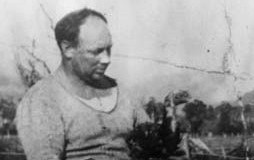
Eric Stanley Graham
Mass murderer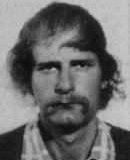 David Malcolm Gray
Mass murderer · New Zealand · 1990
David Malcolm Gray was an unemployed resident of Aramoana, New Zealand, who car…
13 victims
David Malcolm Gray
Mass murderer · New Zealand · 1990
David Malcolm Gray was an unemployed resident of Aramoana, New Zealand, who car…
13 victims
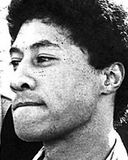 Raymond Ratima
Mass murderer · New Zealand · 1992
Raymond Wahia Ratima was an unemployed shearer and was aged 25. At the beginnin…
7 victims
Raymond Ratima
Mass murderer · New Zealand · 1992
Raymond Wahia Ratima was an unemployed shearer and was aged 25. At the beginnin…
7 victims
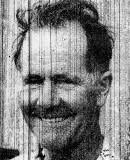 Brian Schlaepfer
Mass murderer · New Zealand · 1992
Brian Schlaepfer was a farmer in Paerata, New Zealand, and he owned over one hu…
6 victims
Brian Schlaepfer
Mass murderer · New Zealand · 1992
Brian Schlaepfer was a farmer in Paerata, New Zealand, and he owned over one hu…
6 victims
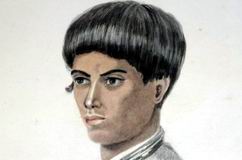 Maketu
Mass murderer · New Zealand · 1841
Maketu (also known as Maketu Wharetotara or Waretotara) (c. 1824 – 7 March 1842…
5 victims
Maketu
Mass murderer · New Zealand · 1841
Maketu (also known as Maketu Wharetotara or Waretotara) (c. 1824 – 7 March 1842…
5 victims
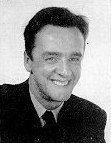 Joseph Albert Guay
Mass murderer · In the Air - Canada · 1949
Joseph Albert Guay (born 1917) was a resident of Quebec City who was responsibl…
23 victims
Joseph Albert Guay
Mass murderer · In the Air - Canada · 1949
Joseph Albert Guay (born 1917) was a resident of Quebec City who was responsibl…
23 victims
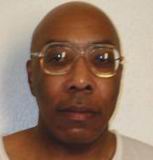 Andrew Sasser
Murderer · USA · 1993
Andrew Sasser was convicted of capital felony murder and sentenced to die by le…
1 victim
Andrew Sasser
Murderer · USA · 1993
Andrew Sasser was convicted of capital felony murder and sentenced to die by le…
1 victim
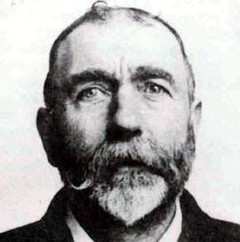 Samuel Herbert Dougal
Murderer · United Kingdom · 1898
Samuel Herbert Dougal was tried for the murder of Camille Cecile Holland, a qui…
1 victim
Samuel Herbert Dougal
Murderer · United Kingdom · 1898
Samuel Herbert Dougal was tried for the murder of Camille Cecile Holland, a qui…
1 victim
 Futoshi Matsunaga
Serial killer · Jap an · 1996
Futoshi Matsunaga ( 松永 太 , Matsunaga Futoshi , born April 28, 1961) was a Japan…
7 victims
Futoshi Matsunaga
Serial killer · Jap an · 1996
Futoshi Matsunaga ( 松永 太 , Matsunaga Futoshi , born April 28, 1961) was a Japan…
7 victims
- Gender
- male
- Country
- New Zealand
- Location
- Kowhitirangi , New Zealand
- Date of birth
- November 12, 1900
- Age at first offence
- 41
- Characteristics
- revenge, spree killer
- Victim profile
- Sergeant William Cooper, 43 , and Constables Frederick Jordan, 26, Percy Tulloch, 35, and Edward Best, 27 / George Ridley (agricultural instructor) / Richard Coulson and Gregory Hutchison (home guardsmen)
- Method of murder
- Shooting
- Date(s) of murder
- October 8, 1941
- Years active
- 1941
- Date of arrest
- —
- Status
-
Shot by Auckland Constable James Quirke on 20 October 1941; died the next day in hospital
Identity
Eric Stanley Graham (also known as Stan) was a New Zealand mass murderer who killed seven people. He was born on 12 November 1900 and died on 21 October 1941.
He was born and raised in Longford, Kokatahi, New Zealand. He lived with his wife and two children in Kowhitirangi (an agricultural district 12 miles from Hokitika) on the South Island. He was baptized Eric Stanley Graham.
His mother left him a 40 hectare farm in Koiterangi (Kowhitirangi). Graham was described as slightly reserved but fairly well behaved. By early manhood he was less than five feet six inches tall but of strong build, a non-smoker, and a light drinker who kept himself physically fit. His sporting interests included boxing, wood-chopping, shooting, and later cock-fighting. He was a member of the Kokatahi gun club in the late 1920s and early 1930s.
Graham met his wife, Dorothy McCoy, when she moved from Rakaia in the late 1920s to work at the Longford Hotel. They married in Christchurch on 22 December 1930, living there for six months before moving to a dairy property at Koiterangi (Kowhitirangi) on the West Coast. They had two children.
Background
From 1938 onwards, Graham became argumentative and alienated from the community. He alleged that neighbours were poisoning his cows and livestock. As income from his farm dropped, he fell into debt, and his behaviour towards others became more threatening. His behaviour towards others worsened and included threatening and abusing neighbours passing his house.
Graham and his wife practiced target shooting out the back of their home in the middle of the night, at 4:00am. He was an expert marksman and had an assortment of firearms. In 1939 he threatened a national mortgage agent from Greymouth who was trying to come to an arrangement over a debt for 40 pounds, and he was behind in mortgage repayments.
By 1940 the Graham family was under severe financial pressure, having had cream condemned by the Westland Co-operative Dairy Company and having incurred debt from a venture into cattle breeding. William Jamieson, a neighbour and a member of the dairy company’s board of directors, noted a corresponding deterioration in Graham, saying: “In himself he was different. I thought he might be slipping mentally”.
Graham thought he was being persecuted by the police for not surrendering a requisitioned rifle, and by his neighbours, some of whom he believed were poisoning his cows. His wife shared his suspicions.
The offence
Graham’s killings occurred around 8 October 1941 and continued into the following days.
On 8 October 1941, Graham confronted a neighbour with a rifle. Later that morning Constable Edward Best, 27, attempted to discuss the matter with Graham. Graham backed Best off with Graham pointing two rifles out the window at him. Best retreated to Hokitika for back-up and returned to the farm with Sergeant William Cooper, 43, and Constables Frederick Jordan, 26, and Percy Tulloch, 35.
When the police approached the house, Graham fired at them as they approached. Sergeant Cooper and Constables Jordan and Tulloch were killed instantly, with Cooper having at least four bullet wounds in his body. Best was also shot and died three days later.
Graham also shot an agricultural instructor, George Ridley, who came to his door. Ridley died of his wounds in March 1943.
Graham fled his house, returned the next evening, and killed home guardsmen Richard Coulson and Gregory Hutchison in a firefight. Coulson died immediately and Hutchison died the following day. Graham was wounded but made his escape in the darkness.
Investigation
A manhunt followed. More than 100 police and army personnel searched dense bush for Graham for 12 days, with orders to shoot on sight if they found Graham still armed.
The manhunt was overseen by Commissioner of Police Denis Cummings and involved hundreds of police, soldiers, home guards, and volunteers.
Arrest / killing
On the evening of 20 October, after 12 nights’ hiding in forested hill country, Graham was sighted by Auckland Constable James Quirke as he was approaching the adjacent Growcott farm. The general instruction was that if Graham was armed, he was to be shot on sight.
Quirke later told the coroner: “I was quite satisfied as to his identity and the fact that he was carrying a rifle. I fired at him … and wounded him and subsequently found that he had a rifle and a .32 calibre automatic pistol”.
Quirke also said Graham told him: “I am done. I was going to chuck it tonight, I am done, I have paid in full”.
An injured Graham was shot by Quirke as he walked out of the bush carrying his rifle. Graham died of his wounds in Westland Hospital in Hokitika the following day.
Graham was buried in the local cemetery. On the rim of the cement pad is one word: “Stanley”.
Aftermath
The Graham home was burnt to the ground four days later and Dorothy Graham and her children left the area.
There was some public feeling that Graham could have been captured without being fatally shot, and he was romanticised as a man alone against the world.
Several biographical accounts of his life and the murders were published in the decades after the murders, including:
- Andrew Brown (Scriptwriter, Producer): Mike Newell (Director): Bad Blood: Sydney: Hoyts: 1983
- Rex Holliss: Killer on the Coast: The Story of Stan Graham: Wellington: Denis Glover: 1953, 1959
- Howard Willis: Manhunt: The Story of Stanley Graham: Christchurch: Whitcoulls: 1979: ISBN: 072330629X
- Howard Willis: Bad Blood: The Story of Stanley Graham: Auckland: Fontana Collins: 1981: ISBN: 0006349250
Timeline
- 8 October 1941 — Graham confronted a neighbour with a rifle; Constable Edward Best, 27, attempted to discuss the matter and backed off; Best returned with Sergeant William Cooper, 43, and Constables Frederick Jordan, 26, and Percy Tulloch, 35; Graham fired and killed Cooper, Jordan, and Tulloch instantly; Best was also shot
- 8 October 1941 — Graham shot agricultural instructor George Ridley at his door and fled the property
- Following evening after 8 October 1941 — Graham returned and killed home guardsmen Richard Coulson and Gregory Hutchison in a firefight; Coulson died immediately and Hutchison died the following day
- 20 October 1941 — After 12 nights’ hiding, Auckland Constable James Quirke shot Graham at the Growcott farm area; Quirke later told the coroner he fired after being satisfied of Graham’s identity and that he was carrying a rifle
- 21 October 1941 — Graham died of his wounds in Westland Hospital in Hokitika
- Four days after 21 October 1941 — The Graham home was burnt to the ground; Dorothy Graham and her children left the area
Other details
Graham’s dispute with the police included the police wanting to relieve him of his .303 firearms because of his mental condition. During 1941, police were directed to collect all .303 rifles from householders to be used in the war.
Local constable Ted Best visited Graham to collect his .303 rifle. Graham said he did not have it and then changed his story and said he would send it to him. He did not send the rifle as promised. On another visit, Graham told Constable Best the police would have to prosecute him to get it. An inspector in Greymouth decided to prosecute Graham for not handing over his rifle.
On “the fifteenth of July 1941”, Graham said he’d give the rifle to the police, and the prosecution was dropped. Graham’s persecution complex worsened after this.
The details of what followed when police met Graham at his front door were unknown at the time. It was stated that Cooper, Jordan, and Tulloch were shot dead; Best suffered grave wounds from which he later died.

Spotted an error, or have more information about this case?