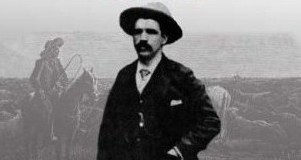
Jackson Lee Davis
Murderer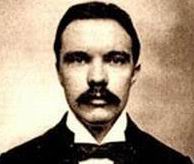 Theodore Durrant
Murderer · USA · 1895
Theodore Henry Durrant was born 1871 in Toronto, Canada. He was the son of Will…
2 victims
Theodore Durrant
Murderer · USA · 1895
Theodore Henry Durrant was born 1871 in Toronto, Canada. He was the son of Will…
2 victims
 William Williams
Murderer · USA · 1905
William Williams was a Cornish immigrant who worked as a miner in Saint Paul, M…
2 victims
William Williams
Murderer · USA · 1905
William Williams was a Cornish immigrant who worked as a miner in Saint Paul, M…
2 victims
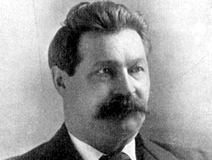 Adolph Luetgert
Murderer · USA · 1897
Adolph Louis Luetgert (also listed as Adolph Louis Luetgert; born December 27,…
1 victim
Adolph Luetgert
Murderer · USA · 1897
Adolph Louis Luetgert (also listed as Adolph Louis Luetgert; born December 27,…
1 victim
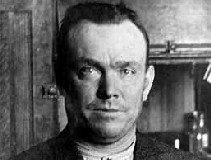 Albert Horsley
Murderer · USA · 1905
Albert Edward Horsley was sentenced to death for the 1905 political assassinati…
1 victim
Albert Horsley
Murderer · USA · 1905
Albert Edward Horsley was sentenced to death for the 1905 political assassinati…
1 victim
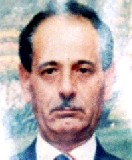 Ali Hassan Abu Kamal
Murderer · USA · 1997
Ali Hassan Abu Kamal opened fire on the observation deck of the Empire State Bu…
1 victim
Ali Hassan Abu Kamal
Murderer · USA · 1997
Ali Hassan Abu Kamal opened fire on the observation deck of the Empire State Bu…
1 victim
 Ming Sen Shiue
Murderer · USA · 1980
May 16, 1980 — Ming Sen Shiue abducted Mary Stauffer and her eight-year-old dau…
1 victim
Ming Sen Shiue
Murderer · USA · 1980
May 16, 1980 — Ming Sen Shiue abducted Mary Stauffer and her eight-year-old dau…
1 victim
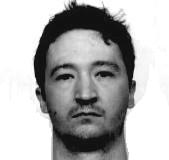 William Hamilton Little
Murderer · USA · 1983
December 3, 1983 — Michael John Rammel found the body of Marilyn Peter in her h…
1 victim
William Hamilton Little
Murderer · USA · 1983
December 3, 1983 — Michael John Rammel found the body of Marilyn Peter in her h…
1 victim
 Warren Glowatski
Homicide · Canad a · 1997
Warren Glowatski (born April 26, 1981 in Medicine Hat, Alberta) was a Canadian…
1 victim
Warren Glowatski
Homicide · Canad a · 1997
Warren Glowatski (born April 26, 1981 in Medicine Hat, Alberta) was a Canadian…
1 victim
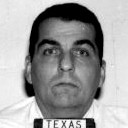 Richard Wayne Smith
Murderer · USA · 1992
Richard Wayne Smith was executed by lethal injection in Texas on September 21,…
1 victim
Richard Wayne Smith
Murderer · USA · 1992
Richard Wayne Smith was executed by lethal injection in Texas on September 21,…
1 victim
- Gender
- male
- Country
- USA
- Location
- Twin Falls County, Idaho, USA
- Date of birth
- 1879
- Age at first offence
- 17
- Characteristics
- murder for hire
- Victim profile
- John Wilson and Daniel Cummings ( sheepherders )
- Method of murder
- Shooting
- Date(s) of murder
- February 15, 1896
- Years active
- 1896
- Date of arrest
- —
- Status
-
Died in custody
Sentenced to death on June 4, 1897; commuted to life in prison on July 16, 1901; on December 17, 1902, the Board of Pardons granted Diamondfield Jack a pardon; killed in 1949 when he was struck by a taxi cab in Las Vegas, Nevada
Case record
Identity
Jackson Lee Davis, also known as Diamondfield Jack, was an inmate.
Timeline
- June 4, 1897 — Diamondfield Jack was sentenced to hang.
- February 24, 1899 — The Idaho Legislature approved an act ruling all executions were to take place at the Idaho State Penitentiary.
- February 27, 1899 — At 1:30 AM, Diamondfield Jack arrived at the Boise Depot; he was taken without delay to the Penitentiary.
- December 24, 1899 — The Idaho Supreme Court ruled that Diamondfield Jack must go back to the Cassia County Jail as a county prisoner.
- December 28, 1899 — Diamondfield Jack was taken back to the Cassia County jail.
- July 3, 1901 — Diamondfield Jack was again scheduled for execution.
- July 16, 1901 — The Board of Pardons commuted Diamondfield Jack’s death sentence to that of life imprisonment.
- July 17, 1901 — The Board of Pardons extended the execution date to July 17.
- December 17, 1902 — The Board of Pardons granted Diamondfield Jack a pardon.
- 1949 — Diamondfield Jack was killed in Las Vegas, Nevada, when he was struck by a taxi cab.
Background
Little was known about Diamondfield Jack’s early life. He was born around 1879 in the eastern United States. He was working in the Black Jack mine in the Silver City district of Owyhee County, Idaho, by 1892. He left the Black Jack to follow rumors of a diamond strike in nearby hills. He failed to find any diamonds, but talked so much of the diamond field that he earned the nickname Diamondfield Jack.
Employment
In 1895, Diamondfield Jack began working for the Sparks-Harrell cattle company of southern Idaho and northern Nevada. He was paid $50 a month to keep sheepherders off what was considered cattle territory. The company instructed him:
"...keep the sheep back. Don’t kill but shoot to wound if necessary. Use what measures you think best. If you have to kill, the company will stand behind you – regardless what happens."
After "shooting up" several sheep camps and wounding a sheepman named Bill Tolman, Diamondfield Jack headed south into Nevada to stay out of sight. He realized he might face criminal penalties, including hanging, if Tolman were to die. While in Nevada, Diamondfield Jack bragged about his activities and said he was paid $150 a month in Idaho to kill sheepherders. He came out of hiding in 1896 and continued working for Sparks-Harrell.
The offence
In February 1896, two sheepherders, John Wilson and Daniel Cummings, were shot and killed at a sheep camp in present-day Twin Falls County, Idaho.
Investigation
Because he had been in the area at the time of the killings, and because he often bragged about shooting sheepherders, Diamondfield Jack was the prime suspect in the murders.
A magazine was found in the sheepwagon with a diamond drawn in blood by one of the victims. The sheepmen were killed with .44 caliber bullets shot out of a .45 caliber gun. Diamondfield Jack was known to have bought .44 caliber cartridges when the correct ones were not available.
Arrest and custody
Diamondfield Jack headed south again and was eventually captured in Arizona Territory, where he had served time in the Arizona Territorial Prison for a shooting incident. He was tried in the courthouse in Albion, Idaho, and found guilty. He was sentenced to hang on June 4, 1897.
Diamondfield Jack was confined to the Cassia County Jail in Albion, Idaho. He made hair ropes and other trinkets for children who visited the jail. He watched the gallows being built and tested the week before his execution date, declaring them "capable of doing the job."
While awaiting execution, he was later moved from Cassia County to the Idaho State Penitentiary in Boise, Idaho.
Trial
Diamondfield Jack was tried in the courthouse in Albion, Idaho, and was found guilty.
Appeals and reprieve
While Diamondfield Jack was awaiting execution, two other men, James Bower and Jeff Gray, confessed to the murders that Diamondfield Jack was to hang for. Although they were tried and acquitted by a jury, their stories raised doubt, and Diamondfield Jack was granted a reprieve the day before he was scheduled to die.
By 1900, Diamondfield Jack had exhausted all of his appeals.
On December 24, 1899, the Idaho Supreme Court ruled that Diamondfield Jack must go back to the Cassia County Jail as a county prisoner, and he was taken back on December 28, 1899.
Sentencing
Diamondfield Jack was sentenced to hang on June 4, 1897.
The week before his execution date, he watched the gallows being built and tested, declaring them "capable of doing the job."
He was again scheduled for execution on July 3, 1901, with the Board of Pardons extending the execution date to July 17. On July 16, 1901, the Board of Pardons commuted Diamondfield Jack’s death sentence to life imprisonment. He was moved back to the Idaho State Penitentiary in Boise, Idaho.
Pardons
On December 17, 1902, the Board of Pardons granted Diamondfield Jack a pardon.
Aftermath
After his pardon, Diamondfield Jack moved to Nevada and made a fortune in the Tonopah mining district. He later lost his fortune. In 1949, he was killed in Las Vegas, Nevada, when he was struck by a taxi cab while walking.
He established several mining towns in Nevada, one named after his nickname Diamondfield.

Spotted an error, or have more information about this case?