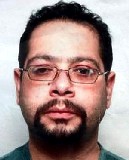
Francisco Acevedo
Serial killer Glen Edward Rogers
Serial killer · USA · 1993
Glen Edward Rogers was a spree killer whose cross-country rampage in 1994-95 le…
70 victims
Glen Edward Rogers
Serial killer · USA · 1993
Glen Edward Rogers was a spree killer whose cross-country rampage in 1994-95 le…
70 victims
 Michael Swango
Serial killer · USA · 1981
Michael Swango (Joseph Michael Swango) was a physician and American serial kill…
60 victims
Michael Swango
Serial killer · USA · 1981
Michael Swango (Joseph Michael Swango) was a physician and American serial kill…
60 victims
 Efren Saldivar
Serial killer · USA · 1989
Efren Saldivar (born 30 September 1969) was an American serial killer who murde…
50 victims
Efren Saldivar
Serial killer · USA · 1989
Efren Saldivar (born 30 September 1969) was an American serial killer who murde…
50 victims
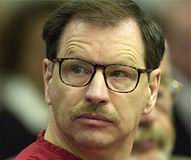 Gary Ridgway
Serial killer · USA · 1982
Gary Leon Ridgway Ridgway was born 18-February-1949 in Salt Lake City, UT. He w…
49 victims
Gary Ridgway
Serial killer · USA · 1982
Gary Leon Ridgway Ridgway was born 18-February-1949 in Salt Lake City, UT. He w…
49 victims
 Charles Cullen
Serial killer · USA · 1984
Charles Cullen (born February 22, 1960) was a former nurse and the most prolifi…
45 victims
Charles Cullen
Serial killer · USA · 1984
Charles Cullen (born February 22, 1960) was a former nurse and the most prolifi…
45 victims
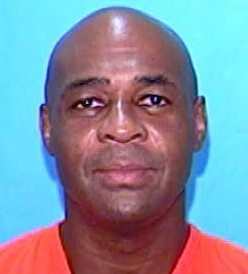 Douglas Ray Meeks
Murderer · USA · 1974
Douglas Ray Meeks was a Florida prison inmate. In two separate trials, Meeks wa…
2 victims
Douglas Ray Meeks
Murderer · USA · 1974
Douglas Ray Meeks was a Florida prison inmate. In two separate trials, Meeks wa…
2 victims
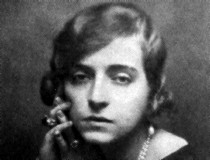 Marguerite Fahmy
Murderer · United Kingdom · 1923
Marguerite Fahmy faced a charge of murder in connection with the death of Ali K…
1 victim
Marguerite Fahmy
Murderer · United Kingdom · 1923
Marguerite Fahmy faced a charge of murder in connection with the death of Ali K…
1 victim
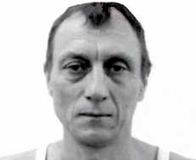 Anatoly Biryukov
Serial killer · Russia · 1977
Anatoly Nikolaevich Biryukov (Russian: Анатолий Николаевич Бирюков) was a Russi…
5 victims
Anatoly Biryukov
Serial killer · Russia · 1977
Anatoly Nikolaevich Biryukov (Russian: Анатолий Николаевич Бирюков) was a Russi…
5 victims
 Karen Tobie
Murderer · USA · 2004
Karen Tobie was convicted of paying a man $4,000 to kill her husband, John Cata…
1 victim
Karen Tobie
Murderer · USA · 2004
Karen Tobie was convicted of paying a man $4,000 to kill her husband, John Cata…
1 victim
 Richard Wayne Smith
Murderer · USA · 1992
Richard Wayne Smith was executed by lethal injection in Texas on September 21,…
1 victim
Richard Wayne Smith
Murderer · USA · 1992
Richard Wayne Smith was executed by lethal injection in Texas on September 21,…
1 victim
 John Walker Turnbull
Murderer · United Kingdom · 1999
John Walker Turnbull (May 18, 1958 – September 27, 1999) was a Lance Corporal i…
2 victims
John Walker Turnbull
Murderer · United Kingdom · 1999
John Walker Turnbull (May 18, 1958 – September 27, 1999) was a Lance Corporal i…
2 victims
- Gender
- male
- Country
- USA
- Location
- Yonkers, Westchester County, New York, USA
- Date of birth
- 1968
- Age at first offence
- 21
- Characteristics
- convicted rapist, rape, drunken rage
- Victim profile
- Maria Ramos, 26 / Tawana Hodges, 28 / Kimberly Moore, 30
- Method of murder
- Strangulation
- Date(s) of murder
- 1989 / 1991 / 1996
- Years active
- 1989–1996
- Date of arrest
- April 2010
- Status
-
Life imprisonment
Sentenced to 75 years to life in prison on January 17, 2012
Case record: Francisco Acevedo
Background
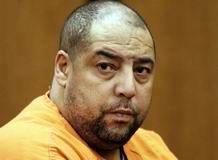
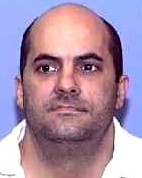
Francisco Acevedo was a serial killer who avoided detection for 20 years until he voluntarily gave a DNA sample. He was 43 at the time of his sentencing. He was linked to the killings by DNA he submitted after being arrested on a drunken driving charge.
Acevedo was nicknamed "Artie" or "Frank". Investigators described him as living and working across Connecticut, Yonkers, Mount Vernon, and on Long Island. Police said he lived in two Yonkers apartments as well as in the Bronx and Mount Vernon during the time of the killings, working at factory jobs.
Acevedo had a troubled history dating to his teens, particularly against women. Connecticut records showed that he abused cocaine, marijuana and alcohol from the age of 12. He also had a history of arrests involving sexual assault, larceny, assault, harassment and drunken driving.
Acevedo served a prison sentence in Connecticut in 1986 after he raped and beat a Meriden, Conn., girl. He later pleaded not guilty to all the Yonkers charges.
The offence
Acevedo was convicted of murdering three women in Yonkers. The murders occurred in Yonkers in 1989, 1991 and 1996.
The killings were linked by DNA. Each woman was found strangled, naked, bound at the hands and facing upward. Investigators later connected the cases because each woman was found with matching DNA found in vaginal swabs, while police initially did not know whose DNA it was.
The victims were:
- Maria Ramos, 26, of the Bronx, killed Feb. 5, 1989
- Tawana Hodges, 38, of the Bronx, killed March 28, 1991
- Kimberly Moore, 30, of Greenburgh, killed May 24, 1996
Police said Ramos and Hodges were prostitutes. Police said Moore was a one-time all-county gymnast who attended Woodlands High School in Greenburgh.
Acevedo was acquitted of three counts of rape. He acknowledged that he had sex with the three women but denied the rape and murder charges.
Investigation
A Yonkers cold-case detective said investigators had looked at more than 100 potential suspects in the case before Acevedo was identified.
Investigators linked the killings because each woman was found strangled, naked, bound at the hands and facing upward, and because DNA was found in vaginal swabs from each of the victims. Police did not know whose DNA it was until a later DNA match.
A DNA database provided leads to convictions and helped free people wrongly accused. Gov. Andrew Cuomo proposed expanding the DNA database to include profiles of those convicted of many more crimes, including drunken driving. Cuomo said that since 1996, the database had provided leads to 2,700 convictions while helping free 27 people who were wrongly accused.
Detective John Geiss led work connecting the case. Detective John Geiss said:
"He wasn't very happy to see us"
Vernon J. Geberth described a profile mistake and discussed serial killer typology, saying urban Hispanic and black serial killers are often overlooked when detectives seek high-IQ killers like Ted Bundy. Geberth also described Acevedo as having an IQ described as very average 104. Geberth said:
"Most of these guys do not have high IQs but they are street smart; that is how they survive"
Geberth described the pattern in the Yonkers killings as "sexual posing" and said:
"He is posing bodies to get some type of psychological charge" and "Only about 1 percent of the nation's killers are sexual posers, he said."
Geiss said he worked with other police agencies to see whether Acevedo was linked to other homicides.
Arrest and pretrial events
Acevedo was arrested on murder charges after he was arrested for drunken driving. It was during jail time on the drunken driving charge that he later provided a DNA sample.
On Jan. 26, 2009, Acevedo was arrested in Brentwood, N.Y., on his fourth drunken driving charge. That conviction landed him in Green Haven Correctional Facility in Dutchess County, where he began serving a one- to three-year sentence May 12, 2009.
In January, he provided DNA as a condition of a parole application. The DNA was matched to the Yonkers slayings, and Acevedo was charged with murder in all three in April.
When he was arrested on murder charges, he was in an upstate prison and was reportedly very surprised.
At his trial, an expert testified that it was statistically impossible for the DNA found in vaginal swabs from each of the women to be anyone's but Acevedo's.
Police Commissioner Edmund Hartnett said Acevedo lived in two Yonkers apartments as well as in the Bronx and Mount Vernon during the time of the killings and worked at factory jobs.
A retired Yonkers detective-turned-lawyer, John D'Alessandro, described the pattern and said:
"It was spooky" and "We knew it was a ritualistic serial killer."
The case was linked after a nine-year investigation by Detective John T. Geiss of Yonkers' Cold Case Squad and the Westchester County forensics laboratory.
Trial
Acevedo was convicted by a Westchester County jury of the three serial murders on the first day of jury deliberations at the Westchester County courthouse.
The convictions came after trial evidence that included DNA testing and testimony from a motel clerk.
At trial, the motel clerk Carlos Gonzalez testified about being a former motel clerk and the moment when he walked into Room 45 to tell a woman inside it was past check-out time. Gonzalez told the jury:
"I keep on kicking the bed, saying, 'Time's up, time's up.' There was no answer,"
"I pulled the bedspread down. There was blood there on her face, on the front of my forehead. I got scared."
Carlos Gonzalez was described as the only person to have seen accused serial killer Francisco Acevedo with any of his alleged victims.
Carlos Gonzalez testified that he was working at 3 p.m. when Kimberly Moore came to his office and asked if she could stay in the room for a few more hours. Gonzalez said she then gestured to a man—Acevedo—on Yonkers Avenue, who met Moore at the bottom of a set of stairs. Gonzalez said he watched them go up to the room together. Gonzalez said he never saw Acevedo leave, but suggested he could have left when Gonzalez was having dinner between 5:30 and 6:10 p.m.
Under cross-examination, Gonzalez said the motel had a lot of clients who would return daily and sometimes "partied."
A police sergeant testified that crack pipes were found on the floor and a hypodermic needle was under a rug in the room where Moore was killed. Gonzalez said Moore had used rooms at the motel before.
Moore's family vehemently denied that she was involved in prostitution.
Only Acevedo's DNA was found on Moore's body, authorities said.
Acevedo's defense was described as arguing that Acevedo had sex with the women but did not rape or kill them. His attorneys, Tamika Ann Coverdale and Janet Ann Gandolfo, sought to have the DNA evidence thrown out.
District Attorney Janet DiFiore said:
"The evidence based on DNA testing allowed these three murder victims to point the finger of guilt at this defendant."
Acevedo maintained his innocence and told the judge he had prayed for the women and their families.
Sentencing
Westchester County Judge Barbara Zambelli combined three maximum sentences and sentenced Acevedo to 75 years to life in prison.
Zambelli said:
"These were monstrous crimes by a cruel and inhuman individual."
Relatives of each of the victims denounced Acevedo in court.
Shulisha Ramos said:
"I hope you suffer every day of your everlasting life,"
Devon Hodges told Acevedo he was:
"a filthy little animal."
Acevedo acknowledged he had sex with the three women but denied the rape and murder charges.
Appeals
No appeal information was stated.
Outcome
Francisco Acevedo was convicted of murdering three women. He was acquitted of three counts of rape. He was sentenced to 75 years to life in prison on January 17, 2012.
Aftermath
Gov. Andrew Cuomo proposed expanding the DNA database to include profiles of those convicted of many more crimes, including drunken driving, and said the database had provided leads to 2,700 convictions and helped free 27 people who were wrongly accused.
Detective John Geiss said the victims' families were:
"very happy, very happy to have some answers."
John D'Alessandro described the investigation approach and pattern as ritualistic. Vernon J. Geberth described the pattern as "sexual posing" and said only about 1 percent of the nation's killers are sexual posers.
Acevedo's mother, Yadira Acevedo, said her son grew up in the house in a working-class section of Meriden where she still lived. She said it was hard on the family and that she felt bad that she could not go to him.
Acevedo went to Meriden public schools and dropped out of Platt High School his freshman year. He earned an equivalency diploma Dec. 11, 1986.
Acevedo worked as a laborer, and later as a cook in a pizzeria, a midnight baker at Dunkin' Donuts and a dishwasher at Testa's Silvertown Inn in Connecticut.
Nina DeMelo said she was his landlord at 125 Rich Ave. in Mount Vernon and said:
"He's not a bad man." and "I am so surprised"
By Nov. 11, 1997, Acevedo and his wife were living at 185 Saratoga Ave. in Yonkers, where he was accused of attacking her. The charge of third-degree assault was later dismissed.
On Aug. 30, 1998, a second arrest led to a conviction. Records showed Acevedo punched his wife in the face and possibly broke her nose while they lived at 24 Caryl Ave. in Yonkers. He served nine months in jail on the misdemeanor conviction. Vincent Dunn said Acevedo "seemed quiet" and said:
"It shocked me" and "He was always a friendly guy."
Wendy Cabrera, 32, said that at 1549 Fifth Ave. in Bay Shore Acevedo had a confrontation with another tenant and the man's pregnant wife. Paul Labron, the landlord, said Acevedo and his wife were evicted for nonpayment of rent. Acevedo's wife, Lizette Santiago, declined to be interviewed.
At the time of reporting, it was stated that if convicted of the Yonkers slayings, Acevedo faced life in prison without chance of parole.
Spotted an error, or have more information about this case?