
Steven James Rollins
Murderer Russell Ellwood
Murderer · USA · 1991
Russell Ellwood was a former taxi driver. Authorities suspected him of killing…
20 victims
Russell Ellwood
Murderer · USA · 1991
Russell Ellwood was a former taxi driver. Authorities suspected him of killing…
20 victims
 Robert Martines Perez
Murderer · USA · 1994
Name: Robert Martines Perez · Other name used in proceedings: Robert Martinez P…
15 victims
Robert Martines Perez
Murderer · USA · 1994
Name: Robert Martines Perez · Other name used in proceedings: Robert Martinez P…
15 victims
 Billy Frank Vickers
Murderer · USA · 1993
Billy Frank Vickers Vickers was executed by lethal injection in Texas on Januar…
14 victims
Billy Frank Vickers
Murderer · USA · 1993
Billy Frank Vickers Vickers was executed by lethal injection in Texas on Januar…
14 victims
 Richard Durn
Mass murderer · France · 2002
Richard Durn Richard Durn was a 33-year-old gunman who opened fire at the end o…
8 victims
Richard Durn
Mass murderer · France · 2002
Richard Durn Richard Durn was a 33-year-old gunman who opened fire at the end o…
8 victims
 Stephanie Nicole Erends
Murderer · USA · 2008
Stephanie Nicole Erends was convicted of first-degree murder with special circu…
1 victim
Stephanie Nicole Erends
Murderer · USA · 2008
Stephanie Nicole Erends was convicted of first-degree murder with special circu…
1 victim
 Anthony Doss
Murderer · USA · 1991
Anthony Doss was sentenced to death on March 31, 1993 for his role in the armed…
1 victim
Anthony Doss
Murderer · USA · 1991
Anthony Doss was sentenced to death on March 31, 1993 for his role in the armed…
1 victim
 Roger James Berget
Murderer · USA · 1985
Roger James Berget was executed by lethal injection in Oklahoma on June 8, 2000…
2 victims
Roger James Berget
Murderer · USA · 1985
Roger James Berget was executed by lethal injection in Oklahoma on June 8, 2000…
2 victims
 John Caudle
Homicide · USA · 2009
John Caudle was the 14-year-old biological son of Joanne Galla (also referred t…
2 victims
John Caudle
Homicide · USA · 2009
John Caudle was the 14-year-old biological son of Joanne Galla (also referred t…
2 victims
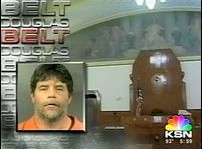 Douglas Belt
Murderer · USA · 2002
Name: Douglas Belt Douglas Belt was sentenced to death in 2004. The appeal resu…
1 victim
Douglas Belt
Murderer · USA · 2002
Name: Douglas Belt Douglas Belt was sentenced to death in 2004. The appeal resu…
1 victim
- Gender
- male
- Country
- USA
- Location
- Sullivan County, Tennessee, USA
- Date of birth
- August 14, 1964
- Age at first offence
- 37
- Characteristics
- robbery, drugs
- Victim profile
- John T. Bussell, 81 (bait shop owner)
- Method of murder
- St abbing with knife
- Date(s) of murder
- August 22, 2001
- Years active
- 2001
- Date of arrest
- October 9, 2001
- Status
-
Acquitted / overturned
Sentenced to death in June 2003. Overturned, 2010
Background
Steven James Rollins was thirty-seven years old when he killed John Bussell, an eighty-one-year-old victim.
For thirty years prior to his murder, John Bussell owned and operated the Fisherman’s Paradise bait shop and barbeque restaurant in the Colonial Heights area of Sullivan County near Kingsport, Tennessee. Bussell lived alone in a camper next door to the bait shop. Although Bussell had arthritis, bad eyesight, and breathing difficulties, he had remained active and independent for a person of his age.
Local residents were aware that Bussell frequently accommodated customers by opening his business late at night to sell bait or fishing and camping supplies. Residents were also aware that Bussell carried large amounts of cash on his person, at least $1,000 to $1,500 at any given time, according to Walter Hoskins, Bussell’s friend of five years and maintenance man. Hoskins recalled that Bussell often displayed this “wad” of cash as he provided change to customers.
Hoskins and other of Bussell’s friends and relatives cautioned Bussell against opening the bait shop late at night while he was alone and against making change from his “wad” of cash, but to Hoskins’ knowledge, Bussell continued to operate his business as he had for the preceding thirty years.
Bussell owned and carried a handgun for his protection. In July 2001, approximately one-month before his murder, Bussell purchased a two-shot Derringer handgun and carried it with him at all times in his right front pants pocket.
The offence
Steven James Rollins killed John Bussell during a robbery.
Bussell was stabbed and suffered twenty-seven and possibly twenty-eight knife wounds. The autopsy disclosed that the victim had bled to death from these wounds.
Dr. Gretel Harlan Stevens, the forensic pathologist who performed the autopsy, testified that the wounds were painful but not all were life threatening. She explained that the presence of blood on the victim’s feet and clothing, as well as defensive wounds to his hands, indicated that he had been injured but had remained alive and had struggled with and fled from his attacker. Dr. Stevens opined that the nature of the wounds suggested that the victim initially did a “fairly good job” fending off his attacker, considering his age and health.
A deep six-inch cutting wound that began near the victim’s left ear and extended across his neck sliced through his left common carotid artery and jugular vein and would have rendered the victim immediately unconscious and led to death within four minutes. Another incised wound to the victim’s neck cut into his right jugular vein and would have been fatal without prompt medical care. A third stab wound to the victim’s shoulder penetrated the victim’s lung and heart and would also have been fatal without immediate medical care.
In his statements to police, Rollins admitted that he and Gregory “Kojack” Fleenor discussed ways to get money to buy cocaine and that Rollins suggested robbing Bussell. Rollins said he purchased four pairs of gloves at a convenience store. Rollins, Fleenor, Rollins’s girlfriend Angela Salyers, and Fleenor’s girlfriend Ashley Cooper then drove to the victim’s bait shop around midnight. Rollins rang the doorbell; when no one answered, he knocked on the camper door. The victim answered and Rollins told him he needed to buy bait. Rollins followed the victim into the bait shop, and while the victim was bent over dipping minnows from the tank, Rollins grabbed the victim’s shoulder. When the victim reached for his gun, Rollins pulled a lock-blade knife from his pocket and began stabbing him. Rollins could not remember how many times he had stabbed the victim. After the stabbing, Rollins said he made sure the victim was dead by shaking him, then washed his hands and his knife in the minnow tank before joining Fleenor in searching through the victim’s camper for money, drugs, and anything else of value. Fleenor found $1,000 to $1,200 in the victim’s wallet.
Rollins’s statement said the group then drove to Knoxville, where Fleenor purchased cocaine, and the group consumed it. Rollins threw away the victim’s wallet and the clothing Rollins had been wearing when he killed the victim. Rollins also threw the victim’s gun into the Holston River. Rollins said Fleenor suggested Rollins kill the victim and that they “leave no witnesses.” Rollins insisted he never intended to kill the victim and that he had been “strung out” on cocaine the entire evening. Rollins concluded the statement with: “I know I should be punished.”
At trial, Rollins contradicted the statements by testifying that Fleenor had killed the victim. Rollins maintained he had been afraid of Fleenor and was unaware Fleenor had planned to rob or to kill the victim. Rollins testified that, at Fleenor’s instruction, Rollins went into the bait shop to buy bait while Fleenor “checked things out.” Rollins left the bait shop after telling Fleenor to pay the victim for the minnows. Fleenor agreed but instructed Rollins to sneak into the camper and steal anything of value.
Rollins testified that he ransacked the camper for five or ten minutes until Fleenor joined him. When Rollins asked where the victim was, Fleenor responded, “I took care of it.” Rollins testified he thought this meant Fleenor had hit the victim in the head. Rollins further testified that Fleenor eventually told him he had killed the victim by “cutting” him, warned Rollins to keep his mouth shut, and threatened to kill Salyers, Cooper, and members of Rollins’s family if Rollins did not keep quiet.
Rollins said he only had “a little, bitty Old Timer” knife in his pocket while Fleenor had a lock-blade knife. Rollins said he could not read or write, that he provided the October 9th statement because officers promised he could ride from Michigan to Tennessee in the same car with his girlfriend Salyers, and that he had accepted blame for the killing because he was afraid of Fleenor and of Fleenor’s father, both incarcerated with Rollins in the Kingsport jail.
Rollins admitted on direct examination that he had fifteen prior felony convictions and stated he had pleaded guilty in each case because he had been guilty.
Investigation
Hoskins was the last person to speak with Bussell before his murder. Bussell telephoned Hoskins at 10:30 p.m. on August 21, 2001, to discuss Hoskins’ plans for the next day.
Ottie McGuire arrived at the bait shop around 8:30 a.m. on August 22, 2001, intending to have breakfast with Bussell. McGuire became worried when he noticed that the restaurant lights were off and the door still locked.
McGuire walked next door and found the door to Bussell’s camper partly open and the morning newspaper still in the box. McGuire knocked on the camper’s window and called for Bussell. When Bussell failed to respond, McGuire went to a nearby fire hall for help, fearing Bussell had suffered a heart attack.
Sullivan County Deputy Sheriff Jamie Free arrived at the bait shop. After looking through a window and seeing the victim’s head lying on the floor of the bait shop between two display racks, Officer Free removed the chained “closed”sign and kicked open the locked door. Officer Free then found Bussell’s body lying in a pool of blood on the floor behind the counter of the bait shop. Bussell was clothed in pajamas and house slippers; his clothing was blood-soaked; and he was not breathing.
The cash register was open and empty. The change drawer was also empty and was lying on the floor beside the body. Several minnows and cups used to dip out the minnows were on the floor near the minnow tank. Bussell’s Derringer was missing.
A trail of bloody footprints led from inside the bait shop to the victim’s camper, which had been ransacked. Blood smears were found inside the camper on a variety of the victim’s personal belongings. A wad of $1,150 in cash was found lying on the floor of the camper covered by other items.
Forensic experts from the Tennessee Bureau of Investigation Crime Laboratory spent 112.5 man hours processing the bait shop, the camper, and the area outside but found no physical evidence tying anyone to the crime. The blood found at the scene belonged to the victim. Investigators neither discovered identifiable latent fingerprints nor shoes belonging to a suspect which could be compared to the bloody footprints found at the scene.
Shortly after the victim’s murder, Richard Russell, chief investigative officer for the Scott County, Virginia Sheriff’s Department, reported to the Sullivan County Sheriff’s Department a conversation he had with Rollins about one month before the murder. Rollins told Officer Russell that two of Rollins’s acquaintances had mentioned robbing “an old guy . . . that owned some kind of a bait shop . . . and taking his money.” At that time, Officer Russell believed Rollins was referring to a crime already committed. After determining no such crime had occurred, Officer Russell forgot about Rollins’s statement. After learning of the victim’s murder, Officer Russell relayed the information to the Sullivan County Sheriff’s Department.
On September 26, 2001, the underwater investigation team of the Sullivan County Sheriff’s Department retrieved Bussell’s Derringer from the Holston River.
Arrest
On August 25, 2001, Rollins and his girlfriend Angela Salyers were interviewed by Sullivan County officers. Rollins agreed to accompany the officers to the Sheriff’s Department for questioning.
Sullivan County Detective Bobby Russell interviewed Rollins and described him as cooperative and responsive. Rollins expounded upon information he previously had given to the Virginia police. Rollins told Detective Russell that about one month earlier Ricky Frasier, for whom Rollins worked as a roofer, and Larry Cowden, Rollins’s co-worker, mentioned going to the trailer of an old man who had a large sum of money and “knocking on the trailer and knocking him in the head. He said he had maybe $40,000.00 or something.” Rollins admitted that about three weeks earlier he had accompanied Frasier and Cowden to a drive-in restaurant across the road from the victim’s trailer while they watched the victim’s trailer. Rollins denied ever meeting the victim or participating in or knowing anything about the victim’s murder.
Rollins and Angela Salyers left Tennessee and traveled to a rural area in Michigan’s Upper Peninsula, a two-day drive from Sullivan County.
On October 9, 2001, Sullivan County officers arrested Rollins and Salyers in Michigan. After receiving Miranda warnings and signing a waiver of those rights, Rollins gave a statement in Michigan admitting that he had killed Bussell. Rollins then waived extradition, and he and Salyers returned to Tennessee with the Sullivan County officers.
The group arrived late on October 11. Rollins asked to speak with officers “to clear up” some things. Due to the lateness of the hour, officers delayed meeting until October 12. On October 12, Rollins gave a second statement recounting his involvement in the robbery and murder of Bussell. This second statement was consistent with the first but provided additional detail.
Trial
Rollins denied participating in the murder in statements used for investigation and later gave two statements admitting involvement, but he later testified at trial that Fleenor had killed the victim.
Rollins’s first and second statements said he and Fleenor discussed robbery to get money to buy cocaine. Rollins purchased gloves, the group drove to the bait shop, Rollins lured and attacked the victim, then both men searched the camper for money and drugs and the group went to Knoxville to obtain and consume cocaine.
Rollins testified at trial that Fleenor killed the victim. He said he was afraid of Fleenor and unaware of Fleenor’s plan to rob or kill the victim. He testified that he ransacked the camper after Fleenor instructed him to steal anything of value, and that when he asked where the victim was, Fleenor said “I took care of it.” Rollins testified that Fleenor later told him he had killed the victim by “cutting” him, warned him to keep quiet, and threatened to kill Salyers, Cooper, and members of his family if he did not keep quiet.
In relation to his ability to read or write, Rollins said he could not read or write and that he initialed erroneous and false written statements because he could neither read nor write. For impeachment, Rollins acknowledged prior convictions for aggravated burglary and felony theft. Another officer, Karen Watkins, testified to rebut Rollins’s testimony concerning events occurring during the ride from Michigan to Sullivan County.
Rana Jandron of the Marquette County Sheriff’s Department in Michigan testified that Rollins told her he could read and write a little bit “enough to write a letter.” A videotape of Rollins’s booking in Michigan showing Rollins making this statement was played to the jury.
Angela Salyers testified that Rollins could read and write, that Rollins had owned a lock-blade knife with a four-inch blade at the time of the victim’s murder, and that Rollins had attacked and killed the victim. Salyers admitted that she had been tried for first degree murder in connection with the victim’s murder and had been convicted of facilitation of robbery.
Salyers’s involvement linked her to the case outcome at least as a matter of trial testimony and her own conviction.
The jury found Rollins guilty of premeditated first degree murder, felony first degree murder, and especially aggravated robbery.
Sentencing
At the sentencing hearing, the State introduced certified copies of Rollins’s two 1996 aggravated assault convictions in Hawkins County, Tennessee. The State presented photographs of some of the wounds inflicted on the victim.
Dr. Gretel Stevens testified at the sentencing phase that none of the injuries had been fatal, that some injuries were inflicted while the victim was alive and standing or walking about, and that the injuries would have been painful.
Marie Carpenter, the victim’s niece, gave victim impact testimony. Carpenter testified that the eighty-one-year-old victim had no children and had been a father-figure to her. Carpenter explained she talked with the victim by telephone every night, saw him weekly, and sometimes drove him to the doctor. Carpenter testified the victim operated his bait shop and barbecue restaurant for thirty years and that although the victim was not in the best of health, he was still able to come and go as he wished.
In closing, the State specifically announced it relied on the proof presented at the guilt phase.
The only mitigation proof offered by the defense was a report by a school psychologist dating from 1978 when Rollins was in his early teens. The report reflected that Rollins’s parents were divorced and that Rollins lived with his grandmother. The report described Rollins’s mother as having a third-grade education and being not well physically or mentally, and noted no information available regarding Rollins’s father. It stated Rollins’s older brother was in the Army.
The report said Rollins received speech therapy, was enrolled in vocational training in auto body work, and was repeating the seventh grade. It described his school grades as mostly Ds and Fs. Teacher comments indicated he was “basically a non-reader” and could not spell or write. When tested in March 1978, Rollins’s I.Q. fell within the borderline defective range, slightly above mentally retarded. The report also noted Rollins’s academic skills were of a second grader. A re-evaluation performed about six months later confirmed Rollins’s I.Q. was borderline defective.
Following deliberations, the jury found that the prosecution proved five aggravating circumstances beyond a reasonable doubt:
- Rollins was previously convicted of one or more felonies, other than the present charge, whose statutory elements involve the use of violence to the person.
- The murder was especially heinous, atrocious, or cruel in that it involved torture or serious physical abuse beyond that necessary to produce death.
- The murder was committed for the purpose of avoiding, interfering with, or preventing a lawful arrest or prosecution of Rollins or another.
- The murder was knowingly committed, solicited, directed, or aided by Rollins while Rollins had a substantial role in committing or attempting to commit, or was fleeing after having a substantial role in committing or attempting to commit, any robbery.
- The victim of the murder was seventy (70) years of age or older.
Upon finding the aggravating circumstances outweighed mitigating circumstances beyond a reasonable doubt, the jury imposed a sentence of death.
Appeals
The Supreme Court of Tennessee issued an opinion described as S45685. The Tennessee Supreme Court affirmed the death sentence jurors imposed.
The opinion included a discussion by Chief Justice William M. Barker that the defendant lured the victim from his camper under the pretense of purchasing bait and then attacked the victim while the victim was in a vulnerable position. The Justices listed were E. Riley Anderson, Janice M. Holder, and Cornelia A. Clark, who concurred in affirming Rollins’s convictions and sentences for murder and robbery. Justice Adolpho A. Birch, Jr. agreed convictions should stand but “as to the sentence of death … I respectfully dissent.” The separate concurring and dissenting opinion stated that the method used by the court to review and compare Tennessee capital cases was “flawed.”
The opinion discussed comparative proportionality review and quoted language from State law and from a comparison “pool of similar cases” used to assess whether the sentence was disproportionate considering the nature of the crime and the defendant. It quoted: “The 37-year-old defendant needed money for drugs and decided to commit a robbery ….” It also quoted: “The defendant planned the robbery and premeditated the murder to conceal the robbery.” It quoted: “The defendant chose as his victim an elderly widower who lived alone and whose health was failing.” It quoted: “He knew the victim had a reputation of carrying large sums of cash on his person.”
The opinion quoted the manner in which Bussell was killed and stated that some wounds were defensive, noting the victim was scooping out minnows for Rollins when he was stabbed “27 times.” It also quoted: “Making absolutely certain that he had left no witnesses, the defendant shook the victim before leaving the bait shop and then washed his hands and knife in the minnow tank before joining his accomplices in searching for and stealing money and personal items from the victim’s bait shop and camper,” Barker wrote.
The opinion addressed an issue raised in Rollins’s automatic direct appeal about whether authorities in Sullivan County recorded interrogations, quoting that the Sullivan County Sheriff’s Department had a policy against electronically recording interrogations. It stated the court disagreed that the policy contravened heightened due process concerns that apply in capital cases. It quoted that the issue of electronically recording custodial interrogations was “one more properly directed to the General Assembly.” The opinion described a joint resolution calling for a study of electronic recording and quoted: “The defendant has failed to present any argument that casts doubt upon the soundness of our holding in Godsey ,” Barker wrote.
The opinion also addressed the contention that Rollins’s right to an attorney was violated, including questioning without counsel being present. It rejected the claim, stating authorities repeatedly advised Rollins of his Miranda rights and he signed a waiver of rights form. The opinion included quotations to the effect that the defendant was meticulously informed of the right to counsel and consequences of failing to exercise it. It quoted: “… The defendant was meticulously informed by the authorities of his right to counsel and of the consequences of failing to exercise that right before he confessed to the murder of John Bussell,” Barker wrote. It further quoted: “On two separate occasions the defendant elected to forgo the assistance of counsel and instead chose to speak directly to law enforcement officials concerning his role in the murder.”
The opinion stated that issues raised by Rollins were without merit and that aggravating circumstances found by jurors outweighed “relatively weak” mitigating evidence presented by the defense. It quoted: “We have considered the entire record in this case and conclude that the sentence of death was not imposed in an arbitrary fashion, that the sentence of death is not excessive or disproportionate, that the evidence supports the jury’s finding of the aggravating circumstances and the jury’s finding that these aggravating circumstances outweigh mitigating circumstances beyond a reasonable doubt,” Barker wrote.
A July 26, 2006 execution date was set for Rollins. The materials further stated that Rollins had state and federal appeals remaining.
Outcome
Rollins was sentenced to death after a jury found aggravating circumstances that outweighed mitigating circumstances beyond a reasonable doubt.
The death sentence was overturned in 2010.
Other details
Rollins’s trial included testimony and rebuttal on whether he could read and write. The videotape of his booking in Michigan included the statement to Rana Jandron, and Salyers testified that Rollins could read and write.
For purposes of impeachment, Rollins acknowledged thirteen prior convictions for aggravated burglary from August 1995 to November 1996 and one conviction of felony theft.
At trial, the State introduced certified copies of Rollins’s two 1996 aggravated assault convictions.
The investigation described that investigators spent 112.5 man hours processing the bait shop, the camper, and outside area but found no physical evidence tying anyone to the crime.
The Supreme Court described Rollins as needing money for drugs and decided to commit a robbery, and it described the victim as an elderly widower who lived alone with failing health and carrying large sums of cash on his person.

Spotted an error, or have more information about this case?