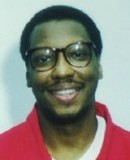
Rufus Lee Averhart
Murderer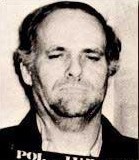 Ervil LeBaron
Murderer · USA · 1972
Ervil Morrell LeBaron (1925 to August 16, 1981) was the leader of a polygamous…
35 victims
Ervil LeBaron
Murderer · USA · 1972
Ervil Morrell LeBaron (1925 to August 16, 1981) was the leader of a polygamous…
35 victims
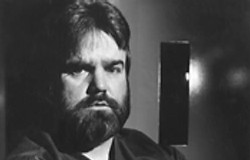 Marvin Gray
Murderer · USA · 1975
Marvin Gray was convicted killer who claimed responsibility for 23 slayings and…
23 victims
Marvin Gray
Murderer · USA · 1975
Marvin Gray was convicted killer who claimed responsibility for 23 slayings and…
23 victims
 Yahweh ben Yahweh
Murderer · USA · 1980
Yahweh ben Yahweh was born and legally named Hulon Mitchell Jr. (October 27, 19…
23 victims
Yahweh ben Yahweh
Murderer · USA · 1980
Yahweh ben Yahweh was born and legally named Hulon Mitchell Jr. (October 27, 19…
23 victims
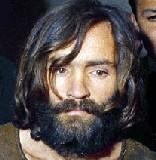 Charles Manson
Murderer · USA · 1969
Charles Milles Manson (born November 12, 1934) was an American criminal and mus…
9 victims
Charles Manson
Murderer · USA · 1969
Charles Milles Manson (born November 12, 1934) was an American criminal and mus…
9 victims
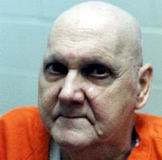 Claude Bloodgood
Murderer · USA · 1969
Claude Frizzel Bloodgood (born Klaus Frizzel Bluttgutt III; July 14, 1937 – Aug…
1 victim
Claude Bloodgood
Murderer · USA · 1969
Claude Frizzel Bloodgood (born Klaus Frizzel Bluttgutt III; July 14, 1937 – Aug…
1 victim
 Wallace Fugate
Murderer · USA · 1991
Wallace Fugate was executed by lethal injection in Georgia on August 16, 2002.…
1 victim
Wallace Fugate
Murderer · USA · 1991
Wallace Fugate was executed by lethal injection in Georgia on August 16, 2002.…
1 victim
 Zhou Youping
Serial killer · China · 2009
Zhou Youping was a Chinese karaoke singer who organized sexually abusive chokin…
6 victims
Zhou Youping
Serial killer · China · 2009
Zhou Youping was a Chinese karaoke singer who organized sexually abusive chokin…
6 victims
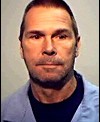 Charles Franklin Smith
Murderer · USA · 1986
Charles Franklin Smith was the husband of 10 years of the murder victim, 27-yea…
1 victim
Charles Franklin Smith
Murderer · USA · 1986
Charles Franklin Smith was the husband of 10 years of the murder victim, 27-yea…
1 victim
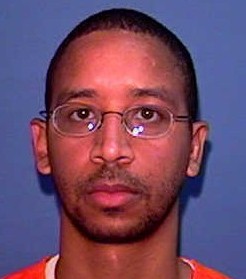 Jermaine Lebron
Murderer · USA · 1995
Jermaine “Bugsy” LeBron was sentenced to death for first-degree murder and to l…
1 victim
Jermaine Lebron
Murderer · USA · 1995
Jermaine “Bugsy” LeBron was sentenced to death for first-degree murder and to l…
1 victim
- Gender
- male
- Country
- USA
- Location
- Gary, Indiana, USA
- Date of birth
- December 12, 1954
- Age at first offence
- 18
- Characteristics
- robbery
- Victim profile
- Leonard Wick, 69 / George Yaros, 57 (Gary Police Officer)
- Method of murder
- Shooting
- Date(s) of murder
- 1972 / 1981
- Years active
- 1972–1981
- Date of arrest
- —
- Status
-
Sentenced to death
Sentenced to death on May 25, 1982.
Case record: Rufus Lee Averhart / Zolo Agona Azania
Background
Rufus Lee Averhart later changed his name to Zolo Agona Azania after entering prison. Zolo Agona Azania was convicted of murder in 1982 and spent the following 26 years in Indiana prisons, most of that time on death row. He was African American and previously had been known as Rufus Averhart.
The offence
Azania was convicted of killing George Yaros, 57, during a bank robbery at the Gary National Bank. Yaros responded to a bank alarm on 3680 Broadway and was wounded in a hail of bullets fired at him. Azania stood over the Yaros’ body and fired a final shot, killing him.
Azania also murdered Leonard Wick, 69, during a burglary at Wick’s home on 2131 W. 9th Ave. in Gary. Nine years before the bank killing, Azania murdered Wick during the burglary at Wick's home and was sentenced to prison for Wick’s murder. Azania was released July 8, 1980.
During the 1981 bank robbery, Azania and two other men held up the Gary National Bank on Aug. 11, 1981. They shot Gary Police Officer George Yaros as he arrived at the scene. As the men fled to their car, Azania stopped and shot Yaros again at close range with a .44-caliber handgun. The case included a shootout behind a Gary National Bank branch after a robbery, in which Azania and two companions became embroiled with Yaros.
Investigation
Yaros fatally shot at close range followed Yaros collapsing from another gunshot wound.
Arrest
Azania was released July 8, 1980 after being sentenced to prison for Wick’s murder. He later killed Yaros Aug. 11, 1981.
Trial
In 1982, an Allen County jury sentenced Azania to death for the 1981 slaying of a police officer during a Gary bank robbery. Former Allen Superior Judge Alfred Moellering sentenced Azania to death in May 1982. The trial had been moved to Allen County because of pre-trial publicity in Lake County.
Allen Superior Judge Al Moellering sentenced Azania to die the first time, and the sentence was later sent back for a new sentencing hearing. At least one jury recommended the death penalty for Azania, while prosecutors sought the death penalty against all three men involved.
In a second sentencing proceeding, another Allen Superior Judge sentenced Azania again to death. Allen Superior Judge Kenneth Scheibenberger imposed the death sentence the second time.
Azania had argued that a faulty computer program selected a jury that underrepresented Allen County's black population. The exclusion of Wayne Township registered voters from Allen County jury pools between 1981 and 1996 resulted in a pool of 189 people with only five blacks for Azania’s case. Allen County's jury selection process had been described as systematically excluding blacks, and the court later barred the death penalty.
The jury composition described in the materials included 11 whites and one Hispanic woman at one point, and other descriptions stated that juries were without any blacks.
Quotes:
“I won't give up because my dad was my best friend,” Yaros said. “He would do anything for everyone.”
“With good behavior, he could get out in 2011,” Yaros said. “Everything has gone his way. It's going to be 25 years since he killed my dad, and he's still living. He killed him in cold blood.”
Sentencing
Azania was sentenced to death on May 25, 1982. He was sentenced to the death penalty twice, and both death sentences were later overturned by the Indiana Supreme Court while upholding the conviction.
After the first reversal, the case was returned to Allen County for another penalty hearing, and Azania was again sentenced to death by Allen Superior Judge Kenneth Scheibenberger.
After the second reversal, prosecutors were barred from pursuing the death penalty and further death penalty motions were prevented by a Boone Circuit Court judge.
In one description, Azania was sentenced to 60 years in prison following Yaros’s death, which was the equivalent of life in prison at that time, with eligibility for parole in five years if the latest appeal was unsuccessful.
Azania was sentenced to die by lethal injection.
Appeals
1993 reversal
In May 1993, the Indiana Supreme Court let stand the conviction but threw out the death sentence. The court found that the state had failed to share gunshot residue reports with the defense and that Azania had received poor legal representation at sentencing.
2001 reversal
In April 2001, Scheibenberger ruled that Azania’s lawyers failed to prove intentional discrimination or systematic exclusion of black jurors from Allen County’s jury pool and that the exclusion was caused by a computer flaw that was immediately remedied upon discovery.
The Indiana Supreme Court ordered a new penalty hearing but kept the conviction intact. Justices Robert Rucker, Frank Sullivan Jr. and Theodore R. Boehm ordered a new penalty hearing, and Justices Brent Dickson and Randall T. Shepard dissented.
November 2002 reversal
On Nov. 23, 2002, the Indiana Supreme Court overturned the death sentence in a 3-2 ruling. The court said: “the jury pool selection process was fundamentally flawed.” The ruling concerned a computer glitch that resulted in no blacks serving on the jury that sentenced Rufus Averhart to death in 1996. The materials stated that the jury pool selection process was fundamentally flawed because of the computer glitch that caused many Wayne Township voters to be omitted from lists of potential jurors.
On Nov. 25, 2002, the Indiana Supreme Court again overturned the death sentence in another 3-2 ruling. The court again said: “the jury pool selection process was fundamentally flawed.”
In that ruling, the materials stated that prosecutor Bernard Carter would decide whether the death penalty again would be sought.
Quotes:
“It's been 21 years, you'd think it'd be over with by now,” Yaros’ wife, Ann, told the Post-Tribune of Merrillville. “Why should it take so blasted long? He's had 21 years my husband didn't have.”
2005 and 2006 proceedings; Indiana Supreme Court reversal of bar
In May 2005, Lake County prosecutors were barred from pursuing the death penalty against Azania, a judge ruled. Boone County Superior Court Judge Steven H. David barred further death penalty motions because the court decided too much time had passed since the crimes were committed.
In June 27, 2006, oral arguments were held before the Indiana Supreme Court as Lake County Prosecutor Bernard Carter appealed Judge David’s ruling that barred pursuing the death penalty.
In May 10, 2007, the Indiana Supreme Court reversed Judge Steve David’s ruling that barred the state of Indiana from pursuing the death penalty in the case of Zolo Azania. It was described as a 3 to 2 decision.
Quotes:
Outcome
The death penalty sentence was imposed and later overturned multiple times, and on May 25, 1982 Azania was sentenced to death. The Indiana Supreme Court later reversed a ruling that had barred the state from pursuing the death penalty for the third time in the case.
Aftermath
Azania had been on death row for much of the 26 years in Indiana prisons. A claim stated that if the latest appeal was unsuccessful, Azania would be eligible for parole in five years, which would correspond to release in 2011 with good behavior.
Multiple judges recused themselves or stepped down during efforts to schedule the penalty phase. Scheibenberger recused himself and checked into an alcohol rehabilitation program at Rush-Presbyterian Hospital in Chicago. Administrative Judge Fran Gull assigned the case after Scheibenberger withdrew, and the materials described other involvement and withdrawals by additional judges, resulting in delays. Another judge recused herself due to prior role as an Allen County deputy prosecutor during Azania’s 1996 sentencing trial.
During a period of procedural uncertainty, some descriptions stated that no jury was selected from Lake County because of pre-trial publicity and that a new venue was sought by the defense.
Defense counsel named in the materials included Michael Deutsch and Jessie Cook, and appellate counsel activity included Michael Deutsch’s representation. Prosecutors and officials named included Bernard Carter and Diane Poulton.
Other details:
- Azania was described as being eligible for parole in five years if the death penalty appeal was not granted.
- Azania’s appeals included claims related to due process rights and delay, and to jury selection issues involving the systematic exclusion of African Americans from jury pools.
- The proceedings described multiple penalty phase trials and reversals of death sentences by the Indiana Supreme Court, with dissents by specific justices.
- The conviction for the murder of a police officer survived multiple death sentence reversals.
- The materials described that juries in each trial were Allen County residents.
Spotted an error, or have more information about this case?