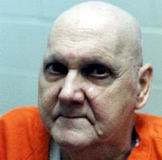
Claude Bloodgood
Murderer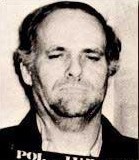 Ervil LeBaron
Murderer · USA · 1972
Ervil Morrell LeBaron (1925 to August 16, 1981) was the leader of a polygamous…
35 victims
Ervil LeBaron
Murderer · USA · 1972
Ervil Morrell LeBaron (1925 to August 16, 1981) was the leader of a polygamous…
35 victims
 Marvin Gray
Murderer · USA · 1975
Marvin Gray was convicted killer who claimed responsibility for 23 slayings and…
23 victims
Marvin Gray
Murderer · USA · 1975
Marvin Gray was convicted killer who claimed responsibility for 23 slayings and…
23 victims
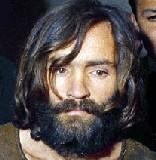 Charles Manson
Murderer · USA · 1969
Charles Milles Manson (born November 12, 1934) was an American criminal and mus…
9 victims
Charles Manson
Murderer · USA · 1969
Charles Milles Manson (born November 12, 1934) was an American criminal and mus…
9 victims
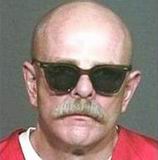 Barry Byron Mills
Murderer · USA · 1979
Barry Byron Mills (born 1948) was a leader of the Aryan Brotherhood (AB) prison…
8 victims
Barry Byron Mills
Murderer · USA · 1979
Barry Byron Mills (born 1948) was a leader of the Aryan Brotherhood (AB) prison…
8 victims
 John Errol Ferguson
Murderer · USA · 1977
John Errol Ferguson was sentenced to death and was executed by lethal injection…
8 victims
John Errol Ferguson
Murderer · USA · 1977
John Errol Ferguson was sentenced to death and was executed by lethal injection…
8 victims
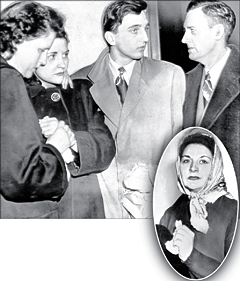 Milton Babich
Murderer · USA · 1949
March 20, 1949 — Firefighters were summoned to the Milwaukee River after a truc…
1 victim
Milton Babich
Murderer · USA · 1949
March 20, 1949 — Firefighters were summoned to the Milwaukee River after a truc…
1 victim
 Paul Bradley Speer
Murderer · USA · 2002
Paul Bradley Speer was in jail awaiting trial for burglary. In March 2002, he a…
1 victim
Paul Bradley Speer
Murderer · USA · 2002
Paul Bradley Speer was in jail awaiting trial for burglary. In March 2002, he a…
1 victim
 Katherine Seeber
Murderer · USA · 2000
Katherine Seeber (defendant) · Pedro Sanchez (accused in Queens County Criminal…
1 victim
Katherine Seeber
Murderer · USA · 2000
Katherine Seeber (defendant) · Pedro Sanchez (accused in Queens County Criminal…
1 victim
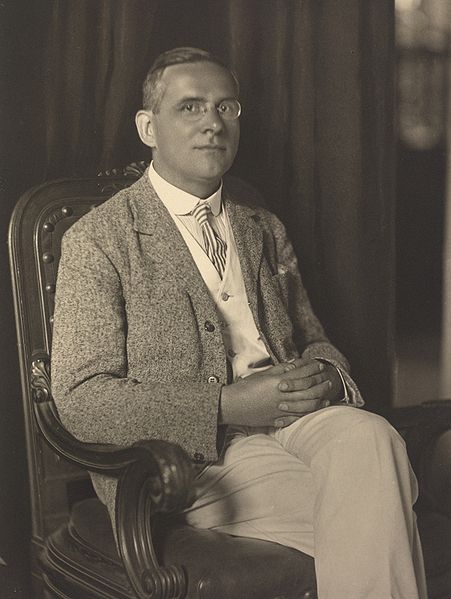 Johann Nelböck
Murderer · Austria · 1936
Dr Johann Nelböck (1903–1954) was an Austrian former student of Moritz Schlick,…
1 victim
Johann Nelböck
Murderer · Austria · 1936
Dr Johann Nelböck (1903–1954) was an Austrian former student of Moritz Schlick,…
1 victim
 Myron Lance
Spree killer · USA · 1966
Myron Lance was 25 years old on Dec. 17, 1966, when he teamed up with fellow pa…
6 victims
Myron Lance
Spree killer · USA · 1966
Myron Lance was 25 years old on Dec. 17, 1966, when he teamed up with fellow pa…
6 victims
- Gender
- male
- Country
- USA
- Location
- Norfolk, Virginia, USA
- Date of birth
- July 14, 1937
- Age at first offence
- 32
- Characteristics
- burglary
- Victim profile
- Margaret Bloodgood (his mother or stepmother?)
- Method of murder
- Strangulation
- Date(s) of murder
- November 19, 1969
- Years active
- 1969
- Date of arrest
- January 1970
- Status
-
Died in custody
Sentenced to death on June 19, 1970; commuted to life imprisonment in 1972; died in prison on August 4, 2001
Case details
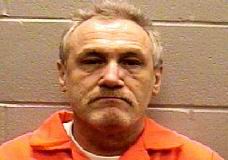
Claude Frizzel Bloodgood (born Klaus Frizzel Bluttgutt III; July 14, 1937 – August 4, 2001) was an American chess player.
Background
Bloodgood was an active chess organizer in Hampton Roads, Virginia in the late 1950s. He was the rating statistician for the Virginia State Chess Federation, where he rated himself at an Elo rating of 1956.
The offence
In 1969, nine days after being released from prison, Bloodgood murdered his mother, Margaret Bloodgood. Bloodgood later claimed she was his stepmother. After the murder, he rolled her body in a carpet and left it in Dismal Swamp, where it was soon found.
Investigation
Margaret Bloodgood’s body was found rolled inside a rug behind a country road several months after her murder. Bloodgood was a prime suspect after the body was found.
Arrest
Bloodgood was arrested in Portsmouth, Virginia two months after the body was found.
Trial
At his trial, Bloodgood confessed to the murder after being arrested. He later recanted and claimed to have owned up only under duress. The jury sentenced him to death after deliberating for 45 minutes.
Bloodgood was sentenced to death on June 19, 1970.
Sentencing
The death sentence was commuted to life imprisonment in 1972 after capital punishment was suspended in 1972.
Appeals
Bloodgood filed two petitions for habeas corpus with the Supreme Court of Virginia. He argued that his death sentence (later commuted to life) was based in part on repeat-offender status, because he had been convicted twice of burglary in Delaware. He argued that because those Delaware convictions had been obtained before the U.S. Supreme Court decision of Gideon v. Wainwright guaranteeing the right to counsel, and because no defense attorney had been assigned to him in the Delaware cases, the Delaware convictions were unconstitutional and thus the Virginia death sentence was unconstitutional as well.
The court rejected his contentions. This resulted in two decisions of the Virginia Supreme Court in Bloodgood v. Virginia and Bloodgood v. Garraghty, 783 F.2d 470, 475 (4th Cir. 1986).
Prison career
Bloodgood remained very active in chess while imprisoned. He played a large number of correspondence games and rated games with other inmates.
In Powhatan Prison, Bloodgood organized chess games with fellow inmates. Many inmates were taught the game by Bloodgood and began as unrated and inexperienced players. Bloodgood obtained USCF memberships for them.
Some accused Bloodgood of rigging ratings. The allegation was that he arranged for new prisoners to play rated games against other prisoners who would deliberately lose, giving the new inmate an inflated USCF rating. It was further alleged that Bloodgood then played rated games against the new highly rated prisoner, and each time he won he gained additional rating points. The accusations described this pattern as continuing for several years, and reported that by 1996 his rating rose to 2702, making him the second highest rated player in the nation. It compared his rating at retirement with Bobby Fischer’s rating of 2760 and noted that several leading grandmasters were in the 2600s.
Bloodgood denied the accusations. He said he played chess in the only competitions available to him, prison tournaments, and won almost every game because he was the strongest player in the prison system. As his rating rose, he wrote the USCF to warn that its system was prone to “closed pool” ratings inflation. The USCF changed its ratings system rules to attempt to prevent “closed pool” ratings inflation after investigation and debate about his qualifications.
Bloodgood would have qualified for entry into the U.S. Chess Championship, an invitation-only event intended for the best 16 players. As a result of the situation, the USCF investigated what to do about the ratings. In the end, Bloodgood was not invited to the event, which he could not have attended anyway.
Brief escape
In 1974, Bloodgood and fellow inmate Lewis Capleaner received a furlough to play in a chess tournament. They overpowered the single guard assigned to them and escaped. They were recaptured after a few days.
Other prison events and claims
Bloodgood’s parole was turned down every year since 1972. Bloodgood blamed his bad luck on his jail-break.
Late in life, Bloodgood made claims that seemed designed to obtain a release from prison. He claimed to have been born in 1924 and asked for a furlough based on old age. He claimed he had been born in Germany or Mexico and asked to be extradited to those countries or to be involved in prisoner exchange. He claimed to have been a Nazi spy during World War II.
He often gave interviews trying to convince interviewers that he was completely innocent of his crimes and a victim of mistaken identity.
Additional chess-related details
Bloodgood authored three books on chess openings, including The Tactical Grob (on 1.g4). He also published three books on chess openings, including The Tactical Grob (on 1.g4).
The Cleveland Public Library houses the Claude F. Bloodgood Collection, which “contains the personal papers of Claude F. Bloodgood, including legal documents, medical and other prison records, and chess related items.”
A postscript described a game and move sequence used in connection with Bloodgood:
- 1. N-KB3
- 2. P-QN3 — P-QB4 — 3. P-K4 — PxP — 4. N-K5 — Q-Q5 — 5. B-QN2 — QxB — 6. N-QB3 — Q-QR6
- 7. B-QN5 (Ch) — B-Q2
- 8. N-QB4 — Q-QN5
- 9. BxB — NxB
- 10. P-QR3
A letter was described as arriving “on yellow legal paper” with advice on how to corroborate bizarre details of Bloodgood’s life and an opening move: 1. N-KB3.
Donald Wedding, who played postal chess and live chess against Bloodgood, explained: “They're the kind of openings you play if you're a hustler. It's the chess equivalent of street fighting, when you point at something and say look up there, then you hit them.”
Death
Bloodgood died in Powhatan Correctional Center of lung cancer on August 4, 2001.
Timeline
- July 14, 1937 — Claude Frizzel Bloodgood was born (born Klaus Frizzel Bluttgutt III).
- late 1950s — Bloodgood was an active chess organizer in Hampton Roads, Virginia and was rating statistician for the Virginia State Chess Federation.
- 1954 — Bloodgood joined the marines.
- 1962 — Bloodgood spent time in a Delaware prison after forging documents, trying to defraud banks, and breaking and entering.
- December 1968 — Bloodgood’s father died.
- two months after (after Margaret Bloodgood’s body was found) — Bloodgood was arrested in Portsmouth, Virginia.
- June 19, 1970 — Bloodgood was sentenced to death.
- 1972 — The death sentence was commuted to life imprisonment.
- 1974 — Bloodgood and Lewis Capleaner escaped from a furlough during a chess tournament; they were recaptured after a few days.
- August 4, 2001 — Bloodgood died in Powhatan Correctional Center of lung cancer.
Other details
Bloodgood was twice convicted of burglary and served prison time in Delaware. He was also convicted of forgery of his parents’ accounts.
The description of Lewis Capleaner included that he was convicted of stabbing a woman 17 times.
Bloodgood claimed: “I said: 'I'll kill you'... and in the end that killed me,” he said.
A quote included the call monitoring warning recorded voice: “This call is from a correctional institution and is subject to monitoring and recording.”
Bloodgood told an interviewer: “I was born Klaus Bluttgutt in La Paz on the Baha peninsular in Mexico. My father's name was Klaus Bluttgutt too. He was an agent for the Abwehr - German military counter-intelligence.”
Bloodgood also said: “My health has got very bad. I can't walk four or five steps before I start wheezing like a son of a bitch,” he said.
Bloodgood said: “This is where it gets interesting.” Bloodgood said: “I went over in U-boats a couple of dozen times. I would come ashore and go straight up to the Waltonian, which was a gun club up near Willoughby Spit (on the coast of Virginia). I would ring my father from there and he would come and get me.”
Bloodgood said: “I was the only one to get away. By the skin of their teeth, the Bloodgoods survived with their secrets intact.”
Bloodgood said: “a dignified man with a limp” Bloodgood said: “a neat scar on the Desert Fox's face” Bloodgood said: “his eyes were dead”
Bloodgood said: “I was playing chess and he heard I was playing for money. We played a few games there and a while later, he would have me driven down for the day to these beach houses in Santa Monica and Van Nuys, and I would play him there.”
Bloodgood explained: “I would say it is quite probable. Bogart loved playing. The game you see him playing in Casablanca was a postal game he was engaged in at that time,” Lax said.
A desk officer note was included: “During this investigation, Bloodgood was in contact and allegedly married Kathryn Jane Grayson...”
Bloodgood said: “There was a bunch of us down in Tijuana for the races, down for a sort of party weekend, and me and Grayson sort of got together.” Bloodgood said: “We got married sort of as an afterthought. But it created a real problem for her when she found out I had a record. She got her lawyers to annul the marriage.” Bloodgood said: “He had changing map of the board in his head, and he was in hustler mode.”
Bloodgood told: “At speed, all the grandmasters make glaring mistakes.” Bloodgood boasted: “I will play five-minute chess against anyone in the world, even today.”
Bloodgood resigned after his queen was cornered, and the narrative included: “My queen was cornered. I resigned.”
Bloodgood urged: “Bloodgood urged me to start a new game, and to keep pressing on the research.”
It included a quote attributed to Bloodgood about what he would do if Powhatan’s gates were suddenly flung open: “First off, he said he'd go looking for a good steak.” Bloodgood said: “I'd love to get a decent meal.” Bloodgood said: “Then I'd play chess with the people I've known over the years, but face to face.” Bloodgood said: “Most of people I've known are dead. I've got to look for another generation of friends - some people who would remember me after I'm gone.”
A game-related description included the title: “Play it again, Claude Bloodgood v Bogart (1955)”.
The commentary on an opening described that Bogart chose what he named the Maltese Falcon Attack after one of his films and that it was “a gambit against the Dutch Defence, which was fashionable at the time.”
The commentary included: “Bloodgood v Borger (1999) In this game, the Guardian's man falls for one of Bloodgood's favourite traps.”
Spotted an error, or have more information about this case?